Saved
Punk & post-punk · Disco, funk & soul

Eternally Yours

Punk’s first proper studio gamble—brass, bass, and bafflement—in a London room that didn’t know what to do with it.

Worth your time?4/5Yes.Hear the whole thing.What works, what does not, who it is for ↓
9:10in productionCh. 1 · Two Albums in One/ 9:10 · ceiling 15 min
5 chapters · 9:10Ceiling 15:00

The brief is written and checked. The video joins this page when it is cut.5 chapters · 2 min read · 9:10 planned

Read the brief

Eternally Yours is The Saints’ 1978 second album, produced by Chris Bailey and Ed Kuepper, featuring an R&B-influenced sound with horn arrangements and new bassist Algy Ward. Recorded at Wessex Studios under the original title International Robots, the sessions yielded stripped-down versions later issued as bonus tracks. Bailey regarded it as the band’s first proper release—distinct from the demo character of their debut—though its horn-heavy approach reportedly alienated some listeners at the time. Retrospective assessments have elevated it as a punk classic, praised for consistency, variety, and influence, with endorsements from major musicians including Kurt Cobain and Mark Lanegan.

Chapters & takeaways5
  1. 0:59
    Two Albums in One

    The album began as stripped-down demos under the title International Robots—then got dressed up with horns and re-recorded.

  2. 1:51
    Horns That Confused

    The horn section was central to the band’s new vision—and central to why listeners were confused.

  3. 3:21
    Bass That Anchored

    Algy Ward’s bass wasn’t just new personnel—it anchored the R&B pivot and defined the album’s physical weight.

  4. 4:16
    First Proper Release

    Chris Bailey called this their first proper release—because (I’m) Stranded was just demos.

  5. 5:14
    R&B as Architecture

    The R&B-driven sound wasn’t stylistic tourism—it was structural: horns, harmonica, choir, and room all recalibrated the band’s attack.

2 more chaptersFewer chapters
Running order13
  1. 01
    Know Your Product3:15
  2. 02
    Lost and Found3:48
  3. 03
    Memories Are Made of This2:19

    Heard in The Hudsucker Proxy (1994)My Week with Marilyn (2011)Veronika Voss

  4. 04
    Private Affair2:05
  5. 05
    A Minor Aversion3:07
  6. 06
    No, Your Product4:05
  7. 07
    This Perfect Day2:30
  8. 08
    Run Down2:31
  9. 09
    Orstralia2:24
  10. 10
    New Centre of the Universe2:20
  11. 11
    Untitled2:46

    Heard in Get Carter (1971)

  12. 12
    (I’m) Misunderstood2:49
  13. 13
    International Robots2:00

Film placements are the ones described in each film's own entry, so the list is partial rather than complete.

Worth your time?

Yes. Hear the whole thing.

4/ 5
What works
  • 'Know Your Product' lands: tight, sneering, bass-forward, with a staccato horn stab that cuts like a blade.
  • 'Memories Are Made of This' lands as deliberate camp—a cover reframed through punk’s deadpan lens, not reverence.
  • 'This Perfect Day' lands for its hollow, metronomic drive and Iain Ward’s harmonica breathing through the cracks.
What does not
  • It does not sustain the velocity of (I'm) Stranded.
  • Tempos slacken.
  • The horn section does not integrate seamlessly—it sits atop the rhythm section rather than locking in.
  • The International Robot Choir feels decorative, not dialectical.
Hear it if
  • People who hear 'punk' as a set of choices—not a uniform—should hear it.
  • People who expect consistency of tone or ideology should not.
  • It is not for those who require authenticity to mean austerity.
Skip it if
  • People who expect consistency of tone or ideology should not.
  • It is not for those who require authenticity to mean austerity.
Who should hear it, and who should skipHide who it is for
The written brief2 min read

What the record is and where it came from

Eternally Yours is The Saints’ 1978 second album, recorded at Wessex Studios and produced by Chris Bailey and Ed Kuepper. It marks their shift from Brisbane garage-punk to a horn-augmented, R&B-inflected sound—with Algy Ward joining on bass in mid-1977—and was originally titled International Robots.

How it sounds, and how it was made

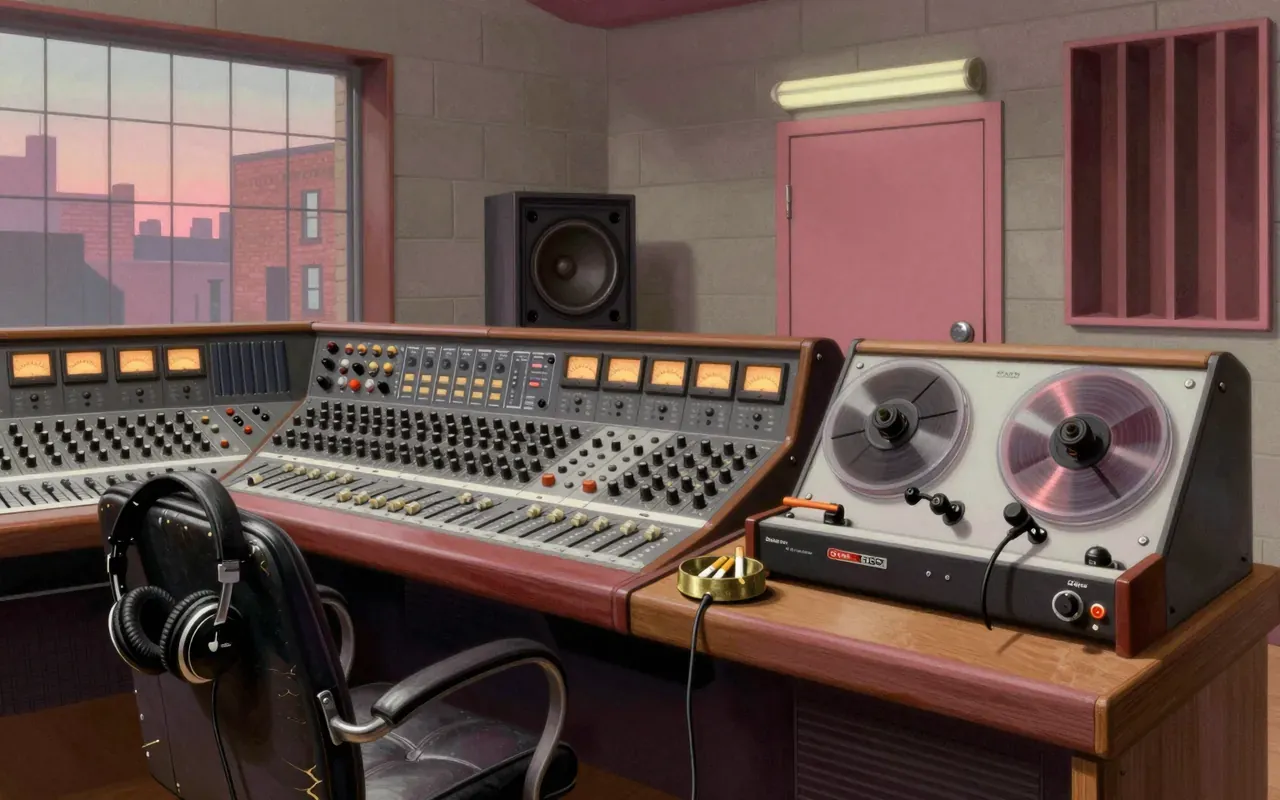
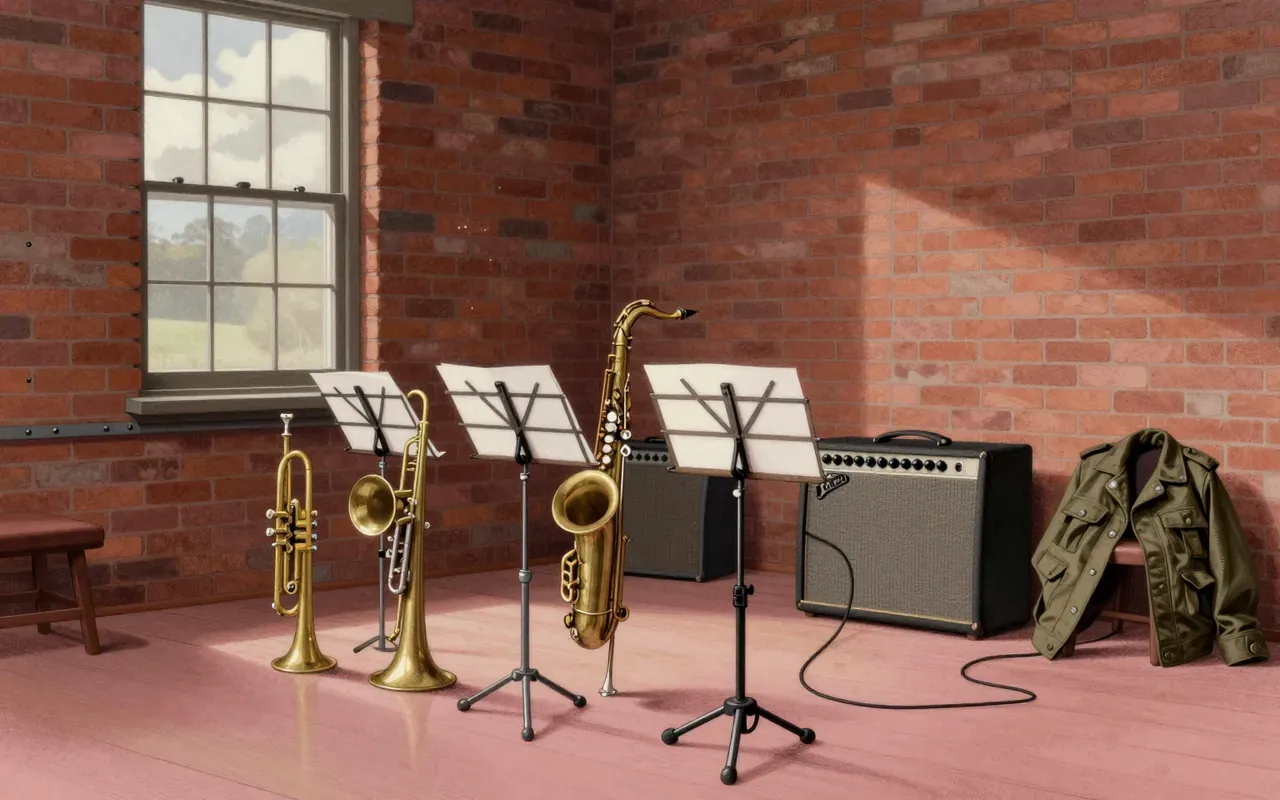
It sounds like a punk band reworking R&B in a London studio with horns, harmonica, and backing choirs. The production uses Wessex Studios’ room, then adds brass arrangements by Graham Preskett and engineering by Bill Price and Mark Dearnley. Algy Ward’s bass lines anchor the groove. The horn section is present on all released tracks except possibly the unreleased ‘Champagne Misery’.

What lands

‘Know Your Product’ lands: tight, sneering, bass-forward, with a staccato horn stab that cuts like a blade. ‘Memories Are Made of This’ lands as deliberate camp—a cover reframed through punk’s deadpan lens, not reverence. ‘This Perfect Day’ lands for its hollow, metronomic drive and Iain Ward’s harmonica breathing through the cracks.

What does not

It does not sustain the velocity of (I’m) Stranded. Tempos slacken. The horn section does not integrate seamlessly—it sits atop the rhythm section rather than locking in. The International Robot Choir feels decorative, not dialectical.

The ideas inside it

The record explores dislocation—between Australia and London, between punk’s rawness and R&B’s polish, between product and person. Lyrics treat consumerism (‘Know Your Product’), alienation (‘(I’m) Misunderstood’), and national identity (‘Orstralia’) with dry irony and clipped phrasing.

Who should hear it, and who should not

People who hear ‘punk’ as a set of choices—not a uniform—should hear it. People who expect consistency of tone or ideology should not. It is not for those who require authenticity to mean austerity.

Is it worth your time

Yes—if you want to hear punk’s first deliberate pivot into soulful arrangement without abandoning its urgency. It rewards attention to how space, brass, and rhythm interact—not as nostalgia, but as a working blueprint.
Same genre · Punk & post-punk4 of 91
9:34
Germfree AdolescentsX‐Ray Spex · 1978Germfree Adolescents is X-Ray Spex’s 1978 debut album. All twelve tracks were written by Poly Styrene. Five had previously appeared on singles’ A-sides or B-sides. The core band was Poly Styrene (vocals), Jak Airport (guitar), Paul Dean (bass), Rudi Thomson (saxophone), and B.P. Hurding (drums). Rudi Thomson played saxophone on the album.
11:57
White Light/White HeatThe Velvet Underground · 1968White Light/White Heat is a record built on overload: Vox gear, distortion pedals, leakage, compression, and refusal to adapt to studio limits. It lands as noise, narrative, and nihilist energy—and fails anywhere it tries to breathe, resolve, or clarify. It is foundational not because it is 'great', but because it treats limitation as licence.
10:53
Rocket to RussiaRamones · 1977Rocket to Russia is the Ramones’ third studio album, recorded in August 1977 at Mediasound Studios in a former Episcopalian church in Midtown Manhattan. With a budget of $25,000–$30,000—most spent on production—the band prioritised speed, using first takes almost exclusively. Ed Stasium engineered and mixed most of it; Tony Bongiovi’s involvement was limited to final mastering at Power Station. The album reached No. 49 on the Billboard 200, yielded the band’s highest-charting single (‘Rockaway Beach’ at No. 66), and was hailed by Rolling Stone’s Dave Marsh as ‘the best American rock & roll of the year’. Its sound is tighter, brighter, and more pop-oriented than earlier releases, integrating surf and bubblegum influences while retaining the band’s signature velocity and brevity.
2:07
Rattus NorvegicusThe Stranglers · 1977Rattus Norvegicus is the Stranglers' 1977 debut, despite the deliberately confusing Stranglers IV designation. Martin Rushent produced it in a week from the band's existing live repertoire. That background helps explain why an early album can already contain several kinds of arrangement.
Up next in Music

Faust IV

Faust · 1973 · 8:56

Faust IV is not a krautrock classic — it’s the sound of a band burning its own map.

8:56