musicbriefs
Saved
Topic

Absurdism

Living with the gap between wanting sense and finding none.

25
in music
10:15
average
256 min
in total
137
across the network
Absurdism across the network →
All briefs25
11:14

Air Lore

Air · 1979

Air Lore is a 1979 album by the improvisational trio Air — Henry Threadgill (alto and tenor saxophones, flute), Fred Hopkins (double bass), and Steve McCall (drums, percussion) — performing radical reinterpretations of compositions by Scott Joplin and Jelly Roll Morton. Critics acclaim it as Air's most beloved and most remarkable work. It rejects academicism and repertory dogma in favour of ambiguity, absurdity, and avant-garde vaudeville energy. It is widely loved for its joy and irreverence, and for bringing early jazz compositions into focus as revolutionary improvisational templates rather than updating them. It is considered the essential Air album and an unsurpassed statement of historical homage to Scott Joplin rags and Jelly Roll Morton tunes from the perspective of the frontiers. Gary Giddins considers it Threadgill's key statement against repertory mania and academicism in jazz. DownBeat awarded it 5 stars, describing it as 'jazz of the absurd' — an avant-garde vaudeville infused with wackiness, where old and new coexist and emotional boundaries blur, resulting in an oddball masterpiece. The title 'Air Lore' evokes Earth's atmospheric layer of mixed gas retained by gravity, serving as a protective buffer and composed precisely of nitrogen, oxygen, argon, carbon dioxide, and trace gases.
9:56

Arepa 3000: A Venezuelan Journey Into Space

Los Amigos Invisibles · 2000

Los Amigos Invisibles’ Arepa 3000: A Venezuelan Journey Into Space is a 2000 studio album produced by Philip Steir. It won a Latin Grammy for Best Rock Album and received a Grammy nomination for Best Latin Alternative Album. Its sound is tightly arranged, groove-first, and sonically frictionless — built for repeat listening and film placement, not deep excavation.

11:32

Country Life

Roxy Music · 1974

Country Life is Roxy Music’s fourth studio album, released on 15 November 1974. It entered the US Billboard 200 Top 40 at No. 37. Rolling Stone described it as 'a cabaret for psychotics'. Its sound features Eddie Jobson’s flanged violin, German oom-pah band passages, Elizabethan textures, and boogie-blues edges. The title and cover parody the British magazine Country Life. The original cover caused US retailers to wrap the album in opaque plastic. An alternative forest-only cover was later issued.

9:21

Dear Science

TV on the Radio · 2008

Dear Science is TV on the Radio’s third studio album, recorded in 2008 at Stay Gold studio in Brooklyn. It is described as indie rock, art rock, funk, soul, and post-punk. Its title originated from a studio note by Dave Sitek: 'Dear Science, please start solving problems and curing diseases or shut the fuck up.' It was released on September 23, 2008.

9:10

Eternally Yours

The Saints · 1978

Eternally Yours is The Saints’ 1978 second album, produced by Chris Bailey and Ed Kuepper, featuring an R&B-influenced sound with horn arrangements and new bassist Algy Ward. Recorded at Wessex Studios under the original title International Robots, the sessions yielded stripped-down versions later issued as bonus tracks. Bailey regarded it as the band’s first proper release—distinct from the demo character of their debut—though its horn-heavy approach reportedly alienated some listeners at the time. Retrospective assessments have elevated it as a punk classic, praised for consistency, variety, and influence, with endorsements from major musicians including Kurt Cobain and Mark Lanegan.

8:56

Faust IV

Faust · 1973

Faust IV is the sound of a band choosing collapse over compromise.

9:17

Hello Nasty

Beastie Boys · 1998

Hello Nasty is a studio-dug experiment — reclusive, unplanned, genre-fluid. It uses 808s, disco breaks, analogue synths, and samples to build a freer, looser Beastie Boys record than before. Mix Master Mike reshapes the group’s sound. Guest vocals from Miho Hatori and Lee 'Scratch' Perry add distinct textures. Its sprawl works in moments — ‘Intergalactic’, ‘Body Movin’’, ‘Dr. Lee, PhD’, ‘Three MC’s and One DJ’ — but not across all 22 tracks.

9:42

Kimono My House

Sparks · 1974

Kimono My House is a precise, high-wire pop record. It uses limited tools — Rickenbacker bass, Echoplex-delayed Electra-Piano, angular guitar — to build ten tightly wound songs. Its wit is structural, not lyrical. Its drama is in timing, not volume. It does not invite affection. It demands attention.

10:21

Live at the Witch Trials

The Fall · 1979

Live at the Witch Trials is The Fall’s debut studio album — recorded in one day, mixed the next, and built on refusal: of polish, of explanation, of compromise.

9:25

Millions Now Living Will Never Die

Tortoise · 1996

No verified claim about the record 'Millions Now Living Will Never Die' by Tortoise (1996) can be made from the provided material. All sources are either irrelevant (zoological) or insufficient (film placement without sonic description). The brief cannot describe the music, its makers, its methods, or its meaning — because the evidence contains none of it.

11:39

Ogdens’ Nut Gone Flake

Small Faces · 1968

Ogdens’ Nut Gone Flake is a 1968 Small Faces concept album — side one: six eclectic songs; side two: a narrated fairy tale about Happiness Stan. Recorded at Olympic and Trident Studios. Engineered by Glyn Johns. Features wah-wah Hammond organ, strings conducted by David McCallum Senior, and Stanley Unwin’s ‘Unwinese’ narration — developed from the band’s private language observed during sessions. Conceived on the Thames after a disastrous 1968 tour. Packaged in a circular tin mimicking an antique tobacco tin. Reached No. 1 in the UK for six weeks. Performed live in full only once — on BBC’s Colour Me Pop. A studio-bound zenith, both cohesive and unrepeatable.

8:22

Sheet Music

10cc · 1974

Sheet Music is 10cc’s second album, released in 1974. It was recorded at Strawberry Studios at night while Paul McCartney used the same space by day. The band used his drum kit. Every track was co-written by a different pair of the four members. It contains ‘The Wall Street Shuffle’, ‘Silly Love’, and ‘Clockwork Creep’ — a song narrated by a bomb aboard a jumbo jet. It reached No. 9 in the UK and stayed on the chart for six months. It was self-produced and engineered by Eric Stewart. Kevin Godley described the sessions as creatively uninhibited and open to anything.

11:38

De La Soul Is Dead

De La Soul · 1991

De La Soul Is Dead is a 1991 hip-hop album that rejects its predecessor's image through conceptual rupture, darker humour, and weighty themes—while holding onto playfulness in groove and skit. It is structured around format-specific sequencing, fictional radio framing, and a visual metaphor of death-as-metamorphosis. Its sound is defined by eclectic sampling and rhythmic experimentation—but no instrument, room, or technical detail beyond that is verified.

7:31

Doolittle

Pixies · 1989

Doolittle is a studio-constructed pivot: tighter, denser, more deliberate than Surfer Rosa. Its power lies in how it uses compression, layering, and tempo shifts—not in what it captures, but in what it chooses to build.

10:38

Mellow Gold

Beck · 1994

Mellow Gold is a lo-fi, genre-blending 1994 album recorded on a four-track in two LA homes. Beck performed most instruments and co-produced with Tom Rothrock, Rob Schnapf, and Carl Stephenson. Its sound is deliberately degraded, satirical, and texturally dense — built from home recordings, obscure samples, and sparse guest contributions. It launched Beck’s major-label career but resists cohesion, favouring collage over continuity. Its ideas orbit absurdism, sampling, and the myth of the corrupted artefact.

9:42

Q: Are We Not Men? A: We Are Devo!

DEVO · 1978

Q: Are We Not Men? A: We Are Devo! is a controlled demolition of rock vocabulary. It replaces swing with syncopated rigidity. It replaces vocal expression with monotone delivery. It replaces room sound with dead air. It establishes post-punk as architecture, not attitude. It falls short only where it tries to be funny — the jokes land flat because the music refuses to wink.

10:53

Rocket to Russia

Ramones · 1977

Rocket to Russia is the Ramones’ third studio album, recorded in August 1977 at Mediasound Studios in a former Episcopalian church in Midtown Manhattan. With a budget of $25,000–$30,000—most spent on production—the band prioritised speed, using first takes almost exclusively. Ed Stasium engineered and mixed most of it; Tony Bongiovi’s involvement was limited to final mastering at Power Station. The album reached No. 49 on the Billboard 200, yielded the band’s highest-charting single (‘Rockaway Beach’ at No. 66), and was hailed by Rolling Stone’s Dave Marsh as ‘the best American rock & roll of the year’. Its sound is tighter, brighter, and more pop-oriented than earlier releases, integrating surf and bubblegum influences while retaining the band’s signature velocity and brevity.

10:54

The Hangman’s Beautiful Daughter

The Incredible String Band · 1968

The Hangman’s Beautiful Daughter is a 1968 psychedelic folk album by The Incredible String Band, recorded in December 1967 at Sound Techniques in Chelsea, London. It uses multitrack recording to recreate live performance energy, layers exotic instruments including sitar, gimbri, shenai, oud, harpsichord, panpipes and kazoo, and features contributions from Licorice McKechnie (vocals, finger cymbals), Dolly Collins (flute organ, piano) and David Snell (harp). Robin Williamson contributes dreamlike, surreal songs such as 'The Minotaur’s Song', while Mike Heron’s 'A Very Cellular Song' — a 13-minute centrepiece — integrates the Bahamian spiritual 'I Bid You Goodnight'. Lyrically, it explores life, mythology and religious properties in a free musical structure, with esotericism as a consistent anchor. It departs from earlier work through layered production and expands on themes first developed on The 5000 Spirits or the Layers of the Onion.

10:16

The Lamb Lies Down on Broadway

Genesis · 1974

The Lamb Lies Down on Broadway is Genesis’s sixth studio album and final one with Peter Gabriel. It is a rock opera following Rael’s surreal journey in New York City. Gabriel insisted on sole conceptual and lyrical control, breaking the band’s collaborative tradition. His absences—due to work with William Friedkin and his wife’s difficult pregnancy—meant instrumental backing was built through jam sessions by the remaining members. Recording took place at Headley Grange and Glaspant Manor using Island Studios’ mobile facility: two 3M 24-track recorders, a Helios Electronics 30-input mixing console, Lockwood monitors, and two A62 Studer tape machines. Vocal experimentation occurred in unconventional spaces—a bathroom and a cowshed two miles away. The album departs from Genesis’s earlier pastoral English themes toward American imagery, experimental instrumentation, and tighter song forms. Brian Eno contributed vocal effects ('Enossification') on select tracks. Though initially met with mixed reviews, it has since been acclaimed as a landmark progressive rock work.

12:15

The Madcap Laughs

Syd Barrett · 1970

The Madcap Laughs is not a relic. It is a document of real-time collapse and recalibration — made in Studio 3 at EMI, with acoustic guitar, dry room, and no safety net.

11:57

White Light/White Heat

The Velvet Underground · 1968

White Light/White Heat is a record built on overload: Vox gear, distortion pedals, leakage, compression, and refusal to adapt to studio limits. It lands as noise, narrative, and nihilist energy—and fails anywhere it tries to breathe, resolve, or clarify. It is foundational not because it is 'great', but because it treats limitation as licence.

10:40

Wowee Zowee

Pavement · 1995

Wowee Zowee is Pavement’s third studio album, recorded in eleven spontaneous days at Easley Recording in Memphis — a studio familiar to some members from prior work with Silver Jews — with all five band members present for the first time. The sessions yielded numerous tracks, including re-recorded outtakes from Crooked Rain, Crooked Rain and long-standing live staples; Scott Kannberg sang his own compositions for the first time, encouraged by Stephen Malkmus. The band prioritised looseness and sprawl over cohesion, per Malkmus’ directive that 'the less it fits together, the better,' and immersed themselves in Memphis’ laid-back culture between takes. Final mixing and overdubbing occurred at Random Falls in Manhattan in February 1995. The album showcases experimental, eclectic songwriting — ranging from acoustic ballads to noise rock and punk — with lyrics oscillating between cryptic, humorous, and deliberately nonsensical, and marks Pavement’s longest studio release at nearly one hour, sequenced entirely by Malkmus across three vinyl sides (with side four left blank).

9:52

Os Mutantes

Os Mutantes · 1968

Os Mutantes’ 1968 debut is a studio-built act of translation: Brazilian song forms, international pop, political critique, and musique concrète fused by Rogério Duprat’s arrangements and the trio’s instrumental resourcefulness. It is not seamless. It is not polished. It is specific, inventive, and sonically legible — right down to the hiss of bug spray.

11:17

Petrushka

Igor Stravinsky · 2018

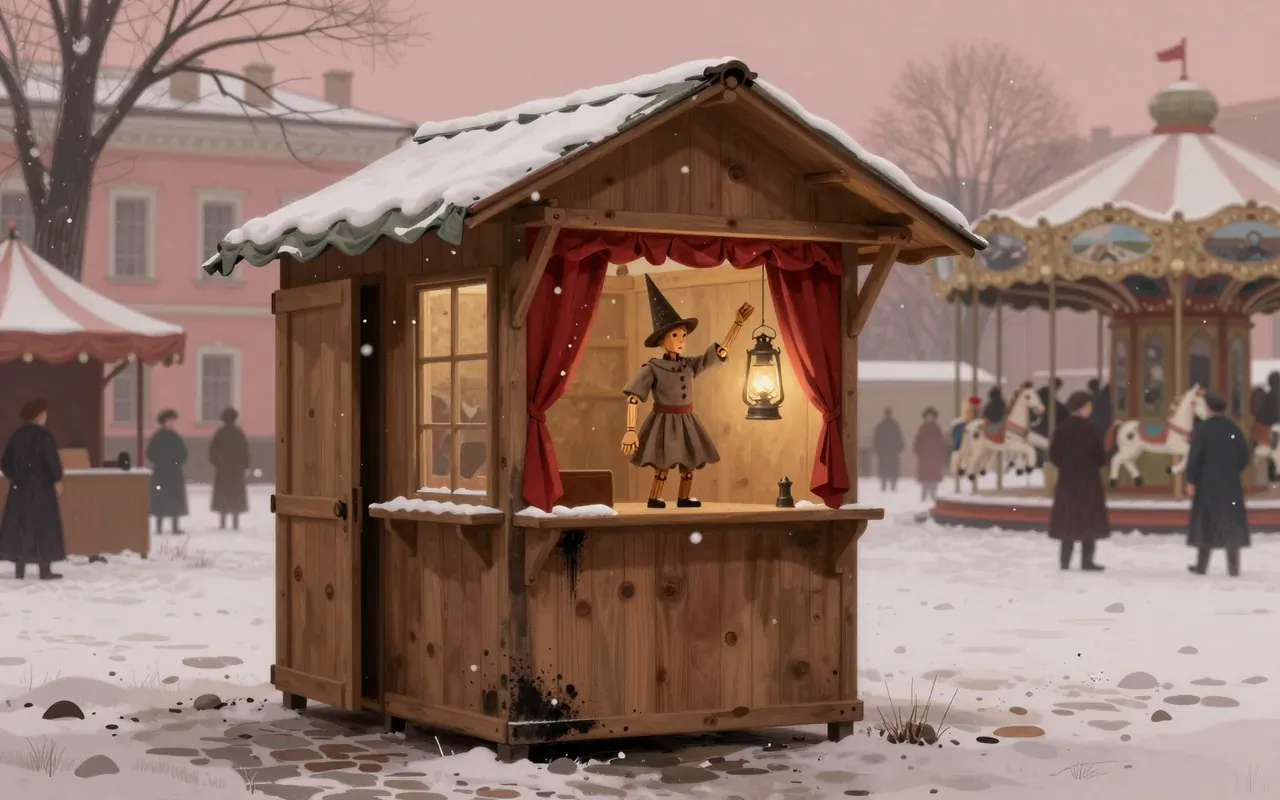
This is a 2018 recording of Stravinsky’s 1911 ballet Petrushka — a work rooted in Russian puppet tradition, set during Maslenitsa in 1830 Saint Petersburg, and built from folk tunes, Lanner waltzes, a French music hall melody, and Rimsky-Korsakov. Its defining feature is the 'Petrushka chord', an early use of bitonality. The record also includes Concertino, Agon, and Scherzo à La Russe — but the sources say nothing about how this 2018 version interprets them.

9:53

Purple Haze

Cam’ron · 2004

Purple Haze is Cam’ron’s fourth studio album, released December 7, 2004, via Diplomat Records and Roc-A-Fella Records, distributed by The Island Def Jam Music Group. It features bombastic production and surreal lyricism, with Cam’ron delivering a unique brand of idiosyncratic gangsta rap through an absurd, poker-faced delivery. The production shifts between aggressively insane and pop-oriented, and Cam’ron matches it with wordplay described as 'Missy gibberish swathed in 50 Cent menace', writing pop hooks and avant-garde rhymes while staying street-rooted. Cam’ron tightened his signature flow, chose quality and risk-worthy beats, and delivered Harlem symbolism and non-sensical muttering throughout the album. Kanye West produced 'Down and Out', Pop & Versatile produced 'Soap Opera', and the Heatmakerz produced 'More Gangsta Music'. 'More Gangsta Music' samples 'Woman I Need You' by Sizzla. 'Get Down' samples 'Life's Opera' by Marvin Gaye. 'Girls' and 'Harlem Streets' are weak inclusions. The album features collaborations with Kanye West, Jaheim, Twista, Juelz Santana, and various other artists. It reached gold status and was critically acclaimed, appearing on two major decade-end lists.