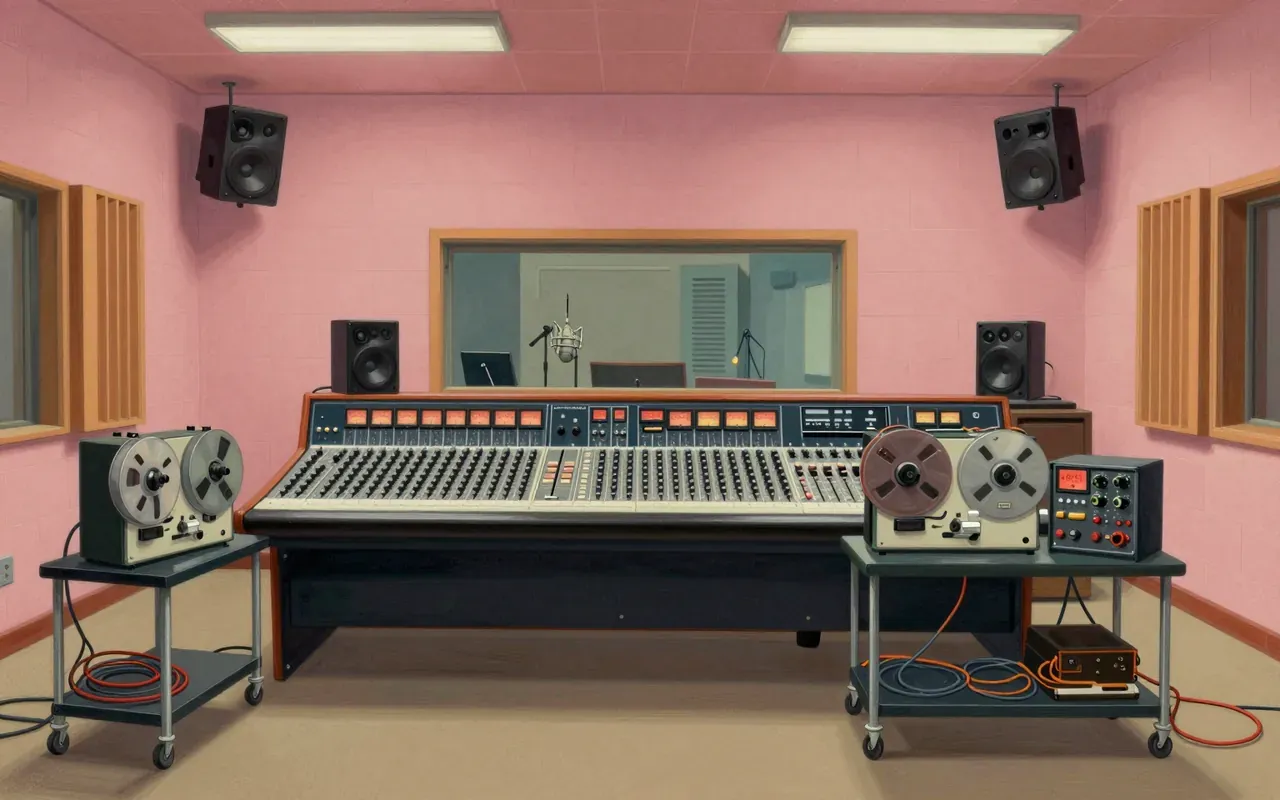
Face to Face is The Kinks’ fourth studio album, released on 28 October 1966. It marks a stylistic departure from beat music toward baroque pop and music hall. It is their first album of entirely original material and has been regarded as one of rock’s earliest concept albums — unified by Ray Davies’ observational and satirical songwriting about English culture, class, and the music industry. Recording occurred after Davies’ nervous breakdown and amid personnel instability. Nicky Hopkins contributed piano and harpsichord. The album reached
Film placements are the ones described in each film's own entry, so the list is partial rather than complete.
Worth your time?
Yes. Hear the whole thing.
4.5/ 5
What works
‘Sunny Afternoon’ lands as the UK No. 1 hit that preceded the album and set its tone.
‘Dandy’ lands with dry, music-hall inflection.
The album lands at
What does not
It does not sustain its conceptual ambition across all tracks.
It does not land in the US: it peaked at #135 there, despite Billboard’s chart-winner prediction.
Hear it if
People who want English pop with narrative precision and baroque texture should hear it.
People seeking psychedelic sprawl, American garage energy, or polished studio sheen should not.
Skip it if
People seeking psychedelic sprawl, American garage energy, or polished studio sheen should not.
Who should hear it, and who should skipHide who it is for
The written brief1 min read
What the record is and where it came from
Face to Face is The Kinks’ fourth studio album, released on 28 October 1966. It follows Ray Davies’ nervous breakdown and marks their first album of entirely original material.
How it sounds, and how it was made
The album shifts from beat music to baroque pop and music hall. Nicky Hopkins plays piano and harpsichord. Ray Davies’ songwriting is musically gentle but lyrically cutting. Bridging sound effects were partially retained, reflecting constrained conceptual ambitions.
What lands
‘Sunny Afternoon’ lands as the UK No. 1 hit that preceded the album and set its tone. ‘Dandy’ lands with dry, music-hall inflection. The album lands at #8 in the UK upon release in October 1966.
What does not
It does not sustain its conceptual ambition across all tracks. The bridging sound effects were only partially retained. It does not land in the US: it peaked at #135 there, despite Billboard’s chart-winner prediction.
The ideas inside it
It observes English culture, class, and the music industry through character-driven narrative songs. The loose unifying theme is social observation — not story or setting, but attitude and irony.
Who should hear it, and who should not
People who want English pop with narrative precision and baroque texture should hear it. People seeking psychedelic sprawl, American garage energy, or polished studio sheen should not.
Is it worth your time
Yes. It is the first Kinks album of entirely original material and a pivotal pivot into English social observation — compact, coherent, and sonically distinct within their 1966–71 golden age.