Saved
Prog & art rock · Pop

Hounds of Love

A vinyl-era concept album that treats the record format as architecture — not nostalgia.

Worth your time?4.5/5Yes.Hear the whole thing.What works, what does not, who it is for ↓
10:55in productionCh. 1 · Home-recorded, studio-protected/ 10:55 · ceiling 15 min
4 chapters · 10:55Ceiling 15:00

The brief is written and checked. The video joins this page when it is cut.4 chapters · 2 min read · 10:55 planned

Read the brief

Hounds of Love is a structurally intentional, sonically sourced, format-aware record — not a mood piece, not a retrospective, not a ‘masterpiece’ by default.

Chapters & takeaways4
  1. 1:24
    Home-recorded, studio-protected

    She built her own studio to protect the atmosphere of early demos — then transferred them to 24-track to build the final album.

  2. 2:48
    Dual architecture

    Two sides: five pop songs on side one, seven interwoven tracks on side two — designed for vinyl and cassette, not CD or stream.

  3. 4:54
    Quotation as composition

    Fairlight textures, Irish instruments, sea shanties, Georgian chorales, and a 1957 horror film sample — all treated as raw material, not decoration.

  4. 6:30
    One year, one suite

    Recorded in Ireland in spring 1984, mixed over a year, finished in June 1985 — a deliberate, unhurried process.

1 more chapterFewer chapters
Running order12
  1. 01
    Running Up That Hill5:00

    Heard in The Circle (2015)Rendezvous (2019)

  2. 02
    Hounds of Love3:03

    Heard in Night of the Demon (1957)Castaway (1986)Hounds of Love (2016)

  3. 03
    The Big Sky4:41

    Heard in Hail, Caesar!

  4. 04
    Mother Stands for Comfort3:08
  5. 05
    Cloudbusting5:10
  6. 06
    And Dream of Sheep2:46
  7. 07
    Under Ice2:22
  8. 08
    Waking the Witch4:19
  9. 09
    Watching You Without Me4:07
  10. 10
    Jig of Life4:04
  11. 11
    Hello Earth6:13
  12. 12
    The Morning Fog2:35

Film placements are the ones described in each film's own entry, so the list is partial rather than complete.

Worth your time?

Yes. Hear the whole thing.

4.5/ 5
What works
  • side one’s pop precision
  • side two’s immersive logic
  • the Fairlight’s textural role
  • the vinyl-first sequencing
What does not
  • sample-based irony
  • studio polish
  • American influence
  • linear storytelling
Hear it if
  • people who listen to records as designed objects
  • people who care how silence is used
  • people who accept dual architecture as functional
Skip it if
  • people who need consistent tempos
  • people who treat albums as playlists
  • people who require exposition over immersion
Who should hear it, and who should skipHide who it is for
The written brief2 min read

What the record is and where it came from

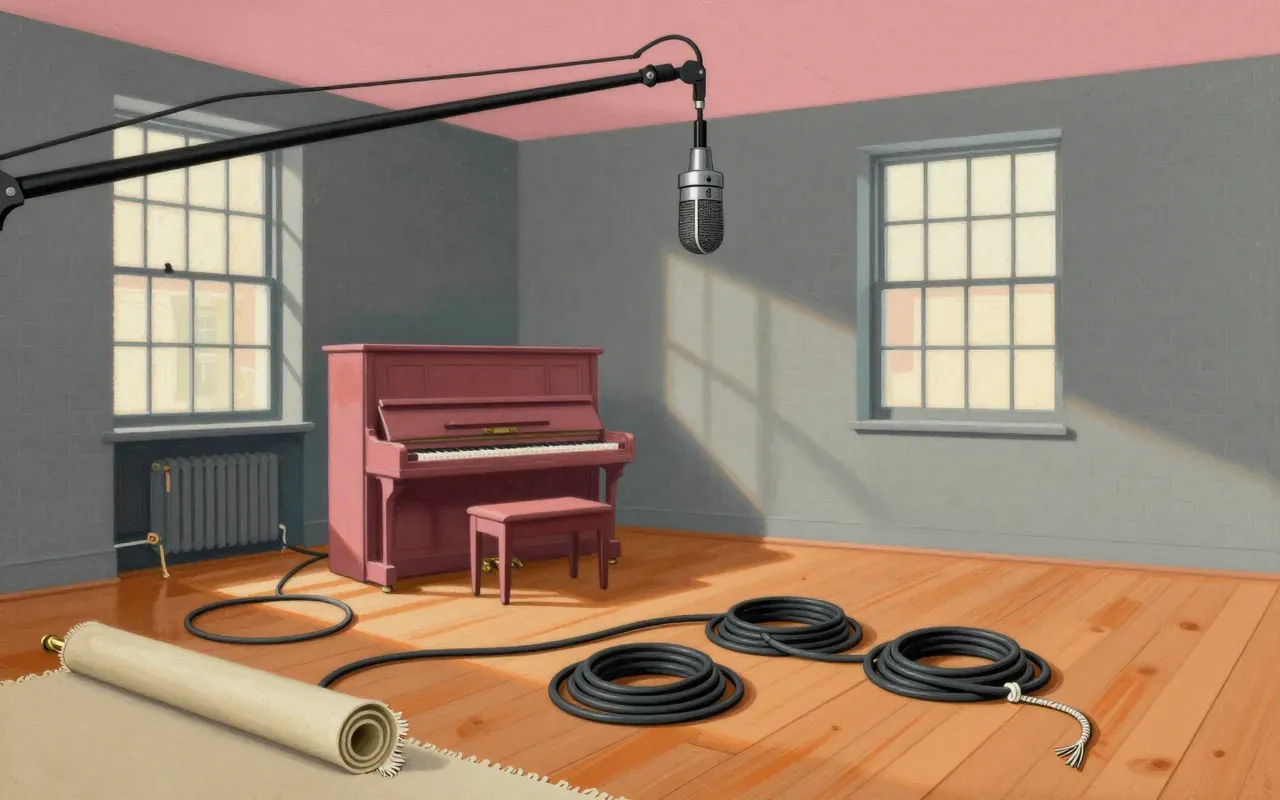
It is Kate Bush’s fifth studio album, recorded between late 1983 and June 1985. She built a private studio near her home to avoid expensive external studio time. Sessions included Ireland in spring 1984, then a year of overdubbing and mixing. It was released in 1985.

How it sounds, and how it was made

It sounds like home demos preserved on 8-track, then transferred to 24-track tape in November 1983 to keep their atmosphere. It uses the Fairlight CMI, piano, traditional Irish instruments, and layered vocals. The title track opens with a film sample: Maurice Denham’s line from Night of the Demon (1957). ‘Waking the Witch’ quotes the chorus of the sea shanty ‘Blood Red Roses’. ‘Hello Earth’ features a chorale from the Georgian folk song ‘Tsintskaro’, performed by the Richard Hickox Singers.

What lands

Side one lands with immediate, precise pop craft: ‘Running Up That Hill’ uses synth textures and vocal layering to dramatise emotional exchange as negotiation. Side two lands as immersive sound design — underwater reverb, abrupt silences, fragmented voices — building dread and transcendence without exposition.

What does not

It does not flatten its sources into pastiche. There is no American influence. No studio polish erases the intimacy of the home recordings. No track on side two stands alone — it functions only as part of the suite.

The ideas inside it

It explores female experience through two linked frameworks: side one treats love and power as pop-scale psychological events; side two constructs a drowning dream sequence — ‘The Ninth Wave’ — drawing on Tennyson’s ‘Idylls of the King’ and structured for vinyl and cassette playback.

Who should hear it, and who should not

People who listen to records as designed objects — not playlists. People who care how silence is used, how a sample changes meaning when isolated, how a suite builds logic across seven tracks. Not people who need linear narratives or consistent tempos.

Is it worth your time

Yes. It rewards focused listening with structural intention, sonic texture, and narrative cohesion — but only if you accept its dual architecture as functional, not decorative.
Same genre · Prog & art rock4 of 76
9:34
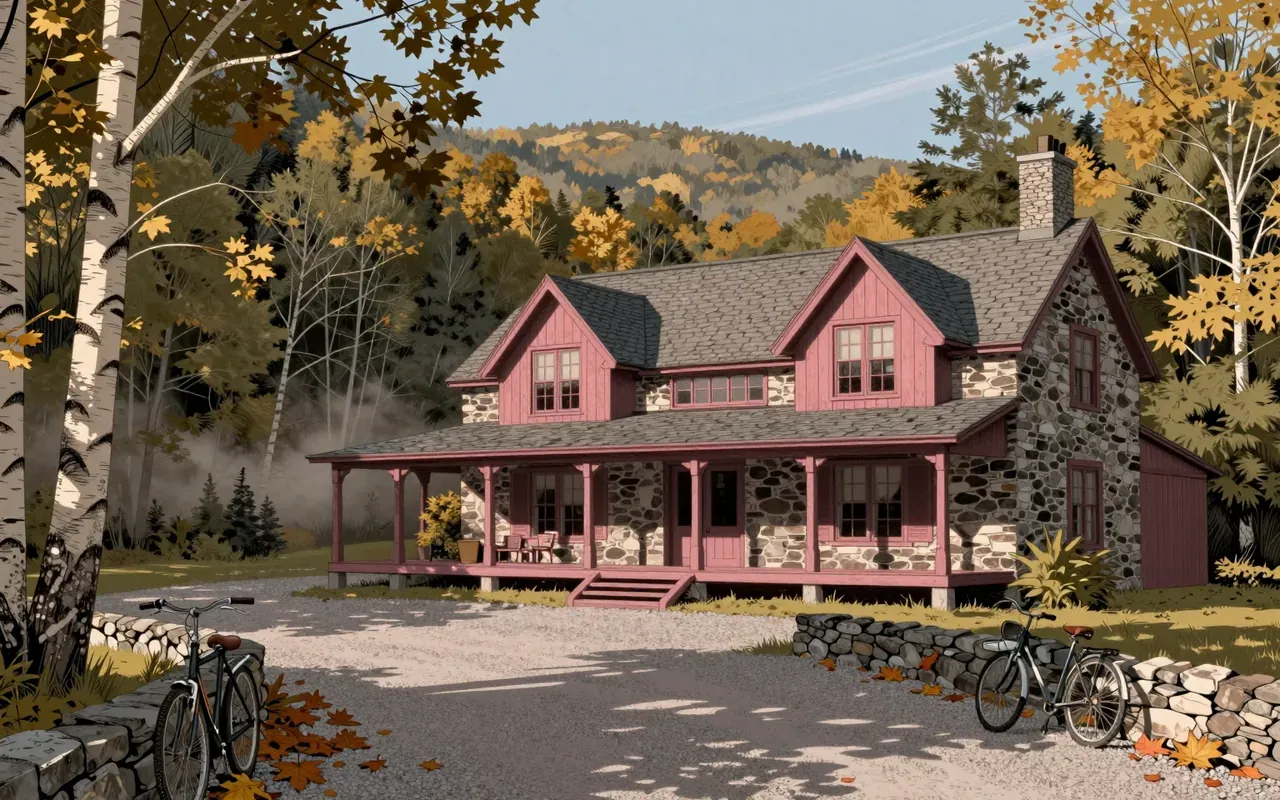
VeckatimestGrizzly Bear · 2009Veckatimest is Grizzly Bear’s third studio album, recorded in summer 2008 at Allaire Studios in the Catskill Mountains, produced by Chris Taylor, and distinguished by a new collaborative writing process, tape-based recording with rich sonic detail, contributions from Nico Muhly and additional musicians including the Brooklyn Youth Choir and Acme String Quartet, and instrumental roles including omnichord and string arrangements by band members. The album’s title references Veckatimest Island in Massachusetts, tied to Ed Droste’s family connection to the region. An unmastered version leaked before release, compromising audio fidelity despite the band’s meticulous production efforts. The artwork was created by William O'Brien and selected by Droste, who had known the artist since high school. The album received widespread critical acclaim and appeared in multiple year-end lists, while several tracks were later used in films Jack Goes Boating and Blue Valentine. It was released on May 26, 2009, by Warp Records, debuted at
10:58
AqualungJethro Tull · 1971Aqualung is Jethro Tull’s fourth studio album, recorded mostly in December 1970 at Island Records’ newly opened Basing Street Studios in London. It marks the debut of Jeffrey Hammond on bass and John Evan as a full-time keyboardist, and Clive Bunker’s final appearance with the band. Technical difficulties at the new studio—including cold, echoey acoustics—shaped the record’s raw, textural sound. Two tracks were laid down earlier in 1970 at Morgan Studios with Glenn Cornick on bass; he was fired after the last 1970 US tour and replaced by Hammond. The album rejects the 'concept album' label despite recurring themes of homelessness, religion, and alienation. Its sonic identity rests on Ian Anderson’s flute, Martin Barre’s electric guitar, and John Evan’s Mellotron—recorded in a room that refused to behave.
11:32
Country LifeRoxy Music · 1974Country Life is Roxy Music’s fourth studio album, released on 15 November 1974. It entered the US Billboard 200 Top 40 at No. 37. Rolling Stone described it as 'a cabaret for psychotics'. Its sound features Eddie Jobson’s flanged violin, German oom-pah band passages, Elizabethan textures, and boogie-blues edges. The title and cover parody the British magazine Country Life. The original cover caused US retailers to wrap the album in opaque plastic. An alternative forest-only cover was later issued.
11:06
The Who Sell OutThe Who · 1967The Who Sell Out is a 1967 concept album by The Who that parodies pirate radio, which had recently been outlawed in the UK. It features humorous jingles, mock commercials (including ads for canned milkshakes and the American Cancer Society), the mini rock opera 'Rael', and the single 'I Can See For Miles'. The band framed the project as an extension of their pop art identity, asserting that advertising was an artform and declaring, 'We don't change offstage. We live pop art.'
Up next in Music

Houses of the Holy

Led Zeppelin · 1973 · 10:39

A studio-made pivot—clean, calculated, and genre-agnostic—where every instrument serves the arrangement, not the myth.

10:39