musicbriefs
9:57in productionCh. 1 · How It’s Built/ 9:57 · ceiling 15 min
Ambient & experimental · Classical

In C

A piano string snaps — and the whole piece keeps going.

Terry Riley’s 1968 recording of In C is a landmark of process-based composition. Its sound is defined by collective repetition, room acoustics, and the physical limits of piano strings and vinyl grooves. It does not seek expression — it sets conditions and listens.

Chapters & takeaways4
  1. 1:03
    How It’s Built

    Fifty-three one-bar modules in C, a piano pulse, and loose rules for interlocking — that’s the score.

  2. 2:49
    How It Was Cut

    Recorded over two days at CBS 30th Street Studio, paced by cue cards to fit LP sides.

  3. 4:08
    Where It Gives

    A broken piano string during the pulse part proves this is music made by bodies in real time.

  4. 6:02
    Who Made It Real

    Buffalo players, not New York insiders. First performers included Reich, Gibson, Oliveros, Subotnick.

Running order2
  1. 01
    In C23:50

    Heard in Amadeus (1984)The Pianist (2002)

  2. 02
    In C19:10

    Heard in Amadeus (1984)The Pianist (2002)

Film placements are the ones described in each film's own entry, so the list is partial rather than complete.

Worth your time?

Yes. Hear the whole thing.

4.5/ 5
What works
  • pulse lands — insistent, physical, slightly strained
  • layering lands — flutes and clarinets weaving through piano and strings, never locking but never clashing
  • duration lands — two sides, 23:50 and 19:10, paced to vinyl’s limits
What does not
  • build to a climax
  • vary key or tempo
  • feature solos or narrative progression
  • use electronics or studio effects beyond room ambience
Hear it if
  • people who listen to sound as architecture
  • people who need melody, harmony, or story
Skip it if
  • people who need melody, harmony, or story
The written brief2 min read

What the record is and where it came from

It is Terry Riley’s 1968 Columbia Records recording of his 1964 composition In C. It was recorded at CBS 30th Street Studio in Manhattan over two days, shortly after a Carnegie Hall performance on March 26, 1968. The players were mostly Buffalo-based musicians who admired the work.

How it sounds, and how it was made

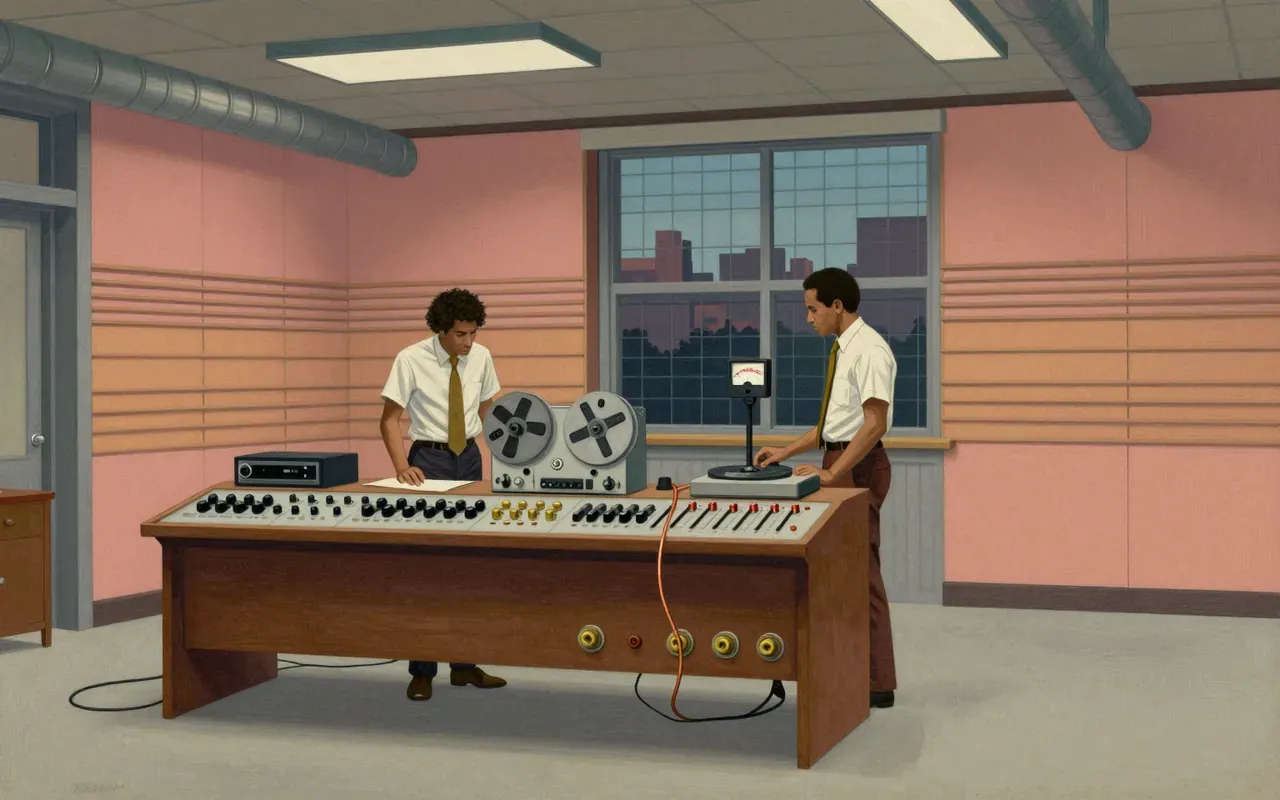
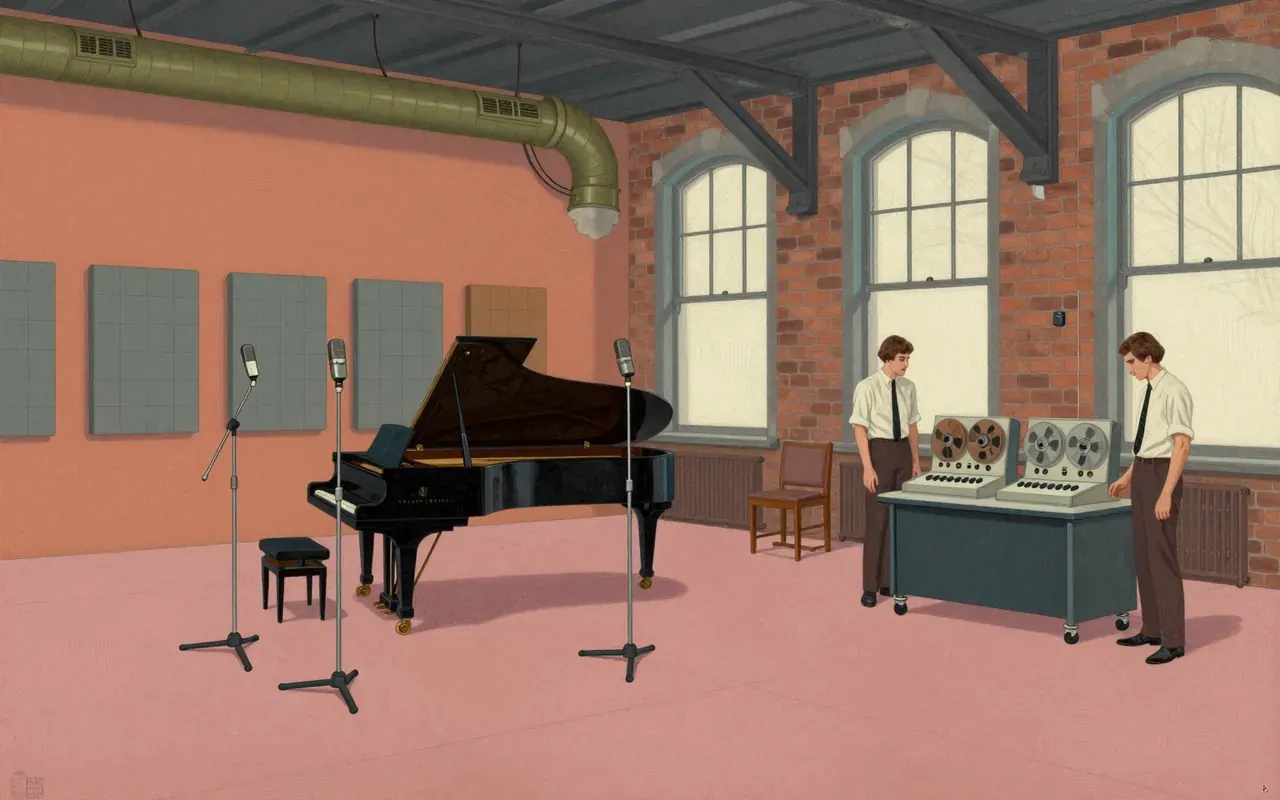
It sounds like a room full of instruments — piano, woodwinds, strings, percussion — all playing short, repeating phrases in C, layered and drifting in and out of alignment. The pulse is a steady piano C, hammered until a string breaks. The recording was made over two days at CBS 30th Street Studio in Manhattan. Fred Plaut and Russ Payne engineered it. David Behrman conducted using cue cards to pace the ensemble so the piece would fit on both sides of an LP. Margaret Hassell played the pulse part.

What lands

The pulse lands — insistent, physical, slightly strained. The layering lands — flutes and clarinets weaving through piano and strings, never locking but never clashing. The duration lands — two sides, 23:50 and 19:10, paced to vinyl’s limits.

What does not

It does not build to a climax. It does not vary key or tempo. It does not feature solos, motifs, or narrative progression. It does not use electronics, tape manipulation, or studio effects beyond room ambience.

The ideas inside it

The piece treats musical time as elastic and communal. It replaces conductor authority with shared rules: 53 one-bar modules, all in C, performed in any order and number, with one player holding a pulse. Form emerges from overlap, not design.

Who should hear it, and who should not

People who listen to sound as architecture should hear it. People who need melody, harmony, or story should not.

Is it worth your time

Yes, if you want to hear how repetition, timing, and group listening reshape time. No, if you expect development, contrast, or resolution.
Same genre · Ambient & experimental4 of 29
Up next in Music

In Concert 1972

Ravi Shankar · 1973 · 8:56

Grief doesn’t shout here — it breathes between notes, measured in ragas and time of day.

8:56