musicbriefs
2:20in production/ 2:20 · ceiling 15 min
Jazz

The Jimmy Giuffre 3

Reeds, guitar and bass make a jazz trio with no drummer to lean on.

This 1957 album introduces the Jimmy Giuffre 3 with Jim Hall on guitar and Ralph Peña on bass. Giuffre plays clarinet, tenor saxophone and baritone saxophone. The trio's unusual distribution of instruments gives it an immediate point of distinction: there is no drummer.

Worth your time?

Yes. Hear the whole thing.

What works
    What does not
      Hear it if
      • Listeners interested in intimate jazz ensembles
      Skip it if
      • Listeners who want a prominent drum part
      The written brief2 min read

      What the record is and where it came from

      This 1957 album introduces the Jimmy Giuffre 3 with Jim Hall on guitar and Ralph Peña on bass. Giuffre plays clarinet, tenor saxophone and baritone saxophone. The trio’s unusual distribution of instruments gives it an immediate point of distinction: there is no drummer.

      How it sounds, and how it was made

      Time has to be carried within the interaction of reeds, guitar and bass. That makes the relationship between motion and accompaniment a useful focus. Hall can participate in the harmonic and rhythmic setting, Peña supplies another source of continuity, and Giuffre changes instrumental colour across his credited reeds.

      The small number of players also makes individual choices easier to notice. A part does not need to be the loudest or most elaborate to affect the whole group.

      What lands

      “The Train and the River” is the concise entry point; the longer “Crawdad Suite” offers more space within the same basic format. The programme also includes “The Song Is You” and “Crazy She Calls Me,” placing standards alongside Giuffre’s compositions. That balance lets the group’s identity meet both familiar and original material.

      What does not

      If a strongly articulated drum part is how you orient yourself in jazz, this trio may initially feel underfilled. The record rewards a change in listening priorities. Expecting the guitar and bass merely to substitute for missing percussion would make their responsibilities too narrow.

      The ideas inside it

      Leaving an instrument out can redistribute musical responsibility. The trio’s identity comes from what the three players can accomplish together with this particular selection of resources. Small scale becomes an expressive choice.

      Who should hear it, and who should not

      Hear it for guitar, bass and reeds in close interaction. It is an appealing prospect for listeners who want to hear more of each player’s contribution without a larger ensemble around them.

      Is it worth your time

      Yes. Begin with “The Train and the River,” then try “Crawdad Suite.” Listen for how the trio maintains movement through the instruments it has.
      Same genre · Jazz4 of 167
      9:53
      Jazz SambaStan Getz · 1962Jazz Samba is a 1962 bossa nova album by Stan Getz and Charlie Byrd, recorded at All Souls Unitarian Church in Washington, D.C., on February 13, 1962, and released by Verve in April. It features Getz on saxophone, Byrd on guitar, two bassists (Keter Betts and Joe Byrd), and two drummers (Buddy Deppenschmidt and Bill Reichenbach). Arrangements are by Byrd. Two tracks—'Desafinado' and 'Samba de Uma Nota Só'—are by Antônio Carlos Jobim and were released as singles. The album won Getz the 1963 Grammy for Best Jazz Performance and sold over one million copies. It was part of Getz’s effort to introduce bossa nova to the U.S. after Byrd’s 1961 State Department tour of Brazil.
      8:52
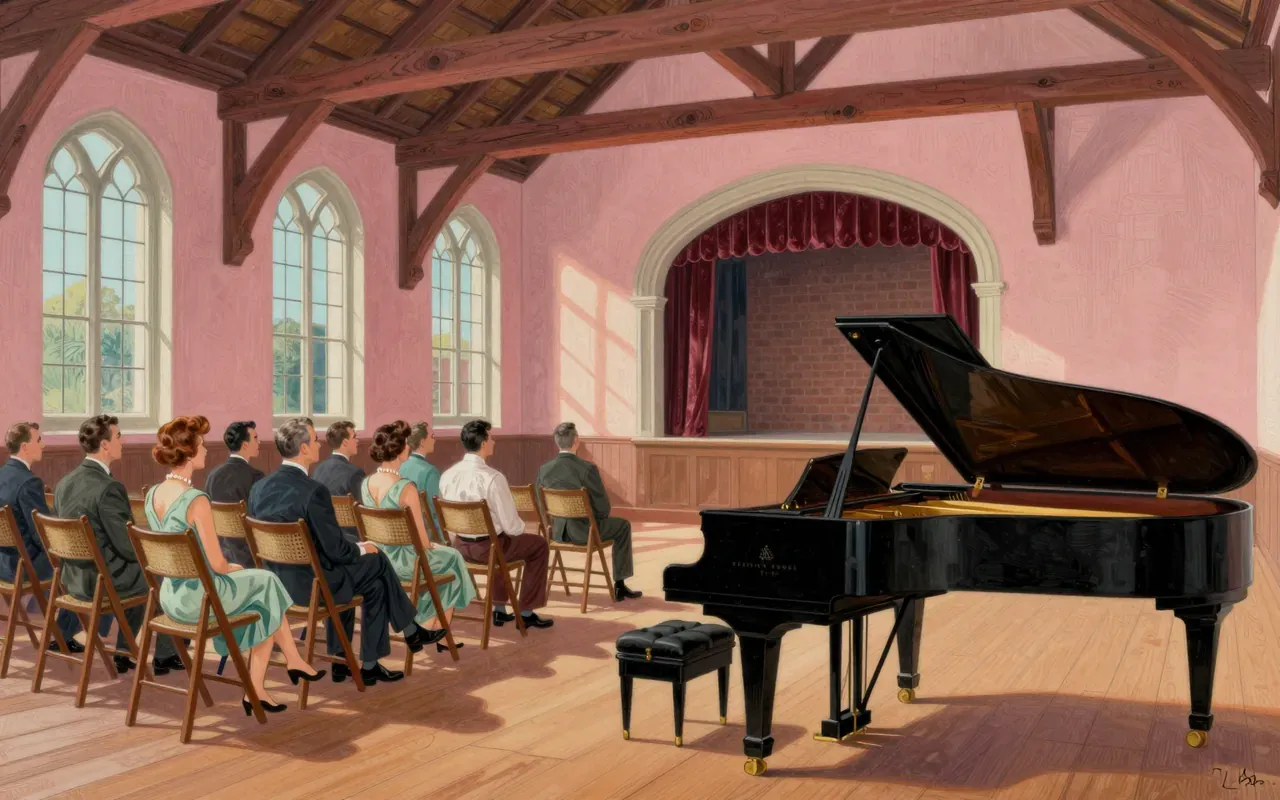
      Concert by the SeaErroll Garner · 1956Concert by the Sea is a 1955 live Erroll Garner Trio album recorded at Sunset School in Carmel-by-the-Sea. It features Eddie Calhoun on bass and Denzil Best on drums. The piano is out of tune. The bass and drums are receded. The acoustics are poor. The recording was made with primitive sound equipment. It was captured unofficially by Armed Forces Radio Network engineer Will Thornbury. Manager Martha Glaser discovered the tape backstage, edited it, and persuaded George Avakian to release it. Servicemen from Fort Ord were bused to attend. The concert took place in a gothic-revivalist assembly hall. It was a best-selling jazz album in its day. The decision to release it was easy for Avakian.
      13:00
      MoondanceVan Morrison · 1970Moondance is Van Morrison's third studio album, recorded at A&R Studios in New York in 1969 with Morrison producing for the first time in his career. Trading the loose, extended pieces of Astral Weeks for tighter songs built around a horn section, it became an immediate commercial and critical success and gave Morrison the sound he would be known for.
      10:06
      Standards, Vol. 1Keith Jarrett, Gary Peacock, Jack DeJohnette · 1983Standards, Vol. 1 is the first album by the Keith Jarrett–Gary Peacock–Jack DeJohnette trio. Recorded over 2½ days in January 1983 in a Manhattan studio. No rehearsal. No pre-planned repertoire. Produced by Manfred Eicher. A deliberate turn toward jazz standards in contrast to early-1980s conventions.
      Up next in Music

      Joan Baez

      Joan Baez · 1960 · 2:37

      Thirteen traditional songs, a young voice, and very little to hide behind.

      2:37