Saved
Jazz

My Favorite Things

A show tune turned into a modal machine — no swing, no resolution, just E minor, E major, and waltz time.

Worth your time?4.5/5Yes.Hear the whole thing.What works, what does not, who it is for ↓
11:06in productionCh. 1 · The Soprano Pivot/ 11:06 · ceiling 15 min
4 chapters · 11:06Ceiling 15:00

The brief is written and checked. The video joins this page when it is cut.4 chapters · 2 min read · 11:06 planned

Read the brief

My Favorite Things is a modal jazz landmark built on repetition, not progression. It uses the soprano saxophone not for nostalgia but for incision. It replaces harmonic motion with tonal stasis. It is precise, not indulgent. It is demanding, not welcoming.

Chapters & takeaways4
  1. 1:07
    The Soprano Pivot

    This is Coltrane’s first soprano saxophone album — an unconventional choice tied directly to his time with Miles Davis.

  2. 3:12
    The Quartet Locked In

    It is the first full document of Coltrane’s definitive quartet — Tyner, Davis, Jones — locked in by autumn 1960.

  3. 5:39
    E Minor, Not G Major

    The title track abandons the original’s G major resolution for vamps on E minor and E major — modal, not melodic.

  4. 7:32
    His Favourite Piece

    Coltrane called this his favourite recorded piece — not a claim about legacy, but about control, repetition, and space.

1 more chapterFewer chapters
Running order4
  1. 01
  2. 02
    Every Time We Say Goodbye5:43

    Heard in Let's Get Lost (1988)Prelude to a Kiss (1992)A Hologram for the King (2016)

  3. 03
  4. 04
    But Not for Me9:35

    Heard in Girl Crazy (1932)Girl Crazy (1943)

Film placements are the ones described in each film's own entry, so the list is partial rather than complete.

Worth your time?

Yes. Hear the whole thing.

4.5/ 5
What works
  • the title track’s vamp-based architecture
  • Tyner’s left-hand anchoring
  • Jones’ unbroken waltz pulse
  • the soprano’s unvarnished timbre
What does not
  • swing in conventional time
  • follow original chord changes
  • feature Coltrane compositions
  • use soprano for lyricism
Hear it if
  • listeners who value rhythmic and tonal repetition as structure
  • people studying how jazz moved beyond functional harmony
Skip it if
  • those needing clear melodic development
  • listeners who rely on harmonic surprise
Who should hear it, and who should skipHide who it is for
The written brief2 min read

What the record is and where it came from

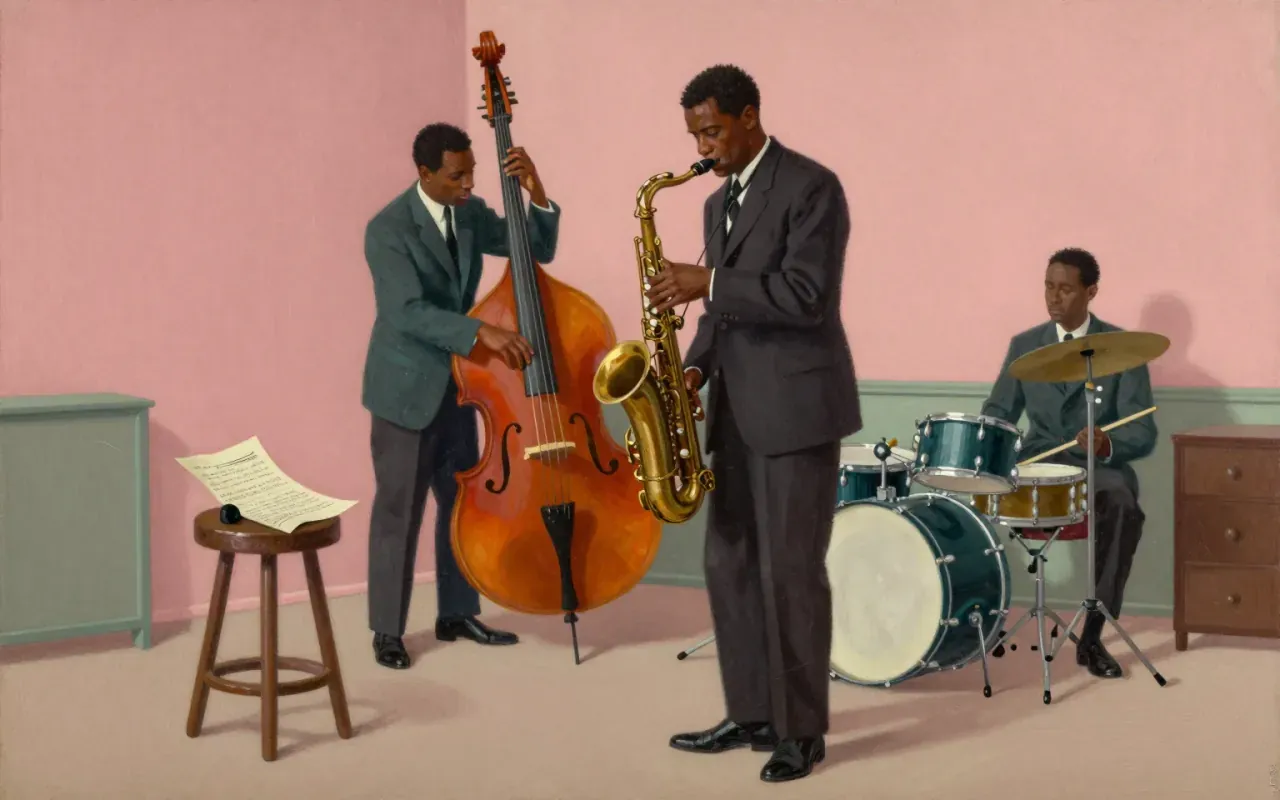
My Favorite Things is John Coltrane’s 1961 debut album on soprano saxophone and the first recording by his permanent quartet — McCoy Tyner, Steve Davis, Elvin Jones — assembled after leaving Miles Davis’ band and solidified by autumn 1960. It was recorded at Atlantic Studios the week before Halloween 1960.

How it sounds, and how it was made

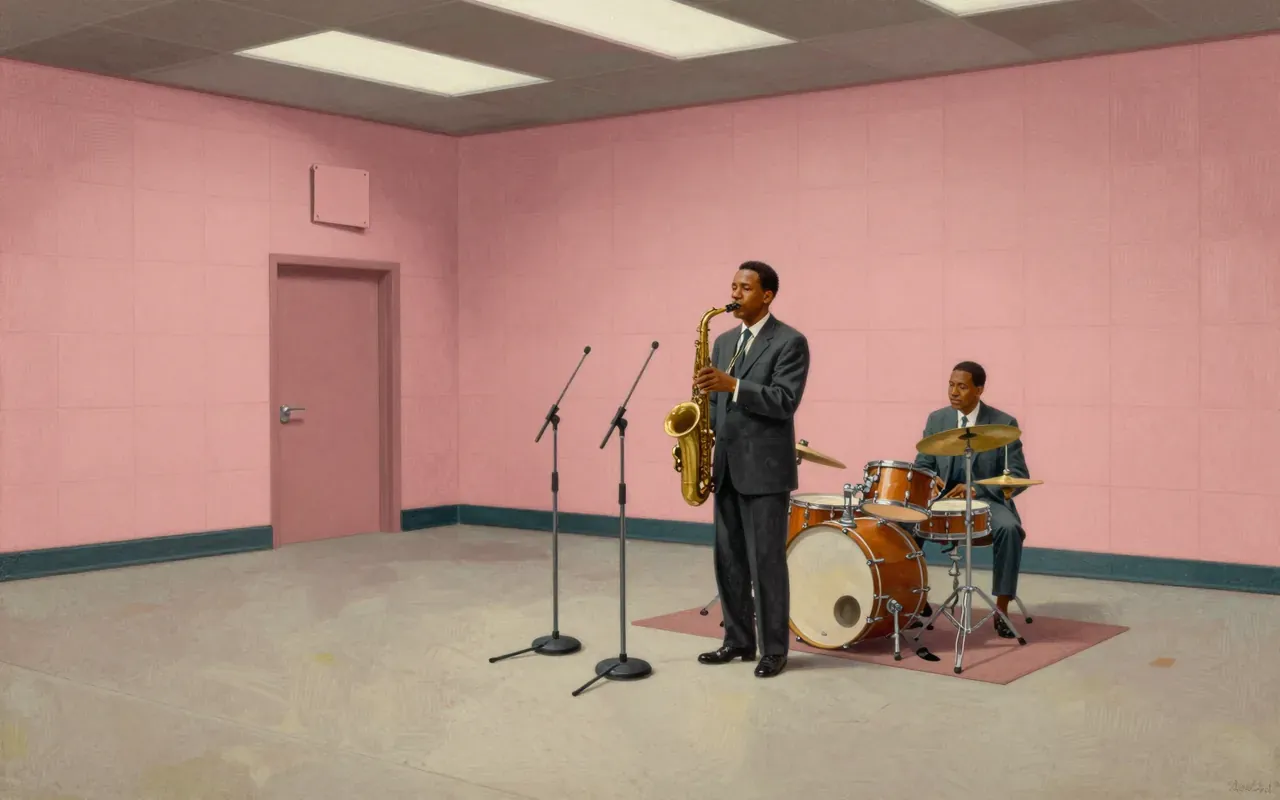
It sounds like soprano saxophone, piano, bass, and drums recorded in Atlantic Studios the week before Halloween 1960. The title track is in waltz time. Coltrane and Tyner solo over vamps on E minor and E major — not the original’s G major. Coltrane plays soprano on side one and bonus tracks, tenor on side two. The room is dry and present: no reverb is named, no mic technique described, no tape speed or EQ noted.

What lands

The title track lands with its insistence: melody repeated, then stripped, then stretched over static tonics. Tyner’s left-hand vamps lock in like a pulse. Jones’ cymbal work is unbroken but never flashy. Davis’ bass lines anchor without walking. The soprano tone is nasal, direct, unvarnished — no vibrato is mentioned, no doubling, no overdubs.

What does not

It does not swing in the conventional sense. It does not follow the original’s harmonic motion. It does not use the soprano saxophone for lyricism or charm. It does not feature Miles Davis. It does not include any composition by Coltrane.

The ideas inside it

Modal jazz as structural liberation. The substitution of E minor/E major for G major is not ornament — it is a pivot. The waltz time is not decorative — it is a frame that makes the vamps hypnotic, not pastoral. The soprano saxophone is not nostalgic — it is a deliberate, unconventional tool for linear intensity.

Who should hear it, and who should not

People who want to hear how a single harmonic idea can sustain thirteen minutes of invention. People who listen for how rhythm and timbre replace harmony as organising forces. Not people who need resolution, narrative arc, or vocal melody.

Is it worth your time

Yes. It repurposes a show tune into a modal engine for extended improvisation. It is not background music. It demands attention to repetition, variation, and rhythmic displacement. If you want harmonic complexity without chord changes, this is essential.
Same genre · Jazz4 of 167
13:00
A Love SupremeJohn Coltrane · 1965Recorded in one day in December 1964 at Rudy Van Gelder's New Jersey studio, A Love Supreme is John Coltrane's four-movement statement of gratitude, made with the quartet of McCoy Tyner, Jimmy Garrison and Elvin Jones. Built around a four-note bass figure that becomes a chanted phrase and later a saxophone recitation of Coltrane's own written poem, it plays as a single sustained piece rather than a collection of tunes.
9:56
Blue TrainJohn Coltrane · 1958Blue Train is John Coltrane’s sole leadership session for Blue Note Records, recorded on September 15, 1957 at Rudy Van Gelder’s studio in Hackensack, New Jersey, and released in January 1958. Coltrane wrote four of its five tracks. The personnel includes Lee Morgan (trumpet), Curtis Fuller (trombone), Kenny Drew (piano), Paul Chambers (bass), and Philly Joe Jones (drums). His playing exhibits early elements of the signature style for which he later became known. The album was recorded during Coltrane’s residency at the Five Spot as a member of the Thelonious Monk quartet. It is often considered his best album from the 1955–1957 period. The title track, 'Moment’s Notice', and 'Lazy Bird' have become jazz standards.
10:22
Interstellar SpaceJohn Coltrane · 1974Interstellar Space is a 1967 duo album by John Coltrane and Rashied Ali, recorded at Van Gelder Studio on February 22, 1967, and released in September 1974. It consists of four tracks — 'Mars', 'Venus', 'Jupiter', and 'Saturn' — each bearing alternate titles in the session sheets. Two further tracks from the same session, 'Leo' and 'Jupiter Variation', appeared on the 1978 compilation Jupiter Variation. The session was minimally planned, cut in one take, and built around Coltrane’s desire for 'more time, more rhythm all around me'.
10:20
Coltrane Plays the BluesJohn Coltrane · 1962Coltrane Plays the Blues is a label-assembled 1962 compilation drawn from unissued October 1960 sessions at Atlantic Studios. Coltrane played tenor saxophone on five tracks and soprano on three. McCoy Tyner played piano on four of the six tracks — his absence from two marks the first pianoless trio since Coltrane’s Prestige years. Atlantic released it without Coltrane’s input or approval, after he had moved to Impulse Records. It is excluded from his official discography because he did not conceive or approve it as a leader during his lifetime.
Up next in Music

My Generation

The Who · 1965 · 11:12

This isn’t punk’s birth certificate — it’s the sound of the delivery room: messy, loud, and already breathing hard.

11:12