Saved
Punk & post-punk

New York Dolls

This isn’t proto-punk—it’s punk’s unedited ID card, stamped with lawnmower guitars and glitter.

Worth your time?4.5/5Yes.Hear the whole thing.What works, what does not, who it is for ↓
10:01in productionCh. 1 · No Concept, Just Noise/ 10:01 · ceiling 15 min
4 chapters · 10:01Ceiling 15:00

The brief is written and checked. The video joins this page when it is cut.4 chapters · 1 min read · 10:01 planned

Read the brief

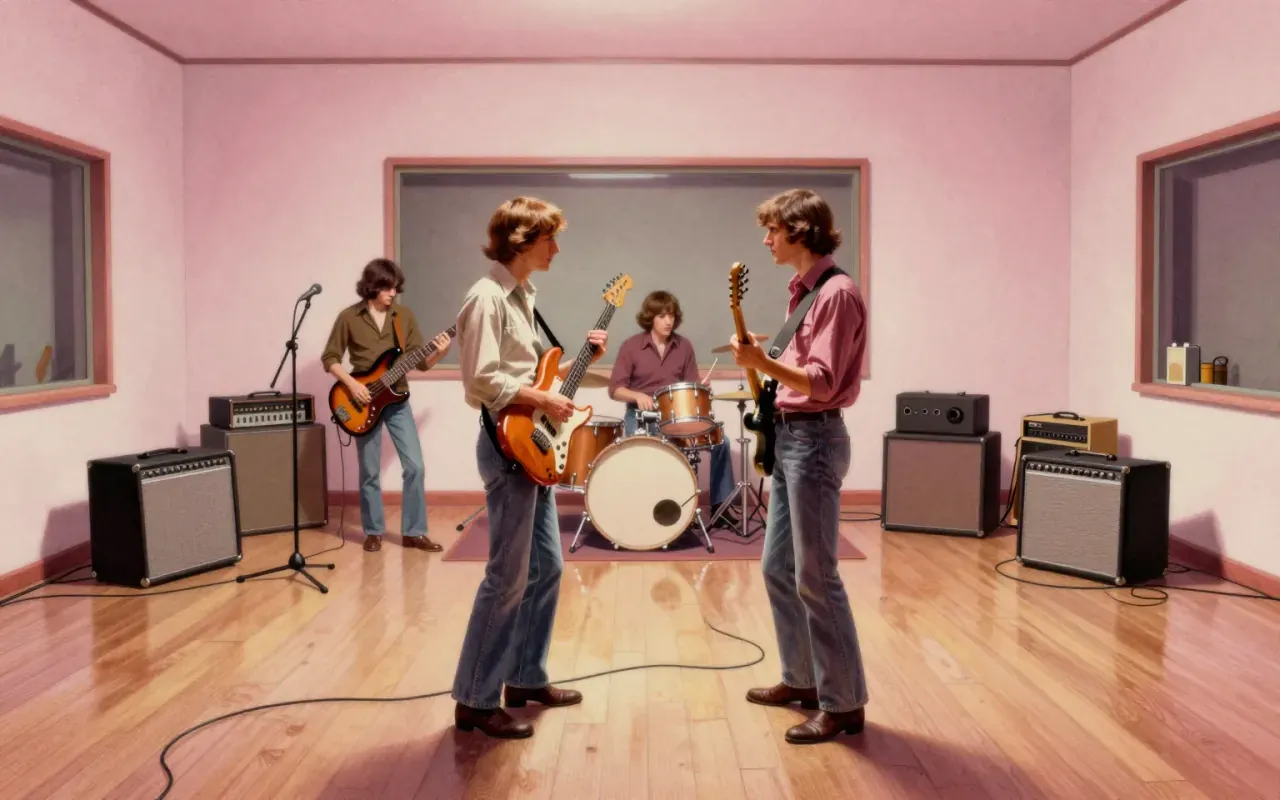
New York Dolls is a live-sounding debut recorded in eight days at the Record Plant in April 1973. Todd Rundgren produced it, intervened physically during sessions—including using a cowbell as a click track and plugging in the bass cabinet—but later claimed minimal involvement in the mix. Critics compared the guitar tone to lawnmowers; sales were sluggish, especially in the American Midwest.

Chapters & takeaways4
  1. 1:00
    No Concept, Just Noise

    Recorded in eight days at the Record Plant in April 1973—no concept, no rehearsal, just a live document.

  2. 3:00
    Hands-On, Not Hands-Off

    Rundgren intervened physically: cowbell clicks, unplugged cabinets, hands-on direction—even while disliking the sound.

  3. 4:29
    Glitter In, Glitter Out

    They wore flashy clothes in the studio—and played like they meant it, not like they were auditioning.

  4. 6:12
    Produced By Name, Shaped By Chaos

    Rundgren produced it—but claimed he barely touched it, while critics compared the guitars to lawnmowers.

1 more chapterFewer chapters
Running order11
  1. 01
    Personality Crisis3:43

    Heard in Velvet Goldmine (1998)In a Valley of Violence (2016)

  2. 02
    Looking for a Kiss3:21
  3. 03
    Vietnamese Baby3:40
  4. 04
    Lonely Planet Boy4:11

    Heard in Jobriath A.D.

  5. 05
    Frankenstein6:00
  6. 06
    Trash3:10
  7. 07
    Bad Girl3:05
  8. 08
    Subway Train4:22
  9. 09
    Pills2:50
  10. 10
    Private World3:40

    Heard in Jackie (2016)

  11. 11
    Jet Boy4:40

Film placements are the ones described in each film's own entry, so the list is partial rather than complete.

Worth your time?

Yes. Hear the whole thing.

4.5/ 5
What works
  • Personality Crisis
  • Trash
  • Jet Boy
  • Frankenstein
What does not
  • resolve tension
  • separate instruments cleanly
  • aim for fidelity
Hear it if
  • people who want to hear rock before it got codified
  • people who care about how a room sounds when a band plays loud and loose
Skip it if
  • those who require technical control
  • those who require lyrical depth
  • those who require sonic consistency
Who should hear it, and who should skipHide who it is for
The written brief1 min read

What the record is and where it came from

A debut album cut in April 1973 at the Record Plant in New York City. No concept. No rehearsal. Just the New York Dolls in their flashy clothes, playing what moved crowds live—and Todd Rundgren intervening, sometimes reluctantly, to get it on tape.

How it sounds, and how it was made

It sounds like a live band in a room, captured raw. Todd Rundgren shaped it physically: cowbell clicks for the drummer, plugging in the bass cabinet mid-take. He added piano, Moog and backing vocals. The guitar tone was dismissed by one reviewer as lawnmower-like. No concept guided the sessions—just songs that worked live, recorded in eight days.

What lands

Personality Crisis lands hard: snare crack, sneer, swagger. Trash lands with its sleazy bassline and sneering chorus. Jet Boy lands with its galloping pace and shouted call-and-response. Frankenstein lands with its six-minute sprawl and theatrical collapse.

What does not

It does not build momentum across tracks. It does not resolve tension. It does not separate instruments cleanly. It does not aim for fidelity—it aims for presence.

The ideas inside it

Youthful chaos. Glamour as armour. New York as a character—not romanticised, just lived-in. Gender as performance, not theory. Rock as attitude first, musicianship second.

Who should hear it, and who should not

People who want to hear rock before it got codified. People who care about how a room sounds when a band plays loud and loose. Not for those who require technical control, lyrical depth or sonic consistency.

Is it worth your time

Yes—if you want to hear how punk sounded before punk existed: unvarnished, urban, campy, and defiant. Not for those who need polish, coherence or studio refinement.
Same genre · Punk & post-punk4 of 91
8:25
Grunge1985Grunge is a regional rock subculture that originated in the mid-1980s in Seattle and Olympia, Washington, among bands like Green River, the Melvins and Mudhoney. It was not a self-defined movement. It gained national attention only in the early-to-mid-1990s. Its legacy lies less in musical innovation than in how a local scene was repackaged for mass consumption.
13:00
Marquee MoonTelevision · 1977Marquee Moon is Television's debut, recorded at A&R Recording in New York in November 1976 after the CBGB regulars spent years turning down record deals they judged wrong for them. Produced by frontman Tom Verlaine and engineer Andy Johns, it favours interlocking guitar lines and extended structures over the blunt riffs of the punk scene the band emerged from, and its influence on the rock guitar playing that followed has far outpaced its modest original sales.
11:26
SpecialsThe Specials · 1979The Specials’ 1979 debut is a tightly wound, politically charged recalibration of 1960s Jamaican ska—stripped of Caribbean languor, amplified with punk’s bite, and anchored in the concrete reality of late-1970s Coventry. Produced by Elvis Costello, it foregrounds guitar, reduces horns and percussion, and uses cover versions as ideological tools. It is urgent, unified, and unapologetically functional: music built to move bodies and shift culture.
9:14
Another Music in a Different KitchenBuzzcocks · 1978Another Music in a Different Kitchen is Buzzcocks’ 1978 debut studio album, recorded by their classic line-up — Pete Shelley, Steve Diggle, Steve Garvey, John Maher — after Howard Devoto’s departure. Martin Rushent produced it; Doug Bennet engineered it. Malcolm Garrett designed the sleeve. Its title came from a Linder Sterling collage. Some early pressings omitted 'I Need' due to a pressing plant error. It reached number 15 in the UK chart.
Up next in Music

Nick of Time

Bonnie Raitt · 1989 · 10:39

A record made in real time — not just recorded in it, but born from it, shaped by it, and faithful to it.

10:39