What the record is and where it came from
It is Joni Mitchell’s seventh studio album, released November 1975. It follows her pivot from folk into jazz-inflected composition. It was self-produced with Henry Lewy, recorded using new tools—Moog, ARP, sampling—and features contributions from L.A. Express, The Crusaders, James Taylor, David Crosby, and Graham Nash.
How it sounds, and how it was made
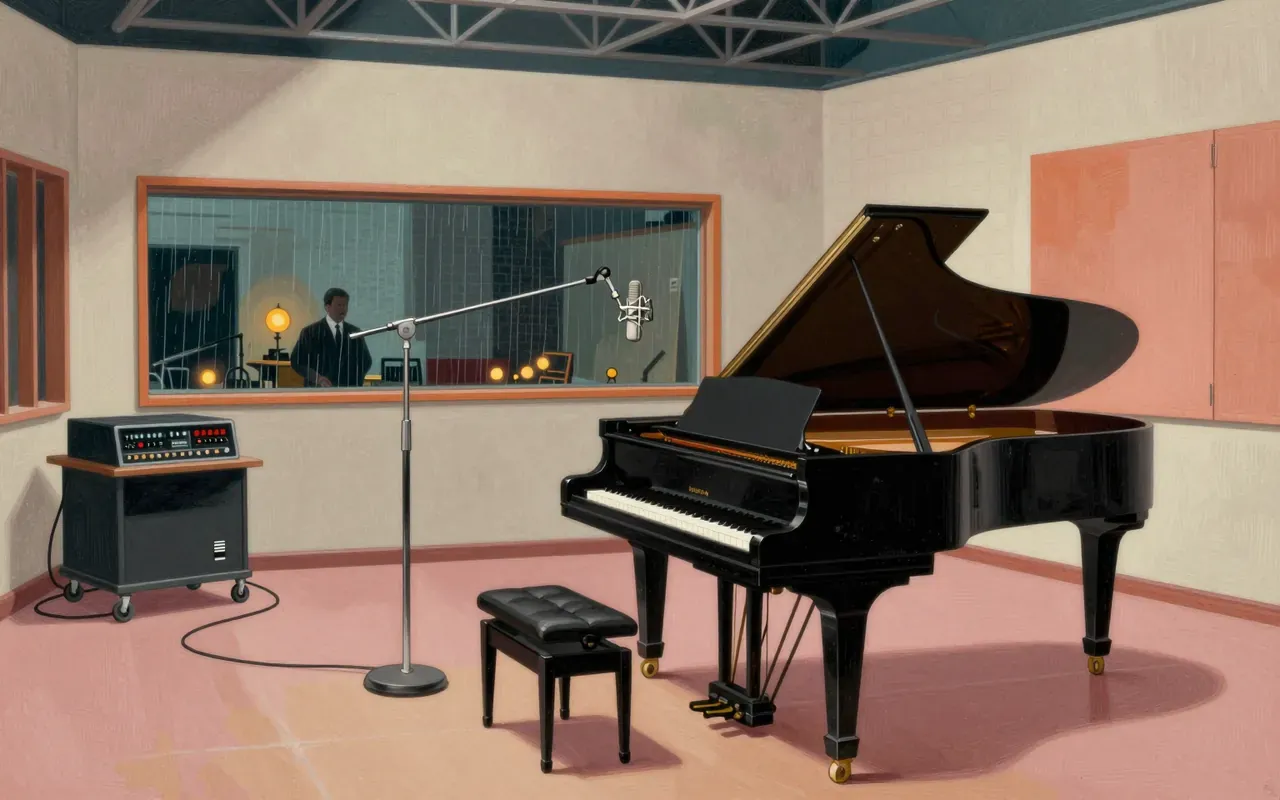
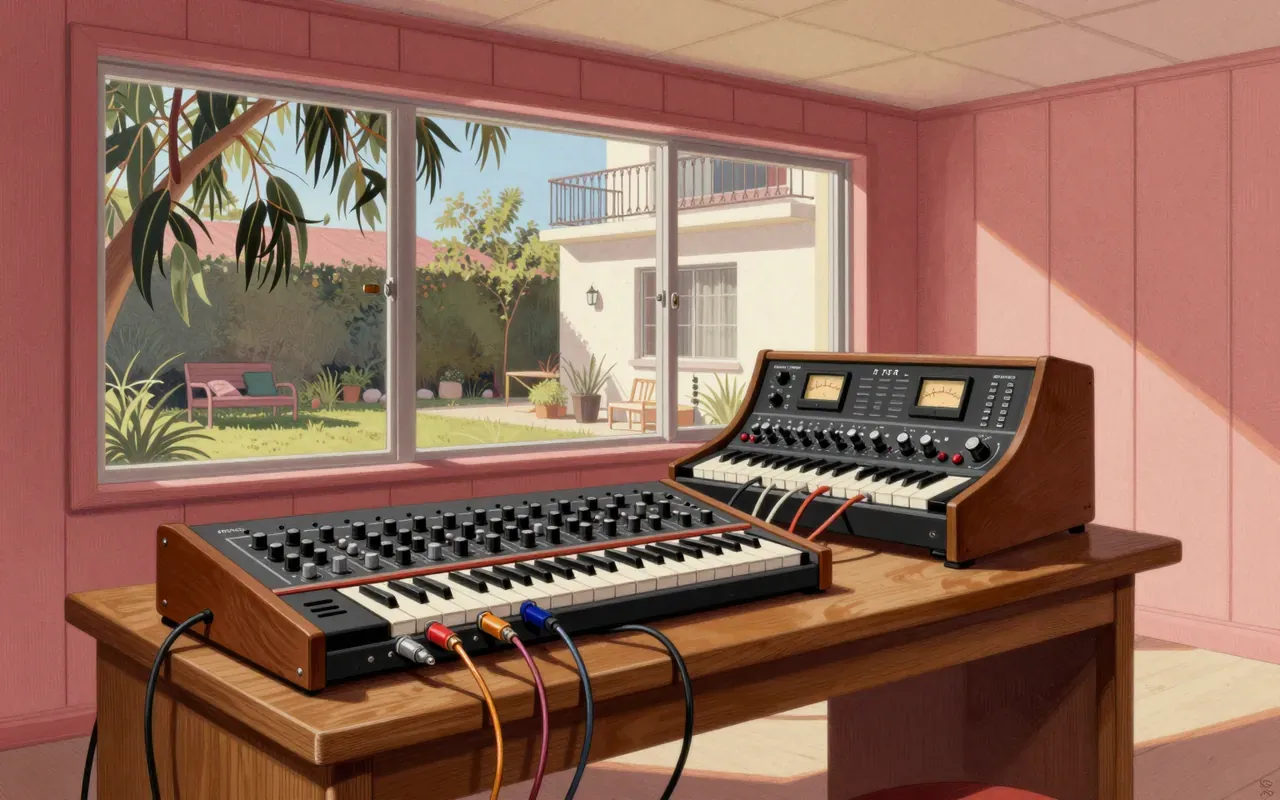
It layers a looped field recording of The Drummers of Burundi over guitar, Moog, and vocals. It uses ARP and Moog synthesizers for the first time in Mitchell’s work. African drums appear alongside jazz-rock backing from L.A. Express and The Crusaders. Henry Lewy engineered and mixed with Mitchell in a room where sampling, dubbing, and synth textures were treated as compositional tools—not effects.
What lands
‘The Jungle Line’ lands: its Burundi drum loop is raw, unvarnished, and placed front-and-centre—not buried. ‘In France They Kiss on Main Street’ lands: it delivers Court and Spark’s warmth but with tighter, drier production. ‘Edith and the Kingpin’ and the title track land: their lyrics map suburban alienation with surgical precision and tonal unease.
What does not
It does not sustain the lush pop continuity of Court and Spark across all tracks. It does not use conventional verse-chorus structures on most songs. It does not privilege voice-and-guitar arrangements. It does not avoid dissonance, abrupt textural shifts, or unresolved harmonic movement.
The ideas inside it
It examines women’s constrained roles under patriarchy. It documents the underbelly of Southern California suburbia. It questions the music industry’s commodification of artistry. It treats domestic space as a site of quiet violence and coded performance.
Who should hear it, and who should not
Producers interested in early sampling practice should hear it. Jazz-pop listeners open to structural fragmentation should hear it. Anyone studying how lyric and texture co-author meaning in 1970s studio albums should hear it. Fans who only want Mitchell’s early acoustic work should not.
Is it worth your time
Yes—if you want to hear how sampling entered pop before it had a name, or how suburban critique can sound like a humid, off-kilter suite of jazz-pop, synth-tinged vignettes. No—if you need clear song forms, acoustic intimacy, or lyrical directness.