What the record is and where it came from
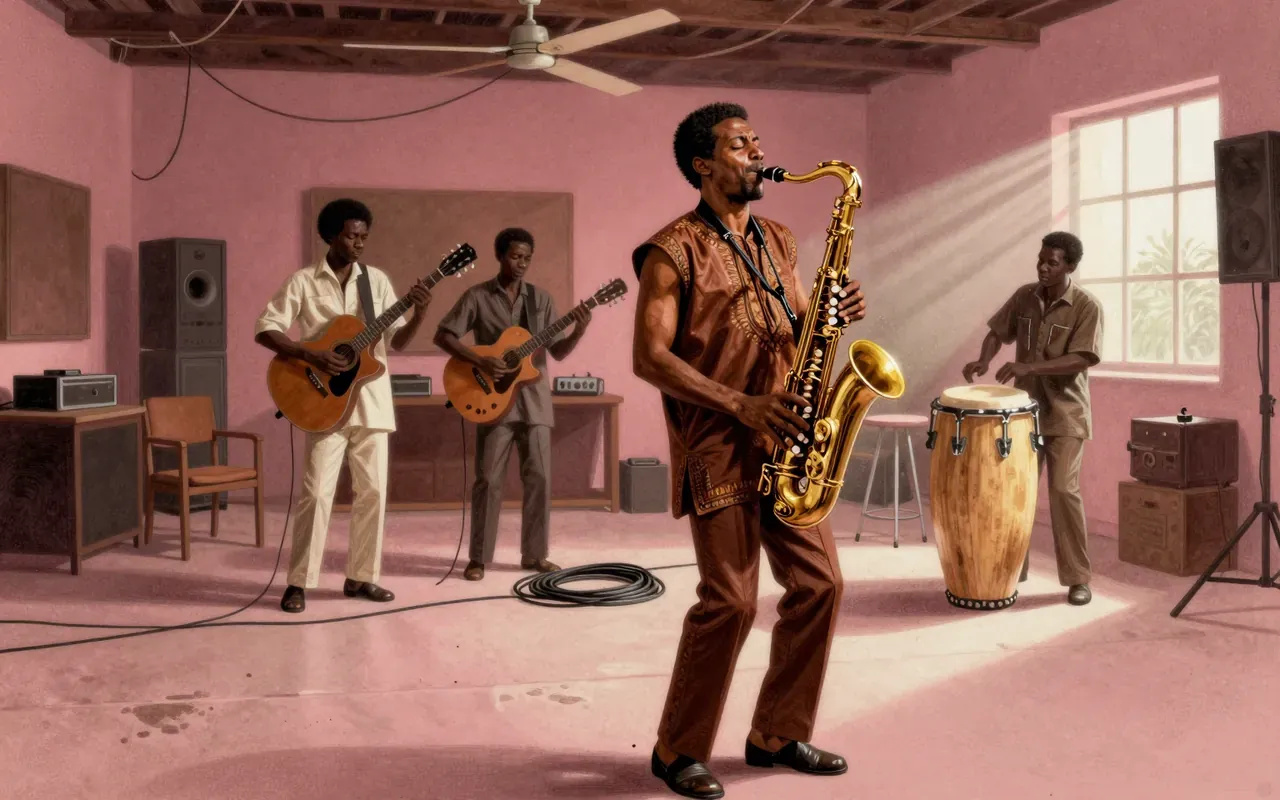
Palo Congo is the 1957 debut led by conga player Sabú Martínez, credited on the record as Sabu. Recorded in April and released by Blue Note, it brings together an eight-person ensemble with several percussionists and singers. Its instrumentation gives a clear reason to hear it on its own terms.
How it sounds, and how it was made
Martínez plays congas and bongos and sings. Arsenio Rodríguez contributes congas, tres, guitar and vocals; his brothers Raúl and Quique also play congas, as does Ray Romero. Evaristo Baró supplies bass, with Willie Capó and Sarah Baró among the vocalists.
Percussion is therefore much of the group, rather than an addition to a standard jazz ensemble. The useful listening task is to distinguish the roles inside that concentration of drums and voices.
What lands
The personnel make collaboration the record’s strongest invitation. Multiple conga players are not interchangeable entries on a list: their combination gives the listener several rhythmic contributions to follow. The string instruments, bass and singers provide other points of orientation around them.
What does not
Someone expecting a Blue Note record to foreground horn solos or a pianist will need to change that expectation. Listening only for a conventional melody-and-accompaniment division may flatten the very feature that makes this ensemble interesting.
The ideas inside it
Rhythm can carry the central musical argument. Moving percussion to the foreground changes what counts as a lead part and what a listener must attend to. The record offers a practical way to enlarge those habits of attention.
Who should hear it, and who should not
Hear it if you want to follow percussion as ensemble playing, with voices and strings participating in the same space. It is a less suitable choice if you primarily want a sequence of jazz horn features.
Is it worth your time
Yes. Begin by identifying a single rhythmic part, then widen your attention to the others. The instrumentation makes that kind of listening the natural way in.