musicbriefs
10:45in productionCh. 1 · African-influenced, not African-made/ 10:45 · ceiling 15 min
Afrobeat & Latin · Reggae & dub

Refavela

Refavela isn’t African music — it’s Brazil remembering itself through Africa.

Refavela is not a fusion record. It is a declaration of continuity — Afro-Brazilian culture as unbroken line, not borrowed motif.

Chapters & takeaways4
  1. 0:50
    African-influenced, not African-made

    Refavela is defined by its African influence — not as quotation, but as recalibration.

  2. 2:08
    Reggae as grammar, not genre

    ‘No Norte da Saudade’ is the album’s reggae anchor — rhythm as argument.

  3. 4:31
    Made in Bahia, after Africa

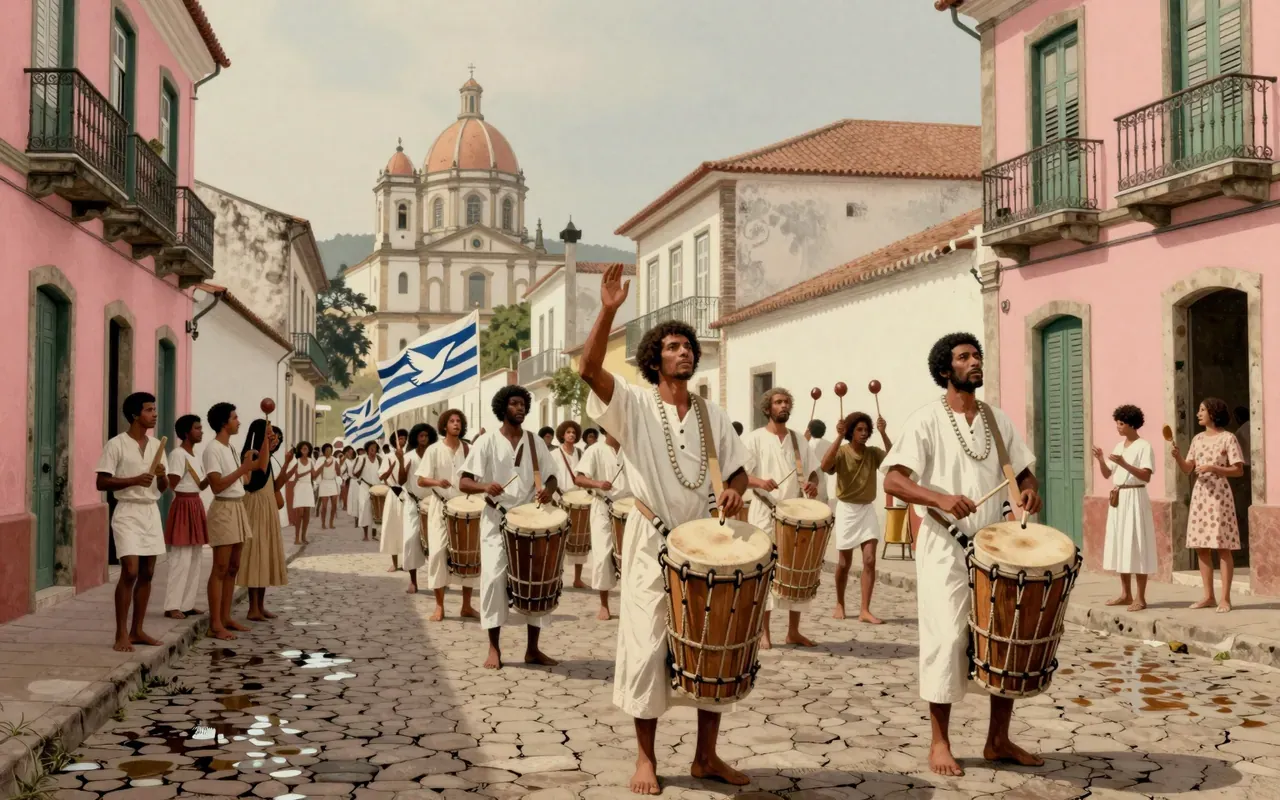
    The album emerges from Gil’s return to Brazil and his work with Filhos de Gandhi.

  4. 6:52
    Refavela means ‘re-favela’

    Refavela treats the favela not as slum, but as locus — a place remade by memory and movement.

Running order10
  1. 01
    Refavela3:53
  2. 02
    Ilé Ayê3:05
  3. 03
    Aqui e agora4:10
  4. 04
    Norte da saudade4:19
  5. 05
    Babá Alapalá3:36
  6. 06
    Sandra4:47
  7. 07
    Samba do avião3:33

    Heard in Copacabana Palace (1962)

  8. 08
    Era nova3:59
  9. 09
    Balafon3:56
  10. 10
    Patuscada de Gandhi2:32

Film placements are the ones described in each film's own entry, so the list is partial rather than complete.

Worth your time?

Yes. Hear the whole thing.

4/ 5
What works
  • It works as a political gesture in sound.
  • It works as a corrective to Eurocentric narratives of musical influence.
  • It works as a record that assumes the listener knows where Ilé Ayê is.
What does not
  • It does not sound like a Jamaican reggae session.
  • It does not use African instrumentation verifiably.
  • It does not separate African roots from Brazilian present.
Hear it if
  • For listeners who treat rhythm as history.
  • For people who know Bahia as a sonic archive, not a holiday destination.
Skip it if
  • For those who want liner-note precision on mic placement or tempo.
  • For anyone expecting a ‘Brazilian dub’ album.
The written brief1 min read

What the record is and where it came from

Refavela is Gilberto Gil’s 1977 album, made after his return from Africa, positioning Afro-Brazilian culture as living inheritance rather than historical footnote.

How it sounds, and how it was made

The album features reggae-influenced rhythms, notably on ‘No Norte da Saudade’. It was recorded after Gil’s return from Africa, during a period of deep engagement with Afro-Brazilian culture. No other sonic details — instruments, tempos, production techniques, or room characteristics — are verified in the material.

What lands

‘No Norte da Saudade’ lands as the clearest statement: reggae’s rhythmic gravity repurposed for Brazilian longing and geography. ‘Ilé Ayê’ and ‘Babá Alapalá’ land as affirmations of Yoruba-derived spiritual infrastructure in Salvador. ‘Patuscada de Gandhi’ lands as a direct link to Gil’s Carnaval afoxé work with Filhos de Gandhi.

What does not

It does not sound like a straightforward reggae record. It does not replicate African instrumentation or structure. It does not distance itself from Brazilian forms — instead, it folds reggae influence into samba, afoxé, and songcraft rooted in Bahia.

The ideas inside it

It centres Afro-Brazilian identity as active reconnection — not nostalgia, not export, but cultural return and recalibration after Africa. The title ‘Refavela’ itself signals this: a reimagining of the favela not as marginal space but as site of origin and renewal.

Who should hear it, and who should not

People who hear rhythm as ideology should hear it. People who treat ‘world music’ as texture, not testimony, should not.

Is it worth your time

Yes, if you want to hear reggae filtered through Afro-Brazilian consciousness in 1977. No, if you expect technical documentation, genre purity, or studio detail beyond what the sources confirm.
Same genre · Afrobeat & Latin4 of 6
8:51
LibertangoAstor Piazzolla · 1974Libertango is a 1974 studio recording made in Milan. It declares tango nuevo through subtraction — no vocals, no ornament, no deference. Its sound is dry, linear, and precisely layered: bandoneón, Hammond organ C3, marimba, bass guitar, drums, guitar, timpani, strings, and flutes. It lands because every instrument has space and purpose. It does not land if you expect warmth, swing, or spectacle. It is worth your time if you value compositional rigour over emotional indulgence.
11:42
Made in LagosWizkid · 2020Made in Lagos is Wizkid’s fourth studio album, released 30 October 2020 after postponement from 15 October due to the End SARS protests. It fuses Afrobeats and R&B with mid-tempo production, rich local African percussions as its core, casually Auto-Tuned melodies, and meticulously complex beats. Themes include love, focus, goodwill, gratitude, and grace. It achieved commercial success and critical acclaim, reaching number-one on the Billboard World Albums chart. Its single 'Essence' featuring Tems became the first Nigerian song to chart on the Billboard Hot 100.
10:16
Twice as TallBurna Boy · 2020Twice as Tall is Burna Boy’s fifth studio album, released on 14 August 2020. It was recorded mainly in Ahoada, Nigeria during the 2020 pandemic. Burna Boy, Diddy and Bose Ogulu served as executive producers. Telz was the primary producer, with additional production from Rexxie, Timbaland and DJDS. Diddy provided spoken intros, including on 'Alarm Clock'. 'Bebo' was produced by Rexxie and addresses authenticity. 'Wonderful' and 'Onyeka' were produced by Telz and recorded in Nigerian pidgin and Yoruba. The album debuted at number one on the Billboard World Albums Chart and won the Grammy Award for Best Global Music Album at the 63rd Annual Grammy Awards.
13:00
Expensive ShitFela Ransome Kuti · 1975Recorded in 1975 out of the Kalakuta Republic compound, Expensive Shit compresses Fela Kuti's long standoff with Nigeria's police into two extended Africa '70 tracks: a title piece built from a real, absurd arrest, and Water No Get Enemy's gentler appeal to a Yoruba proverb about nature's staying power. Short in length, it is unusually complete for a Kuti record.
Up next in Music

Reign in Blood

Slayer · 1986 · 9:22

No reverb. No mercy. No wasted milliseconds.

9:22