What the record is and where it came from
África Brasil is a 1976 album by Jorge Ben, recorded over ten days at Phonogram Studios in Rio de Janeiro. It is one of his most popular records. It fuses funk and samba. It features a remake of ‘Taj Mahal’. It was made after Ben swapped instruments with Dadi Carvalho, acquiring an Ibanez guitar in London.
How it sounds, and how it was made
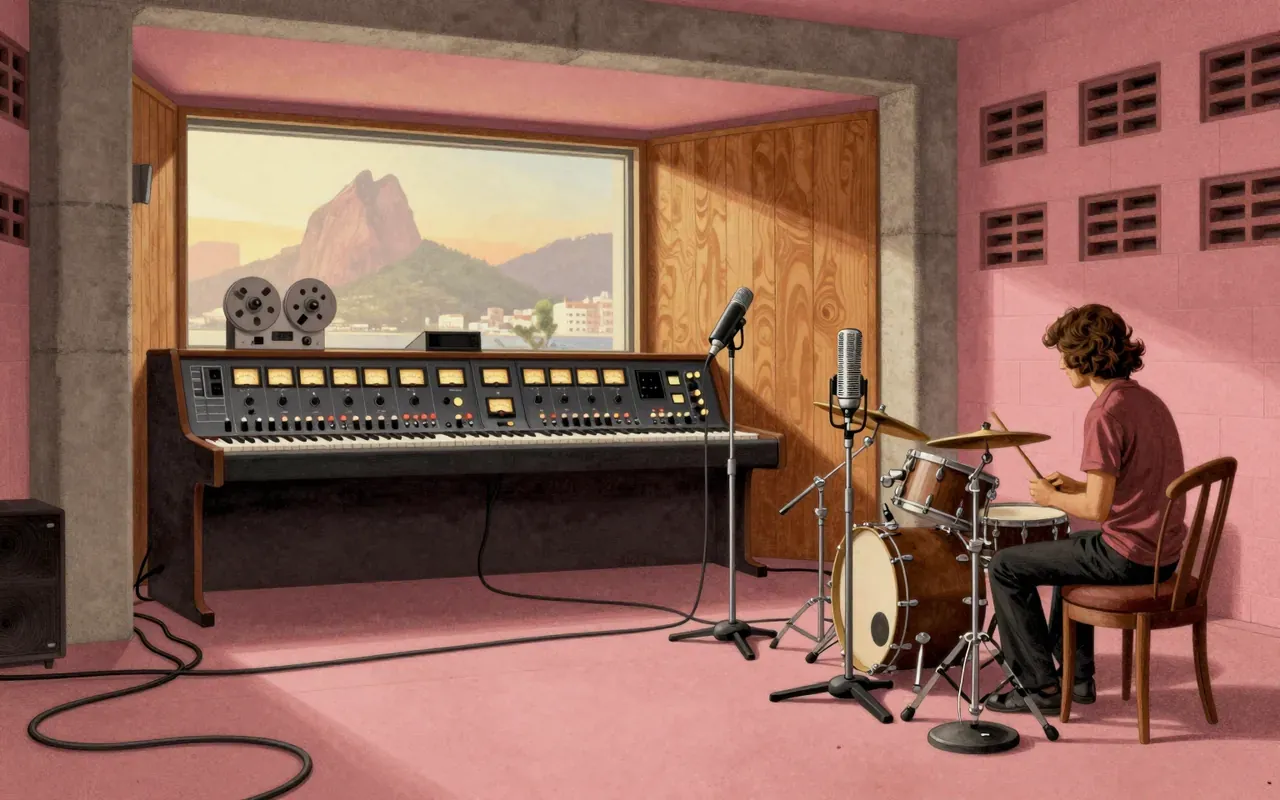
It sounds like electric guitar-driven samba-funk, recorded fast in a Rio studio with a large ensemble. The electric guitar replaces the acoustic that defined Ben’s earlier work. The room was Phonogram Studios in Rio de Janeiro. The group included Admiral Jorge V plus fourteen instrumentalists and five backing vocalists. José Roberto Bertrami arranged orchestral parts. Marco Mazzola mixed it before Philips withdrew him mid-session.
What lands
‘Xica da Silva’ lands — its groove locks early, voice and bass interlock, and it entered film twice: in the 1976 biopic Xica and again in the 2002 film Durval Discos. ‘África Brasil (Zumbi)’ lands — title track, direct, declarative, built on repetition and call-and-response. ‘Taj Mahal’ lands — a remake, now electrified, retaining its melodic hook but sharpening its rhythmic edge.
What does not
It does not sustain rhythmic intensity across all tracks. ‘O filósofo’ and ‘A história de Jorge’ drift in arrangement. It does not foreground percussion as texture — drums serve groove, not dialogue. It does not use studio effects beyond basic mixing: no echo chambers, tape loops, or artificial reverb are mentioned.
The ideas inside it
The album centres Black Brazilian identity, African ancestry, and cultural synthesis. It names Zumbi, Xica da Silva, and Hermes Trismegisto. It links Rio’s favelas (Camisa 10 da Gávea), philosophy, and Afro-Brazilian spirituality without explanation — as assertion, not exposition.
Who should hear it, and who should not
Drummers should hear it for its samba-funk pulse. Guitar players should hear it for how the electric guitar sits in a Brazilian rhythm section. Listeners who know Rod Stewart’s ‘Da Ya Think I’m Sexy?’ should hear its source — though the lawsuit settlement is not part of the sound.
Is it worth your time
Yes — if you want to hear how samba reconfigured itself around funk rhythm, electric guitar tone, and layered vocal arrangements in mid-70s Rio. No — if you expect tight songwriting or consistent groove across all eleven tracks.