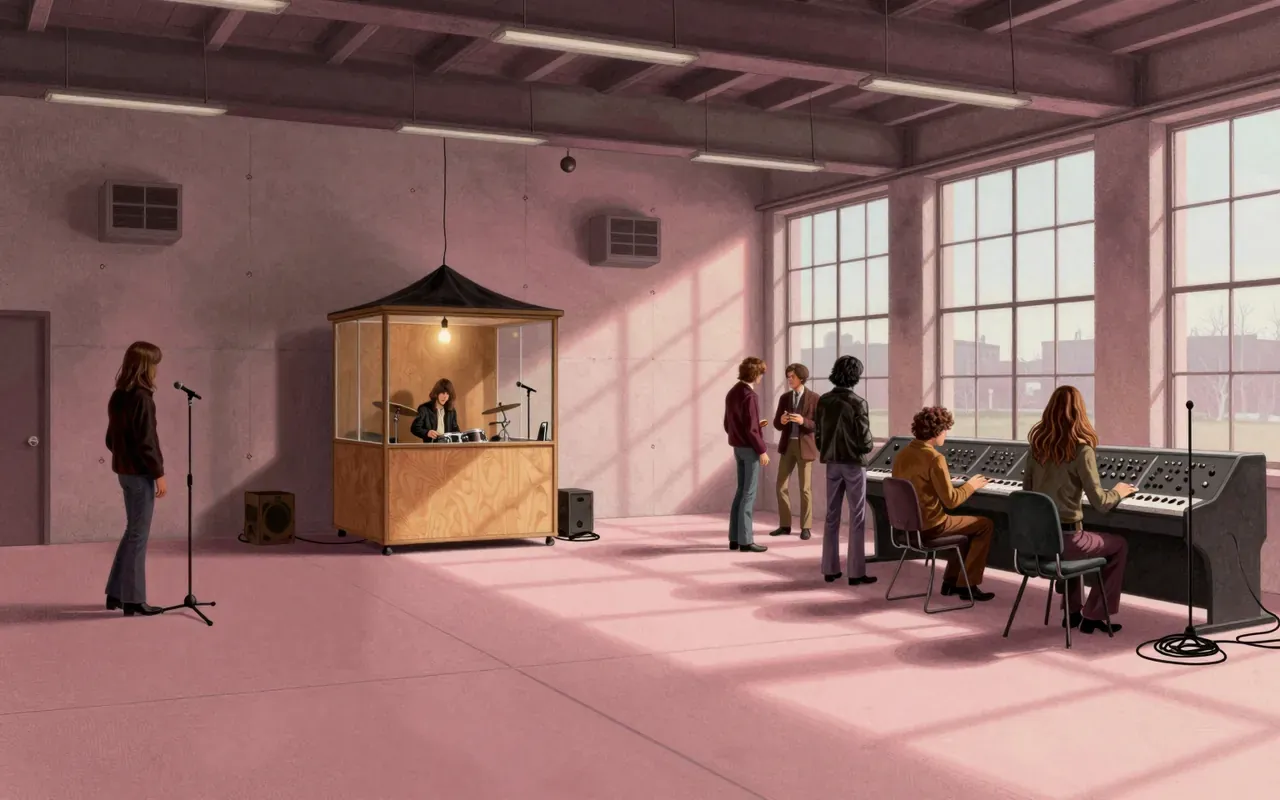
What the record is and where it came from
Risqué is Chic’s third studio album, released in 1979. It was produced by Bernard Edwards and Nile Rodgers for Chic Organization Ltd., recorded and mixed at The Power Station in New York, with additional recording at Electric Lady Studios (New York) and Kendun Recorders (Burbank), and mastered at Atlantic Studios (New York).
How it sounds, and how it was made
The record sounds like a tight, dry, roomy funk-disco groove cut in The Power Station’s live room. Bernard Edwards’ basslines lock with Nile Rodgers’ staccato guitar. Bob Clearmountain engineered it with clarity and punch. Assistant engineers worked across three studios: The Power Station (New York), Electric Lady (New York), and Kendun Recorders (Burbank). No instruments, tempos, or textures beyond those implied by the studio credits and roles are verifiable.
What lands
‘Good Times’ lands. Its bassline, guitar chop, and drum balance define the album’s authority. It appears in film soundtracks — The Last Days of Disco (1998), Wham! concerts, Apocalypse Now (1979) — not as nostalgia, but as functional, unassailable rhythm.
What does not
It does not experiment with form, harmony, or vocal delivery. It does not feature solos, breakdowns, or lyrical abstraction. It does not use synthesizers, strings, or horns as lead voices. Nothing here contradicts its own discipline.
The ideas inside it
The idea is control: of groove, space, and arrangement. Chic treats the studio as a compositional instrument — not for effects, but for placement. The album assumes the listener hears rhythm as structure, not decoration.
Who should hear it, and who should not
Producers, drummers, bass players, and anyone who needs to hear how groove is built from room acoustics and player restraint should hear it. Listeners who expect emotional escalation, lyrical storytelling, or sonic surprise should not.
Is it worth your time
Yes — if you want to hear how disco’s rhythmic architecture was built in real rooms, not sequencers. It is worth your time because it documents a specific, high-functioning studio ecosystem at a precise moment: late-1979 New York, before digital overdubbing changed workflow.