Saved
Hip-hop · Genre

Run The Jewels 4

This is not an album you listen to — it’s one you deploy.

Worth your time?4.5/5Yes.Hear the whole thing.What works, what does not, who it is for ↓
9:23in productionCh. 1 · The Name Is the First Statement/ 9:23 · ceiling 15 min
4 chapters · 9:23Ceiling 15:00

The brief is written and checked. The video joins this page when it is cut.4 chapters · 1 min read · 9:23 planned

Read the brief

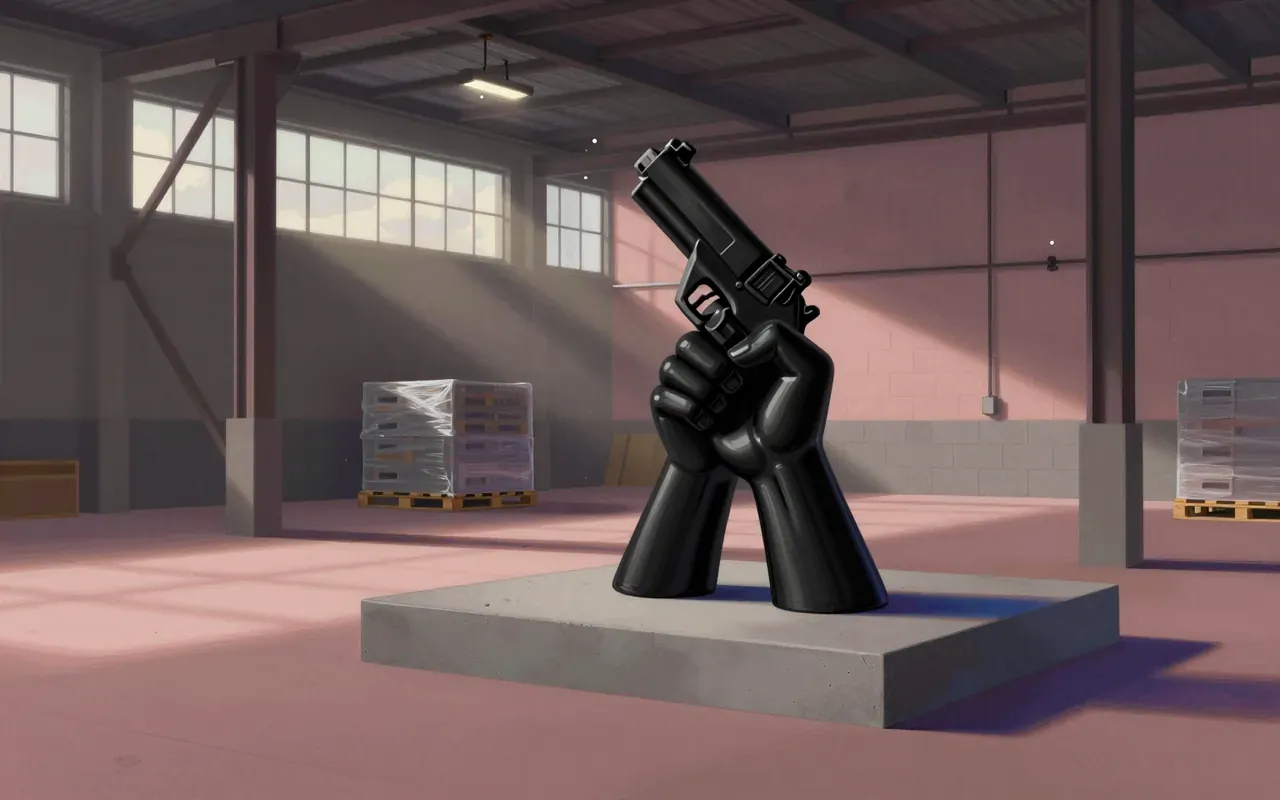
RTJ4 is Run the Jewels’ fourth studio album, released digitally on June 3, 2020 — two days ahead of its scheduled June 5 date — as a direct response to nationwide protests against racial injustice. All tracks were produced by El-P, with co-production by Little Shalimar and Wilder Zoby on most. Its cover art was conceived by El-P and realised by Tim Saccenti as a low-poly 3D-printed sculpture of the duo’s logo, photographed under multi-coloured lighting to reference past album palettes. The record is officially titled RTJ4 — the first in the series to use the abbreviated form — and features guest appearances from Greg Nice, DJ Premier, 2 Chainz, Pharrell Williams, Mavis Staples, Josh Homme, and Zack de la Rocha. Its lead singles were 'Yankee and the Brave (ep.4)' and 'Ooh LA LA', and it was performed in full during the voter-engagement YouTube stream Holy Calamavote on October 18, 2020.

Chapters & takeaways4
  1. 1:09
    The Name Is the First Statement

    RTJ4 is the first Run the Jewels album officially branded RTJ4 — a deliberate contraction, not a shorthand.

  2. 2:16
    Released Into the Fire

    It arrived early because the world did not wait — and neither did the record.

  3. 3:34
    Low-Poly Logic

    The cover is a 3D-printed logo lit to recall past albums — geometry as continuity, colour as memory.

  4. 5:26
    Music as Infrastructure

    Its singles were weapons; its full performance was a rally — all timed to voter mobilisation.

1 more chapterFewer chapters
Running order11
  1. 01
    Yankee and the Brave (ep. 4)2:27
  2. 02
    Ooh La La3:04

    Heard in Rushmore (1998)Big Daddy (1999)The Dirty Picture (2011)The Smurfs 2 (2013)

  3. 03
    Out of Sight3:21

    Heard in Baby Driver (2017)Pulp Fiction (1994)V for Vendetta (2005)

  4. 04
    Holy Calamafuck3:58
  5. 05
    Goonies Vs. E.T.3:03
  6. 06
    Walking in the Snow3:56
  7. 07
    Ju$t3:25
  8. 08
    Never Look Back2:58

    Heard in Never Look Back (1952)Love Me or Leave Me (1955)

  9. 09
    The Ground Below2:32
  10. 10
    Pulling the Pin3:37
  11. 11
    A Few Words for the Firing Squad (Radiation)6:42

Film placements are the ones described in each film's own entry, so the list is partial rather than complete.

Worth your time?

Yes. Hear the whole thing.

4.5/ 5
What works
  • as a weapon
  • as infrastructure
  • as testimony
  • as call-and-response
What does not
  • ambient
  • reflective
  • textural
  • escapist
Hear it if
  • people who need music that matches the tempo of protest
  • people who hear rhythm as resistance
Skip it if
  • people seeking mood
  • people needing space to breathe
  • people who prefer ambiguity
Who should hear it, and who should skipHide who it is for
The written brief1 min read

What the record is and where it came from

RTJ4 is Run the Jewels’ fourth studio album, released digitally on June 3, 2020 — two days early — as a direct response to racial justice protests. It is officially titled RTJ4, the first in the series to use the abbreviated form.

How it sounds, and how it was made

El-P produced every track, with co-production from Little Shalimar and Wilder Zoby on most. The cover art was conceived by El-P as a futuristic reinterpretation of the duo’s logo using basic geometric shapes — realised by Tim Saccenti via 3D-printed glossy sculpture photographed under varied coloured lighting to echo prior RTJ album palettes.

What lands

The production lands with physical force: dense low-end, clipped snares, vocal layers stacked like barricades. Every beat feels calibrated for volume and velocity.

What does not

It does not invite reflection. There are no ambient passages, no instrumental interludes, no tonal ambiguity. It offers no space for neutrality.

The ideas inside it

The record responds directly to national protests against police brutality and racism following the killings of George Floyd, Ahmaud Arbery, and Breonna Taylor. Its urgency is political, not metaphorical.

Who should hear it, and who should not

People who need music that matches the tempo of protest. Not people seeking mood, texture, or escape.

Is it worth your time

Yes. It is urgent, tightly constructed, and sonically unified — built for impact, not immersion.
Same genre · Hip-hop4 of 113
12:01
Deeper Than RapRick Ross · 2009Deeper Than Rap is a 2009 hip-hop album defined by its use of soul and jazz-funk samples, its assertions of status and authority, and its unresolved tension between autobiography and fabrication.
12:03
Straight Outta ComptonN.W.A · 1988N.W.A’s Straight Outta Compton (1988) is a low-budget, high-impact declaration of intent — recorded in six weeks at Audio Achievements Studio in Torrance, California, for $12,000, using TR-808 beats, sampled horns and vocals, and razor-sharp writing by Ice Cube, MC Ren, and The D.O.C. Its sound is sparse, confrontational, and unvarnished. Its ideas are local, immediate, and uncompromising. Its legacy begins not with acclaim, but with backlash — and a warning label.
10:00
By All Means NecessaryBoogie Down Productions · 1988By All Means Necessary is Boogie Down Productions’ 1988 second studio album, released April 12, 1988. KRS-One wrote, produced, and performed every track alone. It features minimalist production and hard-hitting drum beats. Sampling is central: 'My Philosophy' uses Stanley Turrentine’s 'Sister Sanctified'; 'Ya Slippin’' interpolates Deep Purple’s 'Smoke on the Water' and reuses the 'Poetry' beat; 'Stop the Violence' uses Courtney Melody’s 'This Sound a Dem Trouble' riddim; 'Illegal Business' samples Fat Albert’s 'Creativity' and Jefferson Starship’s 'Rock Music'; 'Nervous' samples Rhythm Heritage’s 'Sky’s the Limit' and War’s 'Galaxy'; 'I’m Still #1' samples All the People’s 'Cramp Your Style'. Themes include government and police corruption, safe sex, government involvement in the drug trade, and intra-community violence. It marks KRS-One’s adoption of the 'Teacha' identity and follows DJ Scott La Rock’s murder.
2:40
MadvillainyMadvillain · 2004Released by Stones Throw in 2004, Madvillainy joins rapper MF DOOM and producer Madlib under the name Madvillain. Much of their collaboration took place at the Los Angeles house that also housed the label. DOOM could concentrate on writing and performing while Madlib supplied a shifting musical environment.
Up next in Music

Rust Never Sleeps

Neil Young · 1979 · 11:53

Rust Never Sleeps isn’t live or studio — it’s a controlled leak between the two.

11:53