A teenager’s tape archive
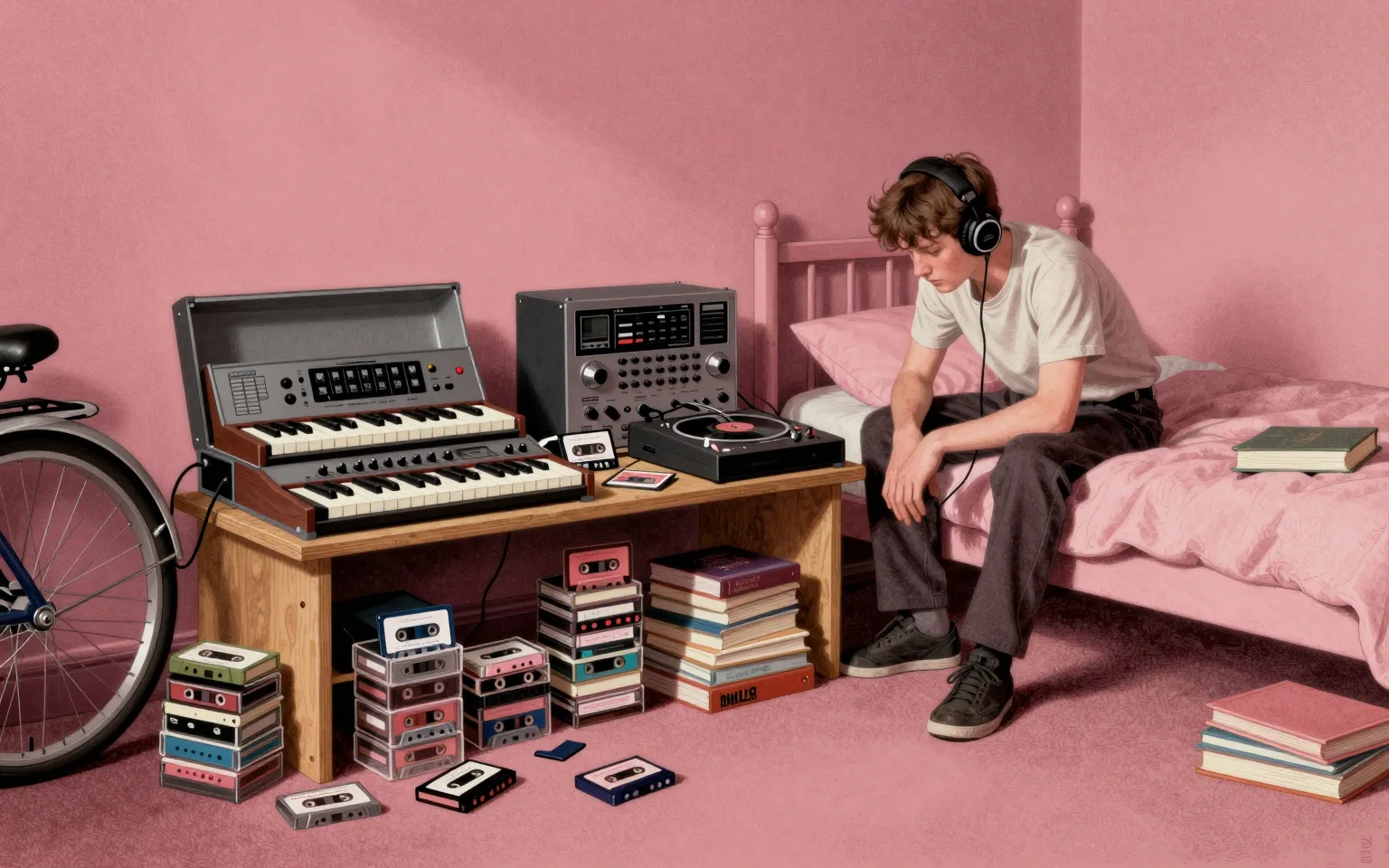
Selected Ambient Works 85–92 is the debut album released under the name Aphex Twin, put out through the Belgian label Apollo in November 1992 when its maker, Richard D. James, was still in his early twenties. The title is literal: the thirteen tracks were pulled from cassette recordings James had made over roughly seven years, starting when he was thirteen or fourteen, using equipment he built and modified himself rather than commercial studio gear. Label head Renaat Vandepapeliere selected the running order from a box of tapes James brought him in person, after James’s earlier twelve-inch had reached him through club and radio play. What reached listeners, then, was not a planned studio album so much as a curated slice of one teenager’s bedroom archive.
Built from broken equipment
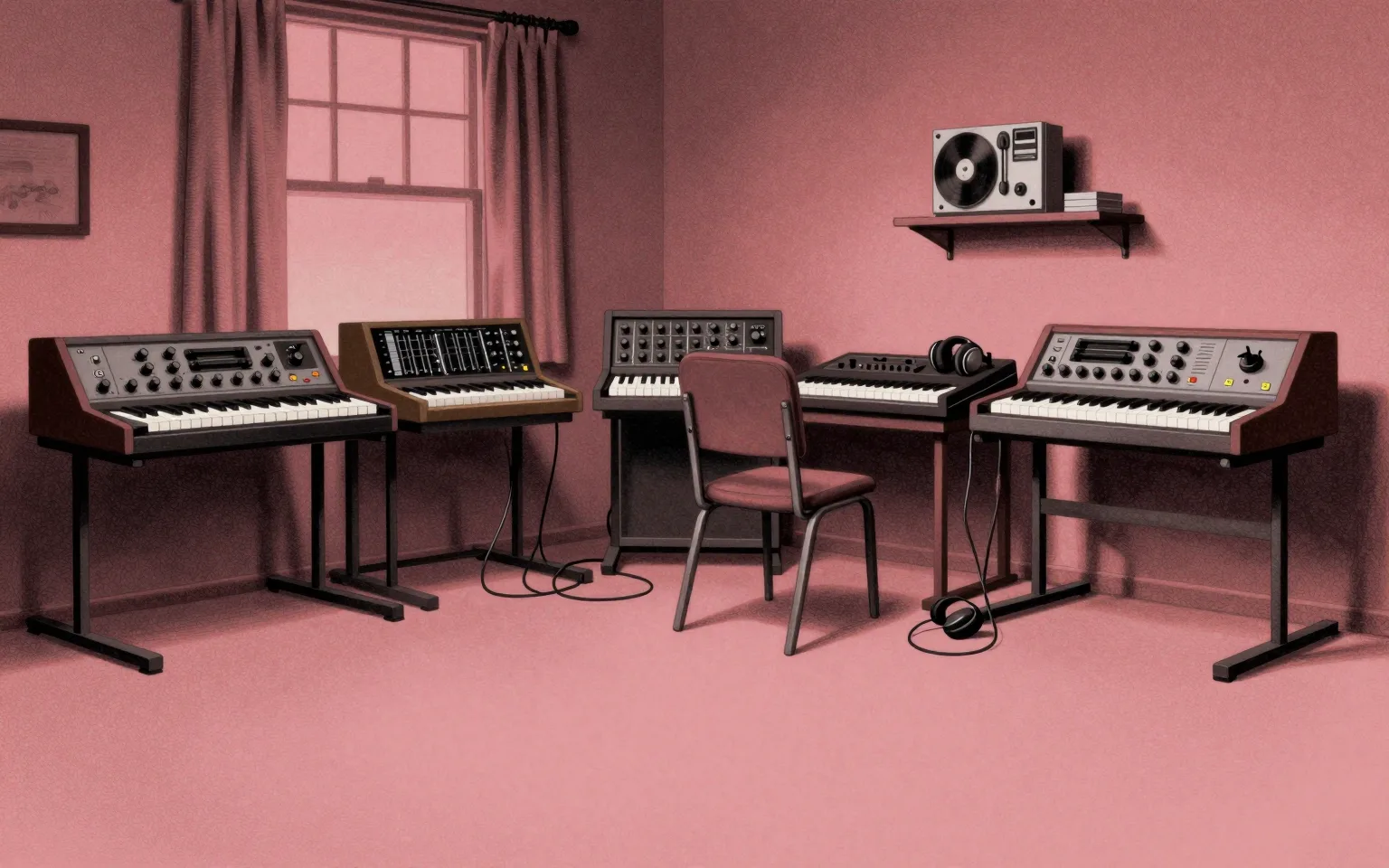
The equipment matters as much as any technique here: homemade synthesisers, drum machines assembled rather than bought, and a Casio FZ-10M sampler that could load sounds from floppy disk, all recorded onto cassette that by some accounts had already been damaged before the tracks were finally selected. That degraded, lo-fi source material shapes the whole record, giving even its cleaner melodic passages a soft, slightly worn edge no digital studio session would produce. Individual tracks pull in samples from unlikely places, a snatch of dialogue from a science-fiction film here, a fragment of a children’s film there, folded into loops that owe as much to found-sound collage as to any conventional dance-music arrangement.
Beauty and unease together
What lands hardest is the record’s refusal to separate the beautiful from the unsettling. A track like Xtal pairs a hazy, half-buried vocal with a melody that could pass for lullaby, while elsewhere the rhythms turn industrial and clattering without ever losing their pull. The melodic sense running through pieces such as Pulsewidth and Ptolemy shows a pop instinct hiding inside deliberately rough production, and the album’s pacing, moving between beat-driven pieces and slower, more textural ones, keeps a listener from settling into any single mood for too long. For a record assembled from teenage cassette experiments, its sense of sequence is remarkably assured.
Where the roughness limits it
The same cassette-sourced roughness that gives the album its character also limits it. Sound quality varies noticeably from track to track, a consequence of source tapes recorded years apart on different equipment, and a listener expecting the polish of a conventional studio production will find some passages genuinely muddy rather than atmospherically so. A handful of pieces feel more like sketches than finished ideas, understandably given their origins, and sit less comfortably next to the album’s stronger, more developed tracks. That unevenness is part of the record’s story, but it is still unevenness.
Where electronic music’s raw material comes from
The album’s real argument is about where electronic music’s raw material can come from. Rather than treating a proper studio and commercial synthesisers as prerequisites, James built his own instruments and worked from what a teenager in Cornwall actually had access to, then let a label built for club records reissue the results as an album in its own right. That challenged an assumption running through dance music at the time, that credible electronic records required professional equipment and a producer’s résumé, and it opened space for ambient techno to be heard as a serious listening format rather than only as chill-out filler between dancefloor tracks.
Who should hear it
Listeners who want electronic music that rewards close, repeated attention, rather than functioning purely as background, are the natural audience, as are anyone curious about ambient music’s roots outside the more studio-polished tradition associated with Brian Eno. It suits headphones and a quiet room better than a party. Those wanting consistent audio fidelity throughout, or dance music with a steady, reliable pulse from track to track, may find the shifts in sound quality and tempo more of an obstacle than a virtue, since the record was never built to that brief in the first place.
An archive that became a statement
More than three decades after its release, Selected Ambient Works 85–92 remains a genuinely strange object: a debut album assembled from a teenager’s home recordings that nonetheless reads as a fully formed artistic statement rather than a curiosity. It entered the UK dance chart at number six within weeks of release and has been named among the defining records of its decade since. Its unevenness is real, but it is the unevenness of an archive rather than of a failed attempt, and that origin is precisely what makes the record worth returning to.