Saved
Rock

Songs for the Deaf

This isn’t desert rock — it’s the sound of the radio dying in your dashboard as the asphalt melts.

Worth your time?4.5/5Yes.Hear the whole thing.What works, what does not, who it is for ↓
10:56in productionCh. 1 · A Drive, Not a Playlist/ 10:56 · ceiling 15 min
6 chapters · 10:56Ceiling 15:00

The brief is written and checked. The video joins this page when it is cut.6 chapters · 2 min read · 10:56 planned

Read the brief

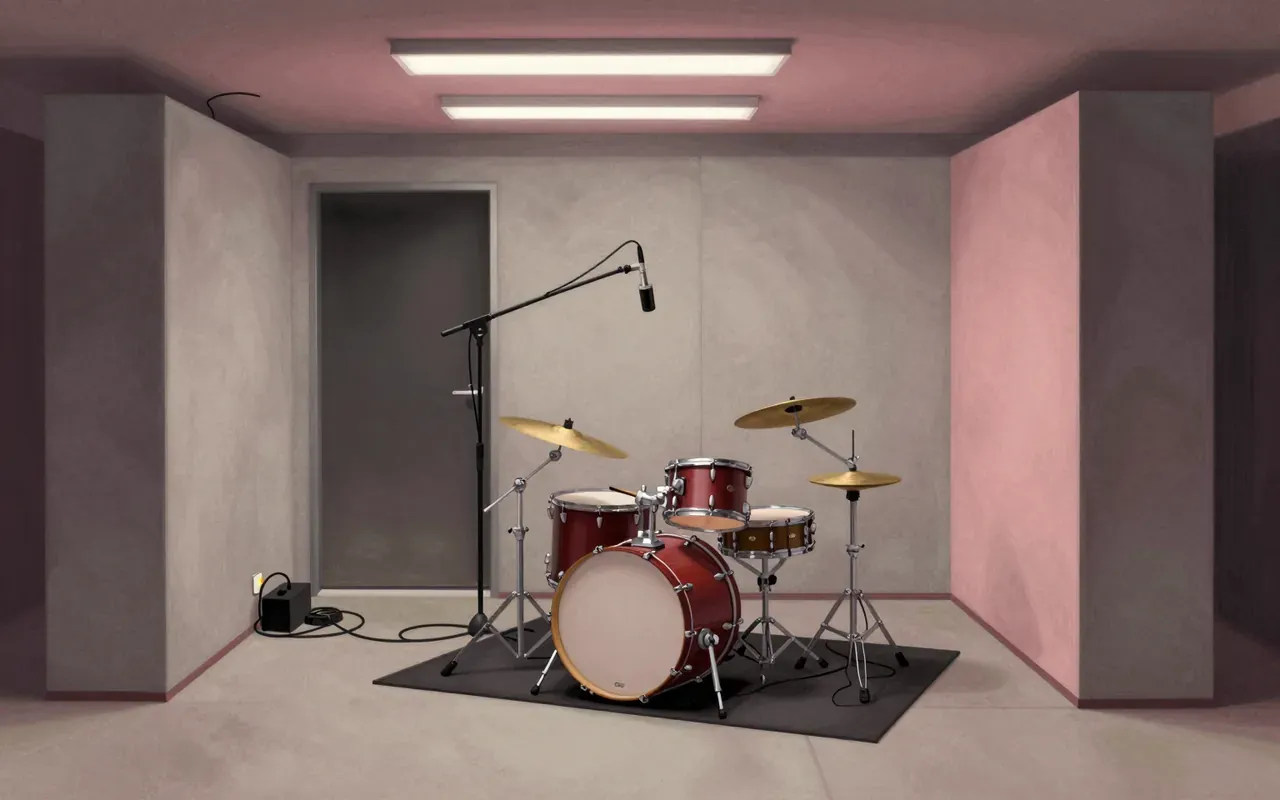
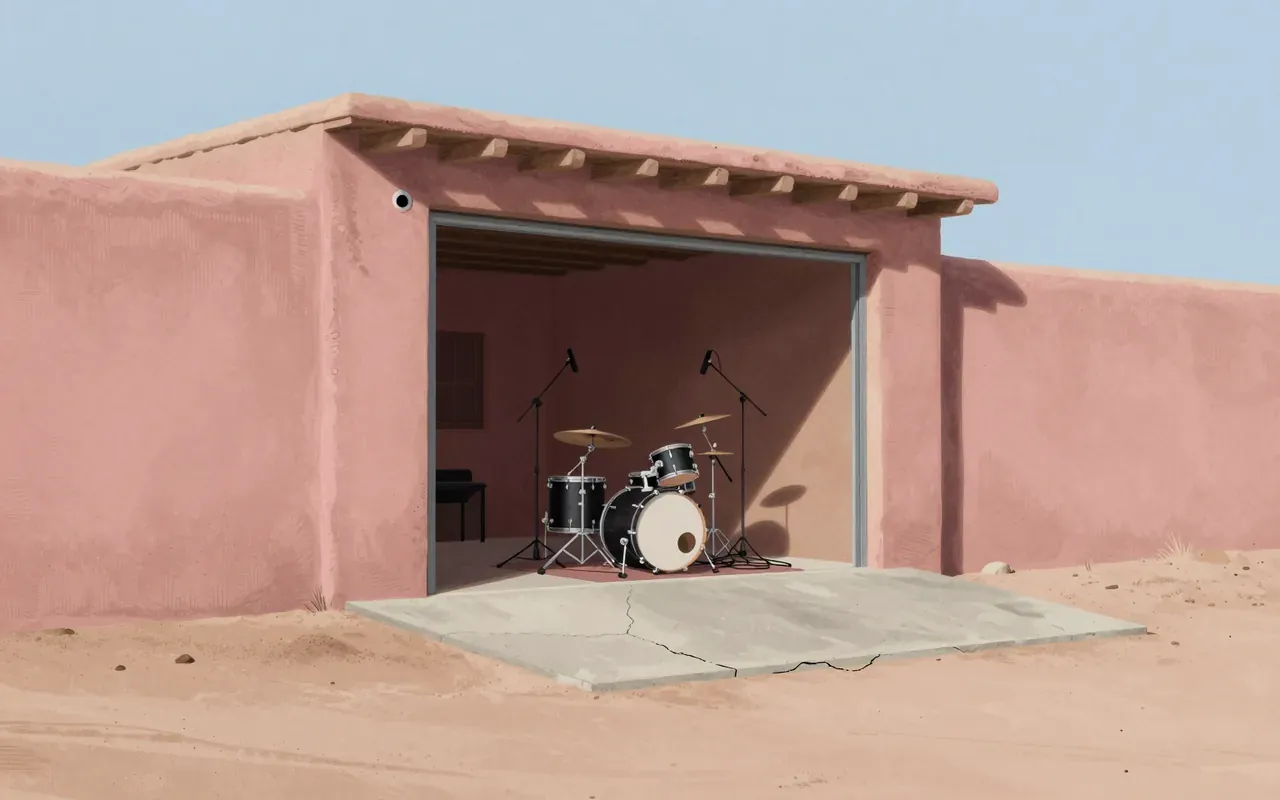
Songs for the Deaf is Queens of the Stone Age’s third studio album, released in 2002. It is structured as a loose concept record simulating a desert drive from Los Angeles to Joshua Tree, using faux-radio interludes. Dave Grohl’s drum parts were recorded twice per song — once with electronic cymbal pads and muted drums, once with live cymbals and dampened drums — then blended in a small, acoustically dead isolation booth to achieve a tight, punchy, claustrophobic sound. Several tracks are reworkings of earlier Desert Sessions recordings. The album was certified gold in 2003 with over 900,000 copies sold.

Chapters & takeaways6
  1. 1:20
    A Drive, Not a Playlist

    The album is a staged radio journey — not a metaphor, but a sequence of sonic signposts from LA to Joshua Tree.

  2. 2:27
    Drums in a Box

    Grohl’s drum sound is engineered claustrophobia — two passes, one dead room, zero reverb.

  3. 3:38
    Desert Rewound

    Seven tracks are reworked Desert Sessions pieces — stripped, tightened, and re-voiced.

  4. 5:02
    Bass, Drums, Static

    Alain Johannes and Natasha Shneider contributed, but the drum-and-bass architecture dominates the stereo field.

  5. 6:20
    Lightning, Not Legend

    The band called it ‘bizarre — like lightning in a bottle’. They meant the sound, not the myth.

  6. 7:41
    Certified, Not Canonised

    Gold by 2003. Over 900,000 copies sold. Not because it’s ‘iconic’, but because it plays loud and never blurs.

3 more chaptersFewer chapters
Running order16
  1. 01
    You Think I Ain’t Worth a Dollar, but I Feel Like a Millionaire3:12
  2. 02
    No One Knows4:39

    Heard in One Perfect Day (2004)Halloween (1978)

  3. 03
    First It Giveth3:18
  4. 04
    A Song for the Dead5:52
  5. 05
    The Sky Is Fallin’6:16
  6. 06
    Six Shooter1:19
  7. 07
    Hangin’ Tree3:06
  8. 08
    Go With the Flow3:07
  9. 09
    Gonna Leave You (Spanish version)2:55
  10. 01
    Do It Again4:05
  11. 02
    God Is in the Radio6:05
  12. 03
    Another Love Song3:16
  13. 04
    A Song for the Deaf
  14. 05
    Mosquito Song5:38
  15. 06
    The Lost Art of Keeping a Secret (live at The Troubadour)3:38
  16. 07
    Everybody’s Gonna Be Happy2:36

Film placements are the ones described in each film's own entry, so the list is partial rather than complete.

Worth your time?

Yes. Hear the whole thing.

4.5/ 5
What works
  • 'No One Knows' lands with its stop-start riff and clipped vocal delivery
  • 'Go With the Flow' lands with its slow-burn groove and Lanegan’s baritone
  • 'First It Giveth' lands with its layered bassline and abrupt tempo shift
  • the radio interludes land as tonal punctuation — dry, distorted, and deliberately cheap-sounding
What does not
  • live Troubadour cut breaks the radio-drive conceit
  • Spanish version of 'Gonna Leave You' feels tacked-on
Hear it if
  • listeners who value production as composition
  • people who notice how drum sounds sit in a mix
  • anyone who hears 'desert rock' and wants the actual heat, dust, and AM static
Skip it if
  • listeners who skip tracks
  • those who expect consistent vocal presence across the record
  • anyone needing linear narrative
Who should hear it, and who should skipHide who it is for
The written brief2 min read

What the record is and where it came from

Queens of the Stone Age’s third studio album. Recorded in 2001–2002. A loose concept record simulating a desert drive from Los Angeles to Joshua Tree, using faux-radio interludes. Features Dave Grohl on drums, Mark Lanegan as full-time member, and reworkings of Desert Sessions material.

How it sounds, and how it was made

Grohl’s drums were recorded twice per song — once with electronic cymbal pads and muted drums, once with live cymbals and dampened drums — then blended. The drum takes were captured in a small, acoustically dead isolation booth. This yields a tight, punchy, claustrophobic tone. Radio interludes stitch the album together as a simulated desert drive from Los Angeles to Joshua Tree.

What lands

‘No One Knows’ lands with its stop-start riff and clipped vocal delivery. ‘Go With the Flow’ lands with its slow-burn groove and Lanegan’s baritone. ‘First It Giveth’ lands with its layered bassline and abrupt tempo shift. The radio interludes land as tonal punctuation — dry, distorted, and deliberately cheap-sounding.

What does not

It does not sustain its concept across all 17 tracks. The live Troubadour cut of ‘The Lost Art of Keeping a Secret’ breaks the radio-drive conceit. The Spanish version of ‘Gonna Leave You’ feels tacked-on, not integrated.

The ideas inside it

A surreal, Lynchian descent into sensory overload. The desert is not backdrop but agent: heat, static, radio bleed, and disorientation are structural elements. The record treats the car radio as a narrative device — stations drop in and out like hallucinations.

Who should hear it, and who should not

Listeners who value production as composition. People who notice how drum sounds sit in a mix. Anyone who hears ‘desert rock’ and wants the actual heat, dust, and AM static — not just the vibe.

Is it worth your time

Yes. It rewards attention to texture and sequencing. The dual-drum process is audible in the snare’s snap and cymbal decay. The record’s coherence depends on listening straight through, not skipping to singles.

Same genre · Rock4 of 319
10:50
The Joshua TreeU2 · 1987A record made in two Irish houses. Guitar, bass, and drums played live through monitors. Open, ambient sound tied to the room. Antipathy toward US foreign policy held beside fascination with American space and ideals. Sequenced the night before delivery. Not ambient. Not experimental. Not American-made — but deeply, tensely, about America.
12:30
AMArctic Monkeys · 2013AM is Arctic Monkeys’ fifth studio album, released 9 September 2013. It marks their first venture into a hip hop-influenced sound, achieved by recording bass and drums first, using unconventional drum setups, and incorporating new instruments including the Hohner Guitaret, celeste, and vintage drum machine. It was produced by James Ford and co-produced by Ross Orton at Sage & Sound Recording in Los Angeles and Rancho De La Luna in Joshua Tree, California. Thematically, it concerns frustration surrounding tainted romance, sex and loneliness. Guest appearances include Josh Homme, Pete Thomas, and Bill Ryder-Jones—with Homme’s contribution to 'Knee Socks' singled out by Alex Turner as his favourite moment on the record. Turner described the sound as 'like a Dr. Dre beat, but we've given it an Ike Turner bowl-cut and sent it galloping across the desert on a Stratocaster', and said 'Arabella' expresses the album’s two dominant styles—hip-hop beats and 1970s heavy rock—most effectively in one track.
11:27
Who’s NextThe Who · 1971Who’s Next is the fifth studio album by The Who, developed from the abandoned Lifehouse project. It was recorded primarily at Olympic Studios with engineer Glyn Johns after initial sessions at Stargroves using the Rolling Stones Mobile Studio. The album features prominent synthesizer use—especially on 'Won't Get Fooled Again' and 'Baba O'Riley'—and includes contributions from guest musicians Nicky Hopkins and Dave Arbus. Eight of its nine tracks originated from Lifehouse, with 'My Wife' being the sole exception, added late in the sessions. The recording process emphasized sonic clarity and impact over narrative cohesion, reflecting a shift from the conceptual ambitions of Lifehouse to a focused, track-driven studio album. The album’s production was shaped by Johns’ pragmatic, sound-first approach, contrasting with the earlier, more chaotic Lifehouse sessions involving Kit Lambert and the Young Vic concerts. Key personnel include Roger Daltrey (vocals), Pete Townshend (guitars, vocals, synthesizers, organ, piano), John Entwistle (bass, vocals, brass, piano), and Keith Moon (drums, percussion).
9:44
Jerry Lee LewisJerry Lee Lewis · 1958The record 'Jerry Lee Lewis' is not a 1958 album. It is the documented body of his earliest Sun Records sessions — beginning with an audition in November 1956 and expanding through December 1956 and early 1957 — captured live in the Union Avenue studio with Jack Clement engineering. His piano dominates those recordings, appearing both on his own sides and on tracks by Carl Perkins and Billy Lee Riley. It is defined by immediacy, ensemble interplay, and physical presence — not by polish, concept, or commercial framing.
Up next in Music

Songs From a Room

Leonard Cohen · 1969 · 10:10

Cohen stripped everything back — not to bare bones, but to the bone’s grain.

10:10