Saved
Pop · Disco, funk & soul

The Lexicon of Love

A studio-as-theatre record that treats love like grammar — precise, teachable, and utterly artificial.

Worth your time?4/5Yes.Hear the whole thing.What works, what does not, who it is for ↓
10:53in productionCh. 1 · The Room/ 10:53 · ceiling 15 min
6 chapters · 10:53Ceiling 15:00

The brief is written and checked. The video joins this page when it is cut.6 chapters · 2 min read · 10:53 planned

Read the brief

A studio-crafted pop record that merges disco rhythm, post-punk economy, and Broadway lyricism — built on orchestral arrangement and early digital texture, not personality or grit.

Chapters & takeaways6
  1. 0:50
    The Room

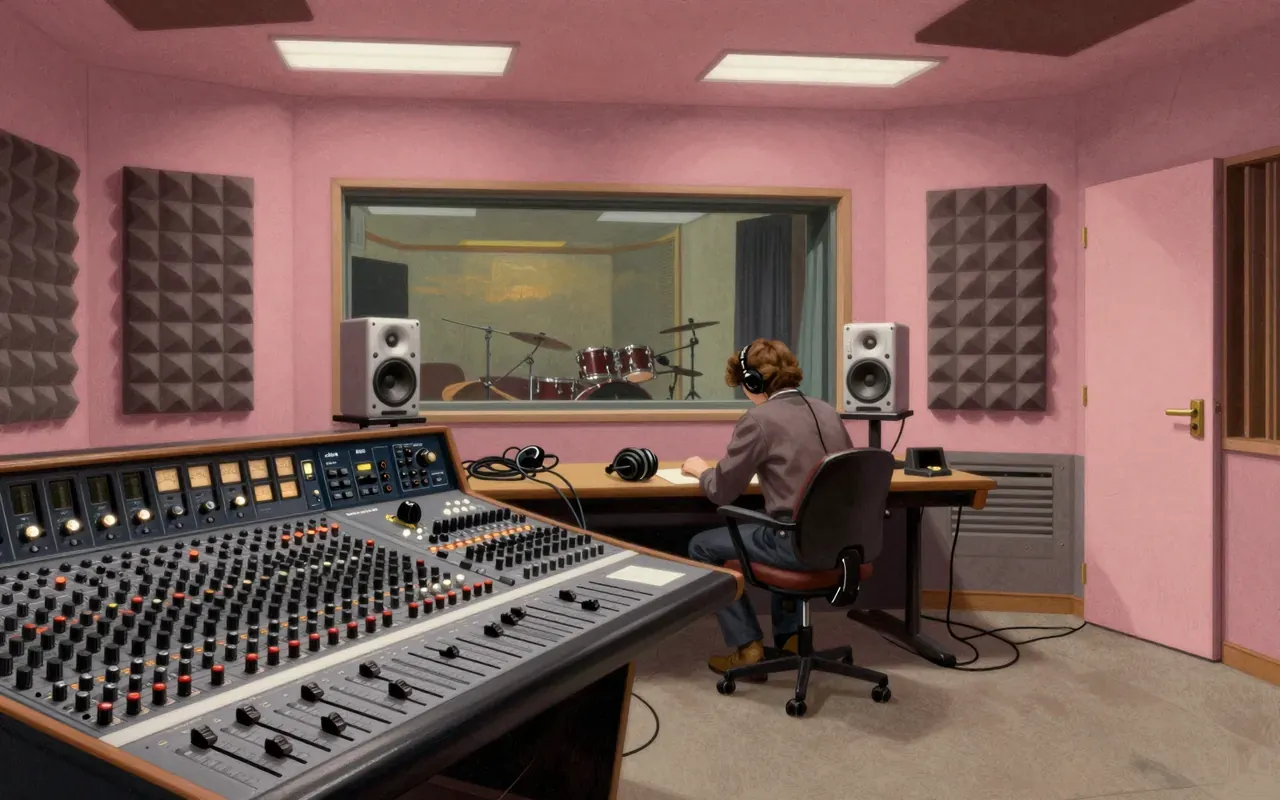
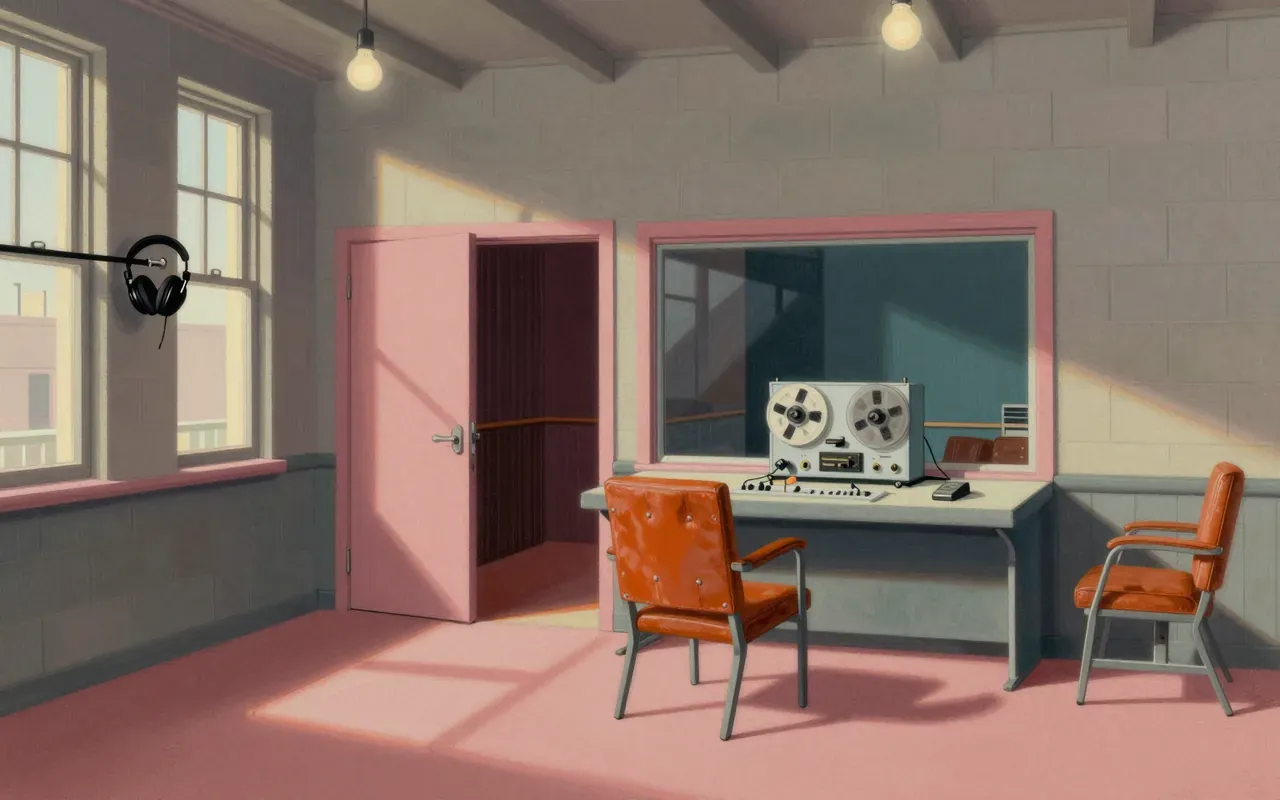
    Most of it was cut at Sarm East Studios in London — a room built for sonic control, not character.

  2. 2:10
    The Machine

    The Fairlight CMI appears not as a lead instrument but as punctuation — a shimmer, a stab, a breath between phrases.

  3. 3:15
    The Arrangement

    Anne Dudley’s string and brass arrangements are structural, not decorative: they carry harmonic weight and define phrasing.

  4. 4:25
    The Words

    Lyrics avoid tech metaphors and instead use emotional diction drawn from Broadway and Tin Pan Alley — love as verb, noun, adjective, and imperative.

  5. 5:35
    The Blend

    Disco’s pulse and post-punk’s economy are fused with show-tune sentiment — not pastiche, but translation.

  6. 7:04
    The Structure

    Ten songs about romance do not make a concept album — they make a syllabus.

3 more chaptersFewer chapters
Running order10
  1. 01
    Show Me4:02

    Heard in Aladdin (1992 Disney film) (1992)Days of Thunder (1990)Pretty Woman (1990)

  2. 02
    Poison Arrow3:25

    Heard in Hurry, Charlie, Hurry (1941)

  3. 03
    Many Happy Returns3:58

    Heard in Music Hath Charms (1935)

  4. 04
    Tears Are Not Enough3:31
  5. 05
    Valentine’s Day3:42

    Heard in Love Story (1970)The Shining (1980)9 to 5 (1980)Fifty Shades of Grey (2015)

  6. 06
    The Look of Love, Part One3:28
  7. 07
    Date Stamp3:52

    Heard in The Revolution Will Not Be Televised (2003)

  8. 08
    All of My Heart5:12
  9. 09
    4 Ever 2 Gether5:31
  10. 10
    The Look of Love, Part Four0:59

Film placements are the ones described in each film's own entry, so the list is partial rather than complete.

Worth your time?

Yes. Hear the whole thing.

4/ 5
What works
  • Poison Arrow
  • Tears Are Not Enough
  • All of My Heart
What does not
  • concept album
  • raw performance
  • spontaneity
  • lyrical abstraction
Hear it if
  • people who care how arrangements function
  • people who listen for where the room ends and the machine begins
Skip it if
  • people seeking raw performance
  • people seeking spontaneity
  • people seeking lyrical abstraction
Who should hear it, and who should skipHide who it is for
The written brief2 min read

What the record is and where it came from

It is ABC’s 1982 debut studio album: a consciously crafted fusion of disco, post-punk, mid-century show tunes and modern songwriting. It is not a concept album, though all ten tracks orbit romantic experience.

How it sounds, and how it was made

It sounds like a studio-built theatre: strings, brass and percussion arranged with orchestral precision, layered over sequenced Fairlight CMI textures and tight disco rhythms. It was made across five London studios — mostly Sarm East — under Trevor Horn’s production, with Gary Langan engineering and J. J. Jeczalik programming the Fairlight. Anne Dudley co-arranged and co-wrote some tracks. The bass was re-recorded after Horn replaced Mark Lickley with Brad Lang.

What lands

‘Poison Arrow’, ‘Tears Are Not Enough’ and ‘All of My Heart’ land because their melodies are anchored by orchestral counterpoint and rhythmic clarity. The strings do not cushion — they argue. The tempo stays steady. The vocals sit dry in the mix, close-mic’d and unadorned.

What does not

It does not sustain its ambition across all ten tracks. ‘The Look of Love, Part Four’ collapses the album’s structure with a 59-second coda that adds no resolution. Several songs rely on arrangement over development, and the Fairlight’s presence remains textural rather than compositional.

The ideas inside it

It treats romantic feeling as vocabulary — not metaphor, not irony, not nostalgia — but as a lexicon to be learned, misused, revised. Lyrics pursue emotional precision in the manner of Rodgers and Hammerstein or Cole Porter, rejecting the tech-obsessed themes common among 1982 synth-pop peers.

Who should hear it, and who should not

People who care how arrangements function — not just how they feel. People who listen for where the room ends and the machine begins. Not people seeking raw performance, spontaneity, or lyrical abstraction.

Is it worth your time

Yes. It rewards attention to craft: the interplay of live orchestration and early digital sequencing is deliberate, audible, and still distinctive. It is not background music. It demands you hear where the strings stop and the synth begins.
Same genre · Pop4 of 178
10:07
69 Love SongsThe Magnetic Fields · 199969 Love Songs is the Magnetic Fields’ sixth studio album, released on September 7, 1999, by Merge Records. It is a three-volume concept album comprising 69 love songs, all written by Stephin Merritt. Conceived as a theatrical revue inspired by Stephen Sondheim and Charles Ives’ 114 Songs, it was composed largely at Dick’s Bar in New York. The album features ukulele, banjo, accordion, cello, mandolin, flute, xylophone, Marxophone, synthesizers, guitars, and effects. Shirley Simms, Dudley Klute, L.D. Beghtol, and Claudia Gonson each sing lead on six songs; Daniel Handler plays accordion; Christopher Ewen serves as guest arranger/synthesist. It is the band’s best-known work.
11:43
Loving YouElvis Presley · 1957The 'Loving You' soundtrack is Elvis Presley’s first film album, recorded in early 1957 across two studios — Paramount Pictures Scoring Stage and Radio Recorders in Hollywood — with Steve Sholes as first officially credited producer. It contains seven songs written expressly for the film under Presley’s and Parker’s publishing companies, plus five added to meet LP runtime: 'Don’t Leave Me Now' (written for but excluded from the film), '(Let Me Be Your) Teddy Bear' (insisted upon by producer Hal B. Wallis), 'Blueberry Hill' (a 1956 Fats Domino hit), 'True Love' (a Cole Porter song from High Society), and 'I Need You So'. Released in July 1957, it was Presley’s third consecutive number-one album. It inaugurated RCA’s practice of padding Presley soundtracks with non-soundtrack recordings — a pattern that defined his film-era output.
11:34
HomogenicBjörk · 1997Homogenic is Björk’s third studio album, recorded in Spain in 1996 after halting London sessions due to media attention following a stalker’s murder attempt. Produced with Mark Bell, Guy Sigsworth, Howie B, and Markus Dravs, it fuses chilly strings from the Icelandic String Octet, stuttering abstract beats, and unconventional instruments like accordion and glass harmonica. It is conceptually rooted in Iceland — embodying volcanic rawness and technological modernity — and intended as a simple, one-flavoured departure from her earlier eclecticism. It retains electronic dance-music and techno-futurism but abandons the sweet melodies and peppy dance collages of Debut and Post. 'Unravel' incorporates a traditional Icelandic choral technique blending speech and song. Björk composed melodies on a Casio keyboard and involved non-professionals like babysitter Rebecca Storey in production. The album was delayed due to vocal dissatisfaction and cover reshoots, and released in September 1997.
2:02
Scott 4Scott Walker · 1969Scott 4 appeared in 1969 under Walker's birth name, Scott Engel. It was his first album made entirely from his own songs, rather than a mixture including covers and Jacques Brel translations. That change places the dramatic situations more firmly within his authorship.
Up next in Music

The Madcap Laughs

Syd Barrett · 1970 · 12:15

A record where every false start is kept because it’s truer than the take that follows.

12:15