musicbriefs
13:00in productionCh. 1 · Answering their own debut/ 13:00 · ceiling 15 min
House & techno · Electronic

Discovery

Daft Punk pushed vocoders and pitch correction past their intended use and argued that obviously synthetic sound could carry as much feeling as a live band.

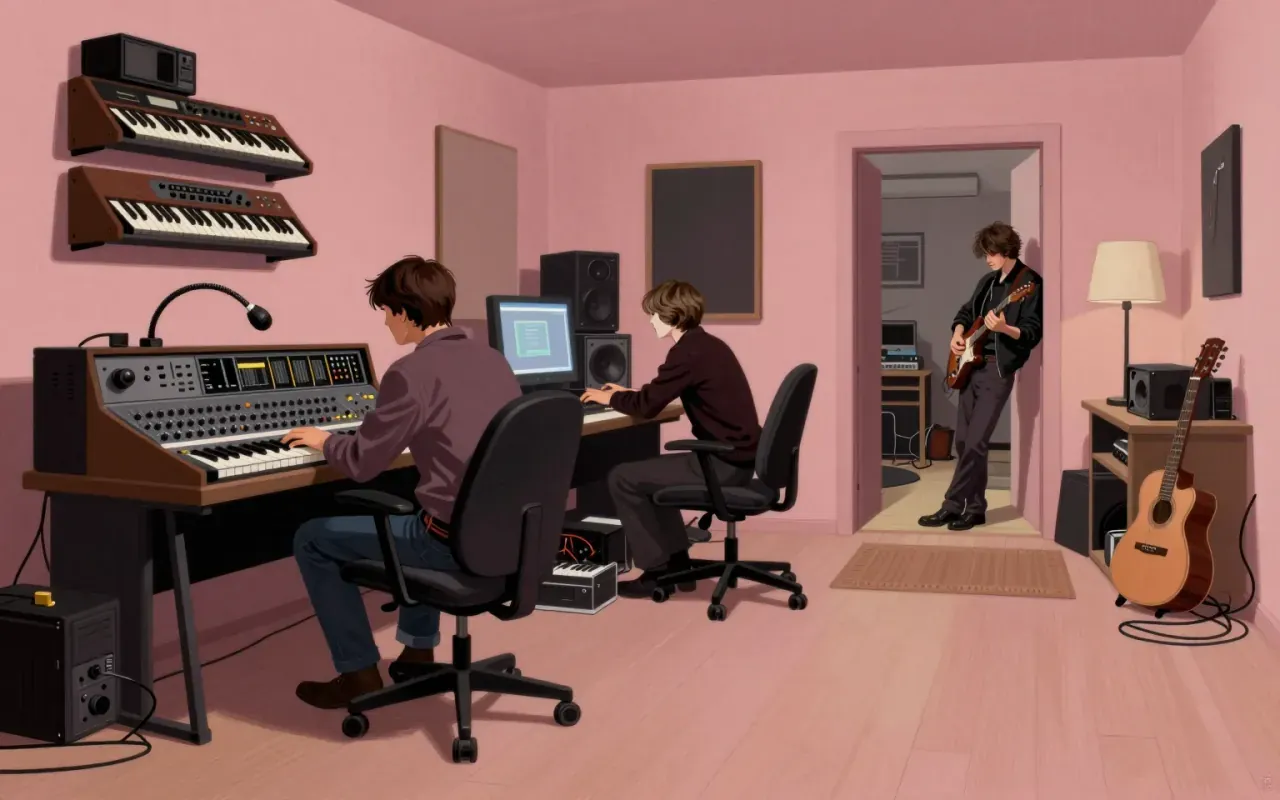
Built at Thomas Bangalter's home studio in Paris over two years, Discovery pairs vintage drum machines and keyboards with heavily processed vocals to turn childhood memory into pop songwriting. It moved the duo from raw club tracks toward a more song-based sound and remains a high point for vocoder-driven dance music.

Chapters & takeaways7
  1. 0:08
    Answering their own debut

    Made at home in Paris over two years, the record deliberately pushed away from the raw club sound of the duo's first album.

  2. 1:51
    Old drum machines, pushed-past vocals

    Vintage hardware, vocoders and misused pitch-correction software, plus guest musicians, built the record's signature glassy tone.

  3. 3:43
    Studio trickery as real songwriting

    Processed vocals and vintage keyboards carry genuine pop choruses rather than functioning as mere studio experiments.

  4. 5:34
    Where the range costs momentum

    A few ambient instrumental passages feel like connective tissue, and the album's sampling has not aged without controversy.

  5. 7:26
    Nostalgia through artifice

    The record argues childhood memory and heavy studio processing are not opposites, using synthetic sound to carry real feeling.

  6. 9:17
    Who should hear it

    Rewards listeners wanting house and disco fused with pop songwriting; those wanting the rawer debut sound may find it a step away.

  7. 11:09
    A high point for vocoder pop

    Despite a weaker ambient stretch and sampling controversy, its song-based, processed-vocal approach remains a high point for the genre.

Worth your time?

Yes. Hear the whole thing.

4.5/ 5
What works
  • Heavily processed vocals used for genuine pop choruses
  • Vintage hardware giving the record a warm, specific tone
  • Guest contributions from Romanthony, Todd Edwards and DJ Sneak
  • A coherent album built from wide-ranging influences
What does not
  • A few ambient passages feel like filler between stronger songs
  • The album's sampling has drawn later scrutiny over credit and payment
Hear it if
  • Listeners who want house and disco fused with real pop songwriting
  • Anyone curious how vocoders and pitch correction can carry emotion
  • Fans of vintage drum machines and keyboards
Skip it if
  • Those wanting the duo's rawer, more functional club tracks
  • Listeners wanting dance music without pop-song concessions
The written brief3 min read

Answering their own debut

Discovery arrived in 2001 as the second album by the French duo Daft Punk, Thomas Bangalter and Guy-Manuel de Homem-Christo, made in Bangalter’s Paris home studio, Daft House, over roughly two years following the touring cycle for their debut, Homework. Where that first record had been built to prove electronic music could hold its own with rock audiences, Bangalter has described this one as aimed the other way, telling electronic listeners that older guitar and disco records deserved the same respect. Rather than another set of raw club tracks, the duo set out to explore song structure directly, drawing on memories of growing up in the decade between the mid-1970s and mid-1980s.

Old drum machines, pushed-past vocals

Instead of the Roland drum machines standard to house production, Daft Punk built the record around older hardware: an Oberheim DMX, a LinnDrum, a Sequential Circuits Drumtraks, samplers including an Akai and an E-mu, plus Fender Rhodes and Wurlitzer electric pianos and vocoders run through effects pedals. Vocals were processed with pitch-correcting software pushed well outside its intended use, producing the glassy, robotic tone that became the record’s signature. Guest musicians Romanthony, Todd Edwards and DJ Sneak contributed vocals and writing across several tracks, and the duo layered in samples both borrowed and self-made, occasionally constructing passages designed to sound like disco or funk records that never actually existed.

Studio trickery as real songwriting

The record’s real achievement is turning studio trickery into something that plays like proper songwriting rather than a producer’s showcase. One More Time rides a heavily processed vocal from Romanthony into a genuine pop chorus; Digital Love builds a full arrangement around a Wurlitzer solo and vintage synthesiser lines; Harder, Better, Faster, Stronger compresses an entire argument about music and repetition into a few minutes of electro. Individual tracks range freely across disco, funk, new wave and ambient territory, yet the record holds together as a single, coherent listen rather than a scattered collection of studio experiments, which is no small feat across fourteen tracks.

Where the range costs momentum

That same range occasionally works against the album’s momentum. A handful of the more purely instrumental or ambient passages, Nightvision especially, feel like connective tissue between the record’s stronger, song-based tracks rather than destinations worth returning to on their own. The heavy reliance on samples, some cleared and credited, at least one traced back to a songwriter never properly compensated for its use, sits a little uneasily against an album otherwise so focused on craft and structure, a reminder that even a meticulously built record depends on other people’s earlier work.

Nostalgia through artifice

Discovery’s underlying idea is that childhood nostalgia and studio artifice are not opposites. Bangalter has framed the album as an exploration of memory from the mid-1970s through the mid-1980s rather than a straightforward homage to any one style, and the vocoders, pitch-correction and vintage keyboards serve that memory rather than disguising it. The record argues, through its own construction, that heavily processed, obviously synthetic sound can carry as much genuine feeling as an unprocessed vocal or a live band, provided the songwriting underneath is strong enough to support it, and across fourteen tracks that argument mostly holds.

Who should hear it

Listeners who want house and disco influences married to actual pop songwriting, or who are curious how vocoders and pitch correction can be pushed toward emotion rather than novelty, will find plenty here. It works equally well as a full album or picked apart into individual singles. Those wanting the rawer, more strictly functional club tracks of the duo’s debut, or dance music without concessions to pop structure, may find this record’s polish and song-first approach a step away from what first drew them to the group in the first place.

A high point for vocoder pop

More than two decades on, Discovery still sounds like the record that pulled disco, house and vocoder pop into a shape mainstream audiences could embrace without electronic music losing its identity in the process. A couple of its more ambient stretches remain the weakest link, and its sampling has not aged without controversy, but as a piece of songwriting built almost entirely from synthetic and processed sound it remains a high point for the duo and for the wider genre it helped popularise, and it still sounds far ahead of most of what it inspired.
Same genre · House & techno4 of 9
13:00
HomeworkDaft Punk · 1997Made in their own Paris studio without label input, Homework turns disco, funk and soul samples into house and techno tracks built around a single insistent hook apiece. Some of that repetition wears thin over sixteen tracks, but the record helped push French house to an audience dance music rarely reached before.
8:49
Gabber1992Gabber is a Dutch electronic dance music subgenre of hardcore, developed in Rotterdam and Amsterdam in the 1990s. It is characterised by fast beats, distorted and heavy kickdrums, and dark themes. It formed as an underground, anti-establishment movement centred on illegal raves in warehouses, basements and tunnels. It later entered mainstream Dutch culture via events like Thunderdome and spread globally to rave communities in the UK, Spain, Italy, US and Australia. It remains highly popular in the Netherlands and saw a major resurgence in the late 2010s.
13:00
ScreamadelicaPrimal Scream · 1991Working with the acid house DJ Andrew Weatherall and engineer Hugo Nicolson, a Scottish guitar band reassembled its own recordings into a record that moves from gospel-soul swagger to dub-inflected drift without settling on one genre. It won the first Mercury Prize and remains the clearest document of guitar music meeting the dancefloor on equal terms.
13:02
Music for the Jilted GenerationThe Prodigy · 1994Music for the Jilted Generation is a breakbeat techno record defined by its political stance, sampling rigour, and studio discipline. It rejects commercial rave tropes while expanding the form’s emotional and structural range. It is not nostalgic. It is not ambient. It is not collaborative beyond Howlett and Reality. It is urgent, specific, and sonically uncompromising.
Up next in Music

Dummy

Portishead · 1994 · 13:00

Two Bristol musicians and a guitarist who taught them to sample distressed their own vinyl on purpose, building a debut that sounds older than it is and sadder than trip hop usually allows.

13:00