Saved
House & techno · Electronic

Homework

Daft Punk financed and built their own debut at home, and argued through sheer sample-driven directness that electronic music deserved rock's seriousness.

Worth your time?4/5Yes.Hear the whole thing.What works, what does not, who it is for ↓
13:00in productionCh. 1 · A home studio, not a label plan/ 13:00 · ceiling 15 min
7 chapters · 13:00Ceiling 15:00

The brief is written and checked. The video joins this page when it is cut.7 chapters · 3 min read · 13:00 planned

Read the brief

Made in their own Paris studio without label input, Homework turns disco, funk and soul samples into house and techno tracks built around a single insistent hook apiece. Some of that repetition wears thin over sixteen tracks, but the record helped push French house to an audience dance music rarely reached before.

Chapters & takeaways7
  1. 0:08

    Made at their own Daft House studio in Paris, the debut grew from singles into an album only once enough strong material existed.

  2. 1:51

    Recording, mixing and a self-taught approach at home let the duo keep ownership over a record built on samples and drum machines.

  3. 3:43

    Disco, funk and gospel samples turn into propulsive house and techno tracks that name their own influences directly.

  4. 5:34

    Several tracks lean on a single repeated riff for their full length, and the album's back half runs longer than its ideas sustain.

  5. 7:26

    Built and financed independently, the record pitched itself at rock listeners as proof electronic music deserved equal seriousness.

  6. 9:17

    Suits fans of French house's roots; those wanting the duo's later, more song-oriented approach may find some tracks narrow.

  7. 11:09

    Selling well beyond dance music's usual audience, it remains a convincing statement that home-built electronic music could compete with anything else on the radio.

4 more chaptersFewer chapters
Worth your time?

Yes. Hear the whole thing.

4/ 5
What works
  • Disco and funk samples turned genuinely propulsive
  • Da Funk and Around the World's hypnotic single-riff structure
  • Teachers naming the duo's own house influences directly
  • The record's self-financed, independent construction
What does not
  • Several tracks lean on one repeated idea for their full length
  • The back half runs longer than its ideas always sustain
Hear it if
  • Anyone interested in the roots of French house
  • Listeners who want a record built almost entirely from samples and drum machines
  • Fans who enjoy hearing an album's own influences named directly
Skip it if
  • Those wanting the fuller songwriting of the duo's later work
  • Listeners wanting varied arrangement within each individual track
Who should hear it, and who should skipHide who it is for
The written brief3 min read

A home studio, not a label plan

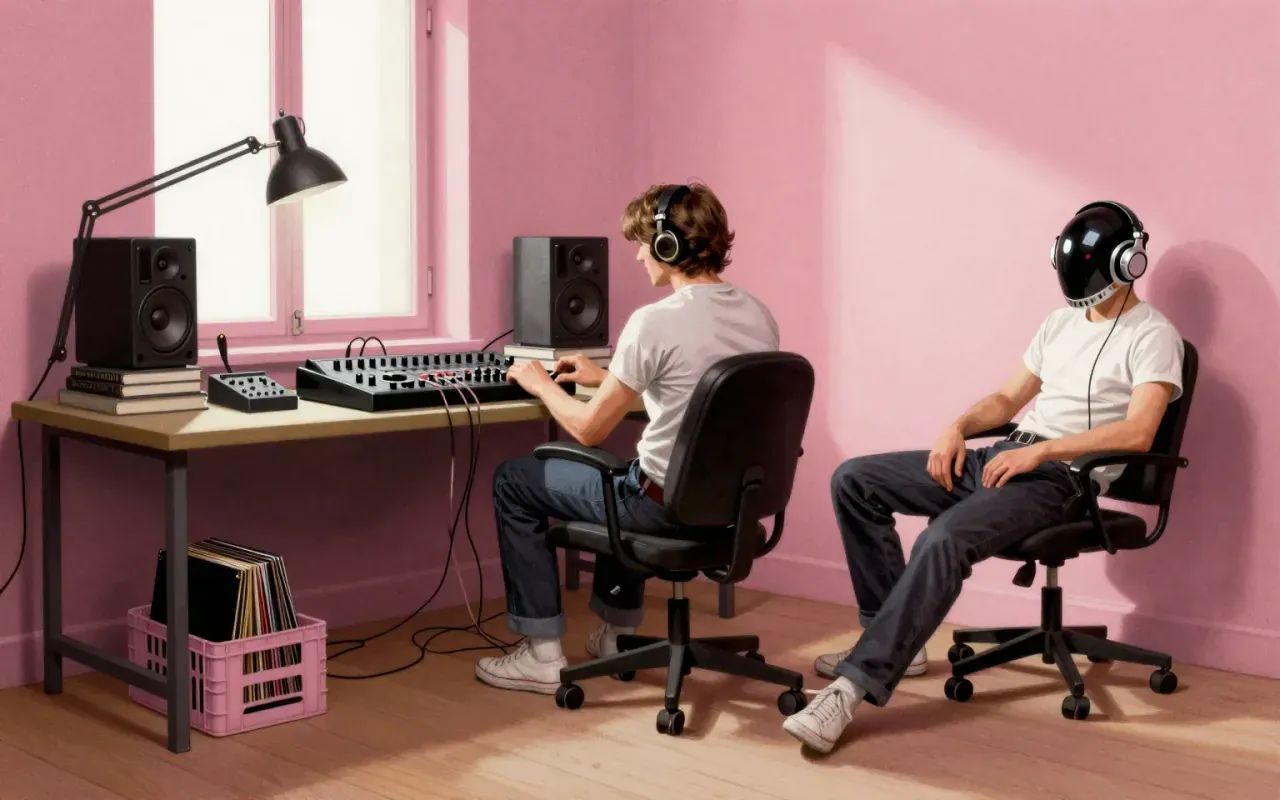
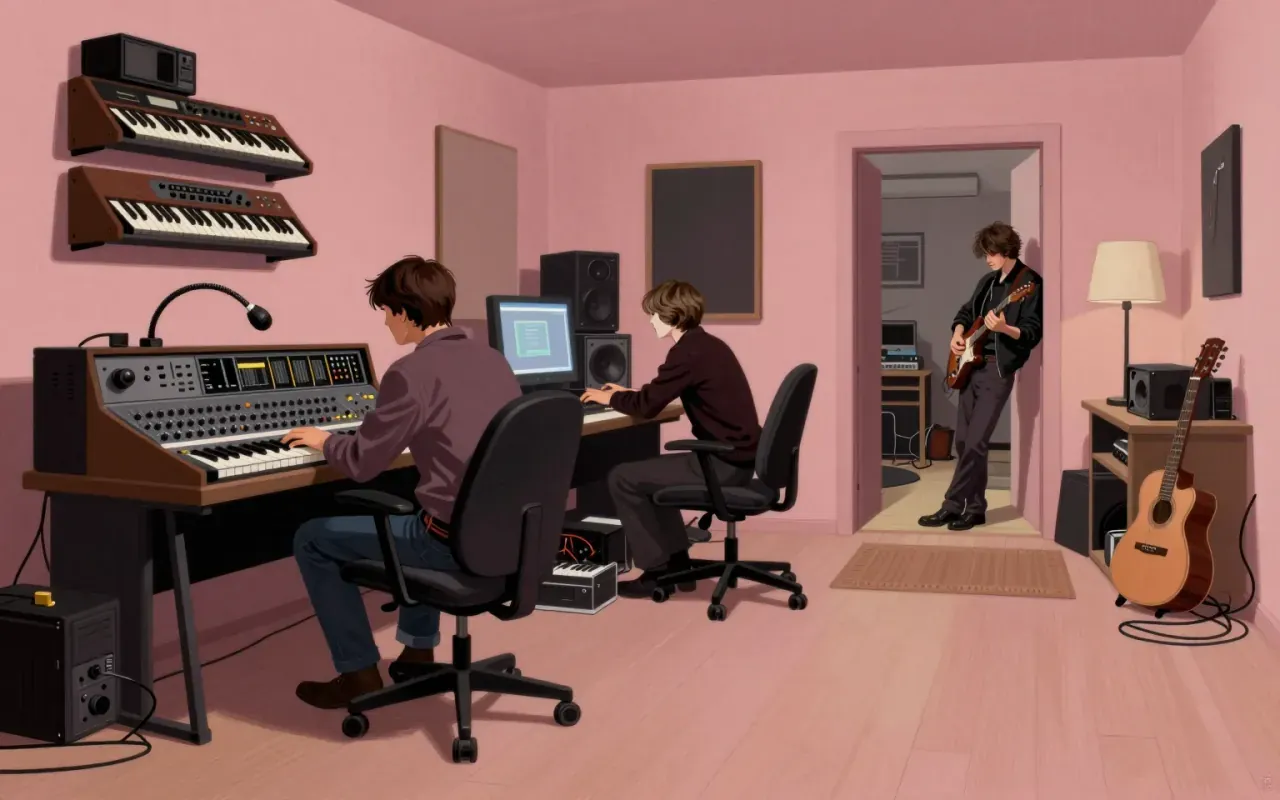
Homework is the January 1997 debut from the French duo Daft Punk, Thomas Bangalter and Guy-Manuel de Homem-Christo, who had been building a following on the Scottish label Soma with singles like Da Funk before signing to Virgin the previous year. The title refers plainly to where it was made: their own home studio in Paris, named Daft House, on a modest budget and without any label plan dictating how the record should sound. The pair had not originally set out to make an album at all, only individual singles, and only realised partway through that they had accumulated enough strong material to sequence as a full-length record.

Financing their own control

Recording and mixing both happened at Daft House, with mastering handled separately by Nilesh Patel in London. Working without outside production or a bigger studio budget, Bangalter and Homem-Christo built tracks around drum machines, samplers and a fairly minimal, self-taught approach to recording, favouring control over polish; Bangalter later linked that independence directly to their reason for financing the sessions themselves rather than working inside a label’s studio system. The duo built the album’s sequence to fill the four sides of a double vinyl LP, and individual tracks draw on samples from disco, soul and funk records, credited sources including Elton John, Vaughan Mason and Crew, and Viola Wills among them.

Samples that show their lineage

The record’s strength lies in how directly its house and techno elements connect to the disco and funk records feeding them. Da Funk rides a bouncy, almost comic funk guitar sample into something genuinely propulsive; Around the World reduces a Gershon Kingsley-style hook to a single, endlessly repeating line that becomes hypnotic rather than tiresome; Phoenix threads gospel phrasing through house rhythm without either element feeling bolted on. Teachers doubles as a tribute to the duo’s own house influences, naming several of the producers who would later work with them directly, which gives the record a clear sense of lineage rather than arriving from nowhere.

Where the loops run thin

Some of that same directness can read as thin once the novelty wears off; several tracks lean on a single repeated riff or sample for their entire length, which suits the duo’s house-music roots but leaves a handful of pieces without much internal development beyond the loop itself. At sixteen tracks and well over an hour, the album’s back half in particular runs longer than its ideas always sustain, and a listener expecting the more fully arranged songwriting of the duo’s later work may find these earlier tracks comparatively one-dimensional by design.

Arguing electronic music’s legitimacy

Homework’s underlying idea, more clearly than any individual track states it, is that electronic dance music could hold its own against guitar-based rock rather than sit in a separate, lesser category. Bangalter has described the record as pitched at rock listeners specifically, an attempt to argue that electronic music deserved the same seriousness, and the duo’s insistence on owning their own masters and financing their own studio reinforced that same claim to legitimacy on their own terms rather than a label’s. The album’s commercial success across dozens of countries suggests the argument landed with an audience well beyond dance music’s usual reach.

Who should hear it

Anyone interested in the roots of French house, or in hearing a record built almost entirely from samples and drum machines that still argues for itself as a proper album rather than a DJ tool, should find this rewarding. It works well both as a start-to-finish listen and broken into individual tracks. Those wanting the fuller, more song-oriented approach the duo later developed on Discovery, or dance music with more varied arrangement within each track, may find some of Homework’s loop-based pieces comparatively narrow by comparison, best suited to a set rather than close listening.

A founding document

Homework sold well over two million copies within its first four years and helped push French house to an international audience it had not previously reached, and that influence still holds up on relistening. A few of its longer, more repetitive tracks have not aged as gracefully as its best-known singles, but as a statement of intent, that electronic music built at home from samples and drum machines could compete on equal terms with anything else on the radio, it remains a genuinely convincing one, and a founding document for a genre it did much to popularise.
Same genre · House & techno4 of 9
13:00
DiscoveryDaft Punk · 2001Built at Thomas Bangalter's home studio in Paris over two years, Discovery pairs vintage drum machines and keyboards with heavily processed vocals to turn childhood memory into pop songwriting. It moved the duo from raw club tracks toward a more song-based sound and remains a high point for vocoder-driven dance music.
7:57
Silent ShoutThe Knife · 2006Silent Shout is The Knife’s third studio album, released 17 February 2006. It is darker than Deep Cuts. It is synth-pop and techno. Karin Dreijer’s vocals are pitch-shifted and multi-tracked. The Knife handled recording, programming, production, vocals, and mixing. Christoffer Berg mixed tracks 1–7, 9, and 11. Pelle Gunnerfeldt mixed tracks 8 and 10. Henrik Jonsson mastered the album. Pitchfork named it the best album of 2006. A companion DVD, Silent Shout: An Audio Visual Experience, was released 8 November 2006. 'We Share Our Mothers’ Health' was iTunes’ Single of the Week in late 2006.
8:49
Gabber1992Gabber is a Dutch electronic dance music subgenre of hardcore, developed in Rotterdam and Amsterdam in the 1990s. It is characterised by fast beats, distorted and heavy kickdrums, and dark themes. It formed as an underground, anti-establishment movement centred on illegal raves in warehouses, basements and tunnels. It later entered mainstream Dutch culture via events like Thunderdome and spread globally to rave communities in the UK, Spain, Italy, US and Australia. It remains highly popular in the Netherlands and saw a major resurgence in the late 2010s.
11:40
In ColourJamie xx · 2015In Colour is a meticulously assembled electronic record that treats sampling as archival practice and editing as emotional architecture. Its strength lies in restraint: space, decay, and human imperfection are compositional tools — not accidents to be polished out.
Up next in Music

Hunky Dory

David Bowie · 1971 · 13:00

David Bowie writes at the piano for the first time and arrives, mid-record, at the voice that would carry him into Ziggy Stardust.

13:00