What the record is and where it came from
Heart Like a Wheel is Linda Ronstadt’s 1974 commercial breakthrough: her first number 1 album on the Billboard 200, her first number 1 Country Album, and a double-platinum seller in the US. It contains ten songs, including covers of R&B, country, and Everly Brothers material, reworked into polished country-rock.
How it sounds, and how it was made
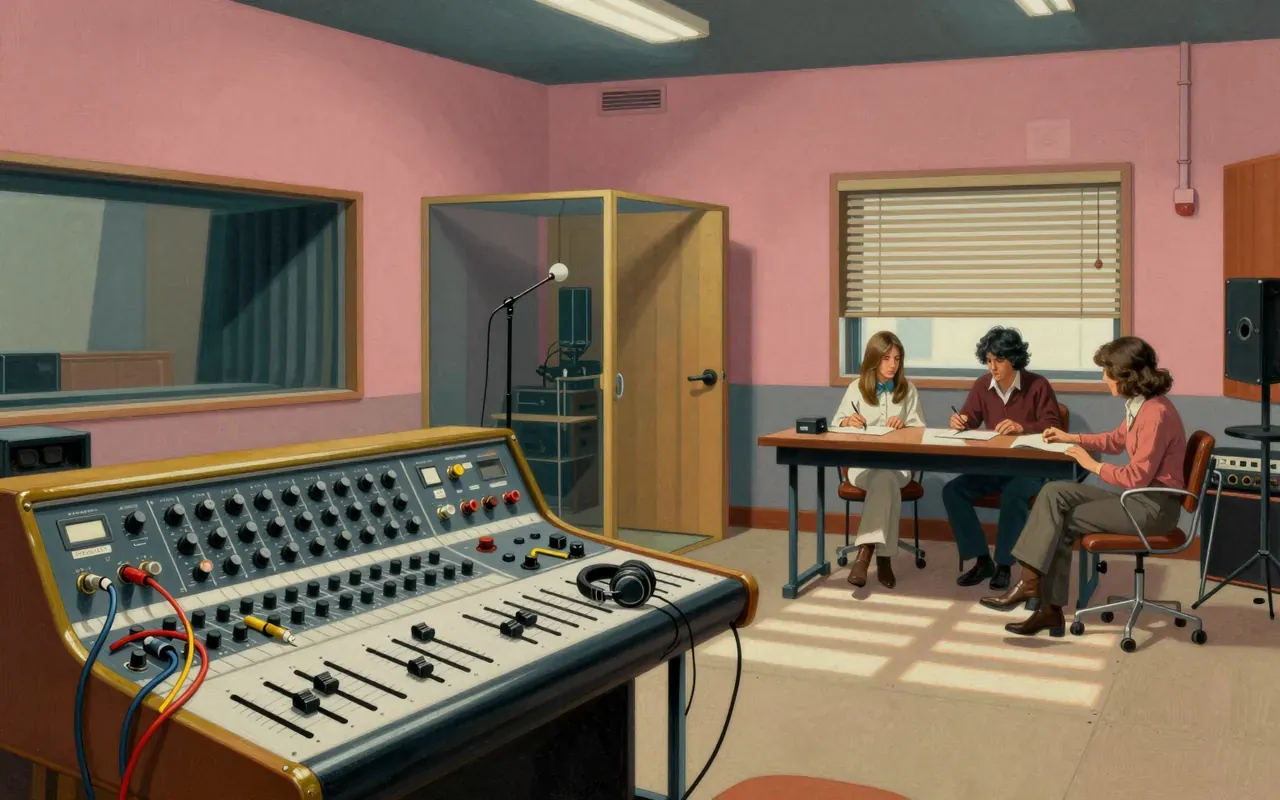
The album is built on layered acoustic and electric guitars, pedal steel, electric piano, and tight drum tracks. Andrew Gold plays electric guitar solo, drums, percussion, and electric piano across multiple tracks. Eddie Black adds electric guitar on ‘You’re No Good’. Bob Warford plays acoustic guitar on three tracks and electric guitar solos on ‘Dark End of the Street’ and ‘Willing’. Sneaky Pete Kleinow’s pedal steel appears on four tracks. JD Souther contributes acoustic guitar and harmony vocals on ‘Faithless Love’. Herb Pedersen adds banjo to ‘Faithless Love’ and backing vocals on ‘Willing’. Paul Craft plays acoustic guitar on ‘Keep Me From Blowing Away’. Linda Ronstadt sings lead on all tracks and adds backing vocals on five others. Peter Asher produced. Val Garay and David Hassinger engineered and mixed.
What lands
‘You’re No Good’ lands with its punchy drum track and Beatles-adjacent guitar — a deliberate, radio-ready rockification. ‘When Will I Be Loved’ lands with its uptempo country-rock drive and Ronstadt’s precise, declarative phrasing. ‘I Can’t Help It (If I’m Still in Love with You)’ lands with its clean country arrangement and vocal restraint — enough to win a Grammy for Best Country Vocal Performance/Female.
What does not
It does not experiment with form, tempo, or texture. There are no extended solos, no studio effects beyond standard mixing, no ambient space or room tone described in the sources. It avoids improvisation, abstraction, or lyrical ambiguity.
The ideas inside it
The album treats heartbreak as a physical object — a wheel, a dark street, a closed eye — and frames love as something that arrives unbidden, persists against reason, and demands vocal control to contain. It insists on craft over confession.
Who should hear it, and who should not
People who want to hear how country-rock sounded when it was made for clarity, not atmosphere — listeners interested in vocal placement, instrumental separation, and mid-70s LA session craft. Not for those seeking rawness, distortion, or genre deconstruction.
Is it worth your time
Yes. It delivers ten tightly arranged, cleanly recorded country-rock songs with clear instrumental roles and vocal precision. Its commercial dominance and Grammy recognition reflect its execution, not mythmaking.