From the charts into the dark
Spirit of Eden is the fourth studio album by the English band Talk Talk, released on Parlophone in September 1988 after ten months of recording at Wessex Studios in London. It followed The Colour of Spring, a record that had sold over two million copies and given the band, led by singer Mark Hollis alongside drummer Lee Harris and bassist Paul Webb, an open budget and full control from EMI, who were kept out of the sessions entirely. Rather than repeat that album’s success, Hollis and producer Tim Friese-Greene used the freedom to go further from pop songwriting, building six tracks from long stretches of improvised playing. The record would later be credited as a founding document of post-rock, though the term did not exist when it was made.
Hours of playing, minutes kept
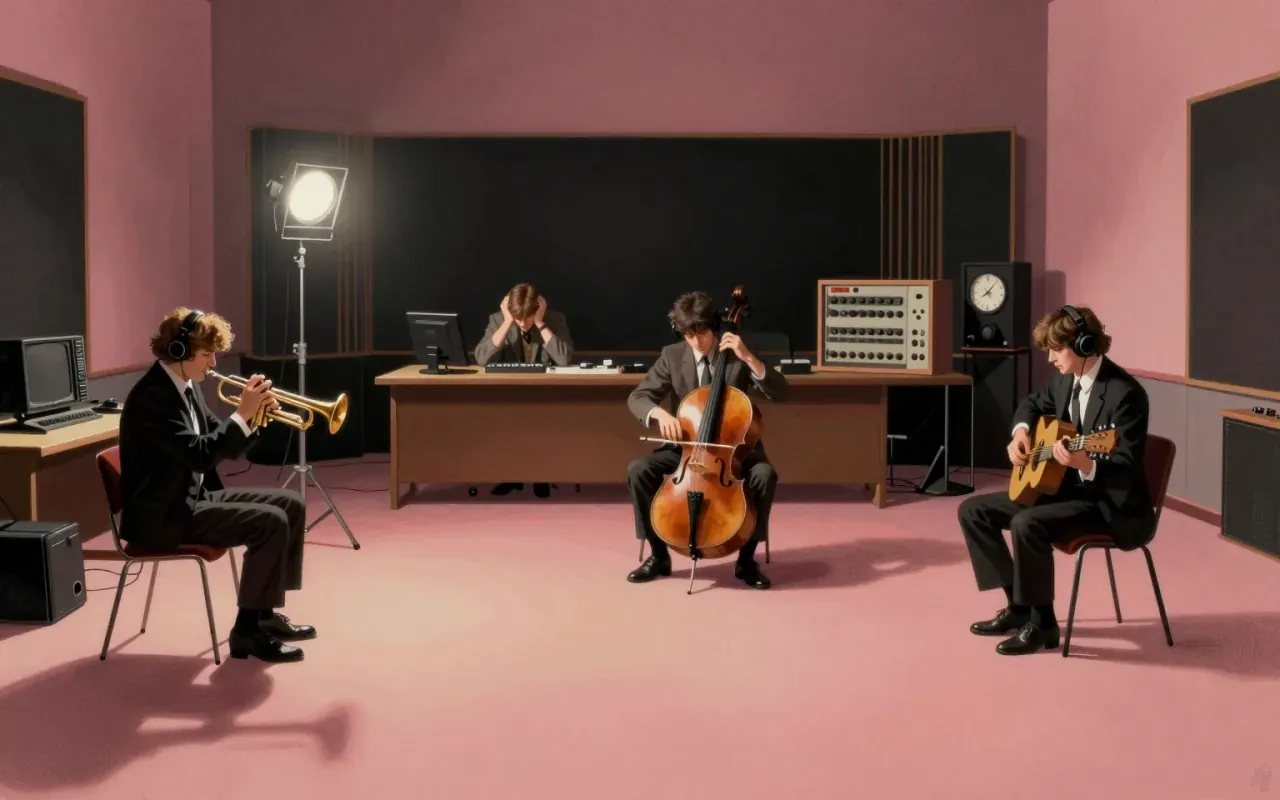
The sessions ran from May 1987 into 1988, with basic tracks laid down first and overdubs continuing for months afterward, much of it recorded in a blacked-out studio lit only by an oil projector and a strobe. Engineer Phill Brown described the process as built on chance and endless attempts at overdubs, with musicians led into the dark room and played a track through headphones with almost no instruction. Hollis left the lyrics until late in the process, writing them at a rectory in Suffolk where he and his wife had recently moved and where their first child was born during the sessions; vocals were among the last elements recorded, in early 1988. The finished album compresses that enormous amount of raw material into just six songs.
Where the silence pays off
What the record does well is make silence function as an instrument rather than an absence, so that a burst of guitar or a rise in Hollis’s voice carries far more weight than it would in a conventionally arranged song. The editing down from long improvisations means almost nothing on the record is filler; each passage that survived the cut earned its place by holding attention against a great deal of quiet around it. The combination of jazz phrasing, echoes of dub spacing, and folk-adjacent melody gives the six tracks a texture that few rock records from the period share, and the discipline behind assembling that texture from hours of loose playing is arguably the album’s real achievement, more than any individual performance.
Where it asks too much
The cost of that discipline is accessibility. Songs built from edited improvisation rarely arrive at a hook, and Spirit of Eden mostly declines to, which made it a difficult record for EMI to sell and remains a difficult record for a new listener to enter on a first pass. Structures shift without warning, verses do not resolve the way pop conditions a listener to expect, and several passages sit so quietly that a distracted play-through will miss much of what is happening. The band’s refusal to tour behind the record, with Hollis saying he could not recreate music that had been built from spontaneous studio takes, meant the album also had no live performance to help audiences find a way into its shape.
Words written last
Hollis has described his lyrics as religious in outlook but not tied to any particular creed, preferring to call them humanitarian, and that unresolved spiritual searching runs under the record’s title and its pastoral imagery, tied loosely by commentators to the couple’s move to rural Suffolk. One track has been read as addressing heroin use, and Hollis has spoken about knowing people who were harmed by it and objecting to how rock music tends to romanticise the drug. Underneath the specific subjects sits a broader idea about music itself: that a song could be treated as something assembled from raw material rather than performed complete, closer to editing film than to playing in a band, which the record’s own construction argues for as much as its words do.
Who it rewards
This is a record for listeners who already have some patience for jazz, ambient composition, or improvised music and are willing to sit through long quiet stretches for a payoff that arrives on the record’s own schedule rather than on demand. Anyone who loved Talk Talk for the synth-driven singles of their earlier albums is likely to find this a difficult, even alienating turn, since almost nothing here resembles that sound. It also rewards someone interested in studio process, in how a band can turn near-endless improvisation into six disciplined songs, more than someone simply looking for a good tune to hum. Played as background music it will mostly disappear; played with attention, its long silences start to do real work, which is exactly the trade the band was betting on.
Was the gamble worth it
It cost the band commercially in the short term, contributing to a legal fight with EMI that eventually freed Talk Talk from their contract, and it did not chart the way The Colour of Spring had. Judged on its own terms, though, the gamble paid off far beyond what a sales figure could show: the record’s reputation has grown steadily since 1988, and its method of building songs from improvisation and heavy editing has been traced through decades of quieter, more spacious rock music that followed. An hour spent with it asks real patience of a listener unused to space and silence doing this much work, but for anyone willing to give it that patience, the album rewards the time far more than its initial commercial reception ever suggested it would.