Nearly gone, then given full control
Stevie Wonder’s eighteenth studio album appeared on Motown’s Tamla label in September 1976 as a double LP with an extra four-song EP tucked inside, arriving after a year in which Wonder had seriously weighed leaving the music industry entirely to work with disabled children abroad and had gone as far as planning a farewell concert. He changed course and instead signed a seven-year, seven-album contract worth tens of millions of dollars, with full creative control attached, reportedly the largest recording deal made up to that point. The record itself slipped roughly a year past its planned release date while Wonder kept remixing, a delay long enough that Motown’s own staff apparently joked about it on printed shirts.
One man, 130 collaborators
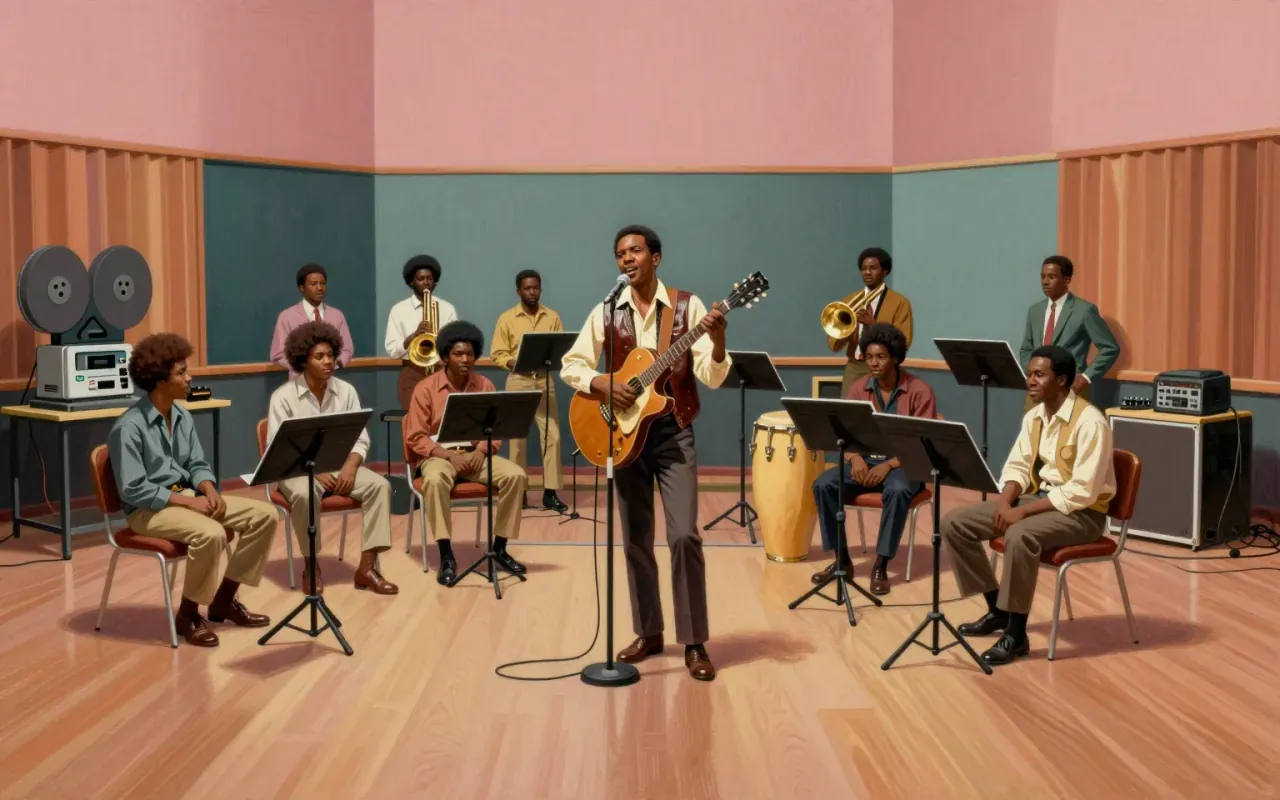
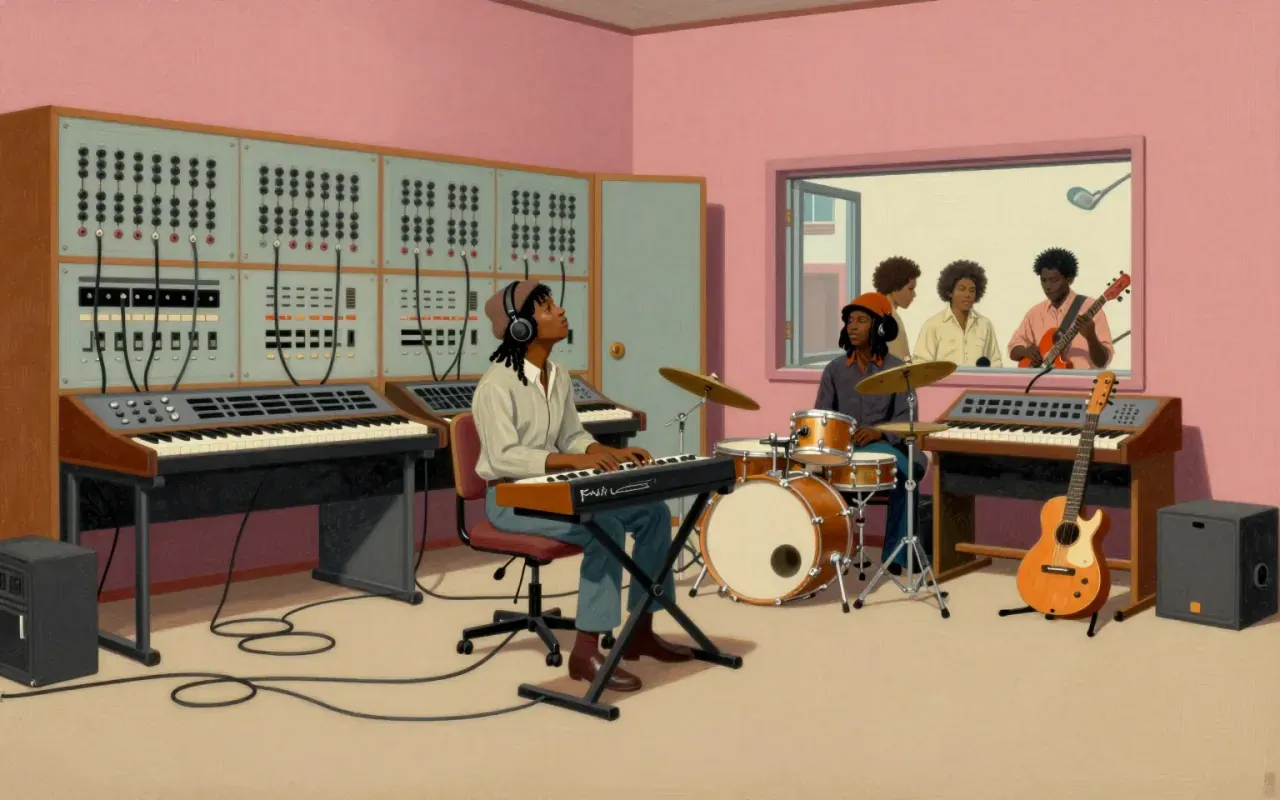
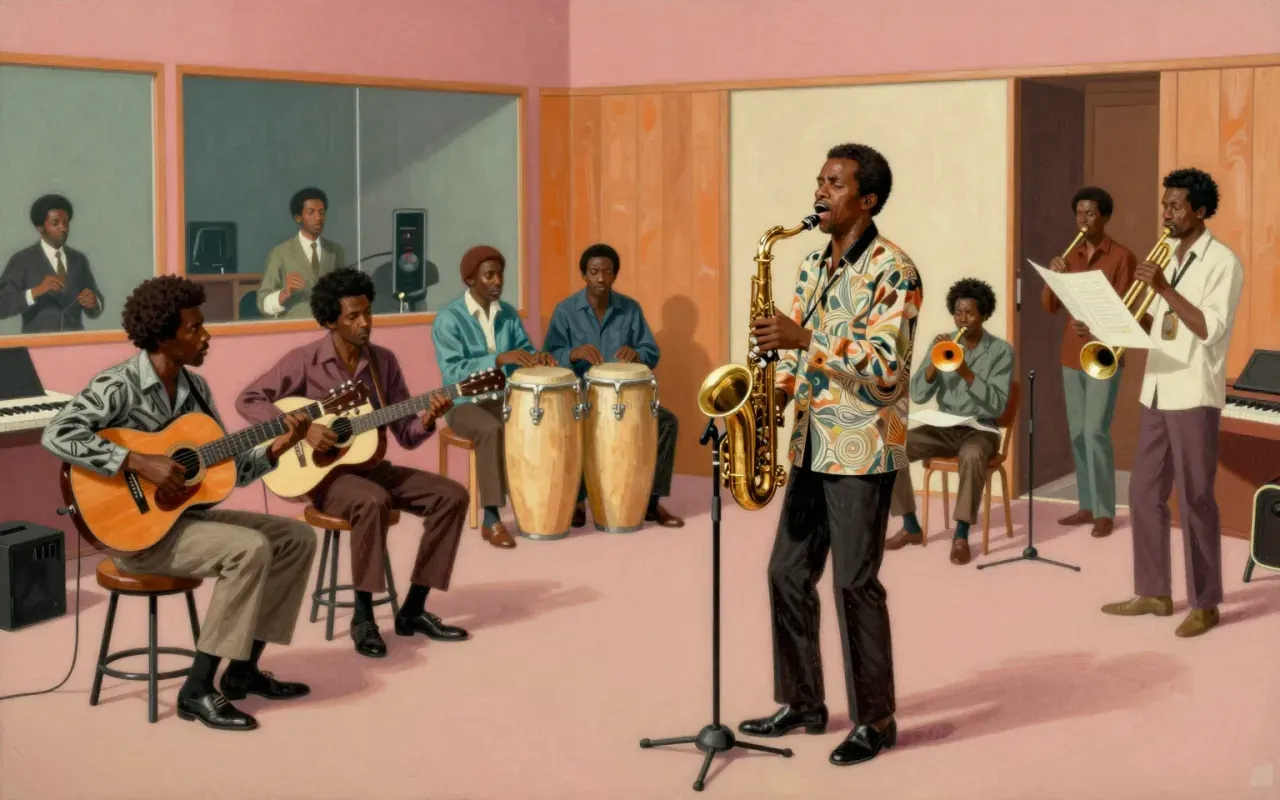
Recording took place mainly at a Hollywood studio, with additional sessions elsewhere in Hollywood, in Sausalito, and for six weeks at a New York studio during a scheduling conflict, though only a single basic track ultimately survived from that detour. Wonder played the great majority of the record’s instruments himself, from drums and keyboards to clavinet, harmonica and vocoder, while roughly 130 musicians in total appear somewhere across its twenty-one songs, among them Herbie Hancock on electric piano and George Benson on guitar, with Minnie Riperton and Deniece Williams adding backing vocals to one track. Bassist Nathan Watts recalled being called back into the studio in the middle of the night mid-session, a measure of how exacting the working process was. Wonder wrote most of the material alone but brought in a broadcaster and civil rights figure to co-write two of the more overtly political songs, and worked with his own brother on another.
A double album that still feels like one voice
What holds this sprawling project together is how consistently it sounds like one person’s voice, despite the enormous cast and the wide range of styles on display across it. Devotional pieces, romantic ballads, funk workouts and jazz-inflected tributes to earlier bandleaders all sit inside the same double album without the record ever feeling like a compilation of unrelated sessions stitched together after the fact. That sense of unity, sustained across more than an hour and a half of music with dozens of contributors passing through, is arguably the record’s central achievement, more impressive in the end than any single song contained within it.
A bonus disc that reads as an afterthought
The bonus disc included with the original release reads, even now, like an afterthought set apart from the two main records rather than fully integrated material, its four songs feeling more like offcuts than a deliberate extension of the album’s argument. The sheer scale of the whole project, more than a hundred minutes spread across twenty-one songs, asks a level of commitment few listeners bring to any single album in one sitting, and a handful of individual tracks drift without quite resolving into anything as sharp as the record’s best moments. That looseness is the cost of an artist working under total creative freedom, with no one in the room positioned to push back on length or pacing.
Faith, fatherhood and injustice in one sitting
Across its many songs the record keeps returning to a handful of large subjects treated as continuous with one another: religious faith, the experience of fatherhood, racial inequality, nostalgia for childhood, and music itself as a kind of universal language. One of its most pointed songs pairs a harsh account of urban poverty with a formally arranged, almost classical string setting, a deliberate mismatch between subject and sound that makes the social content harder to ignore rather than easier. Taken as a whole, the album plays less like a set of individual singles than like a single artist’s attempt to say everything he had accumulated across several years of work in one continuous statement.
For committed listeners, not casual ones
This suits listeners prepared to give a long, genre-roaming double album real time and sustained attention, and anyone drawn to soul and funk records that engage directly with faith, family and injustice rather than staying with romance alone from start to finish. It rewards start-to-finish listening far more than shuffled highlights, since its sense of unity is itself part of the point being made across the record. It offers less to anyone wanting a tighter, single-disc pop record, or uninterested in music that states its social and religious concerns plainly rather than leaving them implied.
The high point of a remarkable run
The awards and chart records this record collected are not simply artefacts of a particular moment; the material underneath them still sounds generous and considered rather than padded, even at its considerable length. It stands as the clearest summary of everything Wonder had been building across the preceding several years, made possible only because he had, for once, been given the money and the freedom to make it exactly as long and as varied as he wanted. Anyone with the patience for its scale will find little on it that feels like filler.