musicbriefs
10:16in productionCh. 1 · No gigs, full studio/ 10:16 · ceiling 15 min
Rock · Prog & art rock

Master of Reality

Heaviness here is not attitude—it’s anatomy, tuning, and studio time.

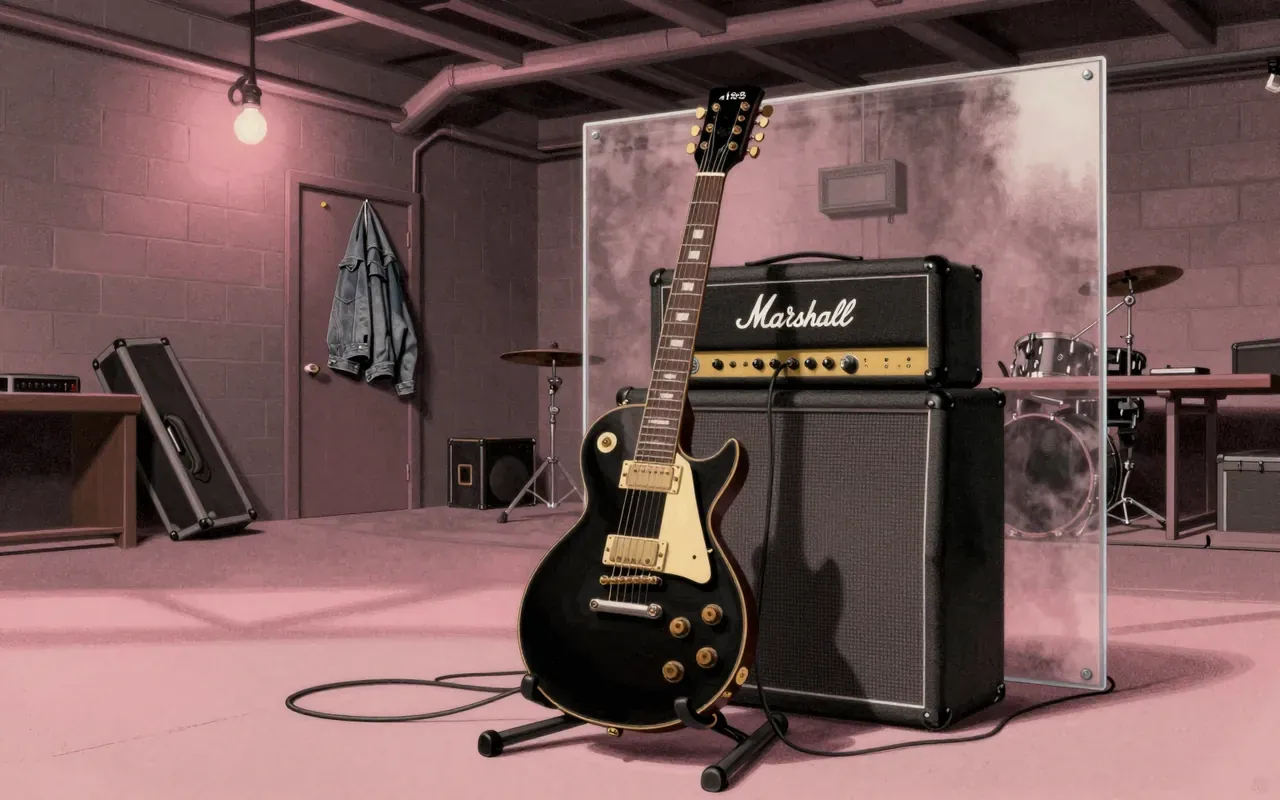
Master of Reality is Black Sabbath’s third album, recorded February–April 1971 at Island Studios in London under producer Rodger Bain—his final collaboration with the band. It was made without touring commitments, using expanded studio time and financial resources, including money for drugs. Iommi and Butler downtuned their instruments 1½ steps on key tracks to ease physical strain, directly shaping the album’s heavier sound. The band experimented with classical guitar, flute, piano, overdubs, bigger bass drums, and amplified bass presence. Osbourne struggled with rapid lyrics on 'Into the Void', requiring written cues; his vocals on 'Solitude' were doubled via delay. Drug use during sessions impaired idea retention. The album contains their first acoustic songs and key tracks like 'Sweet Leaf' and 'Children of the Grave'. Released July 1971, it marked a pivot toward studio-driven heaviness—not myth, but mechanics.

Chapters & takeaways4
  1. 0:59
    No gigs, full studio

    It was their first album made without touring, recorded over ten weeks at Island Studios in London, and marked Rodger Bain’s final production credit.

  2. 2:46
    Heaviness as injury response

    Downtuning wasn’t stylistic—it was medical. Iommi and Butler lowered pitch to reduce string tension, then built the album’s weight around that physical adjustment.

  3. 4:28
    Studio time as instrument

    They used extra time and money to amplify bass, layer overdubs, and add classical guitar—choices driven by confidence, not just budget.

  4. 6:21
    Limits written into the sound

    Osbourne’s vocal strain on 'Into the Void' and the delay-doubled voice on 'Solitude' reveal how technical limits shaped expression—and how drug use undermined retention.

Running order11
  1. 01
    Sweet Leaf5:02

    Heard in Rock School (2005)Trailer Park Boys: The Movie (2006)

  2. 02
    After Forever (Including the Elegy)5:25
  3. 03
    Embryo0:30
  4. 04
    Children of the Grave4:30

    Heard in Black Sabbath: The End of the End (2017)

  5. 05
    The Haunting0:45

    Heard in Black Sunday (1960)

  6. 06
    Orchid1:30
  7. 07
    Step Up0:30
  8. 08
    Lord of This World4:55
  9. 09
    Solitude5:00

    Heard in Suspiria (2018)

  10. 10
    Deathmask3:08
  11. 11
    Into the Void3:08

    Heard in Black Sabbath: The End of the End (2017)Final Destination (2000)

Film placements are the ones described in each film's own entry, so the list is partial rather than complete.

Worth your time?

Yes. Hear the whole thing.

4/ 5
What works
  • 'Sweet Leaf' lands with its sludgy riff and vocal cadence
  • 'Children of the Grave' lands with its downtuned weight and lyrical urgency
  • 'Solitude' lands with its stark, multi-instrumental solitude
  • 'Into the Void' lands despite Osbourne’s struggle
What does not
  • sustain momentum across its running order
  • resolve its experiments
  • deliver vocal polish
Hear it if
  • drummers who care about bass drum size
  • bass players who track tuning shifts
  • guitarists who've adapted to injury
Skip it if
  • listeners seeking narrative cohesion
The written brief2 min read

What the record is and where it came from

Black Sabbath’s third album. Recorded February–April 1971 at Island Studios in London. Produced by Rodger Bain—his final work with the band. Released July 1971. Made without touring commitments. Funded with expanded resources, including money for drugs.

How it sounds, and how it was made

It sounds heavy, slow, and physically strained. Iommi downtuned his guitar 1½ steps on ‘Children of the Grave’, ‘Lord of This World’, and ‘Into the Void’ to ease pain from a factory injury. Butler matched him on bass. The room was Island Studios in London. They used bigger bass drums, overdubs, amplified bass presence, classical guitar, flute, and piano. Osbourne’s vocals on ‘Solitude’ were doubled with delay. His rapid-fire delivery on ‘Into the Void’ forced Butler to write out the lyrics.

What lands

‘Sweet Leaf’ lands with its sludgy riff and vocal cadence. ‘Children of the Grave’ lands with its downtuned weight and lyrical urgency. ‘Solitude’ lands with its stark, multi-instrumental solitude. ‘Into the Void’ lands despite Osbourne’s struggle—the speed forces clarity, not chaos.

What does not

It does not sustain momentum across its running order. ‘Embryo’, ‘The Haunting’, ‘Orchid’, ‘Step Up’, and ‘Deathmask’ are undeveloped fragments. It does not resolve its experiments: the flute and piano on ‘Solitude’ remain isolated, not integrated into the band’s language.

The ideas inside it

Heaviness as bodily necessity. Studio time as creative leverage. Acoustic texture as contrast—not relief. Solitude as arrangement: one man, multiple instruments, delayed voice. Lyrics as functional scaffolding, not poetry.

Who should hear it, and who should not

Drummers who care about bass drum size. Bass players who track tuning shifts. Guitarists who’ve adapted to injury. Anyone studying how studio time changes rhythm section balance. Not listeners seeking narrative cohesion or vocal polish.

Is it worth your time

Yes—if you want to hear how physical limitation and studio time reshaped heaviness. Not if you expect consistency: drug use fractured focus, and the album contains abrupt interludes with no development.
Same genre · Rock4 of 29
9:18
…And Justice for AllMetallica · 1988…And Justice for All is Metallica’s 1988 studio album, recorded January–May at One on One Recording Studios in Los Angeles. It is defined by its dry, sterile production, inaudible bass, clicking drums, and thin guitar buzz—results of a methodical, instrument-by-instrument process overseen partly by Flemming Rasmussen (who joined six weeks in) and mixed by Thompson and Barbiero in Rasmussen’s absence. Jason Newsted recorded bass alone. Hetfield prioritised a hard vibe over singing. The album premiered at Brooklyn’s L’Amour in September 1988.
9:59
Back in BlackAC/DC · 1980Back in Black is AC/DC’s 1980 album, recorded over seven weeks from mid-April to May 1980 at Compass Point Studios in the Bahamas. It followed Bon Scott’s death. Brian Johnson replaced him as vocalist. The songwriting began with Scott and concluded with Johnson.
11:36
Born in the U.S.A.Bruce Springsteen · 1984Born in the U.S.A. is a 1984 rock-pop album by Bruce Springsteen, recorded with the E Street Band in New York City from January 1982 to March 1984. It draws material from the Nebraska demo tape. Its title track is a bitter commentary on Vietnam veterans, but its anthemic music and title led to widespread misinterpretation. Chuck Plotkin judged the full-band performances as less meaningful, less compelling, and less honest than the demos. The album was co-produced by Springsteen, Jon Landau, Steven Van Zandt, and Chuck Plotkin. Toby Scott engineered at the Power Station in April 1982. 'Cover Me' was originally written for Donna Summer. The recording sessions yielded 70–90 songs.
10:50
Born to RunBruce Springsteen · 1975A meticulously constructed studio artifact — not a live document — built on tension, layering, and unresolved sonic ambition.
Up next in Music

Midnight Star

Midnight Star · 1988 · 8:56

A retread, not a reinvention — same vocoder, same groove, same ceiling.

8:56