Saved
Electronic · Rock

Pills ’n’ Thrills and Bellyaches

This isn’t a party record — it’s the sound of a party collapsing into its own rhythm.

Worth your time?4.5/5Yes.Hear the whole thing.What works, what does not, who it is for ↓
10:14in productionCh. 1 · The Room/ 10:14 · ceiling 15 min
4 chapters · 10:14Ceiling 15:00

The brief is written and checked. The video joins this page when it is cut.4 chapters · 2 min read · 10:14 planned

Read the brief

Pills ’n’ Thrills and Bellyaches is the 1990 Happy Mondays album recorded at Capitol Studios in Los Angeles after their US tour. Produced by Paul Oakenfold and Steve Osborne, it fused house, funk, Krautrock, and northern soul into a propulsive, loop-driven sound defined by Gary Whelan’s layered drum work and Rowetta’s soulful vocals on 'Kinky Afro', 'Step On', and 'Bob’s Yer Uncle'. It went platinum in the UK, sold over 350,000 copies, and remains the band’s commercial and artistic zenith — a document of Madchester’s peak, not its myth.

Chapters & takeaways4
  1. 1:21
    The Room

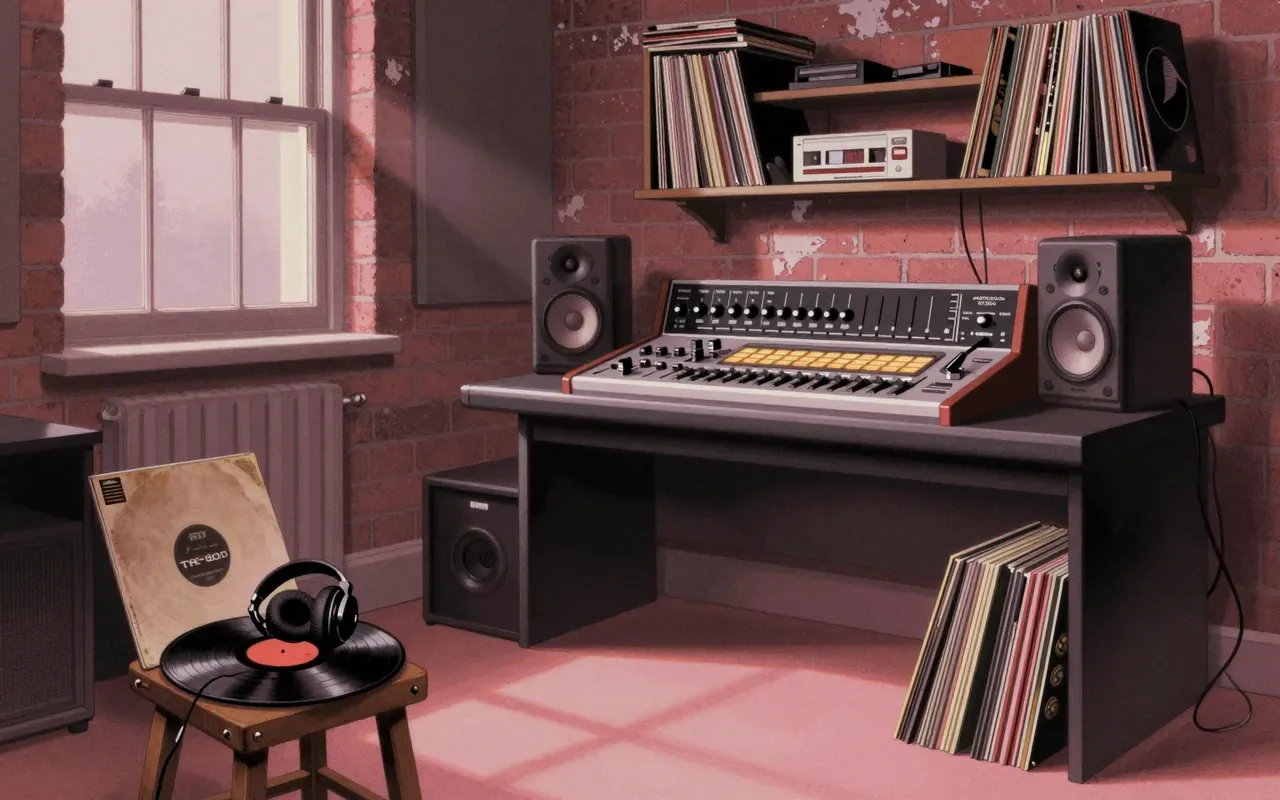
    Capitol Studios in Los Angeles was booked by Elektra and Factory Records, and sessions ran daily from midday to midnight, six days a week.

  2. 3:02
    The Groove

    Paul Ryder and Gary Whelan tracked bass and drums together; Whelan built drum loops and played over them; 'Kinky Afro' was the first track, engineered for a 'baggy' sound.

  3. 4:32
    The Voice and the Producers

    Paul Oakenfold and Steve Osborne produced it; Rowetta sang on 'Kinky Afro', 'Step On', and 'Bob’s Yer Uncle'.

  4. 5:33
    The Breakout

    The session was extended from one to four weeks; the album was recorded at Capitol Studios in Los Angeles; 'Step On' and 'Kinky Afro' both reached number 5 in the UK.

1 more chapterFewer chapters
Running order10
  1. 01
    Kinky Afro3:59

    Heard in 24 Hour Party People (2002)

  2. 02
    God’s Cop4:59
  3. 03
    Donovan4:05
  4. 04
    Grandbag’s Funeral3:21
  5. 05
    Loose Fit5:07

    Heard in 24 Hour Party People (2002)

  6. 06
    Dennis and Lois4:25
  7. 07
    Bob’s Yer Uncle5:11
  8. 08
  9. 09
    Holiday3:29
  10. 10
    Harmony4:03

Film placements are the ones described in each film's own entry, so the list is partial rather than complete.

Worth your time?

Yes. Hear the whole thing.

4.5/ 5
What works
  • 'Kinky Afro' and 'Step On' land as UK Top 5 singles
  • its basslines lock in
  • Rowetta’s voice cuts through dense, house-influenced drum programming
  • the album went platinum in the UK, selling over 350,000 copies
What does not
  • it does not rely on verse-chorus repetition
  • it does not separate singer from band
  • it does not hide studio labour
Hear it if
  • people who want to hear how funk, house, Krautrock, and northern soul fuse inside a guitar band
  • people who care about how rooms, loops, and vocal interplay shape rhythm
Skip it if
  • people who need clear narratives, tidy structures, or studio polish as proof of intent
Who should hear it, and who should skipHide who it is for
The written brief2 min read

What the record is and where it came from

A 1990 Happy Mondays album, recorded after their US tour ended in Los Angeles. It was made at Capitol Studios, booked by Elektra and Factory Records. The band chose LA to escape constant recognition in the UK. It is their commercial and artistic peak — the central record of the Madchester movement.

How it sounds, and how it was made

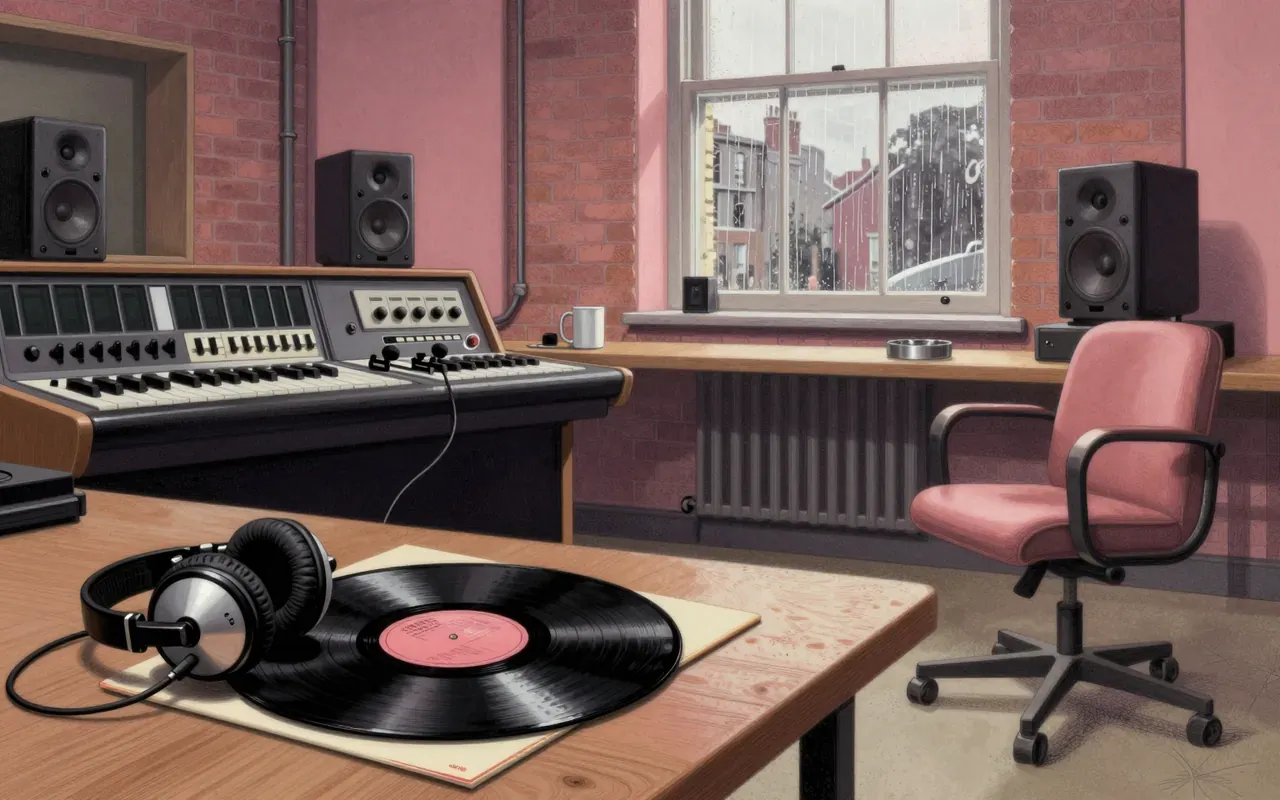
It sounds like bass and drums locked in a looped, baggy groove, built at Capitol Studios in Los Angeles. Paul Ryder and Gary Whelan tracked together; others recorded separately. Whelan layered new drum parts over his own loops. Steve Osborne shaped arrangements; Paul Oakenfold created loops. Rowetta’s soulful vocals sit atop the mix on ‘Kinky Afro’, ‘Step On’, and ‘Bob’s Yer Uncle’. Tony Castro added percussion to ‘Loose Fit’ and ‘Bob’s Yer Uncle’ because Bez’s skills were limited. The room was used for tight, late-night sessions: midday to midnight, six days a week.

What lands

‘Kinky Afro’ and ‘Step On’ land as UK Top 5 singles. Their basslines lock in. Rowetta’s voice cuts through dense, house-influenced drum programming. The album went platinum in the UK, selling over 350,000 copies. It landed at Glastonbury 1990 and in the film 24 Hour Party People — though neither ‘Kinky Afro’ nor ‘Loose Fit’ appear on that film’s official soundtrack.

What does not

It does not rely on verse-chorus repetition. It does not separate singer from band. It does not hide studio labour — looping, layering, vocal retakes, and careful mixing with Dave Burnham at Eden Studios are audible features, not flaws.

The ideas inside it

Pleasure as ritual. Exhaustion as rhythm. Pills, thrills, and bellyaches are not metaphors — they’re inventory. The lyrics were written by Shaun Ryder in Los Angeles while using opium. The title is an anti-mature gesture, deliberately irreverent, naming the cost of euphoria without softening it.

Who should hear it, and who should not

People who want to hear how funk, house, Krautrock, and northern soul fuse inside a guitar band. People who care about how rooms, loops, and vocal interplay shape rhythm. Not people who need clear narratives, tidy structures, or studio polish as proof of intent.

Is it worth your time

Yes. It is a definitive Madchester document — not nostalgic, not polished, but physically urgent. Its grooves are built to move bodies, not impress critics. You’ll know within ten seconds of ‘Kinky Afro’ whether it’s for you.
Same genre · Electronic4 of 117
11:09
LeftismLeftfield · 1995Leftism is a 1995 electronic album that reworks earlier singles with non-dance vocalists and live instrumentation, anchored by dub, breakbeat, and house textures. Its cohesion was achieved through revision, not design. It lands through contrast — Lydon’s bark, Halliday’s haze, Red’s toasting — all framed by cavernous, tactile production. It does not flatter the ear. It recalibrates it.
9:34
Drum and bass1992Drum and bass is a UK-born electronic dance music genre that emerged in the early 1990s from the jungle scene. It is defined by fast, syncopated breakbeats (165–185 BPM), heavy sub-bass lines, sampling, and synthesis. It draws on reggae, dub, hip-hop, breakbeat hardcore, techno, and house. By the mid-1990s, it had become one of the most distinctive and technically innovative styles within electronic dance music. It has since developed multiple subgenres—including breakcore, ragga jungle, techstep, neurofunk, liquid drum and bass, and jump up—and maintains both an underground and mainstream presence worldwide.
9:25
Dig Your Own HoleThe Chemical Brothers · 1997Dig Your Own Hole is the Chemical Brothers’ second studio album, recorded between 1996 and 1997 at their own south London studio and released 7 April 1997. It features guest vocalists Noel Gallagher and Beth Orton. Key tracks originated as DJ promos ('Electronic Battle Weapon 1' and '2'). Its sound is built from verified samples: Schoolly D’s 'Gucci Again', Lothar and the Hand People’s 'It Comes On Anyhow', and John Schroeder’s 'Money Runner'. The title comes from graffiti outside the studio. It was critically acclaimed, earning a 10/10 from Mixmag.
8:49
Gabber1992Gabber is a Dutch electronic dance music subgenre of hardcore, developed in Rotterdam and Amsterdam in the 1990s. It is characterised by fast beats, distorted and heavy kickdrums, and dark themes. It formed as an underground, anti-establishment movement centred on illegal raves in warehouses, basements and tunnels. It later entered mainstream Dutch culture via events like Thunderdome and spread globally to rave communities in the UK, Spain, Italy, US and Australia. It remains highly popular in the Netherlands and saw a major resurgence in the late 2010s.
Up next in Music

Pink Flag

Wire · 1977 · 7:58

This isn’t punk as rebellion — it’s punk as scalpel.

7:58