musicbriefs
9:42in productionCh. 1 · One Track, One Hour/ 9:42 · ceiling 15 min
Electronic · Prog & art rock

Saturnz Return

An hour-long drum and bass requiem for a mother you never knew—and a genre you thought you did.

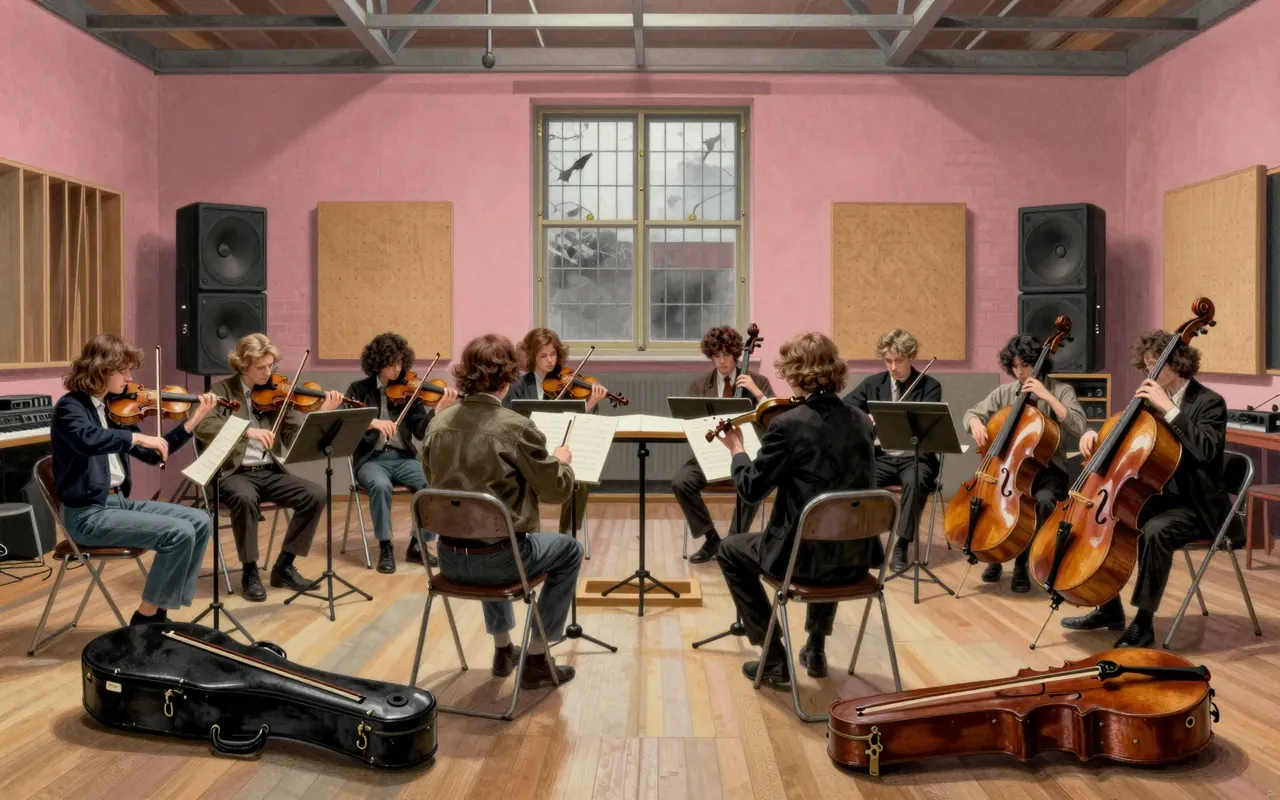
Saturnz Return is Goldie’s 1998 follow-up to Timeless. Its opening track 'Mother' is an hour-long orchestral drum and bass piece featuring a 30-piece string section and classically trained child singers. It was conceived as a sonic representation of Goldie’s adoption at age three, foster care, fame, and addiction. He described its arc as beginning with an unborn-child voice before descending into abandonment and rhythmic ferocity. He made it for one private moment: listening on headphones while seeing his mother’s body before her funeral. The album features David Bowie, Noel Gallagher and KRS-One, and received mixed reviews—including 'ambitious but monotonous and overlong—Pink Floyd with a gold tooth'.

Chapters & takeaways4
  1. 1:00
    One Track, One Hour

    It is not a collection of songs. It is a 60-minute orchestral drum and bass piece built on strings and child voices.

  2. 2:28
    A Sonic Birth-to-Death Arc

    Its structure is narrative: unborn voice → abandonment → ferocity. Its purpose was a private ritual—not release, not legacy.

  3. 3:56
    No Distance Between Sound and Search

    The documentary Goldie: When Saturn Returnz is inseparable from the music—both confront his birth parents with no mediation.

  4. 5:48
    Stars in Its Orbit, Not Its Engine

    Guests like Bowie, Gallagher and KRS-One appear—but they orbit 'Mother', never disrupt its gravitational field.

Running order12
  1. 01
  2. 02
    Truth / Dream Within14:52
  3. 01
    Temper Temper5:14
  4. 02
  5. 03
    I’ll Be There for You6:58

    Heard in The Master (1992)

  6. 04
    Believe7:10

    Heard in Guide (1965)Back to the Future (1985)Thelma & Louise (1991)Sin City: A Dame to Kill For (2014)

  7. 05
  8. 06
    Chico (Death of a Rock Star)7:15
  9. 07
    Letter of Fate7:54
  10. 08
    Fury (The Origin)6:30
  11. 09
    Crystal Clear6:54
  12. 10
    Demonz5:28

Film placements are the ones described in each film's own entry, so the list is partial rather than complete.

Worth your time?

Yes. Hear the whole thing.

3.5/ 5
What works
  • the opening concept—a child’s voice dissolving into rhythmic ferocity over strings
  • the use of orchestral scale within drum and bass
  • the alignment of sound, narrative, and private ritual
What does not
  • sustain momentum across its full length
  • separate musical ambition from biographical exposition
  • invite repeated listening as discrete tracks
Hear it if
  • people who treat albums as durational experiences
  • people interested in orchestral texture fused with drum and bass
  • people who listen for structural logic, not just grooves
Skip it if
  • people who skip intros
  • people who avoid repetition
  • people who distrust first-person grandeur
The written brief1 min read

What the record is and where it came from

Saturnz Return is Goldie’s second studio album, released in 1998. It is built around ‘Mother’, a 60-minute piece conceived as both sonic autobiography and ceremonial act. It features David Bowie, Noel Gallagher and KRS-One.

How it sounds, and how it was made

It opens with a 30-piece string section and classically trained child singers. It is an hour-long orchestral drum and bass piece. The structure moves from a ‘beautiful piece of music that’s the voice of a child who’s not arrived yet’ to abandonment, struggle, and increasingly complex, fierce beats.

What lands

The opening concept lands: a child’s voice dissolving into rhythmic ferocity over strings. The use of orchestral scale within drum and bass lands. The alignment of sound, narrative, and private ritual—listening on headphones before his mother’s funeral—lands with brutal specificity.

What does not

It does not sustain momentum across its full length. It does not separate musical ambition from biographical exposition. It does not invite repeated listening as discrete tracks—it insists on being heard whole, once, for a singular moment.

The ideas inside it

It sonically represents Goldie’s adoption at age three, his time in multiple children’s homes and with various foster parents, and his life in the public eye after his first album’s success and his cocaine addiction.

Who should hear it, and who should not

People who treat albums as durational experiences—not playlists. People interested in how orchestral texture and drum and bass rhythm can coexist without compromise. People who listen to records for their structural logic, not just their grooves. Not people who skip intros, avoid repetition, or distrust first-person grandeur.

Is it worth your time

Yes—if you have sixty uninterrupted minutes and want to hear orchestral strings and child voices fused with drum and bass in a single, ritualistic arc. No—if you expect variety, concision, or separation between composition and confession.


Same genre · Electronic4 of 34
Up next in Music

Satyagraha

Philip Glass · 1985 · 9:39

Satyagraha is not about Gandhi — it is satyagraha, made audible as repetition, resistance, and refusal to resolve.

9:39