Saved
Hip-hop · Electronic

Supa Dupa Fly

This album didn’t update hip-hop — it replaced its operating system.

Worth your time?4.5/5Yes.Hear the whole thing.What works, what does not, who it is for ↓
8:39in productionCh. 1 · Two Weeks, One Room/ 8:39 · ceiling 15 min
4 chapters · 8:39Ceiling 15:00

The brief is written and checked. The video joins this page when it is cut.4 chapters · 2 min read · 8:39 planned

Read the brief

Supa Dupa Fly is a foundational hip-hop record because it treats rhythm as architecture, voice as texture, and production as world-building — all in under two weeks.

Chapters & takeaways4
  1. 0:57
    Two Weeks, One Room

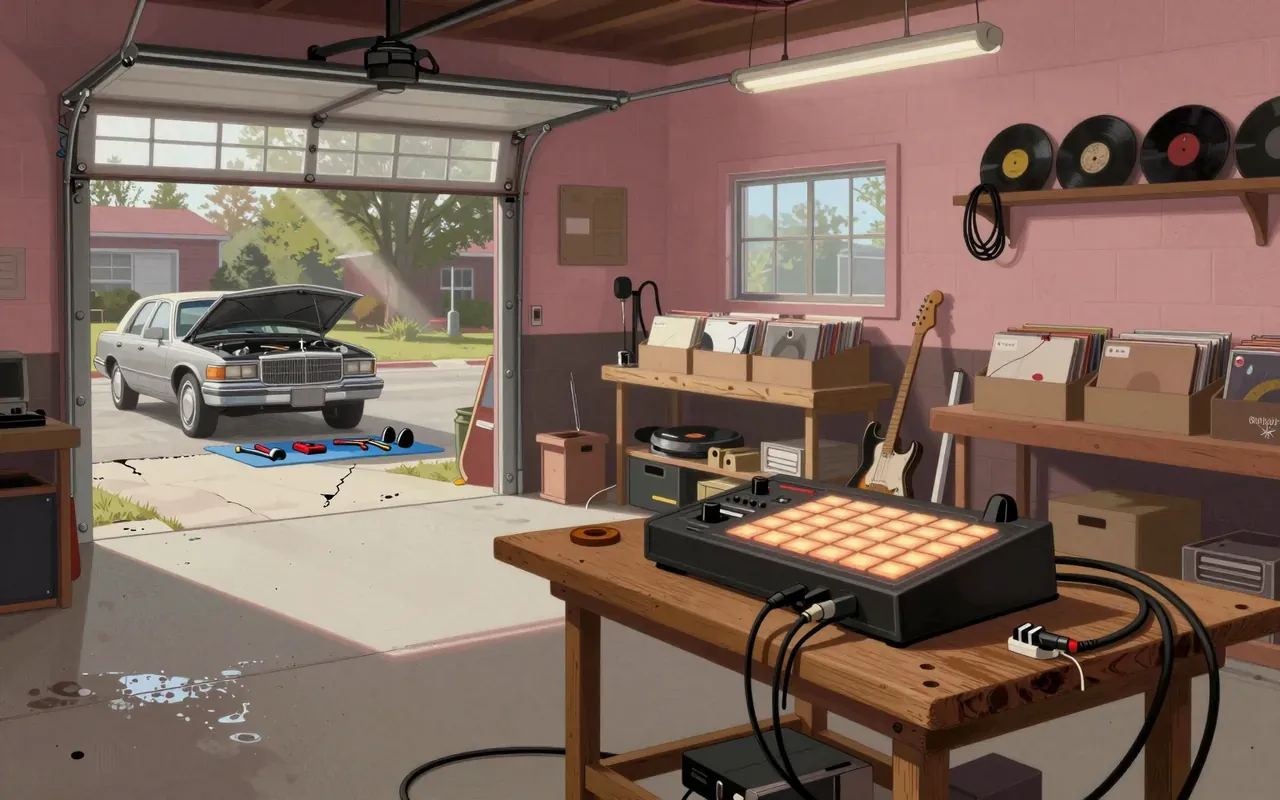
    Made in under two weeks, in one room, by one producer and one rapper.

  2. 2:00
    No Samples, Just Stutters

    Stuttering rhythms and extra-musical noises replace samples and swing.

  3. 3:37
    Free Association, Full Spectrum

    Surreal raps meet hip hop, R&B, dance, electronic, and soul — all at once.

  4. 5:18
    Sound You Could See

    Afro-futurist videos and a trash-bag jumpsuit made the sound visible.

1 more chapterFewer chapters
Running order17
  1. 01
    Busta's Intro1:54
  2. 02
    Hit 'em Wit da Hee4:20
  3. 03
    Sock It 2 Me4:17
  4. 04
    The Rain (Supa Dupa Fly)4:11
  5. 05
    Beep Me 9114:58
  6. 06
    They Don't Wanna Fuck Wit Me3:18
  7. 07
    Pass da Blunt3:18
  8. 08
    Bite Our Style (interlude)0:44
  9. 09
    Friendly Skies5:00
  10. 10
    Best Friends4:07
  11. 11
    Don't Be Commin'4:11
  12. 12
    Izzy Izzy Ahh3:54
  13. 13
    Why You Hurt Me4:31
  14. 14
    I'm Talkin'5:02
  15. 15
    Gettaway4:25
  16. 16
    Busta's Outro1:38
  17. 17
    Missy's Finale0:24
Worth your time?

Yes. Hear the whole thing.

4.5/ 5
What works
  • The Rain (Supa Dupa Fly)
  • Hit 'em Wit da Hee
  • Sock It 2 Me
What does not
  • rely on live instrumentation
  • use traditional song structure
  • separate voice from rhythm
Hear it if
  • people who want to hear how rhythm can be rewritten
  • people tired of rap that treats the voice as a narrative instrument first
Skip it if
  • those who need linear storytelling
  • those who require warm analogue saturation
  • those who expect lyrical realism
Who should hear it, and who should skipHide who it is for
The written brief2 min read

What the record is and where it came from

Supa Dupa Fly is Missy Elliott’s debut studio album, recorded in just two weeks — slightly more than a week — in October 1996 at Master Sound Studios in Virginia Beach, Virginia. Timbaland produced every track. It was released in mid-1997 under The Goldmind Inc., signed to East West Records.

How it sounds, and how it was made

It sounds like lean digital grooves packed with stuttering rhythms that resemble slowed-down drum’n’bass breakbeats. Timbaland built it at Master Sound Studios in Virginia Beach, using extra-musical noises as instruments, avoiding samples, and layering Elliott’s surreal free-associative raps over bump ’n’ grind electronica influenced by dancehall reggae but rounder, fuller, fatter.

What lands

The Rain (Supa Dupa Fly) lands: its beat stutters like a skipping CD, Elliott’s voice floats and snaps, the trash-bag jumpsuit becomes visual shorthand for the album’s aesthetic — unapologetically artificial, fully embodied. Hit ’em Wit da Hee and Sock It 2 Me land as rhythmic detonations — clipped, asymmetrical, impossible to predict.

What does not

It does not rely on live instrumentation, soul samples, or traditional song structure. It does not flatter the listener with familiarity. It does not separate voice from rhythm — Elliott’s cadence is a percussive device, not a vehicle for confession.

The ideas inside it

It treats womanhood as complex, not decorative or oppositional. It refuses to choose between rapping and singing, absurdism and clarity, control and chaos. It asserts Black female authorship without explanation or apology.

Who should hear it, and who should not

People who want to hear how rhythm can be rewritten, not just repeated. People tired of rap that treats the voice as a narrative instrument first and a texture second. Not for those who need linear storytelling, warm analogue saturation, or lyrical realism.

Is it worth your time

Yes. It redefined what hip-hop could sound like in 1997 — not by adding more, but by subtracting expectation and replacing it with precision, playfulness, and synthetic-organic balance.
Same genre · Hip-hop4 of 113
Up next in Music

Surfer Rosa

Pixies · 1988 · 9:43

This record doesn’t capture a band—it captures a room, a bathroom, and thirteen decisions to leave things uncorrected.

9:43