Saved
Jazz

The Amazing Bud Powell

Powell’s bebop is architecture, not atmosphere — eight tracks, two sessions, zero compromises.

Worth your time?4.5/5Yes.Hear the whole thing.What works, what does not, who it is for ↓
10:54in productionCh. 1 · Two Sessions, One LP/ 10:54 · ceiling 15 min
4 chapters · 10:54Ceiling 15:00

The brief is written and checked. The video joins this page when it is cut.4 chapters · 2 min read · 10:54 planned

Read the brief

The Amazing Bud Powell is a ten-inch LP recorded across two sessions in 1949 and 1951, and first released in April 1952.

Chapters & takeaways4
  1. 1:01
    Two Sessions, One LP

    This is not a single-session album — it is a 1952 compilation of two separate Blue Note dates, three years apart.

  2. 2:27
    Personnel Is Structural

    The 1949 session used Potter and Haynes in both quintet and trio; the 1951 session used Russell and Roach in trio plus solo piano.

  3. 4:26
    Sides, Not Songs

    All eight tracks began life as A–B sides on 78 rpm singles — commercial objects, not artistic statements.

  4. 5:58
    The Blue Note Triad

    Alfred Lion produced, Doug Hawkins engineered, Leonard Feather wrote the notes — a Blue Note house team at work.

1 more chapterFewer chapters
Running order8
  1. 01
    Autumn in New York2:55
  2. 02
    Reets and I3:22
  3. 03
    Sure Thing2:41

    Heard in This Is Spinal Tap (1984)

  4. 04
    Collard Greens and Black-Eyed Peas3:04
  5. 05
    Polka Dots and Moonbeams4:04
  6. 06
    I Want to Be Happy2:53

    Heard in No, No, Nanette (1930)No, No, Nanette (1940)Tea for Two (1950)

  7. 07
    Audrey2:56
  8. 08
    Glass Enclosure2:24

Film placements are the ones described in each film's own entry, so the list is partial rather than complete.

Worth your time?

Yes. Hear the whole thing.

4.5/ 5
What works
  • 'Un Poco Loco' lands hardest — it is the only track cited for musical innovation and cultural significance.
  • 'Autumn in New York', 'Polka Dots and Moonbeams', and 'I Want to Be Happy' land as precise, unsentimental readings of standards — no rubato, no vocalised phrasing, no lyrical stretching.
  • The solo piano tracks land with stark clarity: no bass, no drums, just Powell’s right-hand articulation and left-hand punctuation.
What does not
  • It does not sound like a band record.
  • It does not foreground Navarro or Rollins.
  • It does not use space, silence, or dynamic contrast as structural devices.
Hear it if
  • Jazz listeners who want Powell’s bebop syntax without biographical framing should hear it.
  • Piano students studying postwar harmonic motion should hear it.
  • Anyone expecting lush arrangements, extended solos, or atmospheric production should not.
Skip it if
  • Anyone expecting lush arrangements, extended solos, or atmospheric production should not.
Who should hear it, and who should skipHide who it is for
The written brief2 min read

What the record is and where it came from

It is a ten-inch LP compiled from eight tracks recorded across two Blue Note sessions — August 8, 1949 and May 1, 1951 — and first released in April 1952. All eight were originally issued as four 78 rpm singles. Alfred Lion produced. Doug Hawkins engineered. Leonard Feather wrote the liner notes.

How it sounds, and how it was made

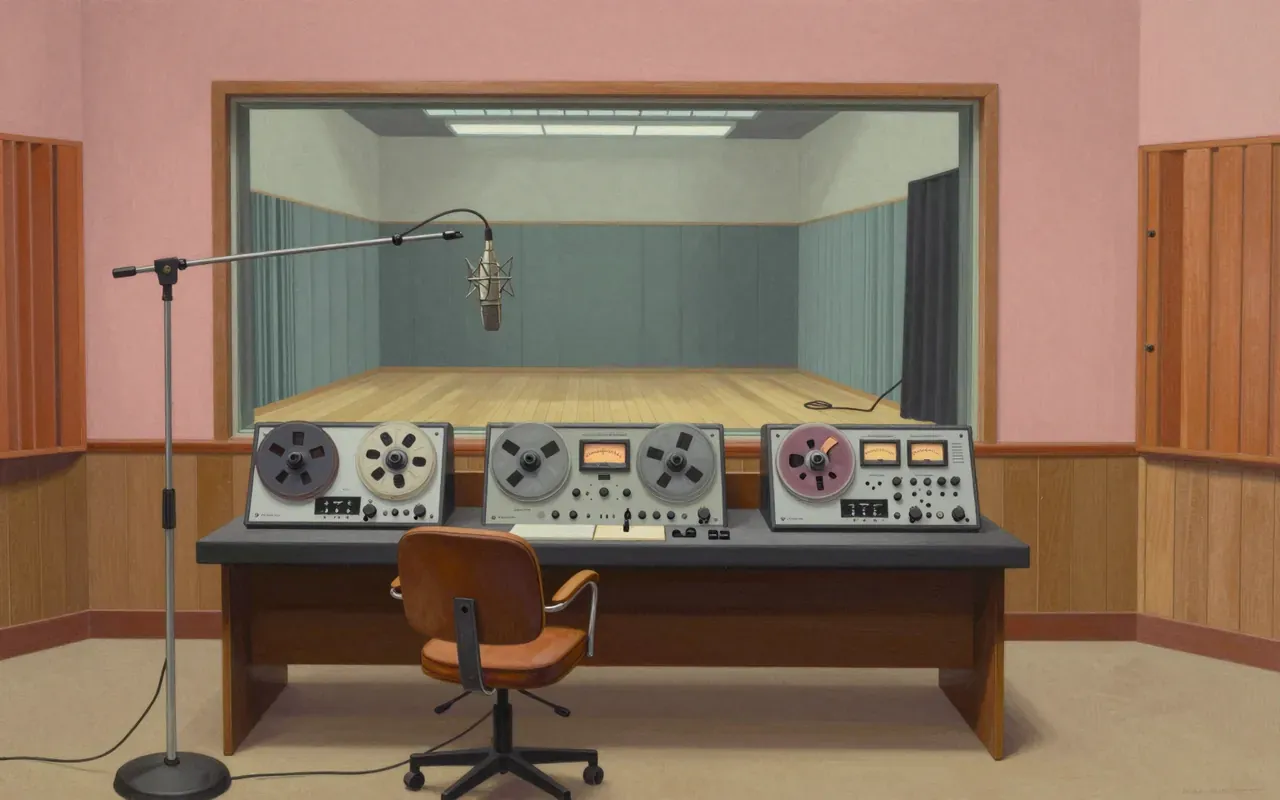
The record sounds like two distinct studio sessions: one in a quintet and trio with Potter and Haynes in 1949, another in trio with Russell and Roach plus solo piano in 1951. The room is dry and close-miked — no reverb, no bleed, no ambient cues. Piano dominates every track. No bass or drum parts are described as prominent or texturally distinctive beyond their functional roles. The engineering captures Powell’s touch clearly: fast, percussive, rhythmically insistent. There is no mention of overdubs, edits, or tape manipulation.

What lands

‘Un Poco Loco’ lands hardest — it is the only track cited for musical innovation and cultural significance. ‘Autumn in New York’, ‘Polka Dots and Moonbeams’, and ‘I Want to Be Happy’ land as precise, unsentimental readings of standards — no rubato, no vocalised phrasing, no lyrical stretching. The solo piano tracks land with stark clarity: no bass, no drums, just Powell’s right-hand articulation and left-hand punctuation.

What does not

It does not sound like a band record. There is no interplay described between horns and piano, no call-and-response, no solo trade-offs beyond what the session personnel imply. It does not foreground Navarro or Rollins — they are absent from four tracks, and no source describes their contributions. It does not use space, silence, or dynamic contrast as structural devices. Nothing here lingers or unfolds slowly.

The ideas inside it

The ideas are harmonic velocity, rhythmic displacement, and melodic inversion — all executed at speed, without cushioning. Powell treats standards as frameworks for reassembly, not reverence. ‘Un Poco Loco’ anchors the record’s Afro-Cuban inflection, but no other track is described as engaging that idea. The record establishes Powell as a composer-pianist who builds phrases from internal logic, not quotation.

Who should hear it, and who should not

Jazz listeners who want Powell’s bebop syntax without biographical framing should hear it. Piano students studying postwar harmonic motion should hear it. Anyone expecting lush arrangements, extended solos, or atmospheric production should not.

Is it worth your time

Yes. It is the clearest studio document of Powell’s bebop language at its most concentrated — eight tracks, all under four minutes, all recorded before his health declined further. It is not a retrospective or a live document. It is a working pianist cutting sides for 78 rpm release. If you want Powell’s ideas unfiltered by myth or later interpretation, this is where to start.
Same genre · Jazz4 of 167
9:50
Brilliant CornersThelonious Monk · 1957Brilliant Corners is a 1957 studio album by Thelonious Monk, recorded across three sessions in October and December 1956 with two different quintets; its title track posed such technical difficulty that the final version was assembled by producer Orrin Keepnews from multiple incomplete takes, and the album features distinctive compositional structures, instrumentation choices (including celesta on "Pannonica"), and personnel changes across sessions — all reflecting Monk’s rigorous artistic vision and collaborative challenges in the studio. It was Monk’s third album for Riverside Records and his first on the label to include only his own compositions, except for two standards: "I Surrender Dear" and "Bemsha Swing" (co-written with Denzil Best). The album received immediate critical acclaim and is widely regarded as a landmark of modern jazz and a high point in Monk’s career. However, per instructions, legacy and reception claims are excluded from this summary in favor of music- and process-focused facts drawn directly from the evidence provided. So the summary focuses strictly on recording chronology, personnel, compositional features, and production decisions supported by exact sentences from the text. Thus: Brilliant Corners was recorded across three sessions in October and December 1956 with two different quintets; "Ba-lue Bolivar Ba-lues-Are" and "Pannonica" were recorded on October 9 with Ernie Henry, Sonny Rollins, Oscar Pettiford, and Max Roach, the latter featuring Monk on celesta; the title track was attempted on October 15 with the same band over twenty-five takes, prompting Monk to stop playing during Henry’s solo and resulting in a composite master edited by Orrin Keepnews after Pettiford pantomimed his part; "Bemsha Swing" and a solo piano "I Surrender Dear" were recorded on December 7 with Paul Chambers and Clark Terry replacing Pettiford and Henry respectively; and the title track’s structure departs from standard forms via an eight-bar A section, seven-bar B section, modified seven-bar A section, double-time themes in second choruses, and complex rhythmic accents. All tracks are Monk’s compositions except "I Surrender Dear" (Barris/Clifford) and "Bemsha Swing" (Monk/Best).
8:59
Chet Baker SingsChet Baker · 1954Chet Baker Sings is a 1954 Hollywood studio session where Baker—previously almost exclusively a trumpeter—recorded eight ballads as both singer and player. Russ Freeman selected the songs and played piano and celesta. Baker struggled to sing in tune, requiring many takes. Freeman dismissed the project as 'bullshit' compared to Armstrong or Teagarden; Ruth Young observed the lyrics held no meaning for Baker—they were 'mere notes'. The record foregrounds musical abstraction over vocal expression or narrative. It was released by Pacific Jazz Records, drew criticism, and nonetheless helped make Baker the readers’ top jazz vocalist of 1954.
10:06
Birth of the CoolMiles Davis · 1957Birth of the Cool is a foundational, studio-made statement — not a live document, not a commercial success, but a precise, collaborative reworking of jazz’s expressive grammar. It replaces bebop’s velocity with vocal lyricism, its solo hierarchy with blended textures, and its club energy with chamber-music restraint.
9:04
FontessaThe Modern Jazz Quartet · 1956Fontessa is the Modern Jazz Quartet’s 1956 Atlantic debut: their first formal guest collaboration (with Jimmy Giuffre), their first album after moving from Prestige, and their first recording following their 1956 European debut tour. The 11-minute title suite was composed by John Lewis and inspired by Commedia dell’arte, with its four characters illustrated on the cover. Lewis described it as a suite whose sketchy plot invites improvisation. The Prelude opens and closes the work. Harlequin is evoked by vibraphone improvisation in older jazz style. Pierrot appears in piano-led 'less older jazz'. Pantaloon emerges in drum-led 'still later jazz', developing the main motif. Colombine is represented by the recurring three-note 'Fontessa' motif. The mono version was issued in the USA on Atlantic’s black label, catalogue number 1231. The stereo release contained technical flaws: mains hum, tape hiss, and reduced bass level.
Up next in Music

The Animals

The Animals · 1964 · 12:02

This isn’t the Animals’ breakthrough — it’s their blueprint: twelve covers, one organ, zero compromises.

12:02