Saved
Hip-hop

Under Construction

This isn’t retro — it’s reconstruction: every sample is a blueprint, every beat a demolition.

Worth your time?4.5/5Yes.Hear the whole thing.What works, what does not, who it is for ↓
10:48in productionCh. 1 · Old School as Scaffolding/ 10:48 · ceiling 15 min
6 chapters · 10:48Ceiling 15:00

The brief is written and checked. The video joins this page when it is cut.6 chapters · 2 min read · 10:48 planned

Read the brief

Under Construction is a deliberate act of sonic architecture — not revival, not pastiche, but reassembly. It uses old school samples as structural elements, not decoration. Its success is factual: 2.1 million US sales, Grammy wins, critical top billing. Its limits are factual too: one scrapped single, one withdrawn remix. It rewards attention to how sound is built — not how it feels.

Chapters & takeaways6
  1. 1:17
    Old School as Scaffolding

    It uses Run–DMC and Frankie Smith samples not as homage but as raw material.

  2. 2:30
    The Sales Floor

    It remains the best-selling women’s rap album in the US — 2.1 million copies sold.

  3. 3:33
    The Grammy and the Chart

    ‘Work It’ won Best Female Rap Solo Performance and peaked at No. 2 on the Hot 100.

  4. 5:02
    The Critical and Cultural Lock

    The New York Times called it 'this year’s best hip-hop album'; 'Gossip Folks' dominated MTV and dance floors.

  5. 6:07
    Who Built the Room

    Timbaland was primary producer; Brockman, Stewart, McCalla, and Elliott co-produced.

  6. 7:04
    The Crew in the Booth

    Vocal assistance came from Tweet and Lisa Crawford; engineers included Douglass and Bedoya; mixing was handled by Douglass and Timbaland with Steamy assisting.

3 more chaptersFewer chapters
Running order14
  1. 01
    Go to the Floor5:06
  2. 02
    Bring the Pain2:59

    Heard in Wrong Turn (2003)

  3. 03
    Gossip Folks3:54
  4. 04
    Work It4:59
  5. 05
    Back in the Day4:56

    Heard in Summer Wars (2009)

  6. 06
    Funky Fresh Dressed3:56
  7. 07
    Pussycat4:32

    Heard in Shark Tale (2004)Scott Pilgrim vs. the World

  8. 08
    Nothing Out There for Me3:06
  9. 09
    Slide3:44
  10. 10
    Play That Beat3:03
  11. 11
    Ain’t That Funny2:48
  12. 12
    Hot4:09

    Heard in Nothing to Lose (1997)Why Do Fools Fall in Love (1998)Guts World Tour (2023)Piece by Piece (2024)

  13. 13
    Can You Hear Me4:29

    Heard in The Kids Are Alright (1979)Yentl (1983)Still Life (2006)

  14. 14
    Work It (remix)5:05

Film placements are the ones described in each film's own entry, so the list is partial rather than complete.

Worth your time?

Yes. Hear the whole thing.

4.5/ 5
What works
  • Work It
  • Gossip Folks
  • Go to the Floor
What does not
  • nostalgia
  • polished pop
  • linear storytelling
Hear it if
  • listeners who want hip-hop to reassemble its past without sentiment
Skip it if
  • those who mistake restraint for sophistication
Who should hear it, and who should skipHide who it is for
The written brief2 min read

What the record is and where it came from

Under Construction is Missy Elliott’s fourth studio album, released November 12, 2002. It was primarily produced by Timbaland, with additional production by Craig Brockman, Nisan Stewart, Errol ‘Poppi’ McCalla, and Elliott herself. It features vocal assistance from Tweet and Lisa Crawford.

How it sounds, and how it was made

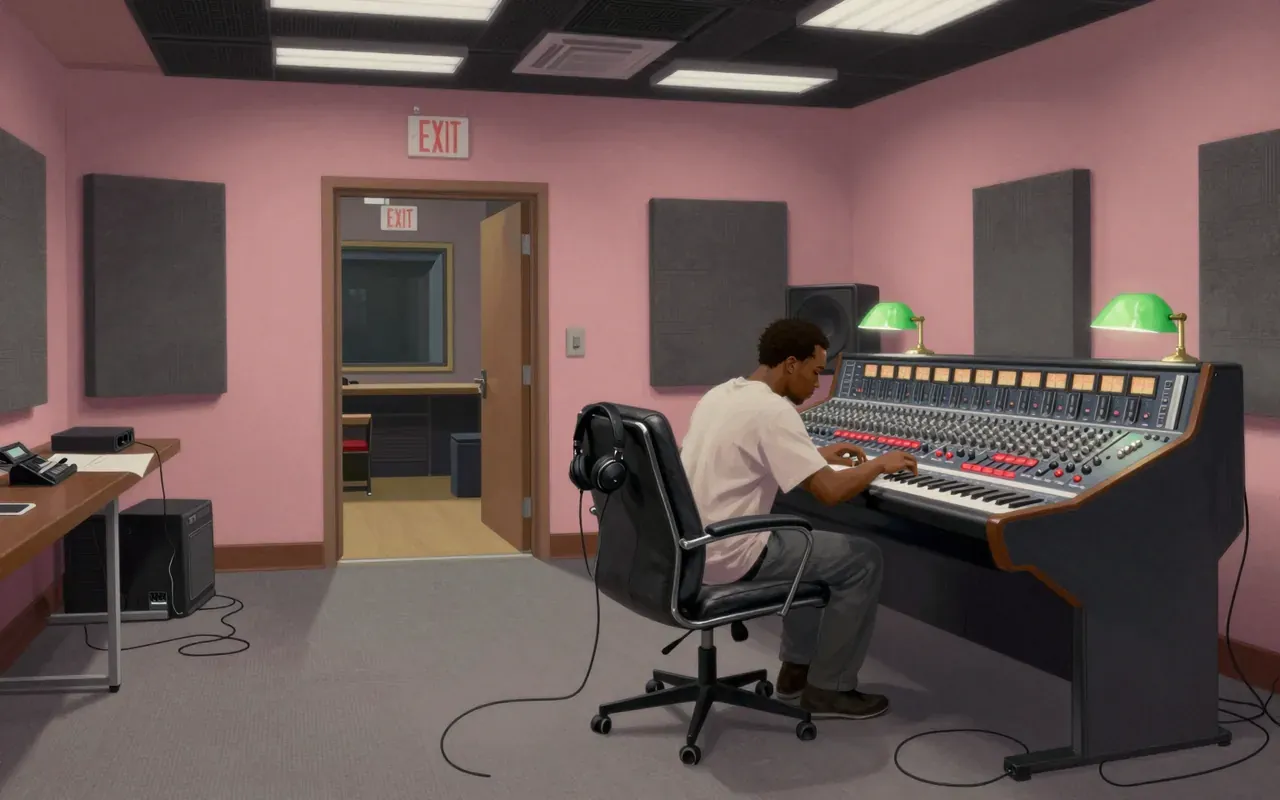
Timbaland and Missy Elliott built the album around old school rap and funk samples — including Run–DMC’s ‘Peter Piper’ and Frankie Smith’s ‘Double Dutch Bus’. Engineers Jeff Allen, Carlos ‘El Loco’ Bedoya, Josh Butler, Jimmy Douglass, Guru, and Mike ‘Hitman’ Wilson captured performances in rooms shaped by Timbaland’s and Douglass’s mixing. The sound is defined by malfunctioning-robot grooves, sitar-like textures, and alien timbres — not by tempo, key, or instrumentation beyond what the sources confirm.

What lands

‘Work It’ lands with force: Grammy-winning, No. 2 on Billboard, MTV Video of the Year. ‘Gossip Folks’, featuring Ludacris, lands as a Top 10 hit, widely played across MTV networks and embraced by the dance community after the Fatboy Slim remix. The album’s sonic palette — malfunctioning-robot grooves, alien textures — lands as distinct and influential.

What does not

It does not sustain its conceptual ambition across all 14 tracks. ‘Back in the Day’ was intended as a third single but scrapped after underperforming. The ‘Pussycat’ remix featuring Janet Jackson and Lil’ Kim was withdrawn due to explicit content concerns — leaving a gap where that version might have anchored the album’s thematic range.

The ideas inside it

It interweaves grief and celebration — dedicated to Aaliyah and victims of 9/11 — while focusing lyrically on the female experience across relationships. It presents a retro-futurist tension: deliberate old school sampling meets sonic innovation, uninhibited and unpredictable.

Who should hear it, and who should not

People who want to hear how hip-hop reassembles its past without nostalgia — not fans of polished pop or linear storytelling. Not for listeners who need clarity over collision, or who mistake restraint for sophistication.

Is it worth your time

Yes. It is the best-selling women’s rap album in the US, certified double platinum, and named ‘this year’s best hip-hop album’ by The New York Times. Its Grammy-winning single ‘Work It’ reached No. 2 on the Billboard Hot 100 and won MTV’s Video of the Year.
Same genre · Hip-hop4 of 113
13:22
In My Lifetime, Vol. 1Jay‐Z · 1997In My Lifetime, Vol. 1 is Jay-Z’s 1997 sophomore album. It follows Reasonable Doubt. It was shaped by The Notorious B.I.G.’s death. It marks a stylistic shift toward the 'jiggy' era.
9:00
Boy in da CornerDizzee Rascal · 2003Boy in da Corner is Dizzee Rascal’s self-produced 2003 debut album. All 17 tracks were produced by him. One track samples Billy Squier’s 'The Big Beat'. Four vocal contributors are named across seven tracks. Nothing else about its making — no instruments, no room, no tempos, no engineering — is stated in the source material.
9:53
Late RegistrationKanye West · 2005Late Registration is Kanye West’s second studio album, released in 2005. It marks a deliberate departure from the chipmunk soul of his debut, embracing orchestral arrangements, genre-blending instrumentation, and collaborative experimentation with Jon Brion. Recorded over slightly more than a year across multiple studios in New York and Hollywood, it cost $2 million — enabling West to hire a 20-piece string ensemble and experiment with unconventional instruments like celesta, harpsichord, and Chinese bells. Jon Brion joined in March 2005 after West scrapped 75% of the near-finished album, radically altering its direction. The record is defined less by lyrical cohesion or narrative arc than by its architectural approach to sound: building, dismantling, and rebuilding hip-hop with live instrumentation as structural material.
12:14
Illadelph HalflifeThe Roots · 1996Illadelph Halflife is the Roots’ third studio album, released 24 September 1996 on DGC and Geffen Records. It features a tougher and broader sound than Do You Want More?!!!??! (1995), integrating programmed drums and guest contributions from R&B musicians including Amel Larrieux and D'Angelo, and jazz musicians including David Murray, Steve Coleman, Cassandra Wilson, and Graham Haynes. Its production is grimy and haunting, shaped by Wu-Tang Clan and RZA’s influence, and replete with samples from old jazz and classical music. The multi-track tapes used to mix the album were destroyed in a 2008 fire at the Universal Studios back lot, though the original 1996 master tape remains unaffected. It was the group’s first album to break the Top 40 on the Billboard 200 chart. ‘What They Do’ was their first single to reach the Top 40 (No. 34); ‘Clones’ was their first to reach the top five on the rap charts. Scott Storch left the band and was replaced by Kamal Gray. Collaborators included Common, D'Angelo, and Q-Tip — foundational to the Soulquarians and the neo-soul association.
Up next in Music

Unhalfbricking

Fairport Convention · 1969 · 11:40

This is not the birth of folk rock — it’s the moment the band stopped copying America and started listening to Cecil Sharp House.

11:40