What the record is and where it came from
OutKast’s third studio album. Released 29 September 1998. Recorded primarily at Bosstown and Doppler Studios in Atlanta. Certified double platinum. Reached number two on the Billboard 200.
How it sounds, and how it was made
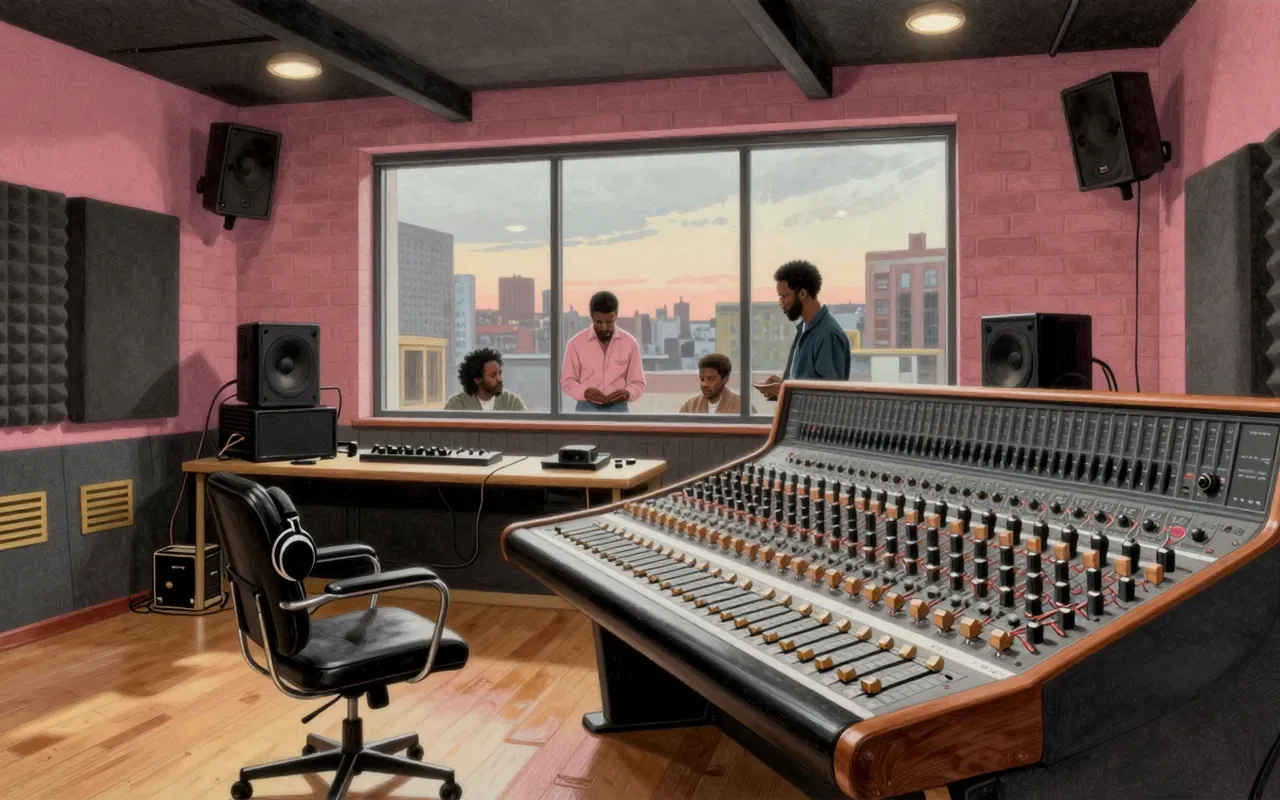
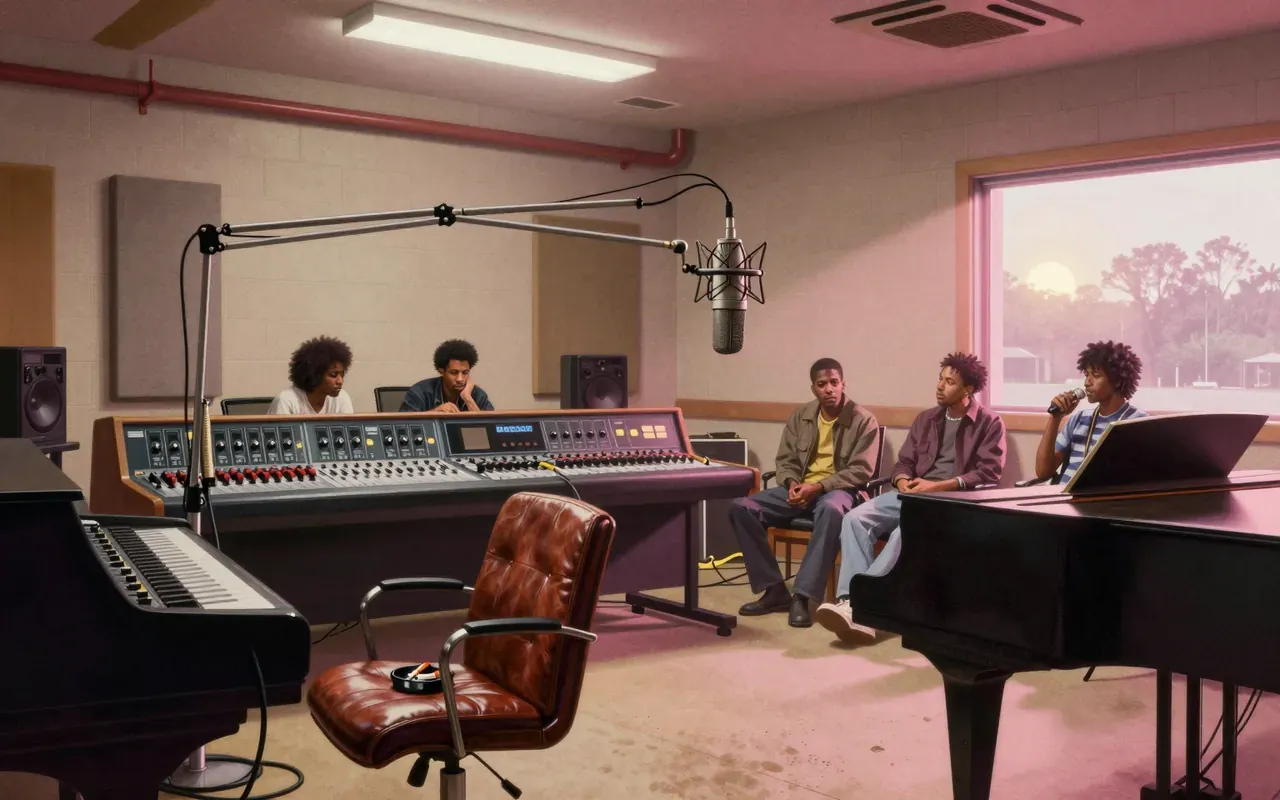
Live instrumentation dominates. A baby grand piano sits in the room. Musicians rotate in and out — stoner funk, prog rock, reggae players — building songs from jam sessions where one chord pattern triggers collective response. The process is organic, unhurried, Motown- and Stax-like. André 3000 listens to Bob Marley constantly. No tempo, key, or mic is specified in source material.
What lands
The live-in studio process lands — especially on ‘Aquemini’, ‘SpottieOttieDopaliscious’, and ‘Liberation’, where layered instrumentation and extended forms breathe with room tone and human timing. ‘Synthesizer’ lands as a deliberate tonal pivot, its name literal, its texture defined by the instrument’s presence, not emulation.
What does not
It does not rely on sample-based production. It does not follow industry timelines. It does not separate rapper from musician — both Big Boi and André produce more themselves, and both engage live players directly.
The ideas inside it
The title fuses zodiac signs — Aquarius (Big Boi), Gemini (André) — as a metaphor for duality: Southern grit and cosmic curiosity, street reportage and mythmaking, funk tradition and electro experimentation. It links hip-hop to the black freedom struggle via ‘Rosa Parks’.
Who should hear it, and who should not
People who hear hip-hop as a live ensemble practice should hear it. People who expect rigid genre boundaries or fast-turnaround rap records should not.
Is it worth your time
Yes — if you want hip-hop built from live rooms, not loops; if you value compositional development shaped by human comings and goings, not algorithms or deadlines.