musicbriefs
Label

RCA Victor

22
briefs
10:18
average
226 min
in total
On music.briefs22
10:35

Calypso

Harry Belafonte · 1956

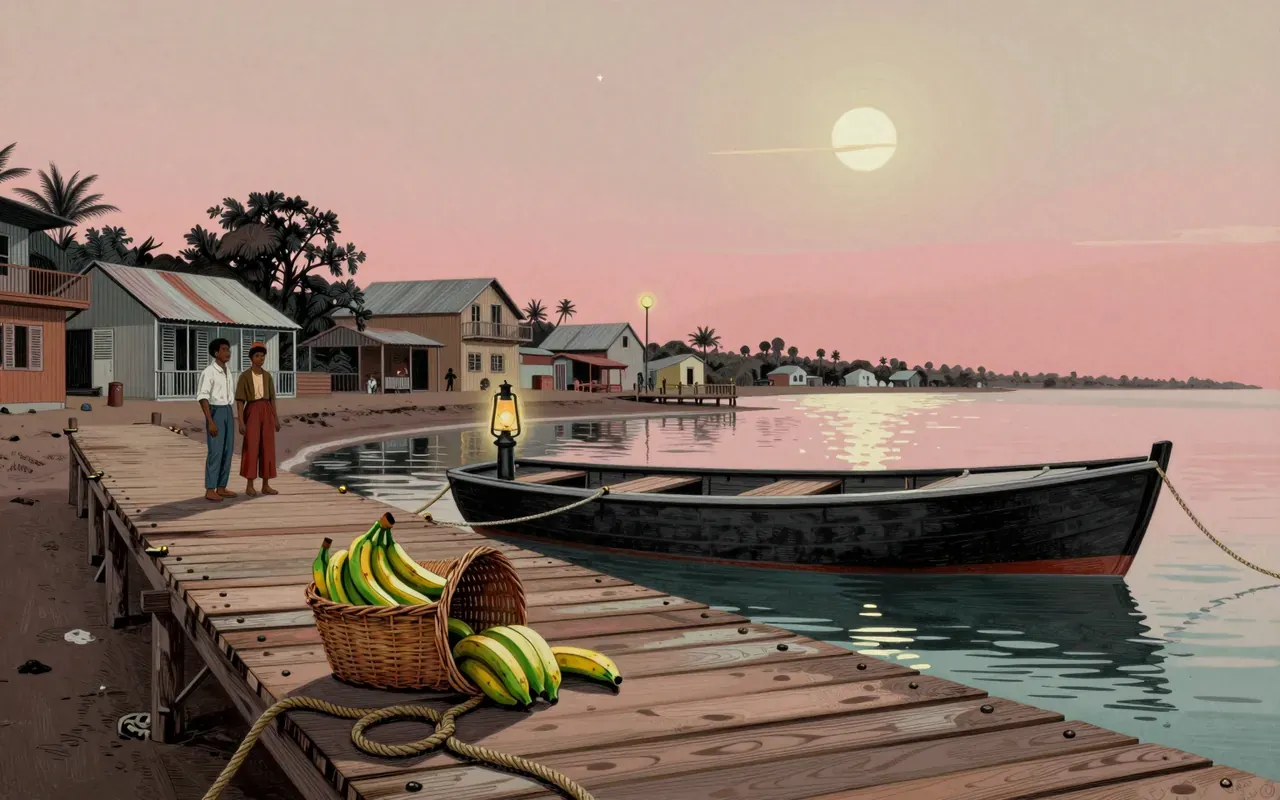
Calypso is Harry Belafonte's third studio album, released in 1956 on RCA Victor. It features vocal performances backed by guitarists Millard J. Thomas and Frantz Casseus, Tony Scott and His Orchestra, and The Norman Luboff Choir on select tracks. It includes 'Day-O (The Banana Boat Song)', sung from the perspective of banana dock workers awaiting daylight, alongside 'Star-O' as a lyrical variant reprise, and 'Jamaica Farewell', a mento folk song published here for the first time. Production involved multiple producers, a conductor, a chorus leader, and contributors to visual and textual elements of the release.

9:42

Concerto for Orchestra

Bartók · 1956

No recording is described. Only the 1943 composition is verified — commissioned by Koussevitzky, premiered by the Boston Symphony Orchestra in 1944, scored for symphony orchestra, structured in five movements, and defined by rotating soloistic emphasis. Everything else — sound, performance, recording, interpretation — is absent from the evidence.

10:08

Elephant Mountain

The Youngbloods · 1969

Elephant Mountain is a focused, unembellished studio document: piano-led, locally rooted, and shaped by absence. It assumes nothing. It delivers less than it promises — and that is its strength.

10:22

Elvis

Elvis Presley · 1956

Elvis Presley’s 1956 debut album is a pivot point made audible: five Sun recordings and seven RCA tracks, with guitar replacing piano on R&B covers, vocals prioritised over polish, and zero studio artifice. It topped Billboard for ten weeks — not as novelty, but as necessity.

11:43

Loving You

Elvis Presley · 1957

The 'Loving You' soundtrack is Elvis Presley’s first film album, recorded in early 1957 across two studios — Paramount Pictures Scoring Stage and Radio Recorders in Hollywood — with Steve Sholes as first officially credited producer. It contains seven songs written expressly for the film under Presley’s and Parker’s publishing companies, plus five added to meet LP runtime: 'Don’t Leave Me Now' (written for but excluded from the film), '(Let Me Be Your) Teddy Bear' (insisted upon by producer Hal B. Wallis), 'Blueberry Hill' (a 1956 Fats Domino hit), 'True Love' (a Cole Porter song from High Society), and 'I Need You So'. Released in July 1957, it was Presley’s third consecutive number-one album. It inaugurated RCA’s practice of padding Presley soundtracks with non-soundtrack recordings — a pattern that defined his film-era output.

10:24

Old No. 1

Guy Clark · 1975

A debut defined by absence: no band, no studio detail, no production flourishes—only the force of Clark’s writing and the dry intimacy of voice and guitar. Its power lies in what it leaves out.

9:56

The Bridge

Sonny Rollins · 1962

The Bridge is Sonny Rollins’s 1962 studio album, recorded in January and February 1962 and released in April 1962. It marks his return after a three-year sabbatical and his debut for RCA Victor. The core quartet features Sonny Rollins on tenor saxophone, Jim Hall on electric guitar, Bob Cranshaw on double bass, and Ben Riley on drums — with Harry "H.T." Saunders substituting on drums for one track. The sessions were held across three dates: January 30 ("God Bless the Child"), February 13 ("Where Are You", "John S.", "You Do Something to Me"), and February 14 ("Without a Song", "The Bridge"). Produced by George Avakian and engineered by Ray Hall, the album was critically lauded and later inducted into the Grammy Hall of Fame in 2015.

9:23

The Jazz Workshop

The George Russell Smalltet · 1957

The Jazz Workshop is George Russell’s 1957 debut album, featuring his Smalltet with Art Farmer, Hal McKusick, Barry Galbraith, and Bill Evans. It includes tracks such as 'Ye Hypocrite, Ye Beelzebub', 'Jack's Blues', and 'Witch Hunt', which appears in the film ParaNorman (2012). Verified claims confirm the personnel, instrumentation, and compositional devices used, including 'Concerto for Billy the Kid' as a feature for Bill Evans and 'Ezz-thetic' built on the chord changes of 'Love for Sale'.

9:24

The Music From Peter Gunn

Henry Mancini · 1959

The Music From Peter Gunn is a television soundtrack album composed by Henry Mancini for the series Peter Gunn, produced by Blake Edwards in 1958. It won the inaugural Grammy Award for Album of the Year in 1958. Mancini pioneered the integration of jazz elements into late-romantic orchestral television scoring.

9:36

Tijuana Moods

Charles Mingus · 1962

Tijuana Moods is a constructed object — not a captured event. Its value lies in hearing how Mingus used editing as an instrument, not in hearing what the band sounded like on a given night.

8:37

Aladdin Sane

David Bowie · 1973

Aladdin Sane is David Bowie’s sixth studio album, co-produced with Ken Scott and recorded between December 1972 and January 1973 in London and New York City during breaks in the Ziggy Stardust Tour. It features the full Spiders from Mars lineup—Mick Ronson, Trevor Bolder, and Mick Woodmansey—alongside jazz-influenced pianist Mike Garson, two saxophonists, and three backing vocalists. Most songs were written on the road in the US and reflect Bowie’s ambivalent perceptions of America, resulting in a harder, edgier rock sound than his prior glam work. Lyrics explore duality: the rewards of stardom versus the toll of touring, and recurring motifs of urban decay, drugs, sex, violence, and death. The album includes a Rolling Stones cover, 'Let's Spend the Night Together', and Bowie framed its title as both a pun—'A Lad Insane'—and the conceptual extension 'Ziggy Stardust goes to America'. 'The Jean Genie' was the first track recorded, on 6 October 1972 in New York, with Bowie producing that session himself. It was Bowie’s final album with the complete Spiders from Mars lineup.

9:36

Berlin

Lou Reed · 1973

Berlin is a concept album about two amphetamine-addicted lovers in Berlin. Lou Reed plays acoustic guitar throughout. The title track is re-arranged for solo piano, with simplified structure and a changed key. 'Oh, Jim' uses the Velvet Underground outtake 'Oh, Gin'. 'Caroline Says II' rewrites 'Stephanie Says'. 'Sad Song' revises an earlier Velvet Underground demo with milder lyrics. 'Men of Good Fortune' was played by the Velvet Underground as early as 1966. The album was recorded as a 64-minute double LP but edited down by RCA. An untitled one-minute piano solo by Allan Macmillan appears between 'Berlin' and 'Lady Day' on early 8-track and cassette editions.

10:53

Coat of Many Colors

Dolly Parton · 1971

A lean, writer-led country record — recorded fast, written tighter, released before myth could set in.

12:18

Elvis Presley

Elvis Presley · 1956

Elvis Presley’s 1956 debut is not a collection of songs. It is a recalibration. Guitar replaces piano in the R&B covers. Five Sun tracks sit alongside seven RCA recordings—not as past and future, but as equal parts of a single argument. It was the first rock and roll album to top Billboard—and held that spot for ten weeks. No hedging. No filler. Just sound, structure, and consequence.

9:39

From Elvis in Memphis

Elvis Presley · 1969

From Elvis in Memphis is Elvis Presley’s tenth studio album, recorded at American Sound Studio in Memphis in January and February 1969 under producer Chips Moman with the Memphis Boys. It marked his return to non-soundtrack albums after fulfilling his MGM film contract and followed the success of his 1968 NBC television special. The sessions were deliberately chosen for their southern soul sound, resulting in a 'country soul' style characterized by country song selections and frequent use of the dobro. Though RCA’s policy required recording in its own studios, the label sent personnel to American Sound. Presley began recording while nursing a cold, and the sessions included contributions from American Sound engineer Ed Kollis on harmonica. The album features a blend of soul, country, gospel, and blues, with arrangements emphasizing the rhythm section and incorporating strings, brass, and syncopation. Twelve tracks were selected from thirty-four recorded, including standout performances like 'In the Ghetto' and 'Suspicious Minds'.

10:58

Lust for Life

Iggy Pop · 1977

A hard rock record made fast, in a real room, with real instruments, by people who had just survived something. No myth. Just sound.

9:54

Nilsson Schmilsson

Nilsson · 1971

Nilsson Schmilsson is Harry Nilsson’s seventh studio album, released by RCA Records on November 11, 1971. It was recorded in London studios — Trident, RCA, and Island — and produced by Richard Perry. It is his most commercially successful album and contains three of his best-known songs: 'Without You', 'Jump into the Fire', and 'Coconut'. Nilsson performed piano, Mellotron, organ, electric piano, and harmonica across the record; Gary Wright played piano and organ; Henry Krein played accordion on 'Gotta Get Up'; and Richard Perry contributed Mellotron and percussion. Engineering credits go to Robin Geoffrey Cable, Richie Schmitt, and Phill Brown. The album won the Grammy for Best Male Pop Vocal Performance for 'Without You'.

9:12

Transformer

Lou Reed · 1972

Transformer is Lou Reed’s second solo album, co-produced by David Bowie and Mick Ronson at Trident Studios, London, in 1972. Four tracks originated in the Velvet Underground and were slowed for this version. Ronson contributed guitar, piano, recorder, backing vocals and the string arrangement for 'Perfect Day'. 'Walk on the Wild Side' features Herbie Flowers’ bass and Ronnie Ross’ saxophone. The cover art resulted from an accidental over-exposure of a Mick Rock photograph. The album includes references to Warhol superstars and Nelson Algren’s novel.

8:46

Wanted! The Outlaws

Outlaw country wasn’t born in the studio — it was edited into existence from tape bins and bargaining chips.
9:23

What’s New?

Sonny Rollins · 1962

What’s New? is a 1962 RCA Victor album by Sonny Rollins built around Latin rhythms. It does not reinterpret the title song’s lyrical conceit or formal structure. It does not feature the trumpet solo for which the tune was originally written. It lands most clearly on ‘Jungoso’ and ‘Bluesongo’. It is worth hearing for its rhythmic focus — not for harmonic invention or narrative depth.

13:00

Station to Station

David Bowie · 1976

David Bowie's tenth album, cut at Cherokee Studios in late 1975 while he shot a film and lived on a diet of peppers and cocaine, sets the funk band from Young Americans against a new, mechanical pulse borrowed from German records. The result is the hinge between his LA period and the trilogy that followed.

13:00

The Rise and Fall of Ziggy Stardust and the Spiders From Mars

David Bowie · 1972

Recorded fast at Trident Studios with Mick Ronson's guitar doing much of the heavy lifting, Ziggy Stardust turns a loosely stitched science-fiction plot into cover for songwriting about sex, stardom and ruin that the early-seventies charts would not otherwise have carried under Bowie's own name.