What the record is and where it came from
A 1957 studio session withheld from release until June 1962 due to a legal dispute with RCA. It is not a live document or a conceptual suite, but a set of edited constructions built from incomplete takes.
How it sounds, and how it was made
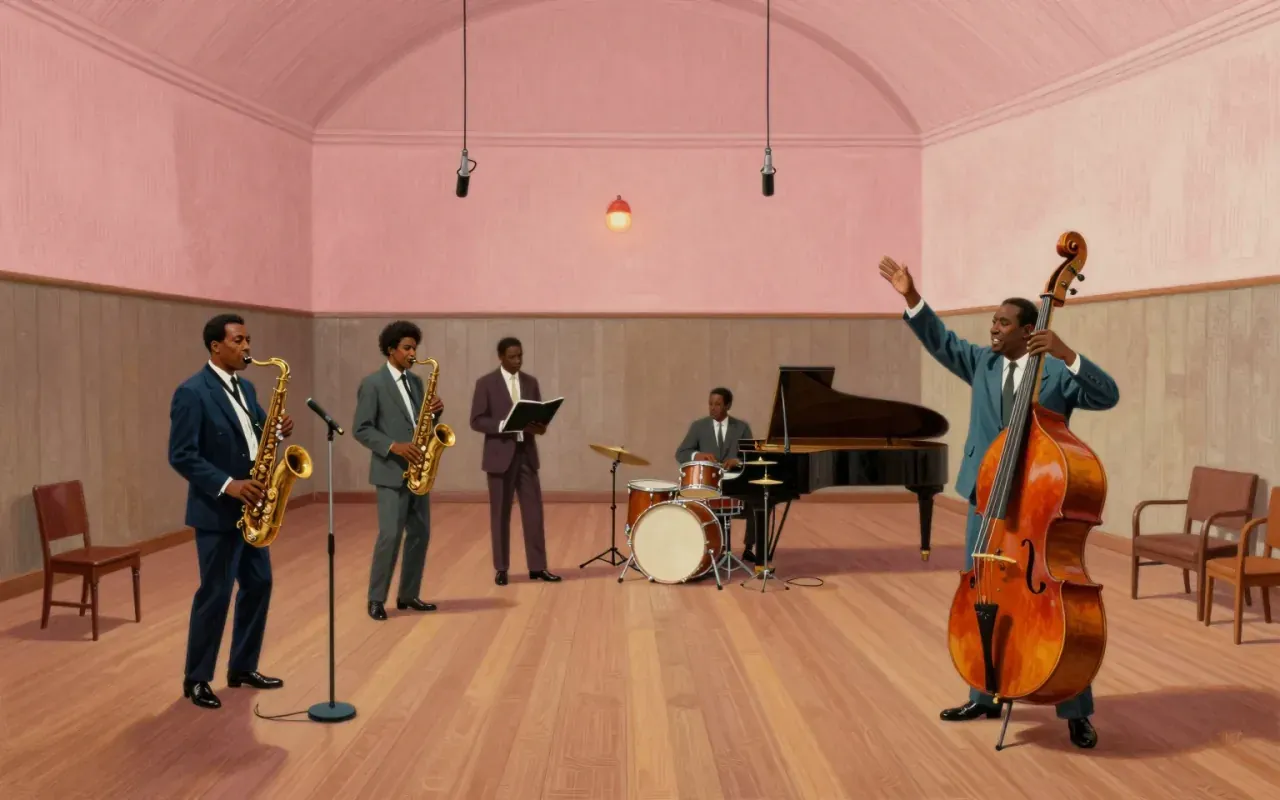
The record sounds assembled. Hardly anything was recorded as a complete take. Base takes were edited, with additional sections spliced in to form both the original and alternate versions. The personnel includes Mingus on bass, Clarence Shaw on trumpet, Jimmy Knepper on trombone, Shafi Hadi on alto and tenor saxophones, Bill Triglia on piano, Dannie Richmond on drums, Ysabel Morel on castanets and vocals, Frankie Dunlop on percussion, and Lonne Elder III on vocals.
What lands
Ysabel Morel’s castanets and vocals land with physical immediacy. The abrupt cuts between sections land as deliberate ruptures, not mistakes. The contrast between the tight groove of ‘Tijuana Gift Shop’ and the sprawl of ‘Los Mariachis’ lands as intentional dialectic.
What does not
It does not deliver unified, live-sounding ensemble statements. It does not foreground solo virtuosity as an end in itself. It does not resolve its tonal or structural tensions — they are left hanging, unresolved by design.
The ideas inside it
The record explores rhythmic displacement, theatrical narrative, and cultural pastiche through editing-as-composition. It treats the studio not as a capture space but as a workshop: fragments of castanets, vocal interjections, and shifting brass voicings are placed like stage directions.
Who should hear it, and who should not
Students of jazz composition should hear it. Editors and producers should hear it. Anyone who thinks ‘jazz album’ means ‘captured performance’ should hear it — then reconsider.
Is it worth your time
Yes — if you want to hear Mingus’s compositional logic at work in real time, not as polished statement but as layered, contested construction. No — if you expect seamless flow or definitive performances.