What the record is and where it came from
There is no record described in the material. The sources refer only to Bartók’s 1943 composition — commissioned by Serge Koussevitzky, premiered by the Boston Symphony Orchestra in December 1944. No recording session, label, conductor, year of release, or physical format is mentioned. ‘Record’ here is a misnomer: only the score and its premiere context exist in the evidence.
How it sounds, and how it was made
No information is given about how any recording of Bartók’s Concerto for Orchestra sounds, or how it was made. There are no details about performers, venue, studio, microphones, tempo, dynamics, articulation, balance, reverb, editing, or production choices for any version of the work. The material does not describe a single sonic attribute of any recorded performance.
What lands
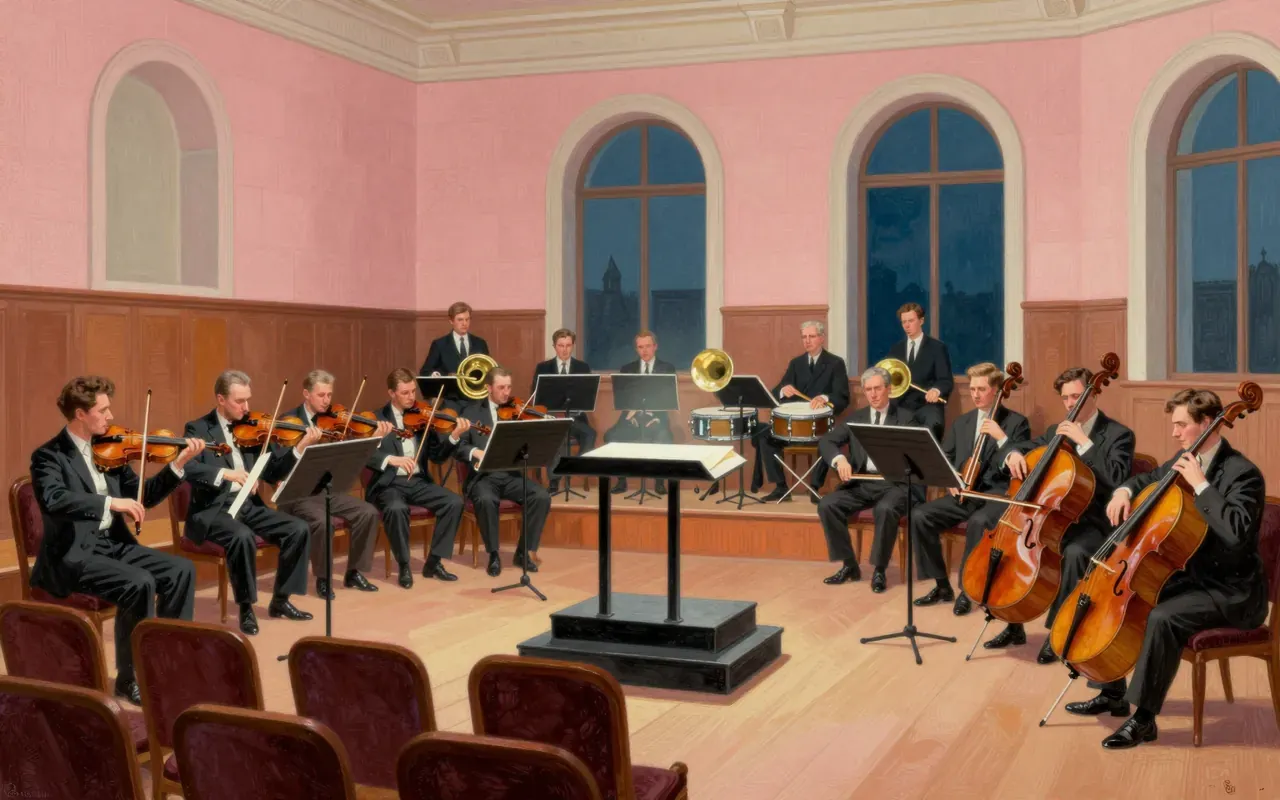
The concerto lands as a compositional argument: that an orchestra can be both subject and object of virtuosity. Its five-movement architecture sustains contrast while binding technique to expression. The Elegia moves with grief-laden weight; the Giuco della coppie with rustic, paired wind interplay; the Finale drives with percussive insistence. Each movement reassigns spotlight — never arbitrarily, always structurally consequential.
What does not
It does not feature a consistent soloist or group of soloists. It does not follow the sinfonia concertante model. It does not rely on a single timbral identity or unbroken narrative arc across movements. It does not use the title ‘Concerto for Orchestra’ as mere ornament — it fulfils the genre’s defining condition: variable, rotating emphasis.
The ideas inside it
The piece explores the idea of orchestral virtuosity without fixed soloists. It treats instruments and sections as shifting protagonists. It synthesises Eastern European folk idioms with Western symphonic form. It asserts the orchestra as both ensemble and constellation of solo voices — a structural and philosophical rebuttal to the concerto’s traditional hierarchy.
Who should hear it, and who should not
Anyone interested in how orchestral writing can redistribute agency across instruments should hear it. Anyone expecting a showcase of interpretive personality, historical recording detail, or sonic character should not — because none of those things are documented here.
Is it worth your time
It is not possible to assess whether this record is worth your time. No recording is identified, described, or contextualised in the source material. There is no evidence about interpretation, fidelity, ensemble character, or listening experience — only that the composition exists and was premiered in 1944.