What the record is and where it came from
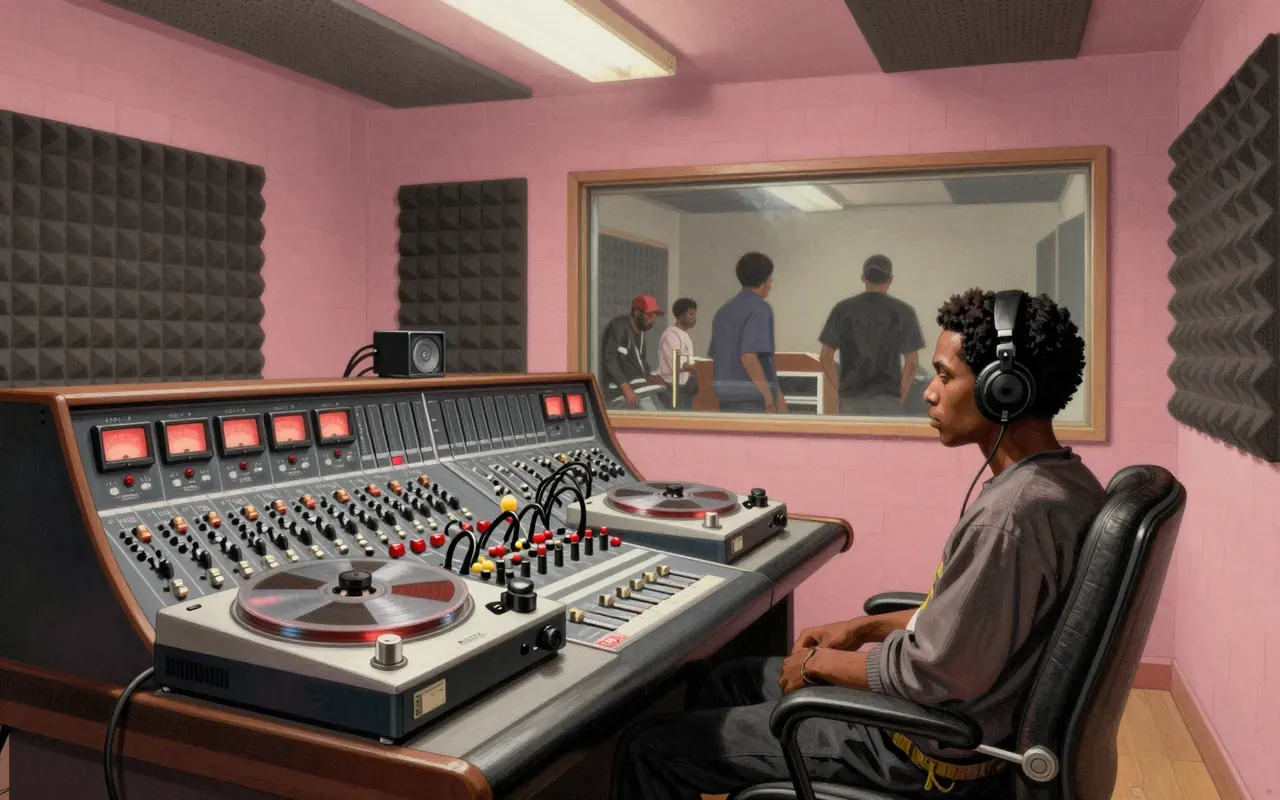
Fear of a Black Planet is Public Enemy’s third album. It was recorded across three New York studios — Greene St. Recording, The Music Palace, and Spectrum City Studios — between June and October 1989. It was produced by The Bomb Squad: Chuck D, Eric ‘Vietnam’ Sadler, Keith Shocklee, and Hank Shocklee. Keith received his first official team credit here.
How it sounds, and how it was made
It sounds like a dense, sample-layered ‘wall of noise’ built from thousands of records combed for fragments, then reconfigured using the E-mu SP-1200, Akai S900, and a Macintosh computer. The Bomb Squad worked in a production assembly line: Hank Shocklee from a DJ’s perspective, Eric Sadler from a musician’s. Radio and other media were added to the sampling repertoire. The sound got significantly denser as pieces were assembled.
What lands
‘Fight the Power’ lands with full force: it is one of the most popular and influential songs in hip-hop history. ‘Welcome to the Terrordome’ lands structurally and thematically — its layered aggression and self-referential defiance define the album’s centre. ‘Burn Hollywood Burn’ lands sonically and politically, featuring Ice Cube and Big Daddy Kane, and name-checking Black Caesar (1973).
What does not
It does not land every track. ‘Meet the G That Killed Me’ runs 0:45 and offers no musical development. ‘Final Count of the Collision Between Us and the Damned’ is 0:49 and functions only as punctuation. Several tracks — ‘Contract on the World Love Jam’, ‘Incident at 66.6 FM’, ‘Reggie Jax’, ‘Leave This Off Your Fu*kin Charts’ — are under two minutes and serve as interstitials, not statements.
The ideas inside it
It continues Public Enemy’s politically charged themes. ‘911 Is a Joke’ criticises delayed emergency response in Black communities. ‘Welcome to the Terrordome’ responds to antisemitic comments made by Professor Griff. ‘Fight the Power’ is the theme song of Do the Right Thing and critiques cultural erasure and hero worship.
Who should hear it, and who should not
Producers should hear it to study sampling workflow. Hip-hop listeners should hear it to understand how rhythm, rhetoric, and resistance cohere in arrangement. Anyone who treats sampling as decoration — not architecture — should not hear it until they’ve studied the hardware and labour behind it.
Is it worth your time
Yes. It is Public Enemy’s most successful album and was selected for preservation in the National Recording Registry in 2005. Its production rigour, political clarity, and sonic density remain unmatched in hip-hop’s mainstream release cycle.