musicbriefs
2:36in production/ 2:36 · ceiling 15 min
Jazz

Getz/Gilberto

A quiet collaboration asks the listener to notice how voice, guitar, piano and saxophone share space.

Getz/Gilberto pairs American saxophonist Stan Getz with Brazilian singer and guitarist João Gilberto, with Antônio Carlos Jobim contributing piano and much of the repertoire. Recorded in New York in March 1963, it appeared on Verve in 1964. Astrud Gilberto sings on “The Girl from Ipanema” and “Corcovado.”

Worth your time?

Yes. Hear the whole thing.

What works
    What does not
      Hear it if
      • Listeners who enjoy restrained singing and small-group jazz
      Skip it if
      • Listeners seeking forceful percussion or constant instrumental intensity
      The written brief2 min read

      What the record is and where it came from

      Getz/Gilberto pairs American saxophonist Stan Getz with Brazilian singer and guitarist João Gilberto, with Antônio Carlos Jobim contributing piano and much of the repertoire. Recorded in New York in March 1963, it appeared on Verve in 1964. Astrud Gilberto sings on “The Girl from Ipanema” and “Corcovado.”

      How it sounds, and how it was made

      João Gilberto’s restrained voice and guitar, Jobim’s economical piano and Getz’s tenor saxophone give the album its principal contrasts. The arrangement invites attention to differences of touch and emphasis without needing a large ensemble.

      The vocal presence is especially important. A quiet singer changes the scale at which instrumental activity registers; accompaniment and melodic commentary have to be heard in relation to that smaller gesture.

      What lands

      The full “The Girl from Ipanema” offers more context than an isolated English-language vocal excerpt. It places Astrud’s contribution within an encounter that also includes João and Getz. “Corcovado” supplies another opportunity to follow the different voices.

      The older sambas “Doralice” and “Pra Machucar Meu Coração” widen the programme beyond the Jobim compositions. Their inclusion keeps the record connected to a repertoire that predates the international enthusiasm for bossa nova.

      What does not

      Familiarity can turn the album into comfortable scenery. Its quietness is easy to mistake for a lack of detail, particularly when the best-known melody arrives with decades of associations already attached. Listeners wanting vigorous exchanges or frequent changes of instrumental colour may find its restraint limiting.

      The ideas inside it

      An international success does not belong only to the name most familiar in a particular market. The album title names two musicians, while its musical identity also depends on Jobim, Astrud and the rhythm section. Keeping those contributions visible makes the collaboration more intelligible.

      Who should hear it, and who should not

      Hear it if you are willing to adjust your attention to a relatively quiet performance. It is a useful meeting point between an interest in jazz saxophone and curiosity about Brazilian song, provided neither side is treated as incidental.

      Is it worth your time

      Yes. Follow the complete album rather than stopping after its most famous song. The repertoire and the distribution of voices explain why the record offers more than a single familiar atmosphere.
      Same genre · Jazz4 of 167
      9:53
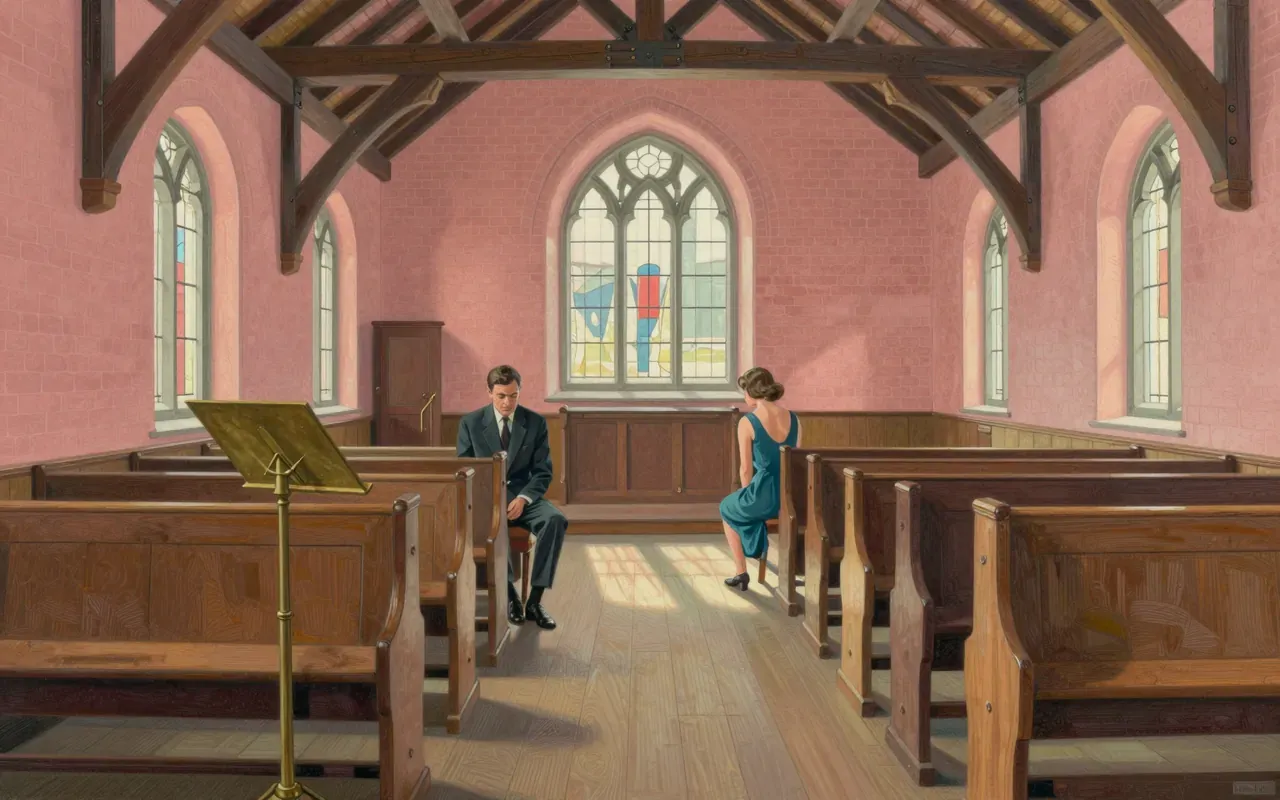
      Jazz SambaStan Getz · 1962Jazz Samba is a 1962 bossa nova album by Stan Getz and Charlie Byrd, recorded at All Souls Unitarian Church in Washington, D.C., on February 13, 1962, and released by Verve in April. It features Getz on saxophone, Byrd on guitar, two bassists (Keter Betts and Joe Byrd), and two drummers (Buddy Deppenschmidt and Bill Reichenbach). Arrangements are by Byrd. Two tracks—'Desafinado' and 'Samba de Uma Nota Só'—are by Antônio Carlos Jobim and were released as singles. The album won Getz the 1963 Grammy for Best Jazz Performance and sold over one million copies. It was part of Getz’s effort to introduce bossa nova to the U.S. after Byrd’s 1961 State Department tour of Brazil.
      9:41
      Lady Sings the BluesBillie Holiday · 1956A companion LP to Billie Holiday’s 1956 autobiography. Released in June 1956. Compiled from two sessions: September 1954 at Capitol Studios and June 1956 at Fine Sound Studios in New York City. Four tracks are new; eight are re-recordings of her biggest hits.
      8:52
      Concert by the SeaErroll Garner · 1956Concert by the Sea is a 1955 live Erroll Garner Trio album recorded at Sunset School in Carmel-by-the-Sea. It features Eddie Calhoun on bass and Denzil Best on drums. The piano is out of tune. The bass and drums are receded. The acoustics are poor. The recording was made with primitive sound equipment. It was captured unofficially by Armed Forces Radio Network engineer Will Thornbury. Manager Martha Glaser discovered the tape backstage, edited it, and persuaded George Avakian to release it. Servicemen from Fort Ord were bused to attend. The concert took place in a gothic-revivalist assembly hall. It was a best-selling jazz album in its day. The decision to release it was easy for Avakian.
      10:06
      Frank Sinatra Sings for Only the LonelyFrank Sinatra · 1958Frank Sinatra Sings for Only the Lonely is a 1958 Capitol Records studio album defined by its torch-song repertoire, emotionally charged context—including Sinatra’s recent divorce and Riddle’s personal losses—and distinctive recording practices involving separate mono and stereo sessions with differing microphone setups. Its arrangements, crafted by Nelson Riddle, feature expressive instrumental solos by Harry Edison, Ray Sims, and Bill Miller. Though initially recorded with Riddle, the usable tracks came from a session led by Felix Slatkin, and the album marked the end of Capitol’s era of dual-format separate-recording techniques. The original stereo release omitted two tracks present on the mono version, and the album won the Grammy Award for Best Album Cover in 1959. It is widely regarded as one of Sinatra’s most introspective and artistically cohesive works, with Sinatra himself naming it his favorite album in the mid-1970s. The front cover, painted by Nicholas Volpe, depicts Sinatra as a sullen, Pagliacci-like clown, and the back cover features a lamppost—a recurring visual motif in Sinatra’s album art. The album was recorded during the transitional period when stereo was entering the marketplace, and Capitol’s engineering choices—including the use of eight microphones for mono and two or three for stereo—produced audible differences between formats, with audio engineer Steve Hoffman favoring the mono version. The album’s emotional gravity, arrangement precision, and sonic craftsmanship collectively establish it as a landmark in vocal jazz and concept-album history. The album’s legacy includes critical acclaim, chart success, and enduring cultural resonance, notably being named No. 1 on Q magazine’s list of the '15 Greatest Stoner Albums of All Time'.
      Up next in Music

      The Great Twenty-Eight

      Chuck Berry · 1982 · 1:58

      A singles-centred collection makes Berry’s first Chess decade available as a sustained musical argument.

      1:58