Saved
Folk & singer-songwriter · Ambient & experimental

If I Could Only Remember My Name

A record that forgets itself—and makes you listen closer to the silence between notes.

Worth your time?4/5Yes.Hear the whole thing.What works, what does not, who it is for ↓
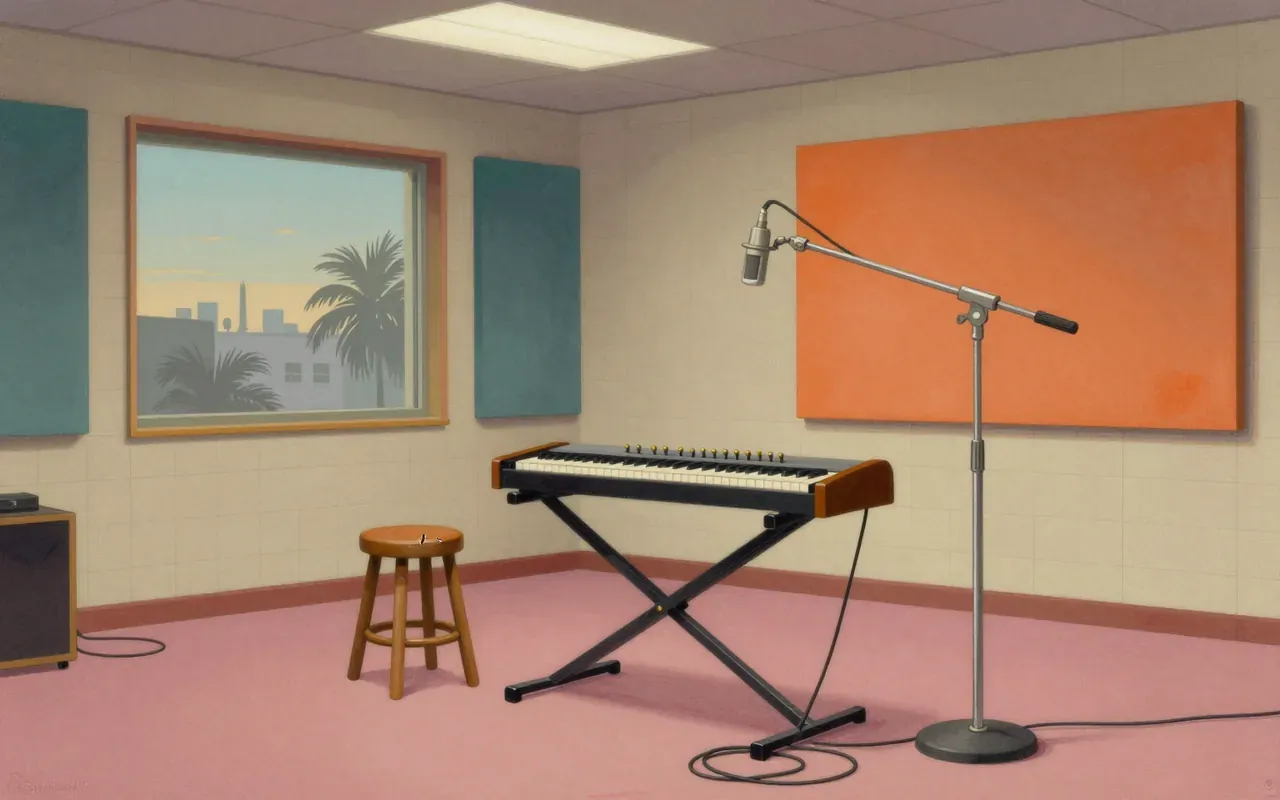
9:31in productionCh. 1 · The Room It Was Cut In/ 9:31 · ceiling 15 min
4 chapters · 9:31Ceiling 15:00

The brief is written and checked. The video joins this page when it is cut.4 chapters · 2 min read · 9:31 planned

Read the brief

If I Could Only Remember My Name is David Crosby’s 1971 solo debut, recorded at Wally Heider Studios in San Francisco. It features contributions from Graham Nash, Neil Young, Joni Mitchell, Jerry Garcia, and members of Jefferson Airplane, Quicksilver Messenger Service, and Santana. The loose ensemble was informally dubbed The Planet Earth Rock and Roll Orchestra by Paul Kantner, though Crosby clarified it was not an organised collective. Five tracks contain lyrics, including 'Orleans', a 15th-century round about French cathedrals. The final two tracks feature Crosby alone. The album was panned on release by Rolling Stone but has since been reappraised and remains in print. In a 2010 list published by L'Osservatore Romano, it ranked second to the Beatles' Revolver.

Chapters & takeaways4
  1. 0:57
    The Room It Was Cut In

    Recorded at Wally Heider Studios in San Francisco, alongside American Beauty, Blows Against the Empire, and Songs for Beginners.

  2. 2:30
    The Planet Earth Rock and Roll Orchestra

    A loose ensemble—not a band—featuring Nash, Young, Mitchell, Garcia, and members of Jefferson Airplane, Quicksilver, and Santana.

  3. 4:16
    What’s Left When Everyone Leaves

    Five lyric-based songs, including a 15th-century cathedral round; the last two tracks are Crosby alone.

  4. 5:58
    How It Was Heard, Then and Now

    Panned on release by Rolling Stone, later reappraised—and ranked second only to Revolver in a 2010 Vatican list.

1 more chapterFewer chapters
Running order9
  1. 01
    Music Is Love3:21
  2. 02
    Cowboy Movie8:11

    Heard in Riders of Destiny (1933)Silverado (1985)

  3. 03
    Tamalpais High (at About 3)3:33
  4. 04
    Laughing5:26
  5. 05
    What Are Their Names4:14
  6. 06
    Traction in the Rain3:46
  7. 07
    Song With No Words (Tree With No Leaves)6:00
  8. 08
    Orleans2:01
  9. 09
    I'd Swear There Was Somebody Here1:20

Film placements are the ones described in each film's own entry, so the list is partial rather than complete.

Worth your time?

Yes. Hear the whole thing.

4/ 5
What works
  • the texture of the room
  • the weight of Crosby’s voice in open space
  • the way Garcia’s pedal steel floats under 'What Are Their Names'
  • the hush before 'Orleans'
What does not
  • cohere
  • build momentum
  • resolve
  • deliver lyrical clarity
Hear it if
  • listeners who value atmosphere over argument
  • people curious about how studio space shapes song form
  • those who hear ‘folk’ as a texture, not a genre
Skip it if
  • those seeking hooks
  • those seeking clarity
  • those seeking forward motion
Who should hear it, and who should skipHide who it is for
The written brief2 min read

What the record is and where it came from

David Crosby’s 1971 solo debut. Recorded at Wally Heider Studios in San Francisco. A gathering of West Coast musicians—not a band, but a constellation. Informally dubbed The Planet Earth Rock and Roll Orchestra by Paul Kantner, though Crosby called it Kantner’s invention. Made alongside Blows Against the Empire, Songs for Beginners, and American Beauty.

How it sounds, and how it was made

Recorded at Wally Heider Studios in San Francisco, the album uses the room’s natural ambience and loose, overlapping overdubs. Guest musicians—including Graham Nash, Neil Young, Joni Mitchell, Jerry Garcia, and members of Jefferson Airplane, Quicksilver Messenger Service, and Santana—play without tight arrangement. The final two tracks feature Crosby alone. Five songs have lyrics; ‘Orleans’ is a 15th-century round about French cathedrals. ‘Laughing’ and ‘Song With No Words’ predate the sessions, with the latter attempted during Déjà Vu.

What lands

The texture of the room. The weight of Crosby’s voice in open space. The way Garcia’s pedal steel floats under ‘What Are Their Names’. The hush before ‘Orleans’. The starkness of the last two solo tracks—‘I’d Swear There Was Somebody Here’ and ‘Orleans’—which cut all guests and leave only Crosby’s voice and guitar in dry, close-mic’d space.

What does not

It does not cohere. It does not build momentum. It does not resolve. ‘Cowboy Movie’ does not function as a Western theme—it is not used in Riders of Destiny (1933) or Silverado (1985) as score or source. The film references are incidental, not functional. The album does not deliver lyrical clarity, rhythmic drive, or structural logic.

The ideas inside it

Memory loss. Dislocation. Fragile community. The album title names its central condition: an inability to hold onto identity or continuity. The music mirrors that—songs drift, fade, reappear, or vanish mid-phrase. There is no narrative arc. There is only recurrence, echo, and absence.

Who should hear it, and who should not

Listeners who value atmosphere over argument. People curious about how studio space shapes song form. Those who hear ‘folk’ as a texture, not a genre. Not for those seeking hooks, clarity, or forward motion.

Is it worth your time

Yes—if you want to hear how a fractured, intuitive studio process sounds when anchored by Crosby’s voice and acoustic guitar. It is not a coherent statement. It is a document of a moment: collaborative, unpolished, and spatially vivid.

Same genre · Folk & singer-songwriter4 of 174
13:00
HarvestNeil Young · 1972Harvest turned an accident into Neil Young's biggest record. Unable to stand for long after hurting his back, he wrote and sang from a brace, recruited Nashville session players he called the Stray Gators, and folded in the London Symphony Orchestra for two tracks. The result gave him a number one single and a sound so widely copied he spent much of the next decade running from it.
10:07
Court and SparkJoni Mitchell · 1974A folk-rock record recalibrated through jazz instrumentation and LA session craft—precise, collaborative, and sonically specific.
10:09
Tonight’s the NightNeil Young · 1975A raw, late-night studio document of grief, recorded live in a rented Hollywood rehearsal space with rented gear, featuring the surviving Crazy Horse rhythm section’s first session after Danny Whitten’s death. Young’s voice cracks. Mics are missed. Room echo stays in. Reprise delayed release for two years. It sold poorly in 1975 but is now regarded as a landmark—and Young called it the closest he ever came to art.
11:07
On the BeachNeil Young · 1974On the Beach is a 1974 Neil Young album recorded mostly at Sunset Sound in Hollywood in late March and early April, with 'Walk On' and 'For the Turnstiles' cut earlier at his ranch. David Briggs missed most sessions due to illness; Ben Keith led recruitment of Rusty Kershaw, members of the Band, Crazy Horse, and CSNY. Honey slides shaped a melancholy, depressed atmosphere. Rusty Kershaw rejected rehearsal, favouring first-take immediacy. The album features varied instrumentation and shared production. Its second side — 'On the Beach', 'Motion Pictures', and 'Ambulance Blues' — lands with cumulative weight. It explores the collapse of 1960s folk ideals, the downside of success, and the underbelly of the Californian lifestyle. It sold poorly on release but later became a critical favourite.
Up next in Music

If You’re Reading This It’s Too Late

Drake · 2015 · 10:25

A mixtape built like a spreadsheet — every bass note, drum hit, and keyboard stab assigned to a named player, track by track.

10:25