Saved
Rock · Prog & art rock

Mellon Collie and the Infinite Sadness

Not a concept album — a controlled explosion of method, not meaning.

Worth your time?3.5/5Yes.Hear the whole thing.What works, what does not, who it is for ↓
9:34in productionCh. 1 · A Double Album From the Start/ 9:34 · ceiling 15 min
4 chapters · 9:34Ceiling 15:00

The brief is written and checked. The video joins this page when it is cut.4 chapters · 2 min read · 9:34 planned

Read the brief

Mellon Collie and the Infinite Sadness is a 1995 double album by The Smashing Pumpkins. It contains 28 songs spanning over two hours. It was recorded with producers Flood and Alan Moulder, abandoning longtime producer Butch Vig. The band recorded first in a rehearsal space, used two rooms simultaneously, and employed Pro Tools for overdubs. All guitars were tuned down a half-step. The album was conceived as a double album from the outset, partly inspired by the Beatles' self-titled album. Corgan described it as 'The Wall for Generation X'. The songs were intended to symbolise the cycle of life and death. Time magazine praised it as 'the group's most ambitious and accomplished work yet'. It debuted at number one on the Billboard 200 in October 1995.

Chapters & takeaways4
  1. 1:06
    A Double Album From the Start

    It was conceived as a double album from day one — and pitched to the press as 'The Wall for Generation X'.

  2. 2:30
    Two Rooms, Not One Studio

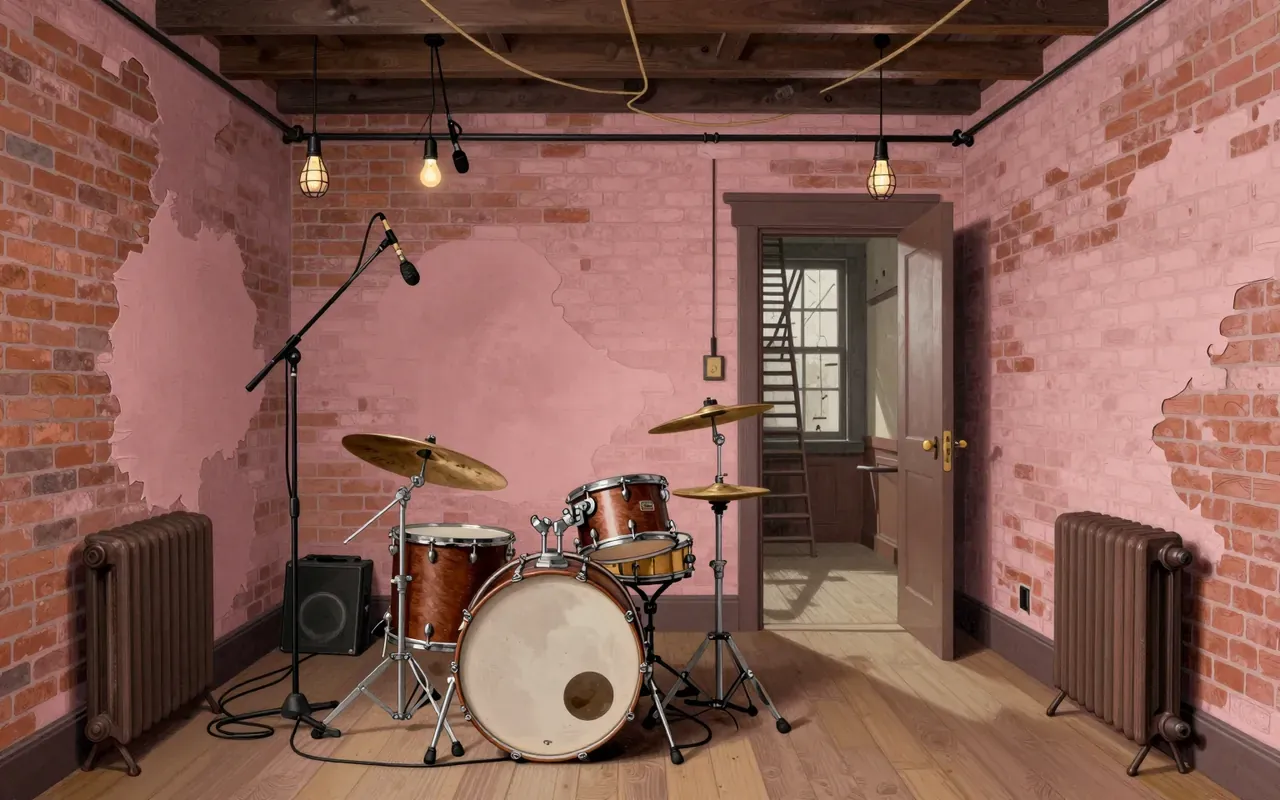
    Flood and Moulder scrapped studio protocol: recording began in a rehearsal space, with two rooms running in parallel.

  3. 4:12
    56 Songs, 28 Tracks, 2 Hours

    Corgan wrote ~56 songs; 28 made the final cut — 2 hours long, 3 records on vinyl, with two extra songs.

  4. 5:46
    Ambition Without Architecture

    Time called it 'the group's most ambitious and accomplished work yet' — but its conceptual frame is loose, not locked.

1 more chapterFewer chapters
Running order28
  1. 01
    Mellon Collie and the Infinite Sadness2:52
  2. 02
    Tonight, Tonight4:15

    Heard in A Fever You Can't Sweat Out

  3. 03
    Jellybelly3:01

    Heard in A Rat's Tale (1997)

  4. 04
    Zero2:40

    Heard in Batman & Robin (1997)

  5. 05
    Here Is No Why3:45
  6. 06
    Bullet With Butterfly Wings4:18
  7. 07
    To Forgive4:17

    Heard in La La Land (2016)The Twilight Saga (film series)

  8. 08
    Fuck You (An Ode to No One)4:51
  9. 09
    Love4:22

    Heard in Batman & Robin (1997)Lost Highway (1997)Not Another Teen Movie (2001)Clerks II (2006)

  10. 10
    Cupid de Locke2:50
  11. 11
    Galapogos4:46
  12. 12
    Muzzle3:44
  13. 13
    Porcelina of the Vast Oceans9:21
  14. 14
    Take Me Down2:53

    Heard in Done the Impossible (2006)Role Models (2008)Point Break (2015)

  15. 01
    Where Boys Fear to Tread4:23
  16. 02
    Bodies4:12

    Heard in If I Stay (2014)

  17. 03
    Thirty‐Three4:11

    Heard in Fantasia (1940)Out of Africa (1985)

  18. 04
    In the Arms of Sleep4:13
  19. 05
  20. 06
    Tales of a Scorched Earth3:46
  21. 07
    Thru the Eyes of Ruby7:38
  22. 08
    Stumbleine2:55
  23. 09
    X.Y.U.7:07
  24. 10
    We Only Come Out at Night4:05
  25. 11
    Beautiful4:18

    Heard in Beautiful Noise (2014)Blade Runner (1982)

  26. 12
    Lily (My One and Only)3:32
  27. 13
    By Starlight4:48

    Heard in The Uninvited (1944)The Nutty Professor (1963)

  28. 14
    Farewell and Goodnight4:23

Film placements are the ones described in each film's own entry, so the list is partial rather than complete.

Worth your time?

Yes. Hear the whole thing.

3.5/ 5
What works
  • 56 songs written
  • 28-track double album
  • two rooms running simultaneously
  • '1979' as precise melancholic snapshot
What does not
  • sustain a unified sonic world
Hear it if
  • producers interested in workflow innovation
  • fans of mid-90s studio craft
Skip it if
  • anyone who conflates length with depth
Who should hear it, and who should skipHide who it is for
The written brief2 min read

What the record is and where it came from

A double album released in 1995. Conceived from the outset as a double LP, inspired by the Beatles’ self-titled album. Written by Billy Corgan immediately after the Siamese Dream tour. Intended as the band’s last record — a final statement before musical exhaustion set in.

How it sounds, and how it was made

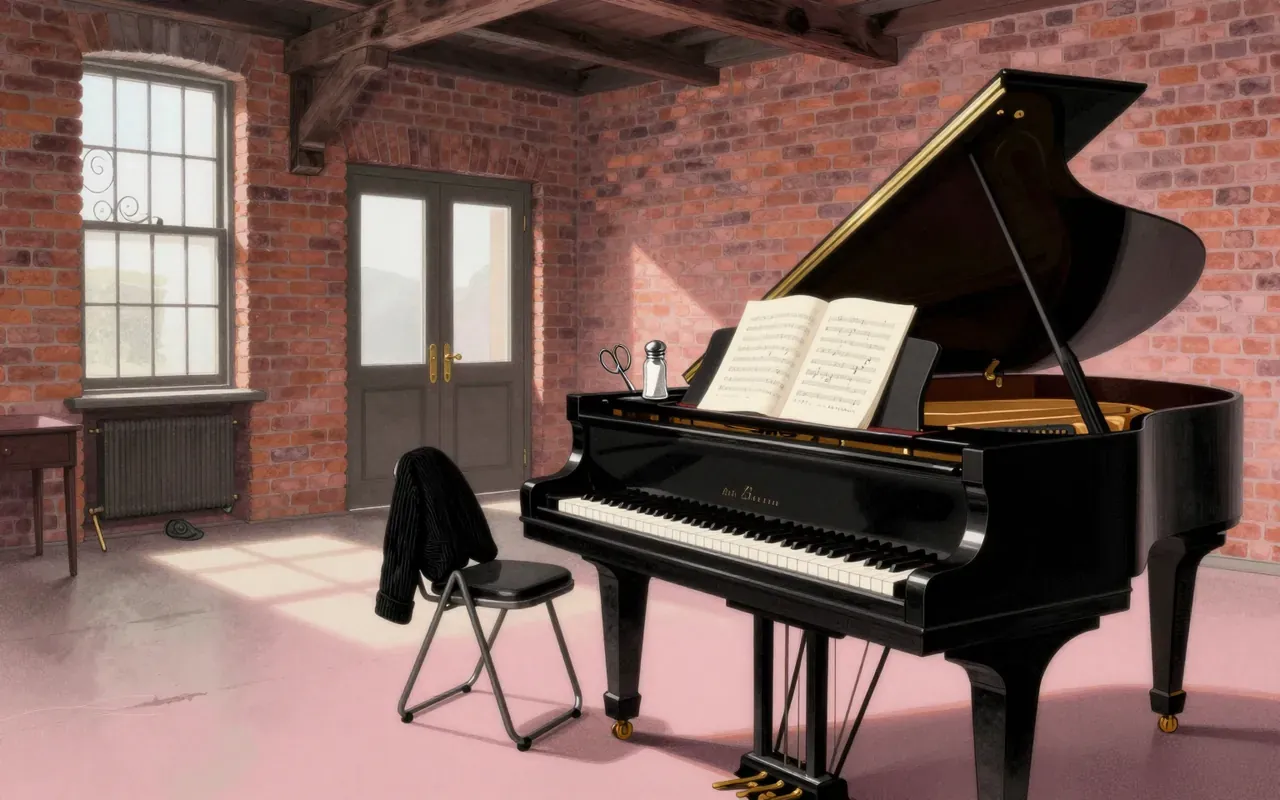
It was recorded in a rehearsal space first, then overdubbed at Chicago Recording Company using Pro Tools. All guitars were tuned down a half-step; some used extreme alternate tunings. Guitar overdub density ranges from one live take on ‘To Forgive’ to ~70 tracks on ‘Thru the Eyes of Ruby’. Piano, synthesizers, live orchestra, salt shakers, and scissors appear. Solo duties split evenly between Corgan and Iha. Two songs — ‘Take Me Down’ and ‘Farewell and Goodnight’ — were written by Iha.

What lands

The ambition lands: 28 songs, over two hours, recorded with radical workflow changes — two rooms, rehearsal-space origins, mandated daily writing. ‘Porcelina of the Vast Oceans’ and ‘Thru the Eyes of Ruby’ land as dense, layered set-pieces. ‘1979’ lands as a precise, melancholic snapshot — piano, clean guitar, hushed vocals.

What does not

It does not sustain a unified sonic world. The stylistic diversity — art rock, grunge, heavy metal, orchestral pop — is deliberate but unmoored. There is no through-line in texture, tempo, or production logic across the 28 songs.

The ideas inside it

It frames songs as symbols of the cycle of life and death. Corgan called it ‘The Wall for Generation X’, but rejected ‘concept album’ — calling the structure ‘loose’ and ‘vague’, rooted in ‘the human condition of mortal sorrow’.

Who should hear it, and who should not

Producers interested in workflow innovation should hear it. Fans of mid-90s studio craft — Pro Tools early adoption, live-room rhythm tracking, orchestral integration — should hear it. Anyone who conflates length with depth should not.

Is it worth your time

Yes, if you want to hear a double album built on structural discipline — two rooms running simultaneously, daily jamming, rhythm tracks cut live and reused — not just sprawl. No, if you expect coherence: its ‘day/night’ framework is loose, vague, and never enforced in the sound.
Same genre · Rock4 of 319
10:36
Siamese DreamSmashing Pumpkins · 1993Siamese Dream is the Smashing Pumpkins’ 1993 album, recorded December 1992 to March 1993 at Triclops Studios in Marietta, Georgia. It was made under duress: Jimmy Chamberlin’s heroin addiction led to multi-day disappearances; Billy Corgan’s depression deepened to suicidal ideation; band members withdrew physically and emotionally; Corgan overdubbed most guitar and bass parts himself for efficiency; Butch Vig co-produced using analog tape; Alan Moulder mixed the final product after Corgan and Vig exhausted themselves. The album contains up to 40 guitar parts in 'Soma', achieved through obsessive layering—not reverb or delay. It ran four months and $250,000 over budget. It peaked at No. 10 on the Billboard 200 and sold over four million copies in the US.
10:07
Master of PuppetsMetallica · 1986A dry, precise, sober metal record made in Copenhagen to escape American studio acoustics. No synths. No gloss. No myth-making during recording. Themes: drugs, militaries, religion, rage, insanity, monsters.
10:50
Born to RunBruce Springsteen · 1975A meticulously constructed studio artifact — not a live document — built on tension, layering, and unresolved sonic ambition.
9:56
Is This ItThe Strokes · 2001Is This It is a document of live-take discipline, recorded fast and lean in a basement studio with no embellishment. Its sound comes from where it was made, how many tracks were used, and who was in the room — not from myth, influence, or ambition beyond that room.
Up next in Music

Mellow Gold

Beck · 1994 · 10:38

A satanic K-tel record found in a dumpster — and the first time American pop accepted fragmentation as fluency.

10:38