Saved
Topic

Adolescence

The years a society decides someone is not yet responsible.

38
in music
11:45
average
447 min
in total
202
across the network
Adolescence across the network →
All briefs38
9:59

After School Session

Chuck Berry · 1957

After School Session is Chuck Berry’s debut studio album, released in May 1957 by Chess Records. It compiles twelve tracks recorded across five sessions at Universal Recording Corporation in Chicago between May 1955 and January 1957. Most songs had previously appeared as singles. The album features Chuck Berry on vocals and guitar, Johnnie Johnson on piano, and contributions from Willie Dixon, Fred Below, L. C. Davis, Jasper Thomas, Ebby Hardy, Otis Spann, Jimmy Rogers, and Jerome Green. Steel guitar appears on 'Deep Feeling'. The sequencing reflects single release order, not recording chronology. It arrived during Berry’s peak commercial and creative period, when he was already an established star with hit records, film appearances, and a touring career.
9:34

Germfree Adolescents

X‐Ray Spex · 1978

Germfree Adolescents is X-Ray Spex’s 1978 debut album. All twelve tracks were written by Poly Styrene. Five had previously appeared on singles’ A-sides or B-sides. The core band was Poly Styrene (vocals), Jak Airport (guitar), Paul Dean (bass), Rudi Thomson (saxophone), and B.P. Hurding (drums). Rudi Thomson played saxophone on the album.

8:21

Histoire de Melody Nelson

Serge Gainsbourg · 1971

Histoire de Melody Nelson is a 1971 concept album by Serge Gainsbourg, co-written and arranged by Jean-Claude Vannier and produced by Jean-Claude Desmarty. It features funk-style electric guitar and bass guitar, Gainsbourg’s spoken word and Sprechgesang vocals, and lush string and choral arrangements. Personnel include Vic Flick, Big Jim Sullivan, Dave Richmond, Dougie Wright, Jean-Luc Ponty, and Jane Birkin. At just under twenty-eight minutes, its short running time and stylistic consistency give it qualities more in line with an extended play or a single continuous suite.

9:55

Pure Heroine

Lorde · 2013

Pure Heroine is a tightly controlled, ten-track electropop record made in under a year at Golden Age Studios in Auckland. It uses deep bass, programmed beats, and Lorde’s voice as its only melodic and rhythmic anchors. Its themes—suburban teenage disillusionment, consumer culture, social status—are delivered without resolution or ornament. It landed four singles, won the 2014 Taite Music Prize, and helped define ‘whisperpop’ as a production ethos. It is not experimental in form, nor indulgent in texture—it is precise, economical, and unsentimental.

75:40

School’s Out

Alice Cooper · 1972

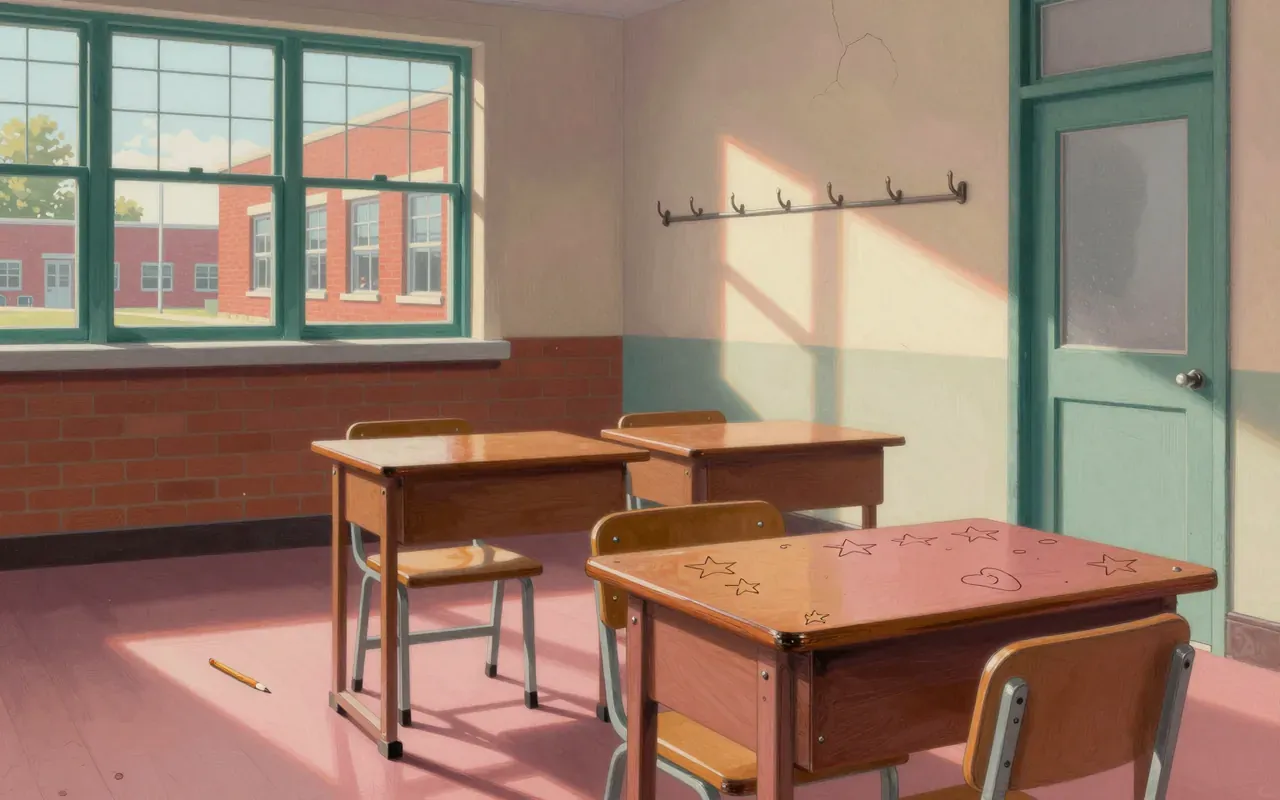
School's Out is a 1972 rock album by Alice Cooper, designed as a school desk with carved graffiti and wrapped in flammable paper panties. Its title track was a UK number one and US Top 10 hit. It marked a shift to a bratty, macho stage persona and provoked moral outrage — including a BBC video ban — without denting its popularity.

8:58

The Black Parade

My Chemical Romance · 2006

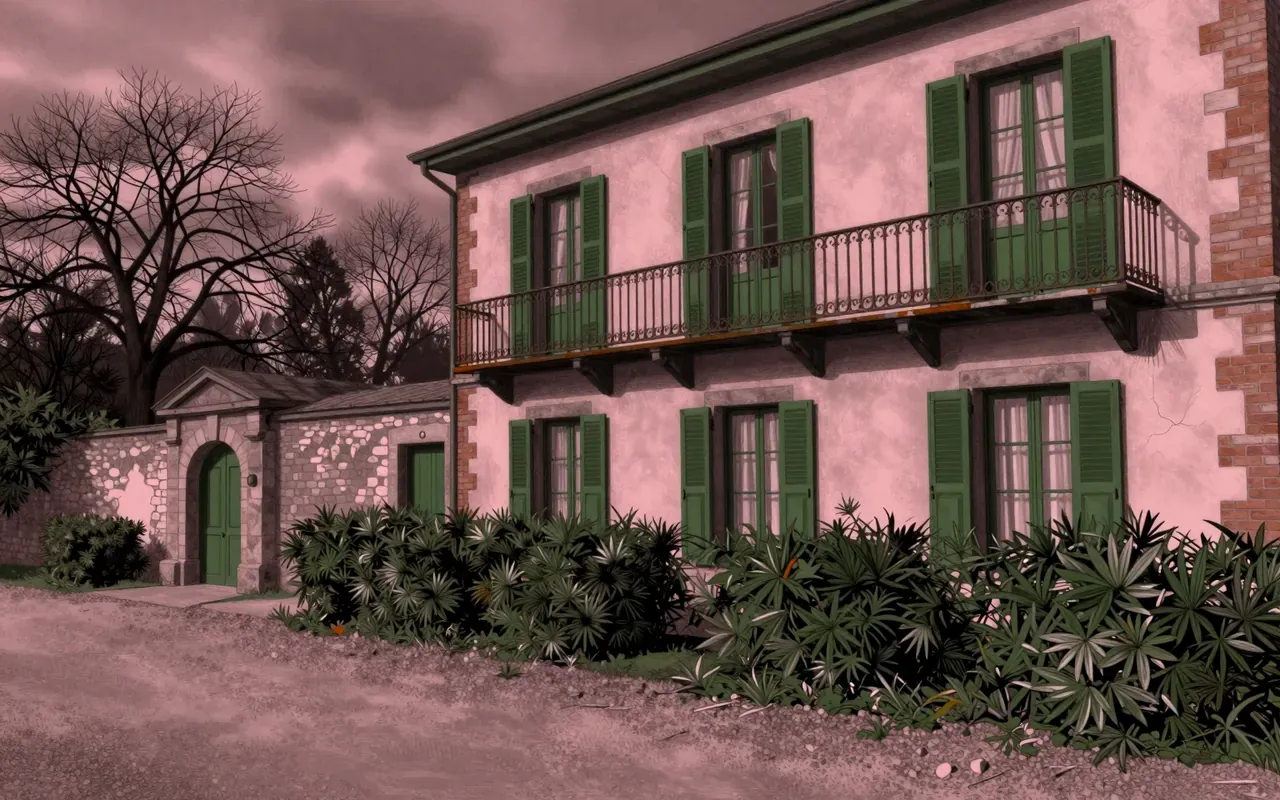
A claustrophobic, emotionally exposed rock record made inside a scary, uneasy mansion — not a polished concept album, but one saturated with the psychological toll of its creation.

11:14

WHEN WE ALL FALL ASLEEP, WHERE DO WE GO?

Billie Eilish · 2019

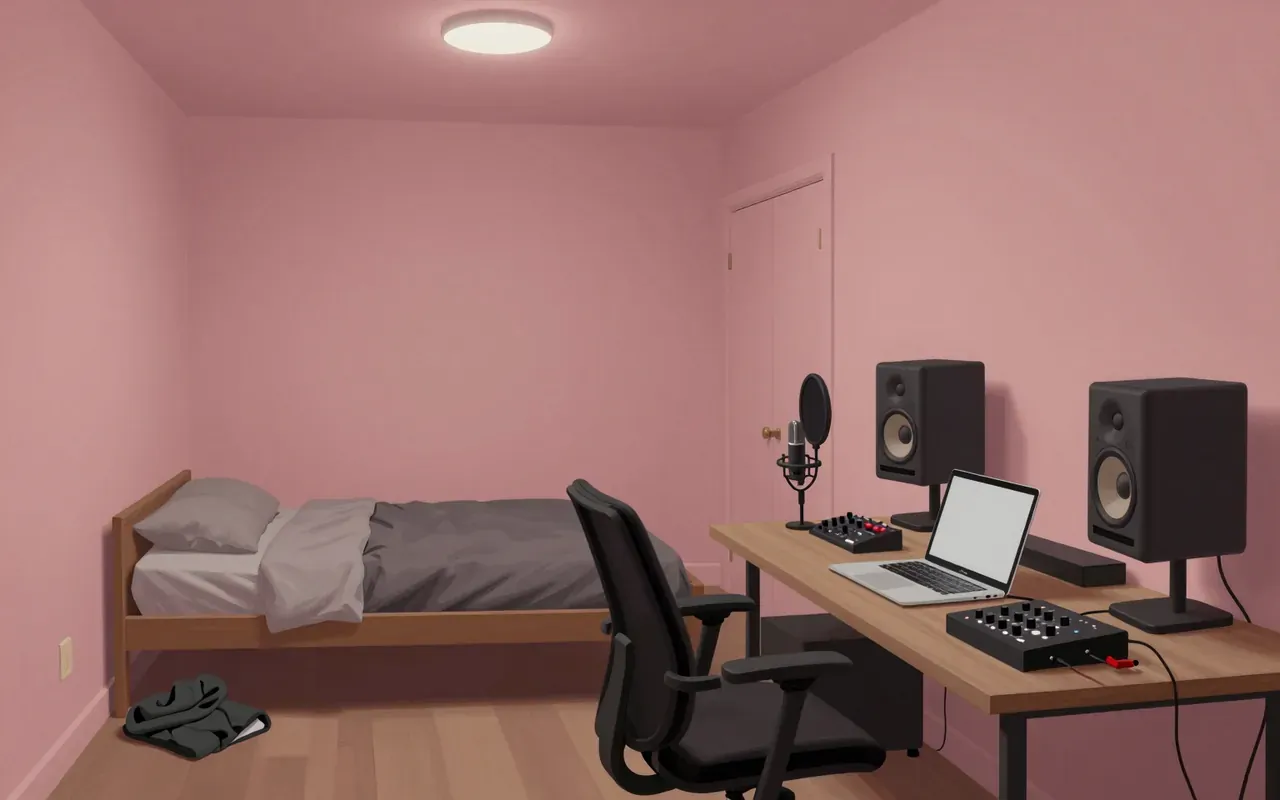
When We All Fall Asleep, Where Do We Go? is Billie Eilish’s debut studio album, released March 29, 2019. Written and produced with her brother Finneas O'Connell in his bedroom studio in Highland Park, Los Angeles, it uses Logic Pro X, a Universal Audio Apollo 8 interface, and Yamaha HS5 monitors with an H8S subwoofer. Its sound centres on amplified bass, minimalist percussion, foley, and acoustic textures — layered with dissonance and distortion to create a rock ’n’ roll feel without rock instrumentation. Eilish later said she 'hated every second' of its creation. It debuted at number one on both the US Billboard 200 and the UK Albums Chart, and 14 of its 14 tracks (excluding 'Goodbye') charted simultaneously on the US Billboard Hot 100 — a record for a female artist.
10:47

Zen Arcade

Hüsker Dü · 1984

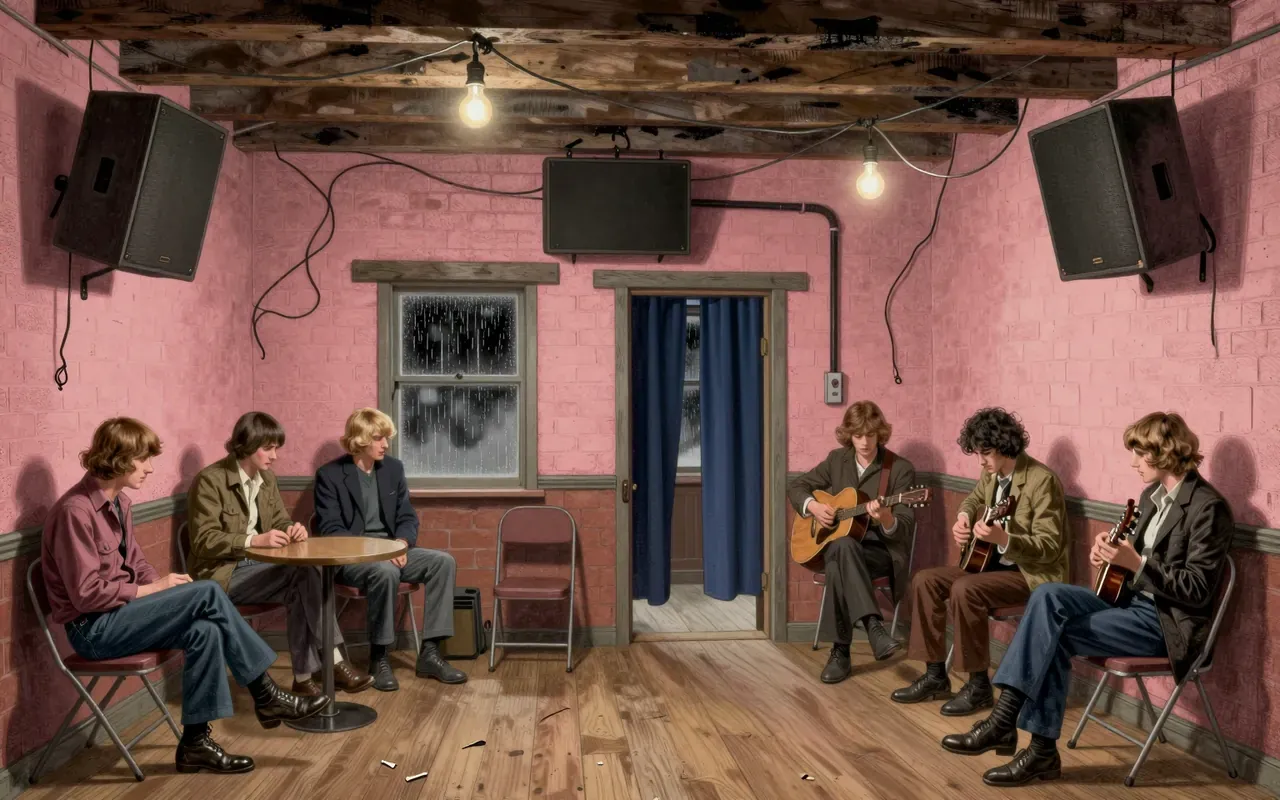
Zen Arcade is a double LP by Hüsker Dü, released July 1984 on SST Records. It tells a conceptual story of a boy fleeing an abusive home, encountering disillusionment through military service, religion, love, and loss — ending when he wakes, revealing the narrative as a dream. Recorded in 45 hours at Total Access Studio in Redondo Beach, California, with producer Spot, it features first-take performances, acoustic folk passages, piano interludes, and psychedelic guitar textures. The band rehearsed in a church-turned-punk squat in St. Paul, Minnesota, during summer 1983, brainstorming lyrics and musical ideas in multi-hour jam sessions. Bob Mould and Grant Hart wrote all songs; Mould demanded individual songwriter credits after seeing Hart’s artwork for another band. Dez Cadena contributed guest vocals to 'What's Going On'. 'Eight Miles High' was recorded during these sessions but released as a non-album single in April 1984. The album’s artistic and conceptual ambitions challenged prevailing U.S. punk purism.

9:07

#1 Record

Big Star · 1972

A debut made by people teaching themselves how to record—sharp guitars, no safety net, zero pretence.

9:59

American Idiot

Green Day · 2004

American Idiot is a punk rock opera built from 30-second musical fragments, recorded in album sequence across two California studios, using analog tape compression on drums to anchor its urgency. It functions as direct protest art, centred on the character 'Jesus of Suburbia', and landed at number one on the Billboard 200 in September 2004 — two months before George W. Bush’s reelection.

9:14

Another Music in a Different Kitchen

Buzzcocks · 1978

Another Music in a Different Kitchen is Buzzcocks’ 1978 debut studio album, recorded by their classic line-up — Pete Shelley, Steve Diggle, Steve Garvey, John Maher — after Howard Devoto’s departure. Martin Rushent produced it; Doug Bennet engineered it. Malcolm Garrett designed the sleeve. Its title came from a Linder Sterling collage. Some early pressings omitted 'I Need' due to a pressing plant error. It reached number 15 in the UK chart.

12:45

Bat Out of Hell

Meat Loaf · 1977

A maximalist, theatrically conceived rock record built from layered studio craft, not live-band chemistry. Its power lies in its refusal to simplify — in its arrangements, its narratives, its production. It is not subtle. It is not concise. It is not meant to be.

9:57

Blood Sugar Sex Magik

Red Hot Chili Peppers · 1991

Blood Sugar Sex Magik was recorded over 30 days in seclusion at Houdini’s former Los Angeles mansion, where the band installed a full studio; Frusciante, Kiedis, and Flea each occupied private rooms and pursued individual creative work between sessions; Kiedis recorded all vocals in his room; the album was written more rapidly than its predecessor and marked a stylistic shift—reducing heavy metal guitar riffs and foregrounding Frusciante’s melodic songwriting—under Rick Rubin’s production guidance, which included collaborative input on drum beats, guitar melodies, and lyrics; the setting and process fostered lyrical completion and structural refinement, moving away from pure jam-based composition toward more deliberate song forms while retaining funk-punk roots and integrating new textures and emotional range.

9:00

Boy in da Corner

Dizzee Rascal · 2003

Boy in da Corner is Dizzee Rascal’s self-produced 2003 debut album. All 17 tracks were produced by him. One track samples Billy Squier’s 'The Big Beat'. Four vocal contributors are named across seven tracks. Nothing else about its making — no instruments, no room, no tempos, no engineering — is stated in the source material.

10:54

Crime of the Century

Supertramp · 1974

Crime of the Century is Supertramp’s third studio album, recorded in 1974 at Trident and Ramport Studios with co-producer Ken Scott. It features eight songs selected from ~42 demos, includes field recordings from London Paddington and Leicester Square, and reflects collaborative and individual songwriting between Rick Davies and Roger Hodgson.

9:56

Crooked Rain, Crooked Rain

Pavement · 1994

Crooked Rain, Crooked Rain is Pavement’s second studio album, released February 14, 1994. It moves toward a more accessible rock sound than their lo-fi debut Slanted and Enchanted. Steve West replaces original drummer Gary Young. The music grafts 1960s–70s California folk-rock and psychedelia onto the abrasive, Fall-inspired noise of their earlier work. It uses guitar feedback, fuzz, and wah effects. It incorporates country rock—including cowbells—and pop elements. Production strips away hiss and fog but retains the band’s fractured sound and spirit. Vocal harmonies and mood-setting are emphasised over lyrical primacy. Critical reception highlights its dynamic shifts, inventive arrangements, and status as a defining underground rock album of the 1990s.

9:20

Damaged

Black Flag · 1981

Damaged is not a document of rebellion — it is the sound of a room, a wrist, a decision to record twice and choose the first take of 'Damaged I'. Its power lies in what it leaves unplayed, unsoftened, unexplained.

11:38

De La Soul Is Dead

De La Soul · 1991

De La Soul Is Dead is a 1991 hip-hop album that rejects its predecessor's image through conceptual rupture, darker humour, and weighty themes—while holding onto playfulness in groove and skit. It is structured around format-specific sequencing, fictional radio framing, and a visual metaphor of death-as-metamorphosis. Its sound is defined by eclectic sampling and rhythmic experimentation—but no instrument, room, or technical detail beyond that is verified.

10:00

Definitely Maybe

Oasis · 1994

Definitely Maybe is a foundational Britpop record whose sonic identity comes from deliberate studio choices—not performance revision. Its power lies in compression, tape delay, bass filtering, and selective guitar layering. It was made across three studios, with Owen Morris finalising the mix on a Neve console in London. It features all five original members, with Tony McCarroll on drums—the only Oasis album to do so. It rejects grunge’s nihilism, favouring anthemic melodies and unpolished charisma. Its abrasion is intentional, its urgency palpable.

8:56

Dookie

Green Day · 1994

Dookie is Green Day’s major-label debut, recorded in 1993 across Fantasy Studios in Berkeley and Music Grinder Studio in Hollywood. It was written mostly by Billie Joe Armstrong from personal experience, addressing boredom, anxiety, relationships, and sexuality. The band demoed 'She', 'Sassafras Roots', 'Pulling Teeth', and 'F.O.D.' on Armstrong’s four-track before recording. Rob Cavallo took them to a Mexican restaurant near Fantasy Studios to ease anxiety — even though Tré Cool was underage. Unlike earlier albums rushed to save money, they took time to perfect quality. Armstrong learned to dial in better guitar tones and vocal takes, choosing a 100-watt Marshall Plexi 1959SLP nicknamed 'Pete'. Recording lasted three weeks at Fantasy; the album was mixed twice by Cavallo and Jerry Finn. It was released in February 1994. Its singles 'Longview', 'Basket Case', and 'When I Come Around' all reached number one on the Modern Rock Tracks chart. It won the 1995 Grammy Award for Best Alternative Album.

10:31

Home Video

Lucy Dacus · 2021

A precise, unsentimental reckoning with adolescence — made in Richmond, shaped by collaborators, anchored in what actually happened.

9:31

If You’re Feeling Sinister

Belle and Sebastian · 1996

If You're Feeling Sinister is a tightly wound, quietly ambitious record made fast and faithfully — in a church hall, then a studio, with continuity as its compass.

9:34

Mellon Collie and the Infinite Sadness

The Smashing Pumpkins · 1995

Mellon Collie and the Infinite Sadness is a 1995 double album by The Smashing Pumpkins. It contains 28 songs spanning over two hours. It was recorded with producers Flood and Alan Moulder, abandoning longtime producer Butch Vig. The band recorded first in a rehearsal space, used two rooms simultaneously, and employed Pro Tools for overdubs. All guitars were tuned down a half-step. The album was conceived as a double album from the outset, partly inspired by the Beatles' self-titled album. Corgan described it as 'The Wall for Generation X'. The songs were intended to symbolise the cycle of life and death. Time magazine praised it as 'the group's most ambitious and accomplished work yet'. It debuted at number one on the Billboard 200 in October 1995.

11:02

Melodrama

Lorde · 2017

Melodrama is a synth-pop, art pop, and electropop record co-created by Lorde and Jack Antonoff over 18 months across four studios. It abandons an early alien sci-fi concept for direct writing about heartbreak and late adolescence. Its sound centres on piano-based melodies, pulsing synthesizers, and dense electronic beats — structured as a loose concept album tracing emotions across a single house party. It was released on 16 June 2017 through Universal, Lava, and Republic Records. It was nominated for Album of the Year at the 60th Annual Grammy Awards and later ranked in Rolling Stone’s 500 Greatest Albums of All Time.

11:12

My Generation

The Who · 1965

The Who's 1965 debut album 'My Generation' is a ferocious, mono-dominated statement rooted in R&B, mod culture, and teenage rebellion — defined by its rushed recording, aggressive sonic density, and stylistic innovations that prefigured punk, heavy metal, and power pop.

9:50

Pretenders

Pretenders · 1979

Pretenders (1980) is a debut defined by refusal: no filler, no compromise, no producer loyalty beyond what served the music. It sounds like four musicians playing in real time, captured with clarity but no indulgence. Its power lies in precision, not poetry — in what is played, not what is implied.

9:09

Quadrophenia

The Who · 1973

Quadrophenia is a concept album about Jimmy, a young mod with a four-way split personality, set in 1965 London and Brighton. It features four interwoven musical themes representing each band member, layered synthesizers recorded at home, overdubbed horns, and field recordings. It was recorded using Ronnie Lane’s Mobile Studio due to delays in completing Ramport Studios. The album reached No. 2 in both the UK and US charts.

9:43

SOUR

Olivia Rodrigo · 2021

Sour is Olivia Rodrigo’s debut studio album, released May 21, 2021, to critical acclaim. Rodrigo co-wrote 'Drivers License' with Dan Nigro. She secured ownership of the masters under her 2020 Geffen Records deal. The making of Sour is documented in Olivia Rodrigo: Driving Home 2 U, released March 25, 2022.

9:36

Spiderland

Slint · 1991

Spiderland is a live-recorded, effects-free document of four musicians playing in a room under pressure—both musical and psychological. Its influence is real, but its power lies in what it refuses: polish, explanation, relief.

14:52

The Kick Inside

Kate Bush · 1978

The Kick Inside is Kate Bush’s 1978 debut album, recorded in July and August 1977 at AIR Studios in London under producer Andrew Powell. EMI required Bush to use experienced session musicians — including Ian Bairnson, Duncan Mackay, and Stuart Elliott — rather than her KT Bush Band. Two songs originated as June 1975 demos. The album features orchestral arrangements on most tracks, with Bush on vocals and piano, and draws inspiration from a 1967 TV adaptation of Wuthering Heights, Gurdjieff, and the ballad of Lizie Wan.

11:13

The Nightfly

Donald Fagen · 1982

The Nightfly is Donald Fagen’s 1982 debut solo album, released after Steely Dan’s 1981 breakup. It was inspired by his suburban adolescence in Kendall Park, New Jersey, and his teenage fascination with late-night radio. It was recorded in 1981–82 across studios in New York City and Los Angeles using 3M’s 32-track and four-track digital recorders—one of the earliest fully digital recordings in popular music. The core production team—Gary Katz, Roger Nichols, and Elliot Scheiner—reunited from Steely Dan’s prior sessions. Key session players such as Jeff Porcaro, Rick Derringer, and Larry Carlton were veterans of Steely Dan’s studio sessions. The album was certified platinum in the U.S., reached number 11 on the Billboard Top 200, spawned the Hot 100 top-30 single 'I.G.Y.', and earned a Grammy nomination for Album of the Year.

8:49

The Suburbs

Arcade Fire · 2010

The Suburbs is Arcade Fire’s third studio album, released in 2010. It was produced by Markus Dravs and engineered by Marcus Paquin. Recording took place across three locations: Win Butler and Régine Chassagne’s Montreal residence, the band’s Quebec studio, and New York City. Win Butler described the album’s sound as a mix of Depeche Mode and Neil Young—intended to evoke the mysterious, formative noises of his youth. Each song was pressed to a 12-inch lacquer and re-recorded for the digital master. The album was released with eight different covers. A pre-release review by The Quietus compared its progression to William Blake’s Songs of Innocence and of Experience.

9:18

The Undertones

The Undertones · 1979

The Undertones’ 1979 debut was recorded live-rhythm-first at Eden Studios in West London in under four weeks, with drums and bass captured together, guitars re-recorded, and no rearrangement needed. Its songs were forged at Derry’s Casbah since 1977, some written only in late 1978. Lyrics focus exclusively on youthful relationships and adolescence. It avoids political themes, expanded instrumentation, and studio embellishment. Released in May 1979, it is a tightly wound, unadorned document of a band playing exactly as they sounded on stage — fast, direct, and uninterested in anything beyond the next chord.

10:10

Violent Femmes

Violent Femmes · 1983

Violent Femmes’ 1983 debut was self-funded, recorded live in July 1982 at Castle Recording Studios in Lake Geneva, Wisconsin, before the band signed with Slash Records. Most songs were written by Gordon Gano at age 18 in Milwaukee. Its sound is defined by acoustic bass, percussion, and raw vocal-guitar interplay — no overdubs, no studio effects, no executive influence.

9:34

Weezer

Weezer · 1994

Weezer’s 1994 Blue Album is a tightly wound pop-rock record made at Electric Lady Studios in New York City with Ric Ocasek. Jason Cropper was fired during recording and replaced by Brian Bell. It merges alternative rock, power pop, and polished production — delivering geeky humour, cultural references, and huge hooks. Its sound is distinct: a '70s trash-rock predilection wrapped in studio clarity.

10:24

Whatever People Say I Am, That’s What I’m Not

Arctic Monkeys · 2005

A first-person document of Sheffield nightlife, recorded at Chapel Studios in Lincolnshire in January 2006 with Jim Abbiss producing. Every track uses observational, first-person narrative. Four tracks examine nightclub behaviour. Three draw from real Sheffield locations and figures: bouncers, taxi queues, and sex workers near the band’s Neepsend practice space. Genre blend includes indie rock, garage rock, post-punk revival, punk rock, alternative rock, and post-Britpop. Title quotes Alan Sillitoe’s Saturday Night and Sunday Morning and reflects loss of control over public perception.

8:10

good kid, m.A.A.d city

Kendrick Lamar · 2012

Good Kid, M.A.A.D City is a tightly wound, atmospheric West Coast hip-hop record built on restraint: low-key production, nonlinear storytelling, and vocal multiplicity. It subverts gangsta tropes by embedding moral ambiguity inside lived detail — skits, basslines, and pauses all serve the narrative. Its power lies in what it leaves out: no easy answers, no sonic spectacle, no mythmaking. Just Compton, rendered in real time and real consequence.

8:56

Ramones

Ramones · 1976

Ramones is the band’s debut album, recorded in January 1976 at Plaza Sound studio. Fourteen songs. All under two and a half minutes. Produced by Craig Leon with Tommy Ramone as associate producer. Budget: $6,400. Front cover photograph by Roberta Bayley.