What the record is and where it came from
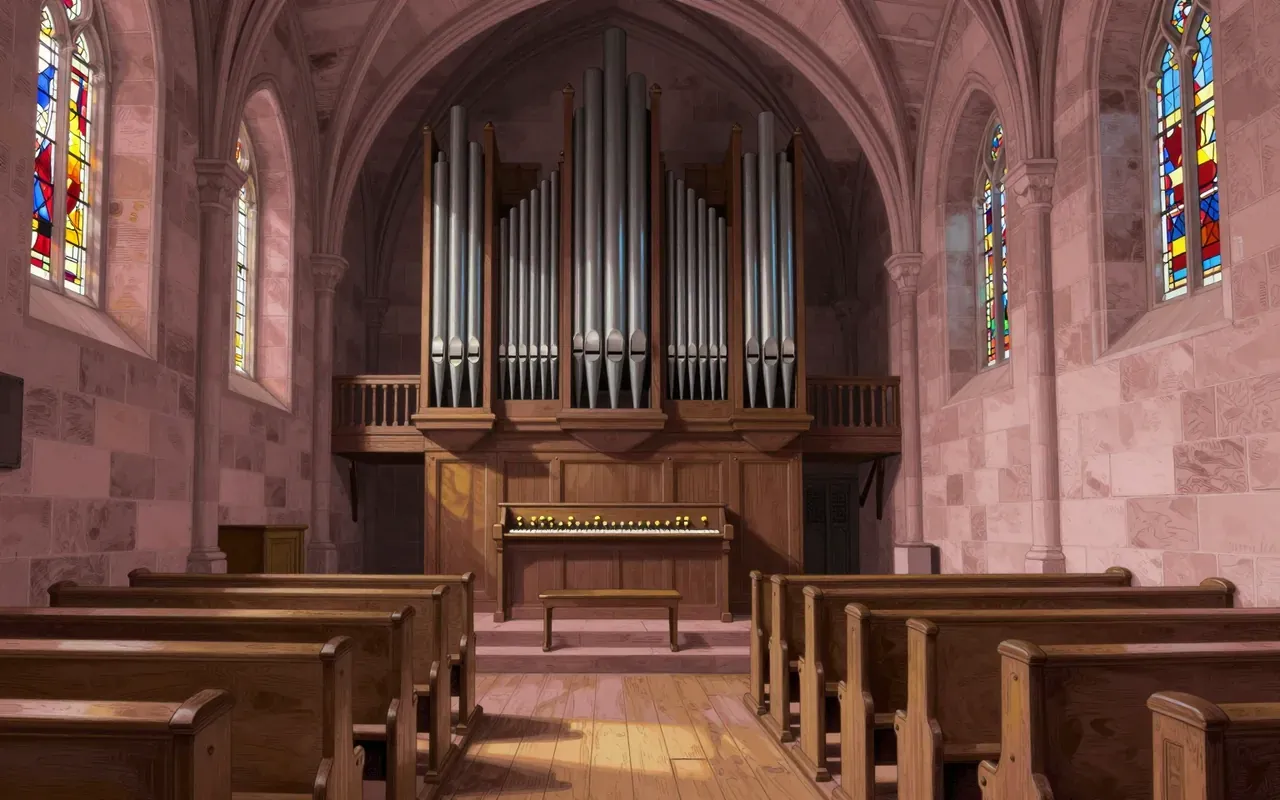
Arcade Fire’s second studio album, recorded mostly in a renovated church (Petite Église) in Farnham, Quebec — formerly a church and Masonic Temple, then a café — purchased after the Funeral tour and converted into a studio in early 2006.
How it sounds, and how it was made
It sounds like a church full of dread and dissonance: pipe organ, hurdy-gurdy, mandolin, accordion, military choir, and orchestra layered in a converted Quebec church, Budapest studios, and Hudson River banks. The band self-produced most of it; Nick Launay mixed it over a month with engineer Marcus Strauss while the band commuted from Montreal. Launay called the mixing process a ‘playful thing’.
What lands
The pipe organ’s weight in ‘Neon Bible’. The military choir’s cold precision in ‘Intervention’. The hurdy-gurdy’s wheeze in ‘Black Wave/Bad Vibrations’. The way ‘Windowsill’ strips back to voice and piano after the album’s accumulated density.
What does not
It does not land as intimate or immediate. Its grandiosity distances rather than draws in. It avoids direct confession in favour of symbolic architecture — the church, the ocean, the flickering sign.
The ideas inside it
Television’s influence. Oceanic imagery as loss of control. An outsider’s view of America. The title comes from a commissioned neon Bible sign — not the Toole novel — and the artwork is that sign caught mid-flicker.
Who should hear it, and who should not
Listeners who care how rooms shape sound. People drawn to instrumentation as argument — not ornament. Those who hear ‘orchestra’ and ‘choir’ not as prestige but as specific textures deployed with intention. Not for those who need lyrics first, or who mistake volume for urgency.
Is it worth your time
Yes — if you want an album that uses space, texture, and architectural acoustics as instruments, not just backdrops. It rewards attention to how sound fills rooms, not just what notes are played.