musicbriefs
11:17in productionCh. 1 · From Konzertstück to Carnival/ 11:17 · ceiling 15 min
Classical

Petrushka

Stravinsky’s Petrushka isn’t about puppets — it’s about hearing human feeling break through mechanical harmony.

This is a 2018 recording of Stravinsky’s 1911 ballet Petrushka — a work rooted in Russian puppet tradition, set during Maslenitsa in 1830 Saint Petersburg, and built from folk tunes, Lanner waltzes, a French music hall melody, and Rimsky-Korsakov. Its defining feature is the 'Petrushka chord', an early use of bitonality. The record also includes Concertino, Agon, and Scherzo à La Russe — but the sources say nothing about how this 2018 version interprets them.

Chapters & takeaways4
  1. 1:22
    From Konzertstück to Carnival

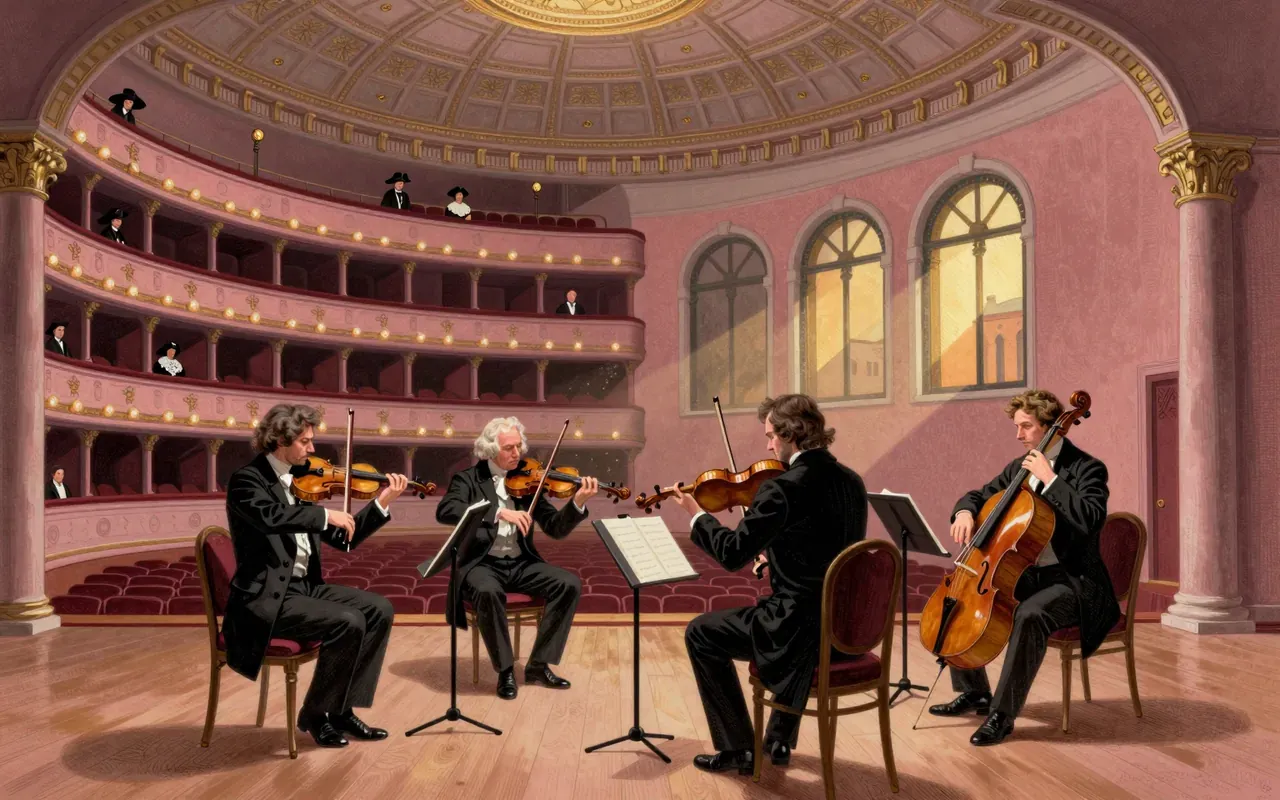
    Petrushka began as a piano concerto about a living puppet — then became a ballet at Diaghilev’s insistence.

  2. 2:51
    A Chord That Refuses to Settle

    Its sound is built from clashing layers: Russian folk, Viennese waltzes, French vaudeville, and Rimsky-Korsakov — all held together by the 'Petrushka chord'.

  3. 4:23
    Maslenitsa as Theatre of the Unreal

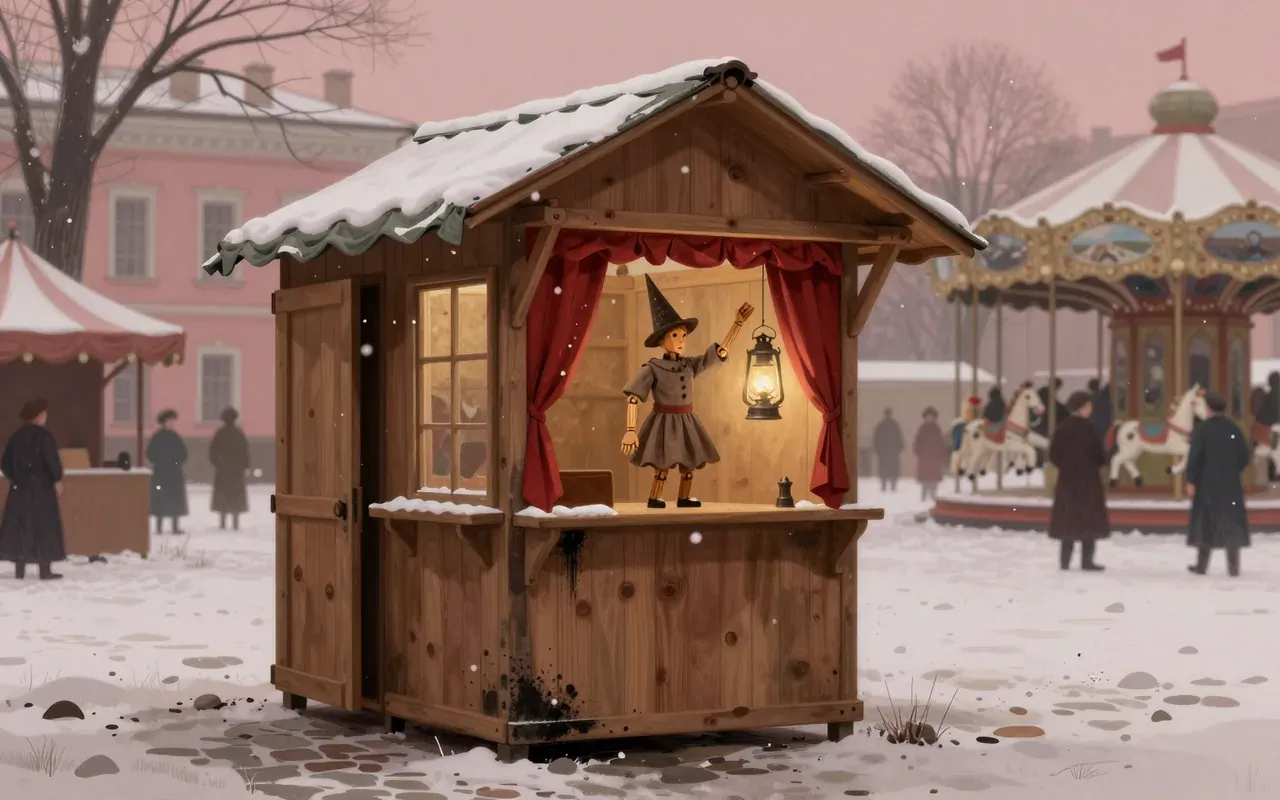
    The music plays out against Maslenitsa — a raucous 1830 Saint Petersburg fair where puppets come alive and die onstage.

  4. 7:04
    The Birth of a New Sound

    Nijinsky danced the first Petrushka; the ballet launched Stravinsky’s fame and broke decisively with 19th-century style.

Running order32
  1. 01
    Petrushka I. The Shrovetide Fair5:09
  2. 02
    Petrushka I. The Magic Trick2:11
  3. 03
    Petrushka I. Russian Dance2:49
  4. 04
    Petrushka II. Petrushka's Room4:29
  5. 05
    Petrushka III. The Moor's Room2:49
  6. 06
    Petrushka III. Dance Of The Ballerina0:44
  7. 07
    Petrushka III. Waltz / Appearance Of Petrushka3:09
  8. 08
    Petrushka IV. The Shrovetide Fair (Toward Evening)1:07
  9. 09
    Petrushka IV. Dance Of The Nursmaids2:47
  10. 10
    Petrushka IV. The Peasant And The Bear1:23
  11. 11
    Petrushka IV. The Jovial Merchant With Two Gypsy Girls1:14
  12. 12
    Petrushka IV. Dance Of The Coachmen And Grooms2:06
  13. 13
    Petrushka IV. The Mummers - The Fight: The Moor And Petrushka - Death Of Petrushka5:21
  14. 14
    Concertino6:11
  15. 15
    Agon: Pas-De-Quatre1:39
  16. 16
    Agon: Double Pas-De-Quatre1:36
  17. 17
    Agon: Triple Pas-De-Quatre1:10
  18. 18
    Agon: Prélude0:54
  19. 19
    Agon: First Pas-De-Trois: Saraband Step1:24
  20. 20
    Agon: Gailliarde1:17
  21. 21
    Agon: Coda1:21
  22. 22
    Agon: Interlude0:53
  23. 23
    Agon: Second Pas-de-Trois: Bransle Simple0:56
  24. 24
    Agon: Bransle Gay0:52
  25. 25
    Agon: Bransle Double1:21
  26. 26
    Agon: Interlude0:53
  27. 27
    Agon: Pas-De-Deux3:34
  28. 28
    Agon: Coda1:29
  29. 29
    Agon: Four Duos0:31
  30. 30
    Agon: Four Trios0:40
  31. 31
    Agon: Coda1:54
  32. 32
    Scherzo à La Russe4:35
Worth your time?

Yes. Hear the whole thing.

3.5/ 5
What works
  • Petrushka
  • Concertino
  • Agon
  • Scherzo à La Russe
What does not
  • explain the 2018 recording’s rationale
  • name performers or venue
  • describe sonic character beyond the score’s known elements
Hear it if
  • students comparing Stravinsky’s early ballets
  • listeners needing a neutral reference recording
Skip it if
  • those seeking interpretive distinction in this version
The written brief2 min read

What the record is and where it came from

This is a 2018 recorded performance of Igor Stravinsky’s 1911 ballet Petrushka. It includes the complete ballet plus later works: Concertino (1920), Agon (1957), and Scherzo à La Russe (1944). The ballet originated as a Konzertstück for piano and orchestra, transformed into a ballet at Diaghilev’s urging.

How it sounds, and how it was made

The record sounds like a 2018 orchestral recording of Stravinsky’s 1911 ballet score. It uses full symphonic forces, with prominent brass, percussive piano, and sharply articulated woodwinds. The ‘Petrushka chord’ — C major and F♯ major triads played together — recurs as a harmonic signature. The arrangement preserves the original’s collage of Russian folk tunes, two waltzes by Joseph Lanner, a French music hall tune, and a melody from Rimsky-Korsakov’s The Snow Maiden. No production details (room, microphone, tempo, editing) are given in the sources.

What lands

The ‘Petrushka chord’ lands as a jarring, unresolved clash — C major and F♯ major sounding at once. The Russian folk tunes land as distorted, mechanised echoes. The waltzes and music hall tune land as ironic, hollowed-out clichés. The Moor’s Room and Petrushka’s Room movements land as contrasting psychological spaces — one swaggering and lazy, the other frantic and unstable.

What does not

It does not explain why this 2018 recording exists. It does not name the orchestra, conductor, venue, or recording date. It does not describe timbral choices unique to this version — no mention of balance, reverb, articulation, or dynamic shaping beyond what the 1911 score prescribes.

The ideas inside it

The ideas are theatrical duality and mechanical life: a puppet gains consciousness, suffers jealousy and rejection, and dies on stage. It treats Maslenitsa — the pre-Lenten fair in 1830 Saint Petersburg — as both festive backdrop and existential arena. The music enacts fragmentation: competing keys, abrupt shifts, borrowed melodies made strange.

Who should hear it, and who should not

People who want to compare Stravinsky’s three early ballets — Firebird, Petrushka, Rite of Spring — should hear it. People who assume this 2018 recording offers new editorial insight into Petrushka’s sound should not — the sources say nothing about its interpretive choices.

Is it worth your time

Yes — if you need to hear how Stravinsky’s bitonal, folk-saturated, puppet-theatre score lands in modern orchestral terms. No — if you expect insight into this specific 2018 performance’s interpretation, engineering or conductor choices, none of which appear in the material.
Same genre · Classical4 of 13
Up next in Music

Port of Miami

Rick Ross · 2006 · 10:48

Miami isn’t a city here — it’s a shipping manifest stamped on a rap record.

10:48