musicbriefs
9:34in productionCh. 1 · How it’s built/ 9:34 · ceiling 15 min
Hip-hop

The College Dropout

Kanye West didn’t reinvent hip-hop — he rebuilt it from a backpack full of soul samples and a two-bedroom apartment in Hoboken.

A self-produced hip-hop debut released in February 2004 after three postponements from its initial August 2003 date. It emerged from four years of beat-collecting, apartment-based production, LA studio sessions, and post-leak revision.

Chapters & takeaways5
  1. 1:28
    How it’s built

    Chipmunk soul isn’t just a gimmick — it’s the structural logic: pitch-shifted vocals, custom drums, strings, and choirs all serve lyrical specificity.

  2. 2:27
    Where it was made

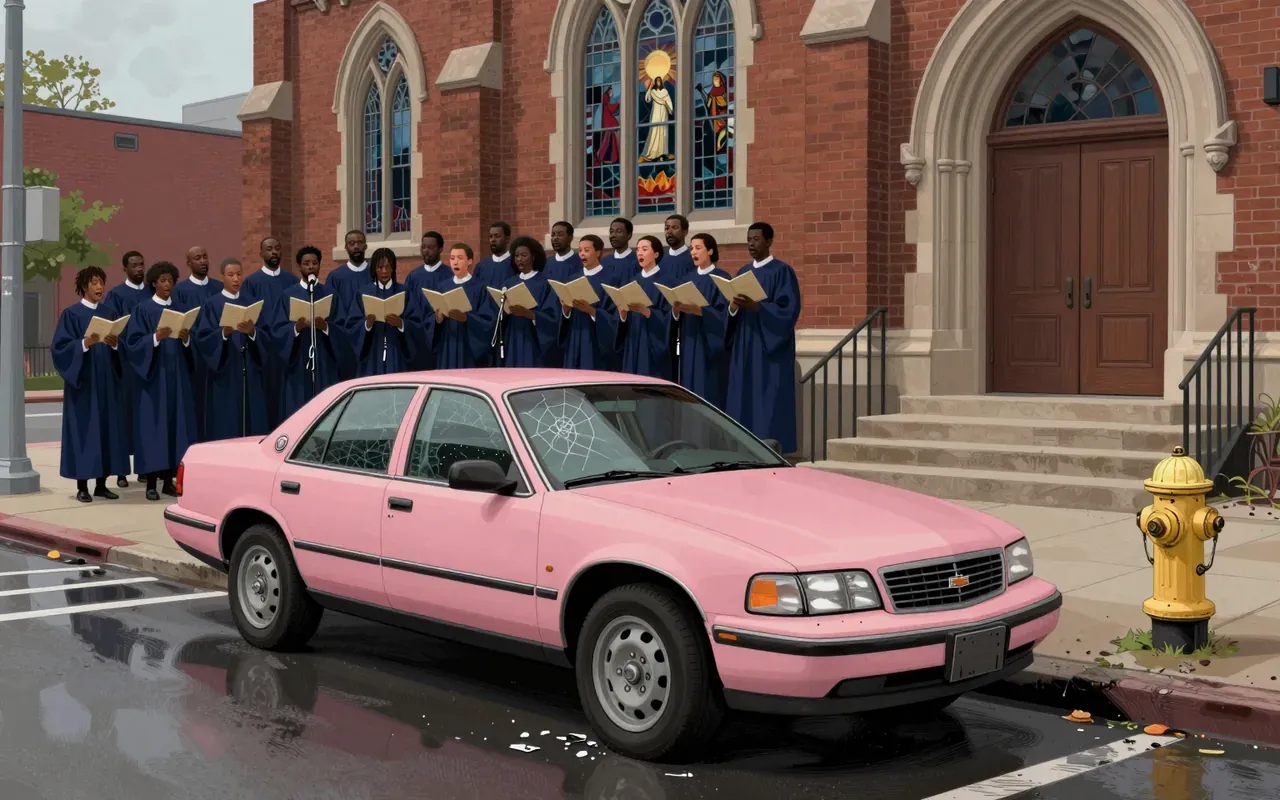
    It was made in two rooms: one in Hoboken, one in Los Angeles — both active during West’s recovery from a car crash.

  3. 3:58
    Why it changed

    The leak wasn’t a setback — it triggered a full revision: new verses, strings, choirs, and tighter drums.

  4. 4:53
    What it says

    It replaced gangsta tropes with middle-class anxiety, institutional critique, and family grief — all delivered with clumsy, inventive wordplay.

  5. 6:02
    What got left out

    Two tracks were cut — 'Keep the Receipt' and 'The Good, the Bad, and the Ugly' — and the release was delayed three times before February 2004.

Running order15
  1. 01
    Intro1:18

    Heard in Bully (album)

  2. 02
    Self Conscious3:06
  3. 03
    Jesus Walks (intro)0:50
  4. 04
    Jesus Walks3:30

    Heard in Four Brothers (2005)

  5. 05
    2 Words4:26
  6. 06
    The Good the Bad the Ugly4:11

    Heard in The Good, the Bad and the Ugly

  7. 07
    Breath in Breath Out5:24
  8. 08
    Keep the Receipt3:31
  9. 09
    Heavy Hitters3:02

    Heard in Raincoat (2004)Heaven's Rain (2010)

  10. 10
    Slow Jamz4:06
  11. 11
    My Way3:27

    Heard in Miss Americana (2020)

  12. 12
    Family Business4:39

    Heard in F9 (2021)Bully (album)

  13. 13
    Through the Wire4:35

    Heard in Runaway (2010)Benji (2012)

  14. 14
    Never Let Me Down4:31

    Heard in When the Wind Blows (1986)

  15. 15
    Home4:03

    Heard in Akira (1988)Eternal Sunshine of the Spotless Mind (2004)The Hangover (2009)12 Years a Slave (2013)

Film placements are the ones described in each film's own entry, so the list is partial rather than complete.

Worth your time?

Yes. Hear the whole thing.

4.5/ 5
What works
  • chipmunk-soul-production
  • jesus-walks-choir-and-snare-urgency
  • through-the-wire-raw-post-accident-vocal-performance
  • slow-jamz-playful-contrast-between-polished-chorus-and-off-kilter-verse-flow
What does not
  • gangsta-rap
  • technical-polish
  • lyrical-consistency
  • genre-orthodoxy
Hear it if
  • people-who-want-to-hear-hip-hop-that-names-its-ideas-plainly
  • people-who-want-to-hear-hip-hop-that-builds-its-sound-from-curated-manipulated-source-material
Skip it if
  • people-who-require-technical-polish
  • people-who-require-lyrical-consistency
  • people-who-require-genre-orthodoxy
The written brief1 min read

What the record is and where it came from

A self-produced hip-hop debut released in February 2004 after three postponements from its initial August 2003 date. It emerged from four years of beat-collecting, apartment-based production, LA studio sessions, and post-leak revision.

How it sounds, and how it was made

It sounds like sped-up soul and R&B vocal samples layered over West’s own drum programming, string arrangements, and gospel choirs. It was made across four years (1999–2003), partly at Record Plant in Los Angeles and partly in West’s converted Hoboken apartment studio. He carried beats and demos in a Louis Vuitton backpack. Much of it was recorded while he recovered from a car crash. After the album leaked, he added new verses, string arrangements, gospel choirs, and improved drum programming.

What lands

The chipmunk soul production lands — the pitch-shifted vocals, tight drums, strings, and gospel choirs cohere as a unified sonic signature. ‘Jesus Walks’ lands with its choir-and-snare urgency. ‘Through the Wire’ lands with its raw, post-accident vocal performance over looped soul. ‘Slow Jamz’ lands with its playful contrast between polished chorus and off-kilter verse flow.

What does not

It does not sound like gangsta rap. It does not rely on street mythos or criminal fantasy. It does not use unaltered soul samples. It does not avoid awkwardness in delivery.

The ideas inside it

Higher education, materialism, self-consciousness, minimum-wage labor, institutional prejudice, class struggle, family, sexuality, music industry struggles, and middle-class upbringing.

Who should hear it, and who should not

People who want to hear hip-hop that names its ideas plainly and builds its sound from curated, manipulated source material. Not people who require technical polish, lyrical consistency, or genre orthodoxy.

Is it worth your time

Yes — if you want to hear how hip-hop’s formal language was reassembled around topical clarity, self-conscious craft, and deliberate imperfection.
Same genre · Hip-hop4 of 56
11:19
AqueminiOutKast · 1998Aquemini is OutKast’s third studio album, released 29 September 1998. It was recorded primarily at Bosstown and Doppler Studios in Atlanta using live instrumentation, rotating session musicians, and extended jam-based composition. Big Boi and André self-produced most tracks, drawing on soul, trip hop, and electro textures — and reggae, via André’s constant listening to Bob Marley. The title merges their zodiac signs. It was certified double platinum and reached number two on the Billboard 200.
10:42
ASTROWORLDTravis Scott · 2018ASTROWORLD is Travis Scott’s third studio album, named after the defunct Houston theme park. Recorded between 2016 and 2018, final sessions took place in Hawaii with Mike Dean, Nav, Frank Dukes, Sonny Digital, WondaGurl, Sheck Wes, Gunna, Wheezy, Don Toliver, Allen Ritter and Amir 'Cash' Esmailian. Mike Dean played keyboards on track 4, guitar on track 17, and synthesizer on track 17. Stevie Wonder played harmonica on track 5. John Mayer played guitar on tracks 8, 11 and 13. Sheldon Ferguson played guitar on track 12. Nineteen85 played bass on track 17. Isaiah Gage played cello on track 17. The album was released on August 3, 2018, debuted at number one on the Billboard 200 with 537,000 album-equivalent units in its first week, and was met with widespread critical acclaim.
11:02
Atrocity ExhibitionDanny Brown · 2016Atrocity Exhibition is Danny Brown’s third studio album, released in 2016 after signing with Warp Records. It is named after a Joy Division song. Paul White produced all tracks except ‘Really Doe’ (Black Milk), ‘Pneumonia’ (Evian Christ), and unspecified contributions from The Alchemist. Guest appearances include Kendrick Lamar, Ab-Soul, Earl Sweatshirt, B-Real, Kelela, and Petite Noir. The album draws stylistic influence from Talking Heads and Joy Division — and, while writing it, Brown also drew inspiration from Björk. It received continued critical acclaim but reduced commercial sales.
9:25
Beats, Rhymes and LifeA Tribe Called Quest · 1996Beats, Rhymes and Life is a tightly wound, sonically restrained document of a group at breaking point — not a triumph, but a testimony.
Up next in Music

The Cool

Lupe Fiasco · 2007 · 9:34

A concept album built on grief, not groove—and recorded in a week, not years.

9:34