Saved
Rock

Definitely Maybe

A record born of ghost-haunted studios and frantic phone calls—and yet it sounds utterly certain.

Worth your time?4.5/5Yes.Hear the whole thing.What works, what does not, who it is for ↓
10:00in productionCh. 1 · Ghost in the machine/ 10:00 · ceiling 15 min
4 chapters · 10:00Ceiling 15:00

The brief is written and checked. The video joins this page when it is cut.4 chapters · 2 min read · 10:00 planned

Read the brief

Definitely Maybe is a foundational Britpop record whose sonic identity comes from deliberate studio choices—not performance revision. Its power lies in compression, tape delay, bass filtering, and selective guitar layering. It was made across three studios, with Owen Morris finalising the mix on a Neve console in London. It features all five original members, with Tony McCarroll on drums—the only Oasis album to do so. It rejects grunge’s nihilism, favouring anthemic melodies and unpolished charisma. Its abrasion is intentional, its urgency palpable.

Chapters & takeaways4
  1. 1:04
    Ghost in the machine

    The Monnow Valley sessions failed—not from lack of effort, but from missing attack and immediacy.

  2. 2:46
    Live in one room

    At Sawmills, they played together without soundproofing—then Noel overdubbed guitars to build density.

  3. 4:06
    Fulham to Manchester

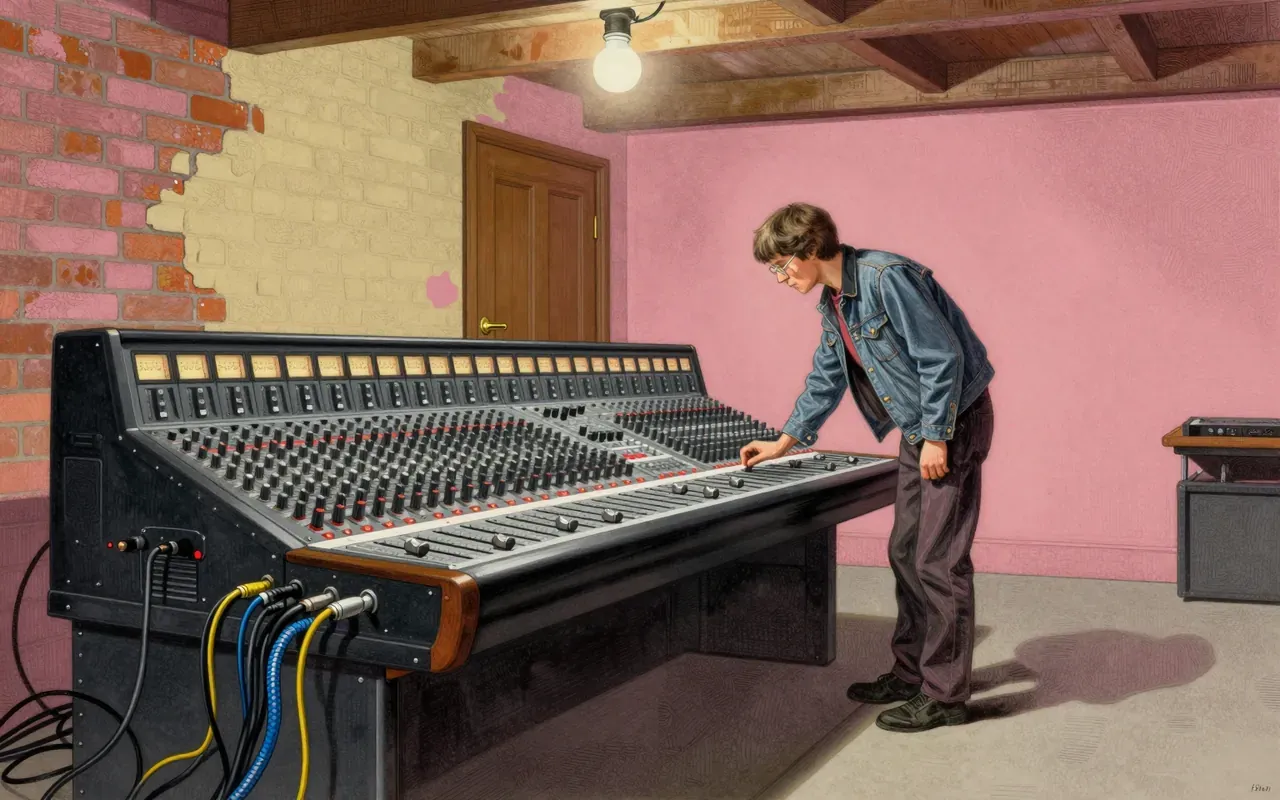
    Owen Morris mixed on a Neve console in London; Johnny Marr mastered it in Manchester.

  4. 5:50
    Sculpted, not rebuilt

    No re-recording of rhythm section or core takes—just compression, tape delay, and selective layering.

1 more chapterFewer chapters
Running order11
  1. 01
    Rock ’n’ Roll Star5:23

    Heard in Lord Don't Slow Me Down (2006)

  2. 02
    Shakermaker5:08
  3. 03
  4. 04
    Up in the Sky4:29
  5. 05
    Columbia6:17

    Heard in The Mask of Zorro (1998)Snatch (2000)Ready Player One (2018)Sonic the Hedgehog (2020)

  6. 06
  7. 07
    Bring It On Down4:18
  8. 08
    Cigarettes & Alcohol4:49

    Heard in Lord Don't Slow Me Down (2006)

  9. 09
    Digsy’s Dinner2:32
  10. 10
    Slide Away6:33
  11. 11
    Married With Children3:13

Film placements are the ones described in each film's own entry, so the list is partial rather than complete.

Worth your time?

Yes. Hear the whole thing.

4.5/ 5
What works
  • Live Forever
  • Supersonic
  • Cigarettes & Alcohol
  • Rock ’n’ Roll Star
What does not
  • technical polish
  • dynamic range
  • lyrical ambiguity
Hear it if
  • people who want guitar-heavy, pile-driving rock
  • people who respond to raw vocal delivery
  • people who value immediacy over fidelity
Skip it if
  • people who need space between instruments
  • people who require subtlety or restraint
  • people who prefer studio perfection over visceral impact
Who should hear it, and who should skipHide who it is for
The written brief2 min read

What the record is and where it came from

A debut album recorded across three studios—Monnow Valley (January 1994), Sawmills (February 1994), and Loco Studios/The Matrix (April–May 1994). It was released on 29 August 1994 by Creation Records. It features all five original members, with Tony McCarroll on drums—the only Oasis album to do so before his April 1995 departure.

How it sounds, and how it was made

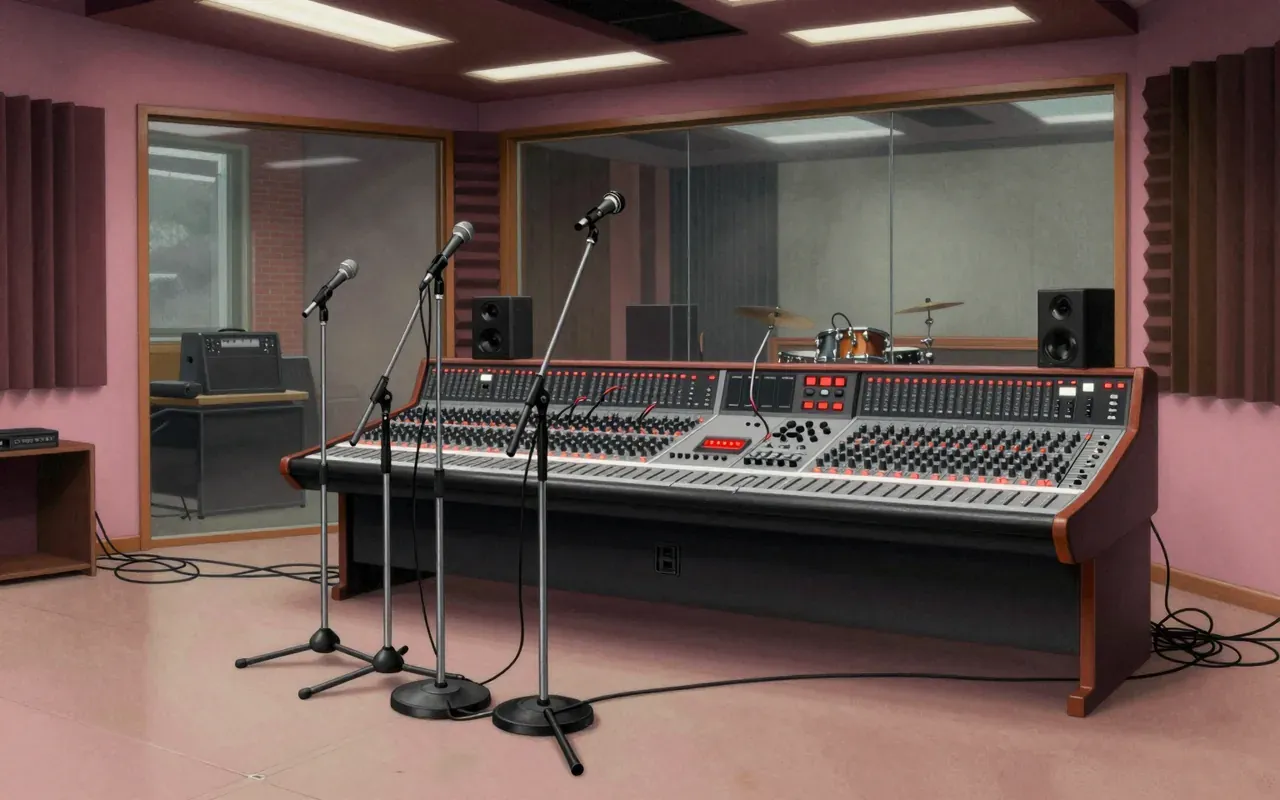
It sounds like live energy forced through tape delay, Minimoog bass processing, and heavy compression. Owen Morris mixed it on a vintage Neve console at The Matrix in London’s Fulham district. Guitar overdubs were selectively retained. Drums were recorded raw—Tony McCarroll’s unadorned playing shaped by effects in the mix, not re-recording. Vocals were re-recorded by Liam in London after earlier sessions failed. No re-recording of core performances occurred—the sound was sculpted in the studio, not on the floor.

What lands

‘Live Forever’ lands with its soaring chorus and layered guitars. ‘Supersonic’ lands with its fuzz-drenched riff and frantic tempo. ‘Cigarettes & Alcohol’ lands with its slurred swagger and distorted bass. ‘Rock ’n’ Roll Star’ lands with its slow-burn intro and explosive payoff. ‘Slide Away’ lands with its six-minute arc and unvarnished vocal delivery.

What does not

It does not offer technical polish. It does not rely on studio trickery beyond compression, tape delay, and bass filtering. It does not feature any member beyond the original five. It contains no song titled ‘Definitely Maybe’. It does not include ‘I Am the Walrus’ on the standard edition. It does not use soundproofing during recording at Sawmills.

The ideas inside it

Hedonism. Youth. Defiance. Certainty dressed as doubt. The title ‘Definitely Maybe’ is ironic: every chord, every shout, every drum hit asserts something real and urgent. It rejects grunge’s nihilism without offering answers—just anthems built on classic pop structures, strong melodies, and unpolished charisma.

Who should hear it, and who should not

People who want guitar-heavy, pile-driving rock that prioritises feel over fidelity. People who respond to raw vocal delivery and unapologetic melodic confidence. Not people who need space between instruments, dynamic range, or lyrical ambiguity.

Is it worth your time

Yes—if you want a record that delivers immediacy as a physical sensation, not a nostalgic idea. Its abrasion is intentional, its conviction absolute. It does not reward patience or subtlety. It demands volume and presence.
Same genre · Rock4 of 319
2:02
(What's the Story) Morning Glory?Oasis · 1995Oasis's second album arrived in 1995, produced by Owen Morris and Noel Gallagher. Compared with Definitely Maybe, its writing gives more space to ballads, strings and large choruses. The change made a band's assertive identity easier to inhabit as a collective singalong.
9:56
Crooked Rain, Crooked RainPavement · 1994Crooked Rain, Crooked Rain is Pavement’s second studio album, released February 14, 1994. It moves toward a more accessible rock sound than their lo-fi debut Slanted and Enchanted. Steve West replaces original drummer Gary Young. The music grafts 1960s–70s California folk-rock and psychedelia onto the abrasive, Fall-inspired noise of their earlier work. It uses guitar feedback, fuzz, and wah effects. It incorporates country rock—including cowbells—and pop elements. Production strips away hiss and fog but retains the band’s fractured sound and spirit. Vocal harmonies and mood-setting are emphasised over lyrical primacy. Critical reception highlights its dynamic shifts, inventive arrangements, and status as a defining underground rock album of the 1990s.
9:57
Blood Sugar Sex MagikRed Hot Chili Peppers · 1991Blood Sugar Sex Magik was recorded over 30 days in seclusion at Houdini’s former Los Angeles mansion, where the band installed a full studio; Frusciante, Kiedis, and Flea each occupied private rooms and pursued individual creative work between sessions; Kiedis recorded all vocals in his room; the album was written more rapidly than its predecessor and marked a stylistic shift—reducing heavy metal guitar riffs and foregrounding Frusciante’s melodic songwriting—under Rick Rubin’s production guidance, which included collaborative input on drum beats, guitar melodies, and lyrics; the setting and process fostered lyrical completion and structural refinement, moving away from pure jam-based composition toward more deliberate song forms while retaining funk-punk roots and integrating new textures and emotional range.
9:34
WeezerWeezer · 1994Weezer’s 1994 Blue Album is a tightly wound pop-rock record made at Electric Lady Studios in New York City with Ric Ocasek. Jason Cropper was fired during recording and replaced by Brian Bell. It merges alternative rock, power pop, and polished production — delivering geeky humour, cultural references, and huge hooks. Its sound is distinct: a '70s trash-rock predilection wrapped in studio clarity.
Up next in Music

Déjà vu

Crosby, Stills, Nash & Young · 1970 · 10:02

This is not a quartet album—it’s four solo records stitched together in a room that smelled of disagreement.

10:02