Leaving the Fugees behind
After touring behind the Fugees’ second album, Lauryn Hill became pregnant during a relationship with Rohan Marley that she had kept largely private, and the resulting media attention around the pregnancy pushed her toward writing rather than away from it. She has said that every disappointment and every lesson during that period turned into a song, and she filled an attic studio in South Orange, New Jersey with material drawing on both the relationship and unresolved tension within her old group. Columbia considered pairing her with an outside producer, including a brief conversation about RZA, but Hill insisted on writing, arranging and producing the record herself, a condition the label’s Ruffhouse imprint agreed to protect.
New York, New Jersey, then Kingston
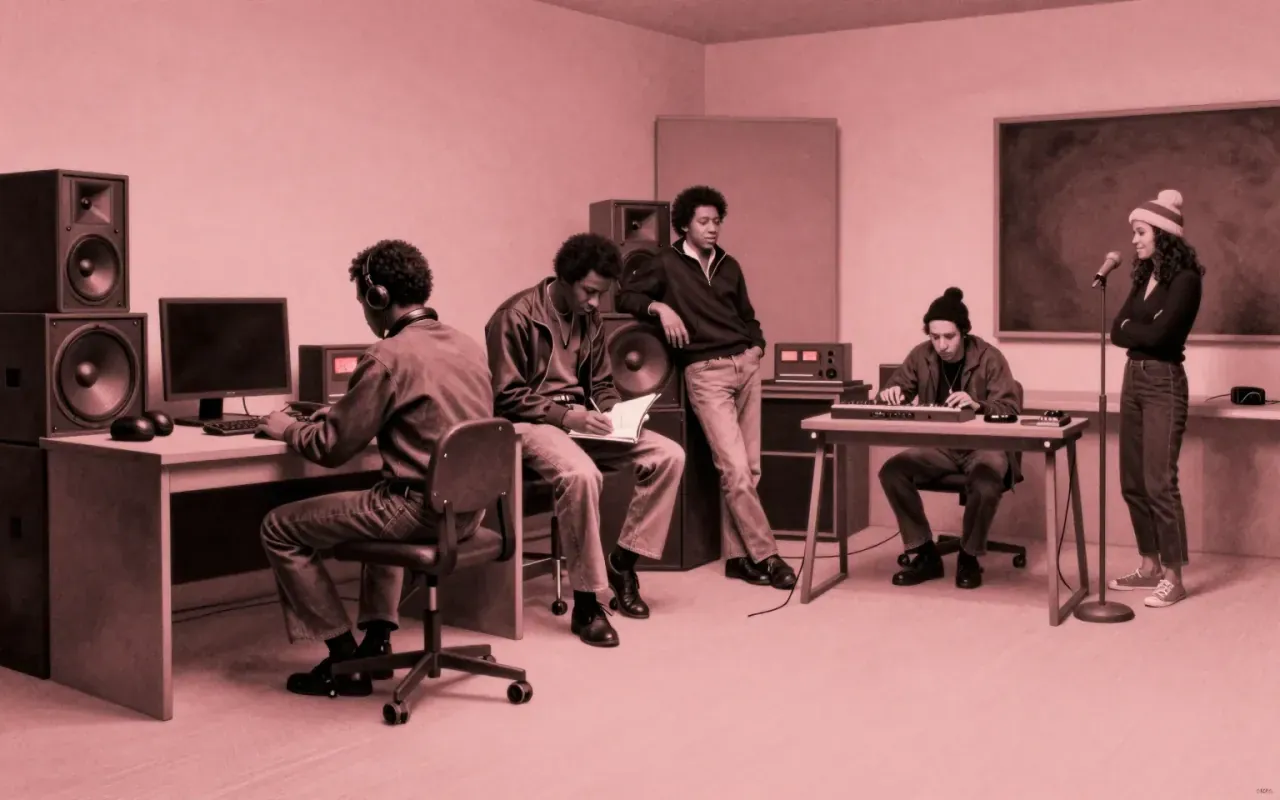
Recording began in September 1997 at Chung King Studios in New York, then continued across New Jersey and briefly at Metropolis Studio in London, before the bulk of the album was finished at Tuff Gong in Kingston, the studio Bob Marley built. Hill has said she wanted every instrument she had ever loved on the record — harps, strings, organs, clarinets — recorded live rather than assembled from samples, to keep what she called the human element intact. A production team she called New Ark, including programmer Vada Nobles and engineer Gordon Williams, worked alongside her, and members of the Marley family were regularly present during the Jamaica sessions, including children who can be heard joining in on Lost Ones.
What lands
The record’s warmth comes directly from that choice to record everyone in a room together rather than build tracks in isolation. Rhodes piano, horns and strings sit under Hill’s voice without crowding it, and the arrangements breathe in a way sample-built hip-hop from the same period generally does not. Lyrically she writes in specific, sometimes uncomfortable detail — about a former partner, about giving birth, about her own faith — without softening any of it into a more marketable generality. Doo Wop (That Thing) manages sharp social observation over a genuinely danceable groove, and To Zion turns new motherhood into one of the record’s most direct, least guarded songs.
What does not
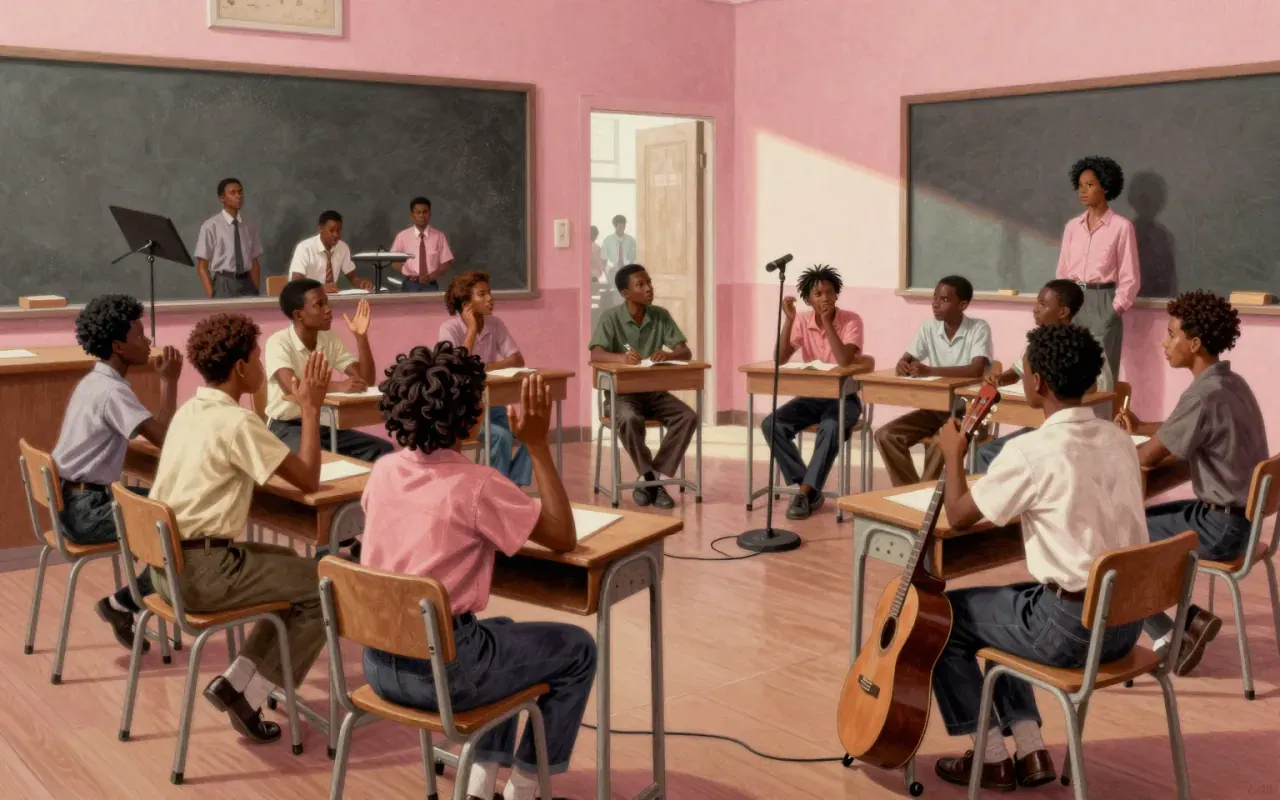
Running seventy-seven minutes across sixteen tracks, the album carries several short interludes and a classroom-recording framing device that, while thematically justified by its title, occasionally interrupts songs that would otherwise flow into each other. A couple of tracks toward the second half repeat ground the earlier songs already covered, and the record’s ambition to say everything about love in one sitting means a few ideas get a full song when a verse would have done. None of this seriously undercuts the record, but a tighter edit was clearly possible, and the pacing occasionally asks more patience of the listener than the strongest songs need.
Love treated as a subject to study
Hill structures the record less as a collection of singles than as a set of connected arguments about love in its different forms — romantic, maternal, spiritual, and communal. Songs about a broken relationship sit beside songs about childbirth and songs directly addressed to God, treated as parts of one continuous education rather than separate moods to cycle through. The title itself frames the record as a corrective to whatever she felt she had been taught, or not taught, about the subject before. That structure gives even the record’s lighter, more radio-facing songs a weight they would not carry as standalone singles, because each one answers to the larger design around it.
Who should hear it
Listeners who want hip-hop, soul and reggae treated as one continuous vocabulary rather than three separate genres to alternate between will find the record’s blending among its most rewarding features. It also suits anyone interested in a record that takes motherhood and faith seriously as songwriting subjects rather than as brief detours from romance. Genre purists looking for a straight rap record or a straight soul record may find the constant movement between styles less satisfying, and the record’s length and interludes ask for patience some listeners will not want to give a debut. It is, in the end, a record built for full, attentive plays rather than shuffled single tracks.
Is it worth your time
Despite a lawsuit from her New Ark collaborators over credit, which was settled years after release, the record’s achievement is not diminished: a young artist insisted on total creative control over an album this large and delivered on that insistence with a genuinely coherent, live-sounding record. Its commercial reception at the time, debuting at the top of the chart with the biggest first week any woman had posted, confirmed what the songs already argued for themselves. Hill has not released another solo studio album since, which only sharpens how complete this one feels on its own. It remains worth the full seventy-seven minutes, best heard start to finish rather than in pieces.