What the record is and where it came from
My Life is Mary J. Blige’s second studio album, recorded in the winter of 1993 and released November 29, 1994. It is a document of personal crisis—clinical depression, addiction, abuse—and a recalibration of R&B production: Thompson replaced prior producers after their fee hike; Combs redirected the album after hearing Thompson’s first track; Alexander joined late to engineer pivotal sessions including the cover of ‘I’m Going Down’.
How it sounds, and how it was made
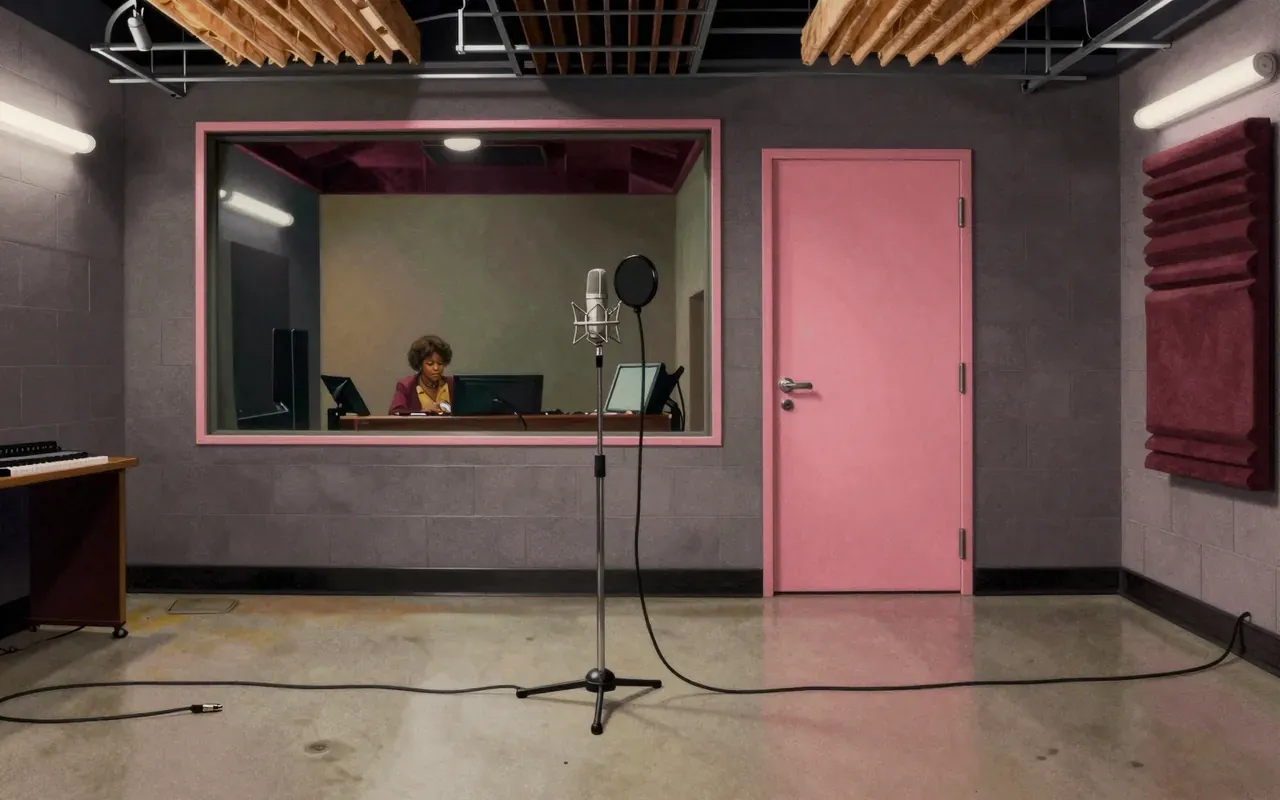
It sounds like soul samples from Curtis Mayfield, Al Green, and Marvin Gaye layered under live-in-the-studio vocal takes. The production is built on Thompson’s mid-tempo grooves, Combs’ redirection of tone, and Alexander’s late-stage engineering on key sessions—including the cover of ‘I’m Going Down’. No tempos, keys, or instruments beyond those named in the source are stated. The interludes were revised in real time: B.I.G.’s verse cut for parental advisory concerns, replaced by Keith Murray. The sound is not polished—it is negotiated, contested, and anchored in emotional exposure.
What lands
Blige’s voice, raw and unfiltered, landing in the space between the soul sample and the silence after the beat drops. The weight of the winter of 1993—the pressure of expectation, the exhaustion of crisis, the urgency of getting it right before the tape ran out. The ‘Marvin Interlude’ lands as a pivot: homage made literal, not implied. The removal of B.I.G.’s verse lands as censorship with consequence—his verse became ‘Who Shot Ya’. The fact that fourteen tracks bear Blige’s lyrics lands as authorship asserted, not granted.
What does not
It does not offer sonic innovation for its own sake. It does not hide behind metaphor or abstraction. It does not separate the singer from the session—no distance between Blige’s voice and the room where it was captured. It does not flatter the listener with uplift. There is no triumphal arc, no resolution. The interludes interrupt rather than soothe. The cover of ‘I’m Going Down’ is not reinterpretation—it is reclamation under duress.
The ideas inside it
Vulnerability as structure. Authorship as negotiation. Soul sampling as emotional architecture. Clinical depression, substance use, and an abusive relationship with K-Ci Hailey are not just themes—they are conditions that shaped who played, who engineered, what got cut, and how long the sessions lasted. The album’s introspection is procedural: fourteen lyrics written by Blige, Thompson brought in last-minute, Alexander added late, B.I.G. removed, Murray inserted. Every decision reflects a struggle for control.
Who should hear it, and who should not
People who listen for how music is made—not just what it says. People who care about who gets credit, who gets cut, and why. People who hear soul samples not as decoration but as lineage. People who understand that an interlude isn’t filler—it’s a site of revision. People who know that ‘K. Murray Interlude’ is not a title—it’s a record of removal and substitution. Not for those seeking polish, detachment, or narrative closure.
Is it worth your time
Yes—if you want to hear how clinical depression, addiction, and abuse translate into rhythm, sample choice, and studio personnel decisions. It is not a record to admire from afar. It demands attention to its making: who was hired when, why a verse was cut, how a cover was assigned mid-process. Its value lies in that specificity—not in legacy, charts, or lists.