musicbriefs
Topic

Dystopia

The future as a warning, usually about the present.

15
in music
10:36
average
159 min
in total
69
across the network
Dystopia across the network →
All briefs15
7:57

Silent Shout

The Knife · 2006

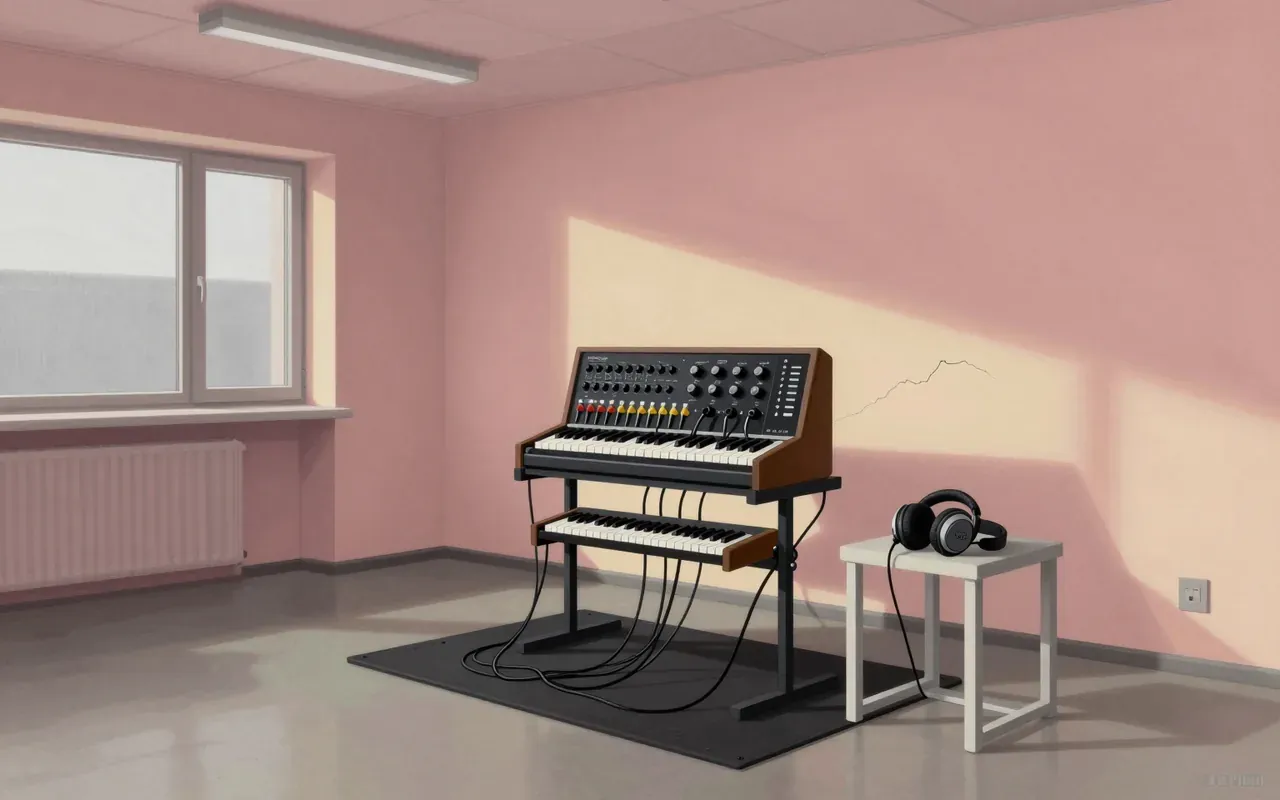
Silent Shout is The Knife’s third studio album, released 17 February 2006. It is darker than Deep Cuts. It is synth-pop and techno. Karin Dreijer’s vocals are pitch-shifted and multi-tracked. The Knife handled recording, programming, production, vocals, and mixing. Christoffer Berg mixed tracks 1–7, 9, and 11. Pelle Gunnerfeldt mixed tracks 8 and 10. Henrik Jonsson mastered the album. Pitchfork named it the best album of 2006. A companion DVD, Silent Shout: An Audio Visual Experience, was released 8 November 2006. 'We Share Our Mothers’ Health' was iTunes’ Single of the Week in late 2006.
8:47

Suicide

Suicide · 1977

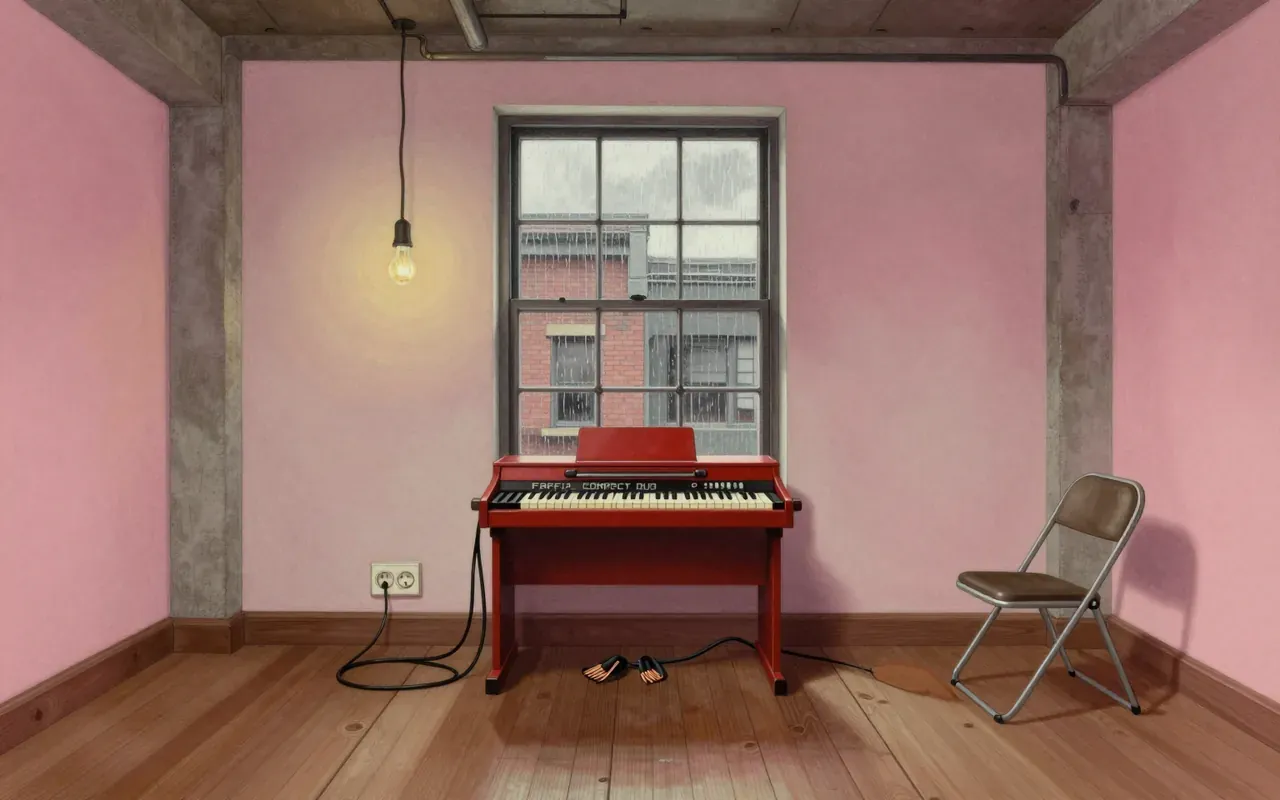
Suicide (1977) is a foundational electronic record made with a Farfisa organ, a drum machine, and a microphone — no guitars, no bass, no reverb. Its sound is dry, repetitive, and physically confrontational. ‘Frankie Teardrop’ and ‘Ghost Rider’ define its impact. It establishes electronic minimalism as a vehicle for psychological tension, not dance or futurism. It falls short as a record of melodic development, harmonic movement, or vocal nuance — by design. Its ideas are architectural: repetition as pressure, silence as weight, monotony as threat. It is worth your time if you treat rhythm and space as primary materials.

9:41

2112

Rush · 1976

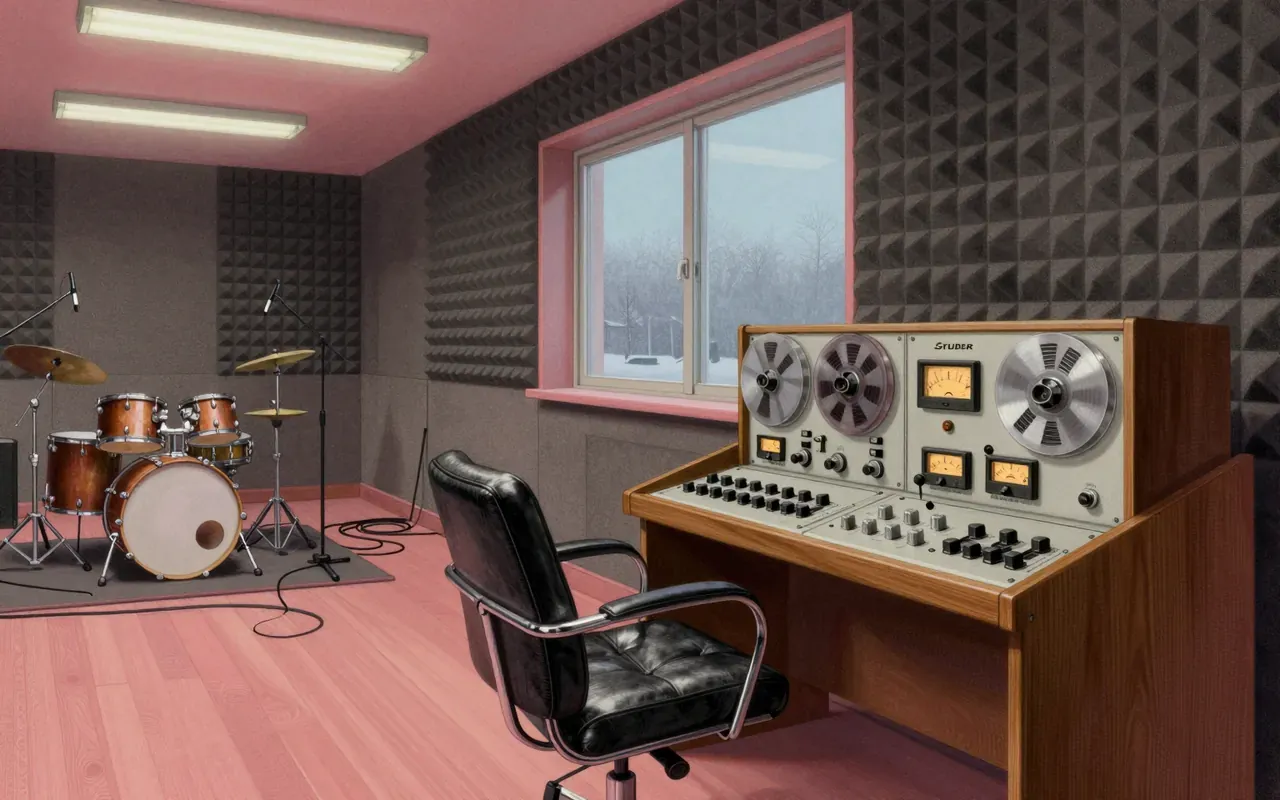
2112 is Rush’s fourth studio album, recorded in January 1976 at Toronto Sound Studios with producer Terry Brown. It followed financial and creative crisis after Caress of Steel underperformed. The band composed material on the road in 1975—Peart writing lyrics first, Lee and Lifeson building songs on acoustic guitars to match their mood—departing from prior electric-based writing. They minimized overdubbing for live fidelity, used varied guitars (ES-335, Les Paul, B-45, Dove, Stratocaster), Fender amps, and Lee’s stereo-output Rickenbacker bass routed unconventionally. 'The Temples of Syrinx' was developed backstage in Sault Ste. Marie; the 'Overture' was the final piece written. It was the first Rush album to 'really sound like Rush'.

8:37

Aladdin Sane

David Bowie · 1973

Aladdin Sane is David Bowie’s sixth studio album, co-produced with Ken Scott and recorded between December 1972 and January 1973 in London and New York City during breaks in the Ziggy Stardust Tour. It features the full Spiders from Mars lineup—Mick Ronson, Trevor Bolder, and Mick Woodmansey—alongside jazz-influenced pianist Mike Garson, two saxophonists, and three backing vocalists. Most songs were written on the road in the US and reflect Bowie’s ambivalent perceptions of America, resulting in a harder, edgier rock sound than his prior glam work. Lyrics explore duality: the rewards of stardom versus the toll of touring, and recurring motifs of urban decay, drugs, sex, violence, and death. The album includes a Rolling Stones cover, 'Let's Spend the Night Together', and Bowie framed its title as both a pun—'A Lad Insane'—and the conceptual extension 'Ziggy Stardust goes to America'. 'The Jean Genie' was the first track recorded, on 6 October 1972 in New York, with Bowie producing that session himself. It was Bowie’s final album with the complete Spiders from Mars lineup.

11:26

Demon Days

Gorillaz · 2005

Demon Days is a 2005 Gorillaz concept album about night as allegory — recorded across London studios, produced by Danger Mouse, and defined by layered guest vocals, reggae bounce, choral swell, and deliberate emotional contrast in harmony.

11:48

Fear of Music

Talking Heads · 1979

Fear of Music was recorded live in two days in Chris Frantz and Tina Weymouth’s Long Island City loft. Brian Eno co-produced and applied electronic treatments after the fact. David Byrne’s lyrics fixate on urban isolation and unnamed dread. The sound merges post-punk rock and funk. The recording environment — raw, wired, untreated — defines the album more than any instrument or melody.

10:02

Moving Pictures

Rush · 1981

Moving Pictures is a 1981 prog-rock album by Rush, recorded at Le Studio in Morin-Heights, Quebec using 48-track tape and an early Sony digital mastering machine. Its sound is defined by surgical drum-bass separation, chest-mounted ambience capture, and rhythmic rigour over expressive looseness.

10:24

OK Computer

Radiohead · 1997

OK Computer is Radiohead’s third studio album, released in May 1997. Most of it was recorded in 1996–1997 at two locations: Canned Applause, a converted apple shed near Didcot, Oxfordshire, and St Catherine’s Court, a 15th-century mansion near Bath owned by Jane Seymour. The band abandoned Canned Applause due to its proximity to home and lack of basic facilities. At St Catherine’s Court, they recorded 80% of the album live, exploiting room acoustics—vocals for 'Exit Music (for a Film)' were captured on a stone staircase; 'Let Down' was tracked in a ballroom at 3 am. Strings were recorded separately at Abbey Road Studios in London. Production avoided artificial reverb and minimised overdubbing. Nigel Godrich co-produced. The album marks a departure from the guitar-centred introspection of The Bends, favouring atmospheric density, thematic abstraction, and collective, room-responsive experimentation. Lyrics shift from personal confession to fragmented, character-based narratives reflecting 'end-of-the-millennium blues'.

10:12

The Wall

Pink Floyd · 1979

The Wall is Pink Floyd's 1979 double-album rock opera, conceived by Roger Waters during the 1977 In the Flesh tour and developed from a 90-minute demo titled Bricks in the Wall. It is a studio-built narrative about isolation, trauma, and psychological fragmentation, centred on the composite character Pink.

16:02

Yoshimi Battles the Pink Robots

The Flaming Lips · 2002

Yoshimi Battles the Pink Robots is a 2002 electronic pop record that foregrounds texture over narrative, borrowing melody while avoiding resolution. Its ideas land where its sound does — in the space between acoustic warmth and digital precision.

11:02

Atrocity Exhibition

Danny Brown · 2016

Atrocity Exhibition is Danny Brown’s third studio album, released in 2016 after signing with Warp Records. It is named after a Joy Division song. Paul White produced all tracks except ‘Really Doe’ (Black Milk), ‘Pneumonia’ (Evian Christ), and unspecified contributions from The Alchemist. Guest appearances include Kendrick Lamar, Ab-Soul, Earl Sweatshirt, B-Real, Kelela, and Petite Noir. The album draws stylistic influence from Talking Heads and Joy Division — and, while writing it, Brown also drew inspiration from Björk. It received continued critical acclaim but reduced commercial sales.

10:51

Black Celebration

Depeche Mode · 1986

Black Celebration is a tightly wound, claustrophobic electronic record built on tension, not release.

12:01

Deeper Than Rap

Rick Ross · 2009

Deeper Than Rap is a 2009 hip-hop album defined by its use of soul and jazz-funk samples, its assertions of status and authority, and its unresolved tension between autobiography and fabrication.

9:50

Deltron 3030

Deltron 3030 · 2000

Deltron 3030 is a 2000 hip-hop concept album set in the year 3030. It tells of Deltron-Zero and the Automator battling megalithic corporations in a thermodynamic universe. Its lyrics were written in under two weeks. Its samples come exclusively from William Sheller’s French classical compositions. It draws explicit lineage from Sun Ra and George Clinton’s Afrofuturism. It frames fatalism as a battle between 'righteousness' and 'malevolence'.

10:15

The Message

Grandmaster Flash & The Furious Five · 1982

The Message is a 1982 hip-hop record that reoriented the genre toward social realism. Its sound is stripped: drum machine, bass synth, piano, and Melle Mel’s unadorned voice. No group members rap lead. No turntablism. No resolution. It documents, not consoles. It is foundational — not because it sounds like what came after, but because it sounds like nothing that came before.