Saved
Worth your time

Yes.

1153 briefs · 10810 min · 385–480 on page 5 of 13
10:00

Tha Carter II

Lil Wayne · 2005

Tha Carter II is a pivot: Wayne sheds Mannie Fresh’s bounce and builds a lean, sample-chopped Southern rap record. It trades groove for grip — every bar snaps, every sample serves rhythm, every guest appearance tightens the frame. It is precise, impatient, and technically assertive. It is not warm. It is not expansive. It is not nostalgic. It is a workshop, not a monument.
11:02

That's All

Bobby Darin · 1959

That's All is Bobby Darin’s second studio album, released in March 1959. It was arranged by Richard Wess. Darin conceived it to demonstrate vocal range beyond rock and roll. It launched him from teen pop into the adult market. 'Mack the Knife' changes key chromatically five times. The album features Hank Jones, Barry Galbraith, Eddie Safranski, Osie Johnson, Don Lamond, Doc Severinsen, Joe Cabot, Al DeRisi, Frank Rehak, Chauncey Welsch, Jerry Sanfino, Romeo Penque, and Joe Soldo. Engineers were Tom Dowd, Carl Lustig, Herb Kaplan, and Heinz Kubicka.

10:54

The Amazing Bud Powell

Bud Powell · 1954

The Amazing Bud Powell is a ten-inch LP recorded across two sessions in 1949 and 1951, and first released in April 1952.

12:02

The Animals

The Animals · 1964

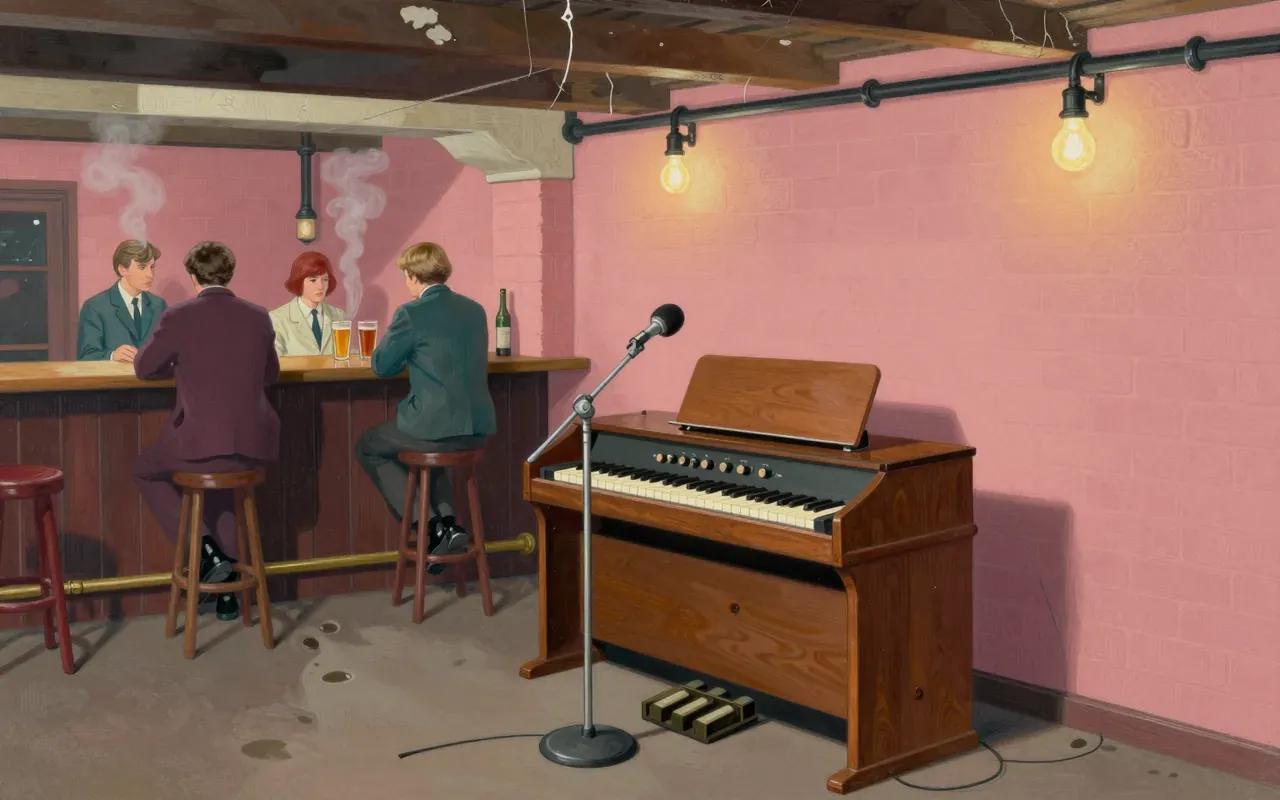
The Animals’ 1964 debut is a focused, unadorned R&B document — twelve covers, dominated by Alan Price’s organ, recorded before their breakout and before any major personnel or production shifts.

9:20

The Best of the Classic Years

King Sunny Adé · 2003

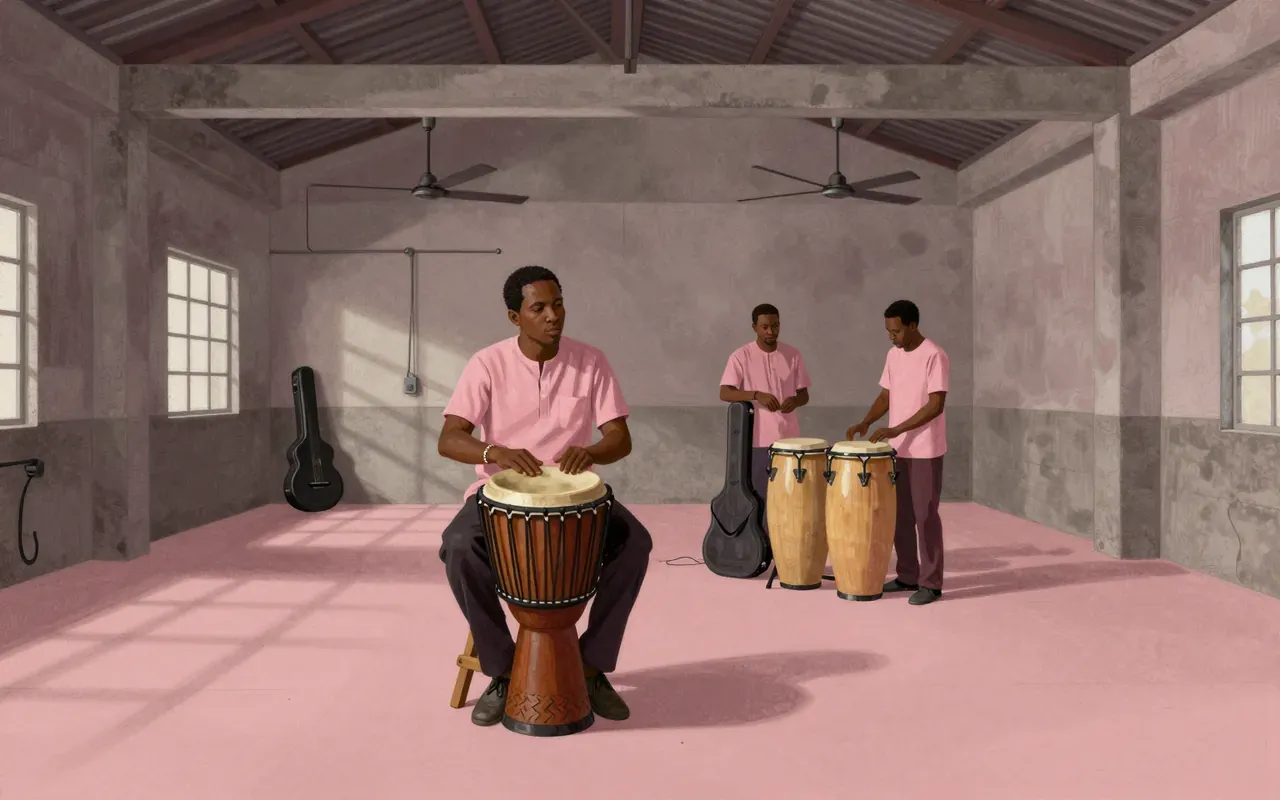
A functional, unadorned distillation of King Sunny Adé’s Island Records years — valuable for its fidelity to the original sequencing and instrumental palette, but silent on why these tracks, in this order, constitute ‘the best’.

8:58

The Black Parade

My Chemical Romance · 2006

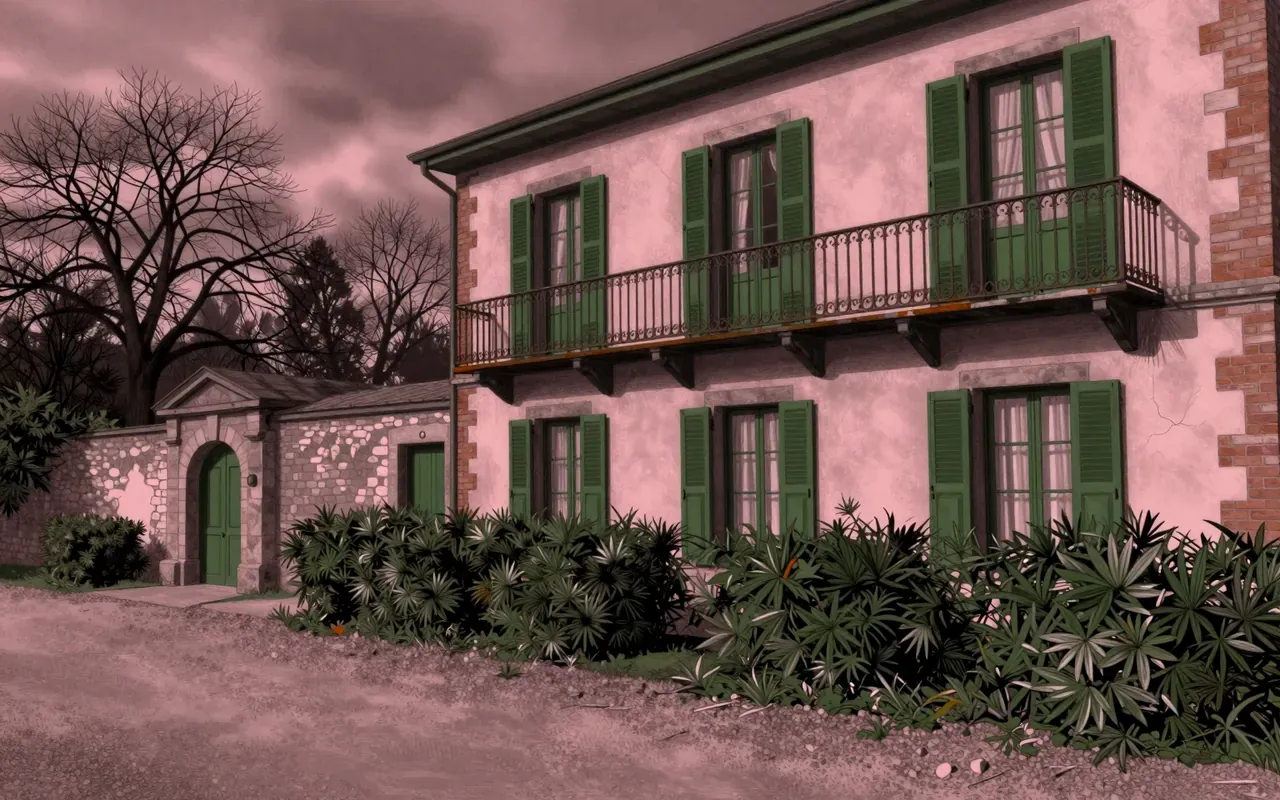
A claustrophobic, emotionally exposed rock record made inside a scary, uneasy mansion — not a polished concept album, but one saturated with the psychological toll of its creation.

9:56

The Bridge

Sonny Rollins · 1962

The Bridge is Sonny Rollins’s 1962 studio album, recorded in January and February 1962 and released in April 1962. It marks his return after a three-year sabbatical and his debut for RCA Victor. The core quartet features Sonny Rollins on tenor saxophone, Jim Hall on electric guitar, Bob Cranshaw on double bass, and Ben Riley on drums — with Harry "H.T." Saunders substituting on drums for one track. The sessions were held across three dates: January 30 ("God Bless the Child"), February 13 ("Where Are You", "John S.", "You Do Something to Me"), and February 14 ("Without a Song", "The Bridge"). Produced by George Avakian and engineered by Ray Hall, the album was critically lauded and later inducted into the Grammy Hall of Fame in 2015.

10:09

The Complete Recordings

Robert Johnson · 1990

The Complete Recordings (1990) compiles all 29 master recordings and 12 alternate takes Robert Johnson made for ARC in San Antonio (November 1936) and Dallas (June 1937). He performed solo on acoustic guitar and vocals. Don Law produced. Vincent Liebler engineered. The sound is dry, immediate, and unvarnished — captured on portable equipment in improvised spaces. It excludes only one alternate take of 'Traveling Riverside Blues', later added in 2011. This edition remains the foundational, unembellished document of his studio work.

11:09

The Diary of Alicia Keys

Alicia Keys · 2003

Alicia Keys’ second album is a tightly controlled pivot into traditional soul — piano-forward, lyrically interior, and commercially unassailable. It lands its strongest ideas early and often, but offers no structural surprises. Its power lies in consistency, not rupture.

9:40

The Dock of the Bay

Otis Redding · 1968

“(Sittin’ on) The Dock of the Bay” is Otis Redding’s final recording — an intentionally atypical, non-R&B song co-written with Steve Cropper, recorded in two sessions at Stax in November and December 1967, and mixed posthumously with seagull and wave sounds per Redding’s request. It features restrained vocals, succinct guitar, no backing vocals, and ends with Redding’s whistle — a deliberate substitution for a fadeout rap. Redding considered it unfinished and planned to re-record it, but died three days after the final session. Released in January 1968, it became his first number-one hit on both the Billboard Hot 100 and R&B charts.

10:51

The Electric Prunes

The Electric Prunes · 1967

A rushed, producer-driven debut where psychedelic texture overpowers pop-song filler — held together by accidental tape manipulation, fuzz, and tremolo.

11:04

The Emancipation of Mimi

Mariah Carey · 2005

The Emancipation of Mimi is Mariah Carey’s 2005 pop-soul recalibration — minimal, roomy, Atlanta-made, and deliberately unadorned.

11:10

The Everly Brothers

The Everly Brothers · 1958

The Everly Brothers (1958) is their eponymous debut album, produced by Archie Bleyer, featuring only Don and Phil Everly on steel-string acoustic guitars and vocals. It combines rock and roll, country, and pop, pioneering country rock through close-harmony singing — Don on baritone, Phil on tenor — with voices overlapping intricately and subtly. The album includes original material and energetic covers of songs by Little Richard, Gene Vincent, and Ray Charles. It is a consistent debut, though the artists had not yet fully matured.

9:47

The Grey Album

Danger Mouse · 2004

A 2004 experimental mashup by Danger Mouse, made from Jay-Z’s The Black Album a cappellas and samples solely from the Beatles’ 'White Album'. Released in a limited 3,000-copy run without Beatles permission. Framed as deconstructive labour — not remixing, but rebuilding using only those two sources.

9:34

The Hottest New Group in Jazz

Lambert, Hendricks & Ross · 1962

The Hottest New Group in Jazz is a 1959 Columbia Records album by Lambert, Hendricks & Ross. Its title quotes Downbeat magazine. It features the Ike Isaacs Trio on all tracks. Irving Townsend co-produced it. It is the fourth album by the trio and the first of three Columbia LPs they recorded beginning in 1959.

9:58

The Incredible Jazz Guitar of Wes Montgomery

Wes Montgomery · 1960

A landmark 1960 studio album featuring Montgomery's signature thumb picking and octave techniques, recorded over two sessions at Reeves Sound Studios in New York City with pianist Tommy Flanagan, bassist Percy Heath, and drummer Albert Heath, and produced by Orrin Keepnews with Jack Higgins as engineer.

9:23

The Jazz Workshop

The George Russell Smalltet · 1957

The Jazz Workshop is George Russell’s 1957 debut album, featuring his Smalltet with Art Farmer, Hal McKusick, Barry Galbraith, and Bill Evans. It includes tracks such as 'Ye Hypocrite, Ye Beelzebub', 'Jack's Blues', and 'Witch Hunt', which appears in the film ParaNorman (2012). Verified claims confirm the personnel, instrumentation, and compositional devices used, including 'Concerto for Billy the Kid' as a feature for Bill Evans and 'Ezz-thetic' built on the chord changes of 'Love for Sale'.

9:24

The Music From Peter Gunn

Henry Mancini · 1959

The Music From Peter Gunn is a television soundtrack album composed by Henry Mancini for the series Peter Gunn, produced by Blake Edwards in 1958. It won the inaugural Grammy Award for Album of the Year in 1958. Mancini pioneered the integration of jazz elements into late-romantic orchestral television scoring.

9:23

The Raincoats

The Raincoats · 1979

The Raincoats’ 1979 debut is a document of intuition over instruction. Four women — Ana da Silva, Gina Birch, Palmolive, and Vicky Aspinall — recorded it with Mayo Thompson and Geoff Travis, using minimal gear and maximal trust in their own ears. Its sound is ragged, homespun folk-punk: elastic rhythms, reedy vocals, rickety structures. Lora Logic’s saxophone appears once. Ross Crighton’s lyrics for 'Life on the Line' name Ladbroke Grove tube station. Palmolive left before release; Ingrid Weiss replaced her. No myth. Just music made in real time, with what they had.

10:00

The Sermon!

Jimmy Smith · 1959

The Sermon! is a document of engineering choices — not inspiration, not myth. Every sonic trait is traceable to a setting, a room, a mic, a preamp. It rewards attention to how things were made, not what they mean.

10:14

The Shadows

The Shadows · 1961

The Shadows’ 1961 debut is a document of real-time constraint: no edits, no overdubs, no reverb beyond the room, no vocals beyond four tracks. It establishes their four-player instrumental format with clarity and rigour — not as a style, but as a working method. Its power lies in what it omits.

9:27

The Slider

T. Rex · 1972

The Slider is T. Rex’s 1972 album, written and demoed during their UK tour in fall and winter 1971. It was recorded across Rosenberg Studios (Copenhagen), Trident Studios (London), and Strawberry Studios in Château d'Hérouville — the latter chosen to avoid British taxing laws. Tony Visconti produced throughout. Marc Bolan’s drinking and cocaine use affected his personality during sessions, but recordings progressed quickly and efficiently. Musically, it features layered electric guitars, phasing, reverb, backwards guitars, string arrangements by Visconti, and androgynous backing vocals — though Visconti later claimed Flo & Eddie sang on only three tracks. Its lyrical themes include vulnerability, godhead imagery, and emotional states like sadness expressed in the title track’s refrain 'and when I'm sad, I slide'.

9:27

The Soft Bulletin

The Flaming Lips · 1999

The Soft Bulletin is a studio-built symphony of rock and synthesis — no strings, no hedging, no filler. It trades psychedelic chaos for meticulous, emotionally charged construction.

10:10

The Sounds of India

Ravi Shankar · 1958

A pedagogical artefact, not a concert document. Recorded in New York in 1957, it uses spoken introductions and concise performances to frame Hindustani classical music for Western listeners. Its sound is defined by three acoustic instruments in a dry studio space: sitar, tabla, tambura. Nothing else enters the frame.
10:07

The Weight of These Wings

Miranda Lambert · 2016

The Weight of These Wings is Miranda Lambert’s sixth studio album, released November 18, 2016, via RCA Records Nashville. It consists of two discs titled The Nerve and The Heart. The album was written and recorded over a year, with contributions from songwriter Luke Dick and producers Frank Liddell, Eric Masse, and Glenn Worf. Its content reflects Lambert's divorce from Blake Shelton and subsequent relationship with Anderson East. The album received widespread critical acclaim and won Album of the Year at the 2017 ACM Awards. It debuted at No. 1 on the Billboard Country Albums chart and No. 3 on the Billboard 200, and was certified Platinum by the RIAA in July 2017. Singles included 'Vice', 'We Should Be Friends', 'Tin Man', and 'Keeper of the Flame'. The Highway Vagabond Tour supported the album, marking Lambert's first solo European tour dates. Critical reception highlighted its non–country-pop production and demand for close listening, earning an 81/100 Metacritic score and five-star reviews from AllMusic. The album was later ranked

8:54

The Writing’s on the Wall

Destiny’s Child · 1999

Destiny's Child's second album is a tightly wound, studio-crafted pivot—built on rewritten lyrics, Houston sessions, and a single track that redefined everything.

10:06

Thelonious Himself

Thelonious Monk · 1957

A solo piano record that treats standards as raw material for structural interrogation. Monk’s touch is percussive, his silences deliberate, his harmonies unresolved by design. Only 'Monk's Mood' breaks form — adding Coltrane and Ware not for colour but for density. The room is functional, the piano is unvarnished, the intent is architectural.

9:36

Tijuana Moods

Charles Mingus · 1962

Tijuana Moods is a constructed object — not a captured event. Its value lies in hearing how Mingus used editing as an instrument, not in hearing what the band sounded like on a given night.

11:13

Tom Petty and the Heartbreakers

Tom Petty and the Heartbreakers · 1976

Tom Petty and the Heartbreakers’ 1976 debut is a studio document: recorded and mixed at Shelter Studio in Hollywood, with instrument assignments confirmed per track, no speculative production claims, and impact tied to external placements — not internal reinvention.

10:09

Tonight’s the Night

Neil Young · 1975

A raw, late-night studio document of grief, recorded live in a rented Hollywood rehearsal space with rented gear, featuring the surviving Crazy Horse rhythm section’s first session after Danny Whitten’s death. Young’s voice cracks. Mics are missed. Room echo stays in. Reprise delayed release for two years. It sold poorly in 1975 but is now regarded as a landmark—and Young called it the closest he ever came to art.

9:53

Tragic Songs of Life

The Louvin Brothers · 1956

Tragic Songs of Life is the Louvin Brothers’ 1956 Capitol debut—a concept album of tragic heartbreak, misfortune, and murder ballads, performed by Charlie (vocals, guitar) and Ira (vocals, mandolin), with Paul Yandell on guitar and Ken Nelson producing. It is rooted in country music, with no verified use of bluegrass or gospel instrumentation beyond the stated roles.

10:26

Triangle

The Beau Brummels · 1967

Triangle is the Beau Brummels’ fourth studio album, released in July 1967 and produced by Lenny Waronker. It marks their first collaboration between vocalist Sal Valentino and guitarist Ron Elliott as co-writers. Recorded by a trio—Valentino, Elliott, and Ron Meagher—after the departure of Don Irving and John Petersen, and during Meagher’s exit to Army Reserves, the album embraces psychedelic musical style, fantasy-themed lyrics, and surreal characters. Session musicians including James Burton, Jim Gordon, Carol Kaye, and Van Dyke Parks (on harpsichord for 'Magic Hollow') contributed. Arrangements feature strings, brass, woodwinds, harpsichord, and unique percussion. Ron Elliott described the album as 'ethereal, mystic, and mysterious', reflecting the drug culture of 1967. Though commercially modest, it received critical acclaim and later gained recognition as a cult classic.

10:33

Trout Mask Replica

Captain Beefheart & His Magic Band · 1969

Trout Mask Replica is a document of extreme compositional control, not wildness — its difficulty is structural, not performative. It lands because it refuses to comfort. It fails because it refuses to release.

9:42

Up the Bracket

The Libertines · 2002

Up the Bracket is a live-wire debut — urgent, unvarnished, and built on two guitars, a drum kit, and a shared sense of London as both home and hazard.

9:26

Viva la Vida or Death and All His Friends

Coldplay · 2008

A record built on enforced difference — one studio, four producers, no repeated instruments, no shared vocal register, no returning motif. It trades intimacy for scale, confession for image, consistency for contrast.

10:00

Wasting Light

Foo Fighters · 2011

Wasting Light is the Foo Fighters’ seventh studio album, recorded analog-to-tape in Dave Grohl’s Encino garage in 2011. Produced by Butch Vig, it marks Pat Smear’s full-time return after fourteen years and the band’s first five-piece record since 1997. Its sound is heavy, raw, and tightly performed—built on rehearsal discipline, analog limitation, and collective presence. It rejects digital convenience to affirm rock as physical, communal, and immediate.

9:51

Way Out West

Sonny Rollins · 1957

A pianoless trio record that treats silence like terrain — and proves you don’t need chords to build a world.

10:44

We’re Only in It for the Money

The Mothers of Invention · 1968

We’re Only in It for the Money is a 1968 album by The Mothers of Invention, recorded in New York between March and October 1967. It features tape splicing, speed manipulation, and layered vocals applied to psychedelic rock, musique concrète, and orchestral fragments. Its satire targets both mainstream politics and the commodification of the counterculture. Zappa produced it alone — the first time — with Tom Wilson as executive producer. Its cover parodies Sgt. Pepper’s. It was selected for the National Recording Registry in 2005.

11:14

WHEN WE ALL FALL ASLEEP, WHERE DO WE GO?

Billie Eilish · 2019

When We All Fall Asleep, Where Do We Go? is Billie Eilish’s debut studio album, released March 29, 2019. Written and produced with her brother Finneas O'Connell in his bedroom studio in Highland Park, Los Angeles, it uses Logic Pro X, a Universal Audio Apollo 8 interface, and Yamaha HS5 monitors with an H8S subwoofer. Its sound centres on amplified bass, minimalist percussion, foley, and acoustic textures — layered with dissonance and distortion to create a rock ’n’ roll feel without rock instrumentation. Eilish later said she 'hated every second' of its creation. It debuted at number one on both the US Billboard 200 and the UK Albums Chart, and 14 of its 14 tracks (excluding 'Goodbye') charted simultaneously on the US Billboard Hot 100 — a record for a female artist.

11:23

Whipped Cream & Other Delights

Herb Alpert’s Tijuana Brass · 1965

Whipped Cream & Other Delights is Herb Alpert & the Tijuana Brass’s fourth album, released in 1965. It marks a shift: away from Mexican-themed material, toward instrumental covers of popular songs, and toward a new studio configuration blending future band members and Wrecking Crew players. The cover features Dolores Erickson seemingly covered in whipped cream. One track — 'Love Potion No. 9' — continues the band’s 'strip-tease' arrangement tradition.

11:39

White Light Demo's

Gene Clark

A set of demos tethered to White Light—not a reissue, not a reconstruction, but a quiet echo of what came before the album’s quiet arrival.

8:58

Wild Honey

The Beach Boys · 1967

Wild Honey is a soul record blending pop and R&B. Recorded mostly at Brian Wilson’s home studio. A deliberate departure from Pet Sounds and Smile. A self-conscious return to rock-band fundamentals.

8:50

Wish I Was in Heaven Sitting Down

R.L. Burnside · 2000

Wish I Was in Heaven Sitting Down is a blues record defined by omission. Burnside’s voice is present. His guitar is not. The album was made in 2000, after heart surgery and an ear infection in 1999, while his touring had dropped to a minimum. Guitar duties were handed to Rick Holmstrom, Smokey Hormel, and John Porter. Nothing else about the recording — room, mics, tempos, arrangements — is documented in the source material. This is not a reinvention. It is a delegation.

8:34

X 100PRE

Bad Bunny · 2018

X 100PRE is Bad Bunny’s debut studio album, released December 24, 2018, on Rimas Entertainment. It peaked at
12:01

You Forgot It in People

Broken Social Scene · 2002

You Forgot It in People is a record built on refusal: to simplify, to centralise, to master. It is neither cohesive nor chaotic — it is densely occupied. Its value lies in how it forces attention to move laterally, not hierarchically.

10:20

You Got My Mind Messed Up

James Carr · 1967

A 1967 soul record defined by vocal immediacy, structural economy, and emotional precision — not myth, not legacy, but sound made in a specific room, with specific tools, at a specific time.

10:47

Zen Arcade

Hüsker Dü · 1984

Zen Arcade is a double LP by Hüsker Dü, released July 1984 on SST Records. It tells a conceptual story of a boy fleeing an abusive home, encountering disillusionment through military service, religion, love, and loss — ending when he wakes, revealing the narrative as a dream. Recorded in 45 hours at Total Access Studio in Redondo Beach, California, with producer Spot, it features first-take performances, acoustic folk passages, piano interludes, and psychedelic guitar textures. The band rehearsed in a church-turned-punk squat in St. Paul, Minnesota, during summer 1983, brainstorming lyrics and musical ideas in multi-hour jam sessions. Bob Mould and Grant Hart wrote all songs; Mould demanded individual songwriter credits after seeing Hart’s artwork for another band. Dez Cadena contributed guest vocals to 'What's Going On'. 'Eight Miles High' was recorded during these sessions but released as a non-album single in April 1984. The album’s artistic and conceptual ambitions challenged prevailing U.S. punk purism.

9:07

#1 Record

Big Star · 1972

A debut made by people teaching themselves how to record—sharp guitars, no safety net, zero pretence.

9:16

1989

Taylor Swift · 2014

1989 is Taylor Swift’s fifth studio album, released October 27, 2014. It marks her deliberate transition from country to pop. She relocated from Nashville to New York City in March 2014 and titled the album after her birth year to signal artistic rebirth. Songwriting began in mid-2013 on the Red Tour and concluded after the tour ended in mid-2014.

10:46

1999

Prince · 1982

1999 is Prince’s 1982 double LP, his first with the Revolution, defined by synth-and-drum machine-heavy arrangements that codified the Minneapolis sound. It uses ARP Omni, Oberheim OB-SX, OB-X, OB-Xa, OB-8 synths and the Linn LM-1 drum machine. Themes include nuclear anxiety, Computer Age alienation, eroticism, and spiritual gratitude. Its production is tightly controlled, layered, and mechanised—no live drums, no guitar solos, no acoustic piano leads. It landed with urgency, intimacy, rhythmic insistence, theatricality, and groove. It is worth hearing if you want to understand how funk became electronic without losing its body.

10:32

21

Adele · 2011

21 is Adele’s 2011 album, written and recorded in response to her breakup with her first serious partner — a relationship that began in April 2009 and ended shortly after. Early attempts to write an upbeat, contemporary follow-up to '19' failed due to lack of inspiration, leading Adele to cancel sessions. Production resumed immediately after the split, with songs channeling heartbreak and depression. The album’s sound draws on classic and contemporary country and roots music, influenced by Nashville music she heard on her 2008–09 US tour — a sound she found exciting precisely because it was unfamiliar. Its title reflects her age and personal growth over the prior two years.

9:41

2112

Rush · 1976

2112 is Rush’s fourth studio album, recorded in January 1976 at Toronto Sound Studios with producer Terry Brown. It followed financial and creative crisis after Caress of Steel underperformed. The band composed material on the road in 1975—Peart writing lyrics first, Lee and Lifeson building songs on acoustic guitars to match their mood—departing from prior electric-based writing. They minimized overdubbing for live fidelity, used varied guitars (ES-335, Les Paul, B-45, Dove, Stratocaster), Fender amps, and Lee’s stereo-output Rickenbacker bass routed unconventionally. 'The Temples of Syrinx' was developed backstage in Sault Ste. Marie; the 'Overture' was the final piece written. It was the first Rush album to 'really sound like Rush'.

11:32

3+3

The Isley Brothers · 1973

3+3 is the Isley Brothers’ 1973 Epic debut and first album with six official members — Ronald, Rudolph, and O'Kelly Isley joined by Ernie Isley, Marvin Isley, and Chris Jasper. It features layered instrumentation including guitars, bass, clavinet, Moog and ARP synthesizers, and percussion, with guest contributions on drums, organ, and congas. Produced by the three eldest brothers and engineered by Malcolm Cecil and Robert Margouleff, it includes the Top 10 hit 'That Lady' and a UK Top 10 cover of 'Summer Breeze'. The album incorporated hard rock, folk-rock, funk, and soulful balladry, and became their breakthrough hit — selling over two million copies.

10:29

3 Feet High and Rising

De La Soul · 1989

3 Feet High and Rising is De La Soul’s 1989 debut — a sample-heavy, psychedelic-influenced hip-hop record built with the Casio RZ-1 and Eventide Harmonizer. It introduced the 'D.A.I.S.Y. Age' concept ('Da Inner Sound, Y'all'), used quiz show skits to structure its flow, and drew from funk, soul, doo-wop, psychedelic rock, and children’s music. It was certified platinum, added to the Library of Congress National Recording Registry in 2010, and remained unavailable digitally until 2023 due to sample clearance issues.

11:38

30

Adele · 2021

30 is Adele’s fourth studio album, released 19 November 2021. It reached number one in 24 territories and was the best-selling album of 2021 worldwide across multiple chart formats. It marked the first time Columbia Records marketed an Adele album globally. Its lead single, 'Easy on Me', won a Grammy Award in 2023.

10:42

3rd

Big Star · 1978

Big Star’s Third/Sister Lovers is not a polished artefact—it is a document of dissolution. Recorded in late 1974 at Ardent Studios with producer Jim Dickinson, it features Alex Chilton and Jody Stephens working alongside a rotating group of Memphis musicians—including drummer Richard Rosebrough and vocalist Lesa Aldridge, whose parts were later erased. The sessions ended in early 1975 with 250 plain-label promos pressed, but label interest failed in New York and California. The band broke up before the album was titled. Dickinson framed his role as removing ‘oppressive production’ to enable Chilton’s integrity—not to shape a marketable product. The result is a stark, emotionally extreme, and stylistically fractured record that diverges entirely from Big Star’s earlier power-pop. Its cult status rests on its honesty, not its polish.

10:07

69 Love Songs

The Magnetic Fields · 1999

69 Love Songs is the Magnetic Fields’ sixth studio album, released on September 7, 1999, by Merge Records. It is a three-volume concept album comprising 69 love songs, all written by Stephin Merritt. Conceived as a theatrical revue inspired by Stephen Sondheim and Charles Ives’ 114 Songs, it was composed largely at Dick’s Bar in New York. The album features ukulele, banjo, accordion, cello, mandolin, flute, xylophone, Marxophone, synthesizers, guitars, and effects. Shirley Simms, Dudley Klute, L.D. Beghtol, and Claudia Gonson each sing lead on six songs; Daniel Handler plays accordion; Christopher Ewen serves as guest arranger/synthesist. It is the band’s best-known work.

10:57

A Hard Day’s Night

The Beatles · 1964

A Hard Day's Night is the Beatles’ third studio album and their first composed entirely of original Lennon–McCartney songs. Recorded between February and June 1964 at EMI Studios in London, it features Harrison’s debut use of a Rickenbacker 12-string guitar — a sound that shaped emerging folk rock and jangle pop. Side one contains songs from the film A Hard Day’s Night; side two comprises other new recordings written for the album. Musically, it departs from earlier rock and roll covers in favour of a tightly crafted pop sound defined by ringing guitars and layered vocal arrangements.

11:15

A Night at the Opera

Queen · 1975

A Night at the Opera is not a miracle. It is a construction — four months, seven studios, £40,000, 24-track tape, and four musicians assigning themselves roles like actors in a play. Its power lies in how tightly its ideas are bound to its making: no Trident, no compromise, no unassigned instrument, no unmotivated genre shift. It is prog not as indulgence but as method — and art rock not as pose but as precision.

10:56

A Rush of Blood to the Head

Coldplay · 2002

A Rush of Blood to the Head is Coldplay’s second studio album, recorded in Liverpool after relocating from London in September 2001. It follows their global success with Parachutes and 'Yellow'. The album was produced by Ken Nelson and features 11 tracks, including 'In My Place', 'Clocks', and 'The Scientist'. It was inspired by urgency, heartbreak, and impulse — themes reflected in both lyrics and musical texture. The recording process was collaborative and focused, with Martin and Buckland developing ideas independently on weekends before presenting them to the full band each Monday. 'Politik' was recorded two days after 9/11; 'Clocks' emerged late in the process from a spontaneous piano riff. The album won the Grammy Award for Best Alternative Music Album in 2003 and Record of the Year for 'Clocks' in 2004. It was certified 12-times platinum in the UK and sold over 17 million copies worldwide.

10:34

A Seat at the Table

Solange · 2016

A Seat at the Table is Solange’s third studio album. Writing began in 2008. Recording spanned 2013 to June 2016 across Long Island, New Orleans, New Iberia and Los Angeles. It was released 30 September 2016. Its sound comes from hour-long improvised tracks built around bass and synth lines, later structured in Louisiana and finished in LA with Raphael Saadiq and Troy Johnson. 'Cranes in the Sky' originated from a 2008 Saadiq instrumental — drums, strings and bass only. Master P narrated interludes drawn from real conversations. Themes include identity, empowerment, grief, healing, rage and self-care. All lyrics were paired with images in a digital art book.

10:04

A Wizard, a True Star

Todd Rundgren · 1973

A Wizard, a True Star is a studio-as-instrument document: chaotic, synthetic, structurally audacious, and technically frayed. It rewards attention to process over polish.

10:32

Abraxas

Santana · 1970

Abraxas is a live band caught in transition — between blues and salsa, between San Francisco and Latin roots, between cover and composition. Its strength is rhythmic clarity, keyboard contrast, and unselfconscious physicality. Its limits are vocal thinness and structural looseness. It rewards attention to how parts lock, not how they soar.

9:59

Achtung Baby

U2 · 1991

Achtung Baby is U2’s seventh studio album, produced by Daniel Lanois and Brian Eno, recorded in Berlin and Dublin between late 1990 and mid-1991. It marked a deliberate departure from their earlier sound—incorporating alternative, industrial, and electronic dance influences—and reflected personal, introspective lyrical themes inspired by marital breakdowns, German reunification, and spiritual questioning. The Berlin sessions at Hansa Studios were fraught with tension and creative uncertainty, nearly leading to the band’s dissolution, until the improvised creation of 'One' provided a breakthrough. Subsequent Dublin sessions at Elsinore and Windmill Lane Studios yielded the completed album, characterised by distorted guitar textures, pronounced rhythm section, electronic beats, altered vocal techniques, and a self-conscious embrace of irony and artifice in both music and presentation. The album’s title and packaging were conceived to confound expectations and erect a 'mask' over its emotional weight. Its release inaugurated U2’s 1990s reinvention, culminating in the Zoo TV Tour and sustained musical experimentation throughout the decade.

12:46

Actually

Pet Shop Boys · 1987

Actually is a synth-pop record made in short, rotating sessions at Sarm and Advision Studios. It uses Fairlight programming instead of orchestras. Producers included Julian Mendelsohn, Stephen Hague, and Andy Richards. Lyrics reference Thatcherism, AIDS, and pop songs including 'Tainted Love'. 'King’s Cross' unintentionally foreshadowed the November 1987 fire. It was Pet Shop Boys’ second album, released in September 1987.

10:20

África Brasil

Jorge Ben · 1976

África Brasil is a 1976 album by Jorge Ben, recorded over ten days at Phonogram Studios in Rio de Janeiro with a large ensemble including Admiral Jorge V, fourteen additional instrumentalists and five backing vocalists. Ben replaced his acoustic guitar with an electric guitar during these sessions, influenced by Dadi Carvalho, after swapping instruments following Carvalho’s acquisition of an Ibanez guitar in London. José Roberto Bertrami arranged orchestral parts; Marco Mazzola mixed the album before Philips withdrew him mid-session. The album is described as one of Ben’s most popular, a fusion of funk and samba relying more on electric guitar than previous efforts, and features a remake of 'Taj Mahal'.

10:16

Aftermath

The Rolling Stones · 1966

Aftermath is the Rolling Stones’ first album of entirely original Jagger–Richards songs, recorded across two relaxed sessions at RCA Studios in Los Angeles in December 1965 and March 1966. Engineer Dave Hassinger enabled experimentation, especially with session musician Jack Nitzsche and Brian Jones — who pioneered use of sitar, marimba, and dulcimer — expanding the band’s sonic palette beyond Chicago blues into folk, Baroque, psychedelia, and world music. Melodic ideas were largely developed by Richards and refined collectively in the studio, often guided by Nitzsche’s piano work. Jones’ contributions were central to the album’s textural innovation, though his unreliability occasionally led Richards to assume most guitar duties — a shift marking one of the first Stones albums dominated by Richards’ guitar work. The album also marked the band’s first major use of true stereo and included the extended, improvisational track 'Going Home', nearly 12 minutes long.

9:45

Aja

Steely Dan · 1977

Aja is a studio-built jazz-pop record defined by precision, segmentation, and elite execution — not feel, not band identity, not room sound.

8:37

Aladdin Sane

David Bowie · 1973

Aladdin Sane is David Bowie’s sixth studio album, co-produced with Ken Scott and recorded between December 1972 and January 1973 in London and New York City during breaks in the Ziggy Stardust Tour. It features the full Spiders from Mars lineup—Mick Ronson, Trevor Bolder, and Mick Woodmansey—alongside jazz-influenced pianist Mike Garson, two saxophonists, and three backing vocalists. Most songs were written on the road in the US and reflect Bowie’s ambivalent perceptions of America, resulting in a harder, edgier rock sound than his prior glam work. Lyrics explore duality: the rewards of stardom versus the toll of touring, and recurring motifs of urban decay, drugs, sex, violence, and death. The album includes a Rolling Stones cover, 'Let's Spend the Night Together', and Bowie framed its title as both a pun—'A Lad Insane'—and the conceptual extension 'Ziggy Stardust goes to America'. 'The Jean Genie' was the first track recorded, on 6 October 1972 in New York, with Bowie producing that session himself. It was Bowie’s final album with the complete Spiders from Mars lineup.

10:08

All Directions

The Temptations · 1972

All Directions is a 1972 Motown album by The Temptations, produced by Norman Whitfield. It features layered vocals, timpani, vibes, congas, brass, and basslines from James Jamerson and Bob Babbitt. The group resisted recording 'Papa Was a Rollin’ Stone' and 'Run Charlie Run', both covers with socially charged lyrics. 'Papa' became a

9:24

All Mod Cons

The Jam · 1978

All Mod Cons is a re-recorded crisis album that treats the UK as a series of locked rooms — and makes every key turn with purpose.

10:42

All That You Can’t Leave Behind

U2 · 2000

All That You Can’t Leave Behind is U2’s 2000 return to live ensemble recording, made with Brian Eno and Daniel Lanois at Hanover Quay Studios. It abandons Pop’s fragmentation for clarity, cohesion, and vocal-led uplift. Its strength is commitment—not revelation.

11:15

All Things Must Pass

George Harrison · 1970

All Things Must Pass is a triple album released by George Harrison in 1970. It features two discs of original songs and a third disc of informal jams titled Apple Jam. The album was co-produced by Phil Spector using his Wall of Sound technique. It includes contributions from Eric Clapton, Ringo Starr, Billy Preston, Klaus Voormann, Gary Wright, Badfinger, Pete Drake, and members of Delaney & Bonnie’s Friends. Most backing tracks were recorded on 8-track tape at EMI Studios in London between late May and mid-June 1970, with overdubbing and mixing continuing through October. The Apple Jam disc contains four improvised instrumentals built around minimal chord changes — or, in the case of 'Out of the Blue', a single-chord riff — and one vocal track, 'It's Johnny's Birthday', performed to the melody of Cliff Richard’s 'Congratulations'. The album was critically acclaimed and widely regarded as Harrison’s best work.

12:30

AM

Arctic Monkeys · 2013

AM is Arctic Monkeys’ fifth studio album, released 9 September 2013. It marks their first venture into a hip hop-influenced sound, achieved by recording bass and drums first, using unconventional drum setups, and incorporating new instruments including the Hohner Guitaret, celeste, and vintage drum machine. It was produced by James Ford and co-produced by Ross Orton at Sage & Sound Recording in Los Angeles and Rancho De La Luna in Joshua Tree, California. Thematically, it concerns frustration surrounding tainted romance, sex and loneliness. Guest appearances include Josh Homme, Pete Thomas, and Bill Ryder-Jones—with Homme’s contribution to 'Knee Socks' singled out by Alex Turner as his favourite moment on the record. Turner described the sound as 'like a Dr. Dre beat, but we've given it an Ike Turner bowl-cut and sent it galloping across the desert on a Stratocaster', and said 'Arabella' expresses the album’s two dominant styles—hip-hop beats and 1970s heavy rock—most effectively in one track.

10:04

American Beauty

Grateful Dead · 1970

American Beauty is the Grateful Dead’s 1970 studio album — recorded fast, under pressure, without their usual crew, and produced by Stephen Barncard. It features pedal steel instead of lead guitar, mandolin from David Grisman, and songs from Lesh, Weir, and McKernan alongside Garcia and Hunter. Eight tracks became live staples. It helped pioneer Americana — not as revival, but as reinvention.

9:59

American Idiot

Green Day · 2004

American Idiot is a punk rock opera built from 30-second musical fragments, recorded in album sequence across two California studios, using analog tape compression on drums to anchor its urgency. It functions as direct protest art, centred on the character 'Jesus of Suburbia', and landed at number one on the Billboard 200 in September 2004 — two months before George W. Bush’s reelection.

9:18

American Recordings

Johnny Cash · 1994

American Recordings is Johnny Cash’s 1994 solo album for Rick Rubin’s American Recordings label. It was recorded mostly in Cash’s Tennessee cabin or Rubin’s Los Angeles home, with Cash accompanied only by his Martin Dreadnought acoustic guitar. Two tracks—'Tennessee Stud' and 'The Man Who Couldn’t Cry'—were recorded live at the Viper Room in Los Angeles. The album features newly commissioned songs by Tom Waits and Glenn Danzig, a cover written by Nick Lowe, and two re-recordings of Cash’s earlier material. Rubin granted Cash full creative control, resulting in a stark, intimate record that launched a late-career resurgence. It won the 1995 Grammy for Best Contemporary Folk Album.

9:46

AmeriKKKa’s Most Wanted

Ice Cube · 1990

AmeriKKKa's Most Wanted is Ice Cube's 1990 debut solo album, recorded in New York with Public Enemy's production team the Bomb Squad. It was released in May 1990 and became an instant hit that advanced rap's mainstream integration. The album was controversial, drawing accusations of misogyny and racism, while introducing Cube's affirmation of black nationalism and ideology of black struggle.

11:34

Another Green World

Eno · 1975

Another Green World is Brian Eno’s third solo studio album, recorded at Island Studios in Notting Hill, London, in July and August 1975. Eno entered the recording studio with nothing written or prepared, viewing the album as an experiment. For the first four days in the studio, Eno failed to be productive. To look for new ideas, Eno turned to his Oblique Strategies cards and began coming up with new ideas, as he had done on his previous album Taking Tiger Mountain (By Strategy). Some of the album credits for the instruments have fanciful names that describe the sound they make. The "castanet guitars" are electric guitars played with mallets, electronically treated to sound something like castanets. The "Leslie piano" is an acoustic piano fed through a Leslie speaker. Eno described the "snake guitar" and "digital guitar" thus: "the kind of lines I was playing reminded me of the way a snake moves through the brush, a sort of speedy, forceful, liquid quality. Digital guitar is a guitar threaded through a digital delay but fed back on itself a lot so it makes this cardboard tube type of sound." Seven songs on the album have Eno playing all the instruments himself, including keyboards, guitars and percussion.

9:14

Another Music in a Different Kitchen

Buzzcocks · 1978

Another Music in a Different Kitchen is Buzzcocks’ 1978 debut studio album, recorded by their classic line-up — Pete Shelley, Steve Diggle, Steve Garvey, John Maher — after Howard Devoto’s departure. Martin Rushent produced it; Doug Bennet engineered it. Malcolm Garrett designed the sleeve. Its title came from a Linder Sterling collage. Some early pressings omitted 'I Need' due to a pressing plant error. It reached number 15 in the UK chart.
9:04

ANTI

Rihanna · 2016

ANTI is Rihanna’s eighth studio album, released exclusively on Tidal on January 28, 2016, after her departure from Def Jam to Roc Nation. It is eclectic by design, blending pop, dancehall, psychedelic soul, lo-fi beats, soul, and trap — shaped by creative struggles and emotional turmoil — and it became her second number-one album on the Billboard 200.

9:40

Appetite for Destruction

Guns N’ Roses · 1987

Appetite for Destruction is a controlled detonation—not a spark. Every element was tested, rejected, rebuilt. Its power lies in its precision, not its chaos.

10:58

Aqualung

Jethro Tull · 1971

Aqualung is Jethro Tull’s fourth studio album, recorded mostly in December 1970 at Island Records’ newly opened Basing Street Studios in London. It marks the debut of Jeffrey Hammond on bass and John Evan as a full-time keyboardist, and Clive Bunker’s final appearance with the band. Technical difficulties at the new studio—including cold, echoey acoustics—shaped the record’s raw, textural sound. Two tracks were laid down earlier in 1970 at Morgan Studios with Glenn Cornick on bass; he was fired after the last 1970 US tour and replaced by Hammond. The album rejects the 'concept album' label despite recurring themes of homelessness, religion, and alienation. Its sonic identity rests on Ian Anderson’s flute, Martin Barre’s electric guitar, and John Evan’s Mellotron—recorded in a room that refused to behave.

11:17

Art Blakey And The Jazz Messengers

Art Blakey and The Jazz Messengers · 1958

Art Blakey and the Jazz Messengers (1958) is the debut album of a new lineup—Lee Morgan, Benny Golson, Bobby Timmons, and Jymie Merritt—recorded for Blue Note. It produced the band’s biggest hit, 'Moanin’', and introduced two enduring jazz standards: 'Blues March' and 'Along Came Betty'. The record sounds urgent and unified, with no studio artifice—just four composers playing as one unit.

8:47

Arular

M.I.A. · 2005

Arular is a debut shaped by constraint: one machine, one room, one voice. Its power lies in what it excludes — space, polish, convention — not what it adds.

10:17

At Folsom Prison

Johnny Cash · 1968

Johnny Cash at Folsom Prison is a 1968 live album recorded during two performances on January 13, 1968, at Folsom State Prison in California. It features Cash, the Tennessee Three, Carl Perkins, the Statler Brothers, and June Carter. The first show — at 9:40 a.m. — forms the core of the album; only two tracks ('Give My Love to Rose' and 'I Got Stripes') were taken from the 12:40 p.m. second show. Rehearsals spanned two days and included learning 'Greystone Chapel', written by inmate Glen Sherley. The album reached number one on the Billboard country album chart.

11:17

At Last!

Etta James · 1960

Etta James’s 1960 debut is a calculated, string-draped entry into pop—neither raw blues nor jazz improvisation, but a vocal showcase built for radio, supper clubs, and legacy.

10:28

Automatic for the People

R.E.M. · 1992

Automatic for the People is a record built on absence: no drums driving, no Stipe present for demos, no fast songs, no tour, no resolution. It is defined by what it leaves out—and what remains is precise, sombre, and unrelenting.

10:25

Avalon

Roxy Music · 1982

Avalon is Roxy Music’s final studio album, recorded between 1981 and 1982 across three studios. It marks a decisive turn toward atmospheric, synth-laden minimalism—built on Linn LM-1 drum machine foundations, shaped at Compass Point, and polished at Power Station. Its success was commercial and critical: UK No. 1, Platinum in the US and Canada, and widely praised for its production. Yanick Étienne’s improvised vocal coda on the title track remains its most haunting sonic signature.