musicbriefs
Topic

Minimalism

Removing until only the argument is left.

19
in music
10:00
average
190 min
in total
68
across the network
Minimalism across the network →
All briefs19
8:58

Glassworks

Philip Glass · 1982

Glassworks is a six-movement chamber work Philip Glass wrote for the recording studio after his large concert and stage pieces, released by CBS in 1982 on LP and on cassette, each with its own mix. It was meant to bring his music to a wider audience, and it did: the album sold well and made his name widely known.

11:04

The Emancipation of Mimi

Mariah Carey · 2005

The Emancipation of Mimi is Mariah Carey’s 2005 pop-soul recalibration — minimal, roomy, Atlanta-made, and deliberately unadorned.

9:18

American Recordings

Johnny Cash · 1994

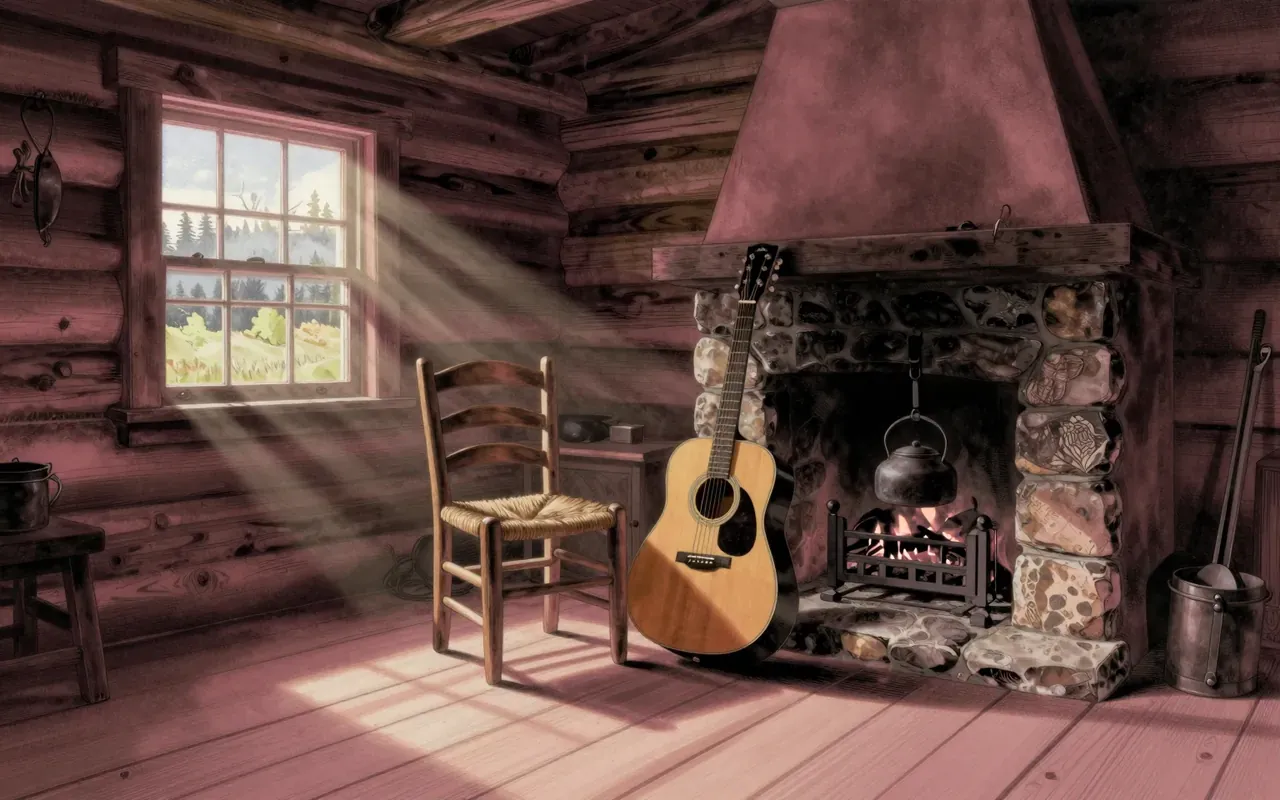
American Recordings is Johnny Cash’s 1994 solo album for Rick Rubin’s American Recordings label. It was recorded mostly in Cash’s Tennessee cabin or Rubin’s Los Angeles home, with Cash accompanied only by his Martin Dreadnought acoustic guitar. Two tracks—'Tennessee Stud' and 'The Man Who Couldn’t Cry'—were recorded live at the Viper Room in Los Angeles. The album features newly commissioned songs by Tom Waits and Glenn Danzig, a cover written by Nick Lowe, and two re-recordings of Cash’s earlier material. Rubin granted Cash full creative control, resulting in a stark, intimate record that launched a late-career resurgence. It won the 1995 Grammy for Best Contemporary Folk Album.

11:28

Before and After Science

Brian Eno · 1977

Before and After Science is Brian Eno’s fifth solo studio album, recorded over two years while he worked concurrently on Music for Films, Discreet Music, and David Bowie’s Low and 'Heroes'. Released in December 1977, it concludes his pop and rock phase and was inspired by Oblique Strategies. It features electronic and artistic rock compositions with vocals, built via 'deconstruction and elimination'. Only two tracks are instrumental: 'Energy Fools The Magician' and 'Through Hollow Lands' (dedicated to Harold Budd). Guest musicians include Fred Frith, Jaki Liebezeit, Cluster, Dave Mattacks, Andy Fraser, Percy Jones, and Phil Collins. It received equalised acclaim upon release.
9:26

Black Monk Time

The Monks · 1966

Black Monk Time is a radical, rhythm-obsessed studio document made under physical exhaustion and technical constraint. It is not a precursor to be admired from afar — it is a working blueprint of what happens when every instrument is forbidden from doing anything but hit, pulse, grind, and yelp.

9:19

Ctrl

SZA · 2017

Ctrl is SZA’s debut studio album, recorded between 2014 and 2017 at the TDE Red Room in Carson, California, and other locations including Chicago and Carter Lang’s Michigan home. It uses analog techniques—physically unplugging and re-plugging wires—to shape sound. Rick Rubin guided its minimalism, stripping reverb and background vocals to foreground SZA’s voice. Producers competed, exchanging beats; SZA studied Top 40 hits from the 1940s and 1980s for stylistic reference. The album features sampled voice recordings of her maternal grandmother, Norma Rowe. It was universally acclaimed, earned seven Grammy nominations, and debuted at number three on the Billboard 200.

9:56

Is This It

The Strokes · 2001

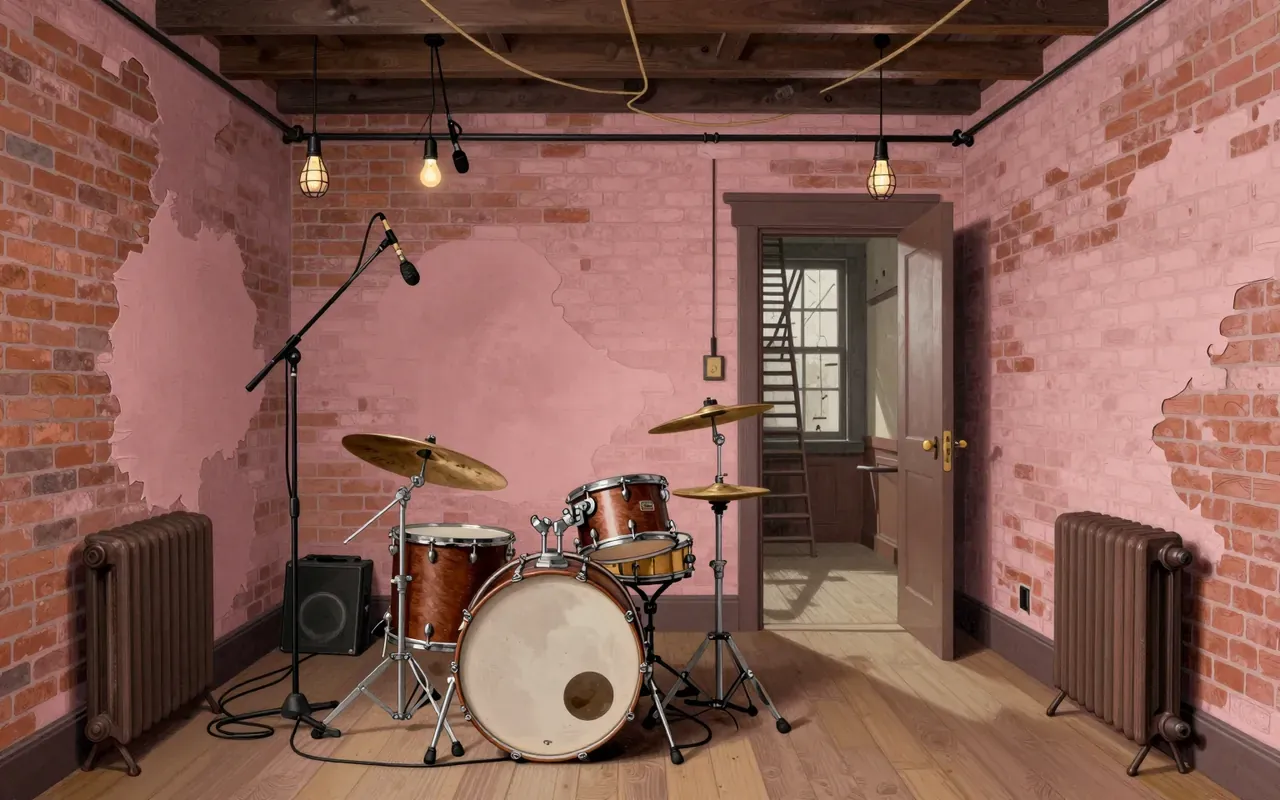
Is This It is a document of live-take discipline, recorded fast and lean in a basement studio with no embellishment. Its sound comes from where it was made, how many tracks were used, and who was in the room — not from myth, influence, or ambition beyond that room.

7:58

Pink Flag

Wire · 1977

Pink Flag is Wire’s debut album. Released 25 November 1977 via Harvest Records. Recorded September–October 1977 at Advision Studios, London. Produced by Mike Thorne. 21 tracks. Not songs. No easy structure or meter. Minimalism pushed to new heights. Manipulates classic rock forms into brief, intense explosions of attitude and energy.

10:02

The Idler Wheel Is Wiser Than the Driver of the Screw and Whipping Cords Will Serve You More Than Ropes Will Ever Do

Fiona Apple · 2012

The Idler Wheel Is Wiser Than the Driver of the Screw and Whipping Cords Will Serve You More Than Ropes Will Ever Do is Fiona Apple’s fourth studio album, released 19 June 2012. It was recorded secretly between 2008 and 2012 without Epic Records’ knowledge, co-produced by Apple and drummer Charley Drayton, and defined by sparse, physically engaged arrangements — featuring timpani, celeste, kora, autoharp, bouzouki, marimba, truck stomping, thighs, pillow, and 'voice of pain'. It received critical acclaim, peaked at number three on the Billboard 200, and was nominated for Best Alternative Album at the 2013 Grammys.

9:16

xx

The xx · 2009

The xx’s 'xx' is a document of constraint: recorded in a converted garage, at night, with two voices, a bass, a drum machine, and one shared microphone. Nothing is added. Nothing is smoothed. It is what fits in the room.

9:24

A Rainbow in Curved Air

Terry Riley · 1969

A Rainbow in Curved Air is a solo studio construction: keyboard and percussion overdubs on the A-side, saxophone drone and tape manipulation on the B-side. Made in 1968 on one of CBS’s first eight-track recorders. It established repetition, delay, and modal layering as core tools for electronic composition — not as texture, but as architecture.

9:33

Akhnaten

Philip Glass · 1987

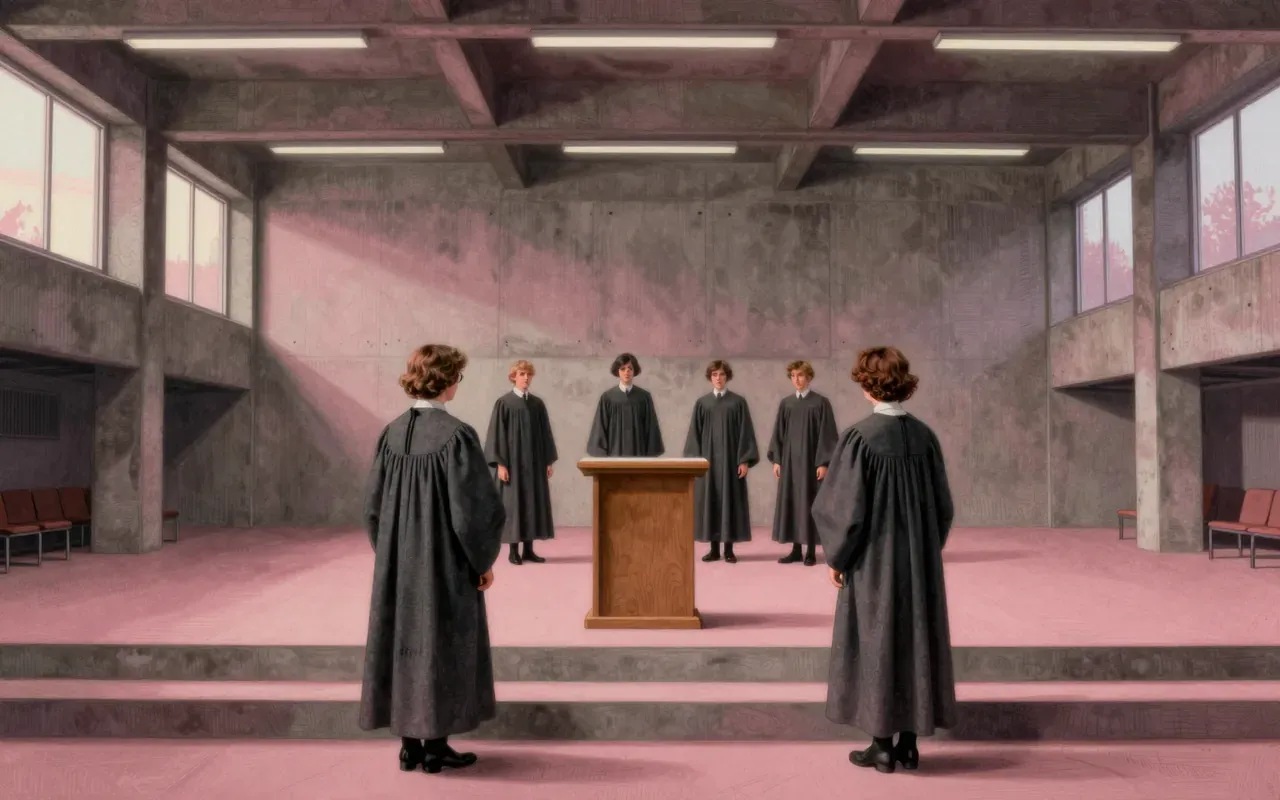
A low, dark opera built by deleting violins — and a Western fantasy dressed as ancient ritual.

9:25

Beats, Rhymes and Life

A Tribe Called Quest · 1996

Beats, Rhymes and Life is a tightly wound, sonically restrained document of a group at breaking point — not a triumph, but a testimony.

10:22

Einstein on the Beach

Philip Glass · 1979

Einstein on the Beach is a 1979 recording of Philip Glass’s 1976 opera—the first of his portrait trilogy—composed in 1975 in Cape Breton, Nova Scotia, in close collaboration with Robert Wilson. It incorporates Parts 1 and 2 of Another Look at Harmony. The 1979 recording features Paul Zukofsky on solo violin.

9:48

I Am Sitting in a Room

Alvin Lucier · 1981

A 1969 acoustic experiment in which Alvin Lucier records himself speaking, then plays that recording back into a room and re-records it — repeatedly — until speech dissolves into the room’s resonant frequencies.

9:04

Koyaanisqatsi

Philip Glass · 1983

The 1983 album of Philip Glass’s score for Koyaanisqatsi is a landmark application of minimalism to film: nine movements built from repetition, brass sustain, choral tonality, and synth-driven ostinatos—performed by the Philip Glass Ensemble and the Western Wind Vocal Ensemble under Michael Riesman. It does not develop themes, resolve harmonically, or prioritise individual expression. It treats musical time as malleable, like the film’s time-lapse and slow motion. It is essential for listeners who treat sound as architecture—not atmosphere.

9:39

Satyagraha

Philip Glass · 1985

Satyagraha is Philip Glass’s 1979 opera, recorded in 1985, based on Gandhi’s early South African years. It uses Sanskrit text, symphony orchestra, chorus, and solo voices to embody the concept of satyagraha — not narrate it. Repetition is its grammar. Resistance is its rhythm. It does not explain. It insists.

13:00

Kind of Blue

Miles Davis · 1959

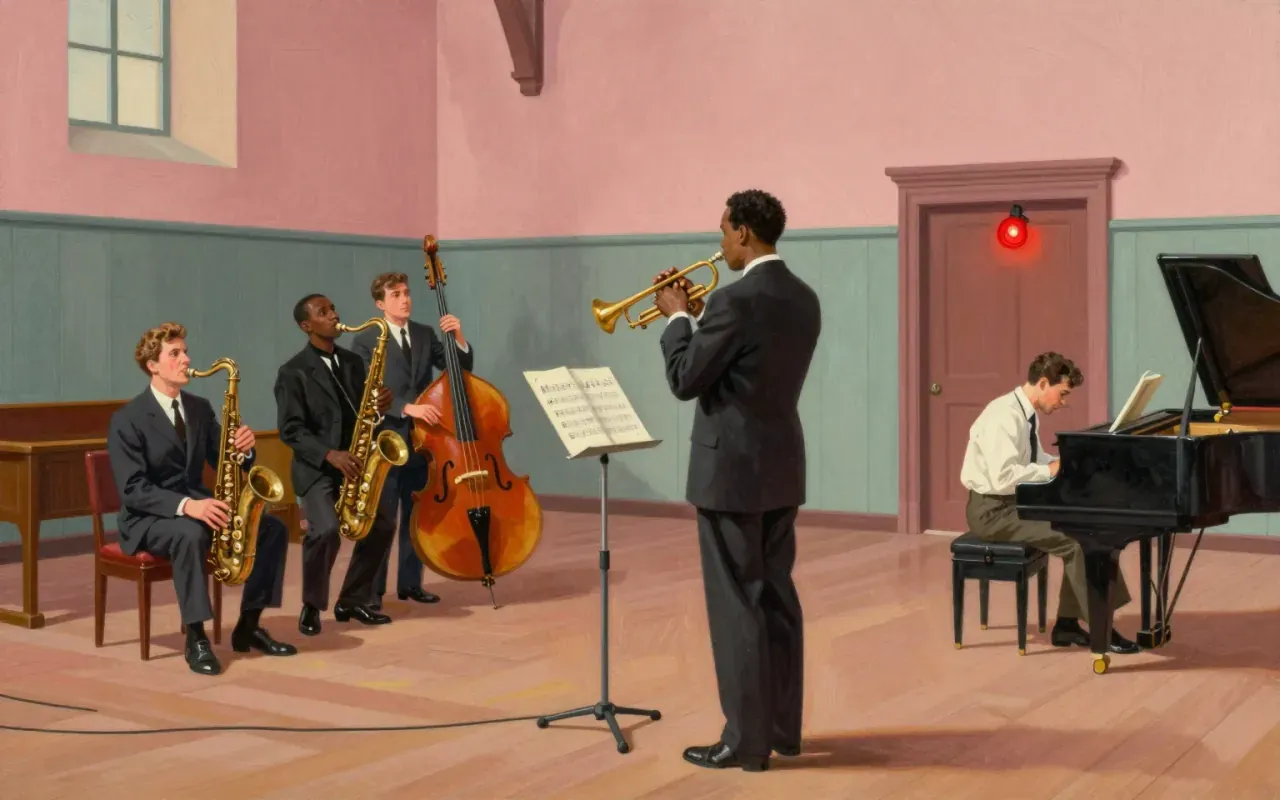
Recorded in two sessions in March and April 1959 at Columbia's 30th Street Studio, Kind of Blue found Miles Davis trading bebop's dense chord changes for loose modal sketches, handed to his sextet with barely any rehearsal. The gamble produced five tracks, from So What to Flamenco Sketches, that have shaped how musicians well outside jazz think about improvisation ever since.

13:00

Trans Europa Express

Kraftwerk · 1977

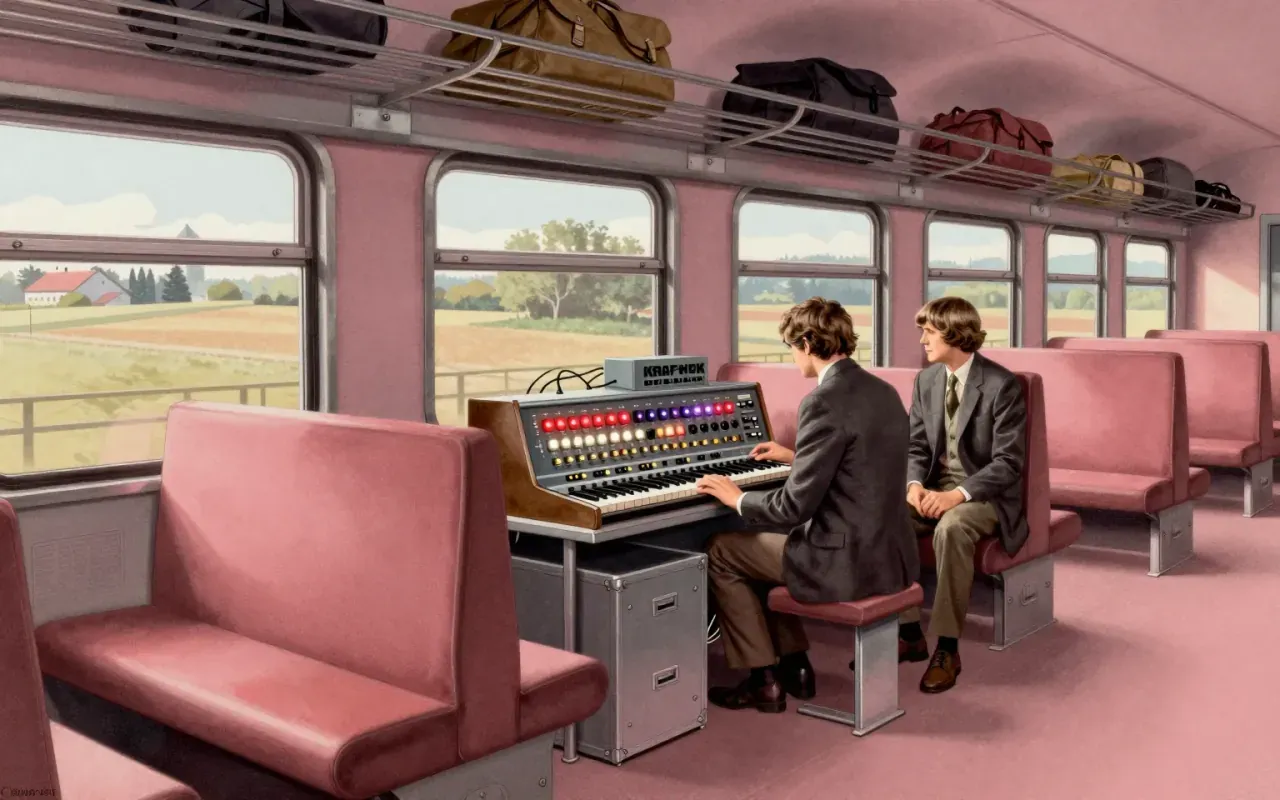
Recorded at the band's own Kling Klang facility in Düsseldorf and finished with sessions in Hamburg and Los Angeles, this sixth Kraftwerk album refines the group's earlier improvised style into tight, sequenced songcraft. Built around a new custom sequencer and versions cut separately in German, English and French, it turns a train service into a symbol for a Europe the band wanted to claim as their own, apart from war-era associations attached to their earlier work.