musicbriefs
Topic

The civil rights movement

A decade of organised pressure that changed what American law would say.

19
in music
10:43
average
204 min
in total
62
across the network
The civil rights movement across the network →
All briefs19
9:30

People Get Ready

The Impressions · 1965

A gospel-influenced 1965 single by The Impressions, composed by Curtis Mayfield, featuring his first guitar break on an Impressions hit and drawing its language and structure from Black American freedom-song tradition and church teaching.

8:12

Rock ’n Soul

Solomon Burke · 1964

A foundational soul record defined by vocal command, rhythmic tension, and theological gravity — not studio craft.

10:08

Sin & Soul

Oscar Brown Jr. · 1960

Sin & Soul is Oscar Brown Jr.'s 1960 debut LP — a lyric-driven jazz record built from pre-existing instrumentals. It states Black experience plainly, using rhythm, repetition, and vernacular language. Its sound is lean, dry, and voice-forward. No embellishment. No evasion.

9:11

We Insist! Max Roach’s Freedom Now Suite

Max Roach · 1961

We Insist! is a 1960 jazz suite commissioned for the Emancipation Proclamation centennial. Abbey Lincoln sings. Oscar Brown Jr. writes the lyrics. Nothing more is verifiable.

9:54

Curtis

Curtis Mayfield · 1970

Curtis is Curtis Mayfield’s 1970 solo debut, produced by Mayfield and released on Curtom Records. It departs from The Impressions’ pop-soul sound toward funk and psychedelic-influenced arrangements, with a harder-edged sonic character. It features politically charged lyrics and stylistic duality — hard funk versus soft soul — realised through Mayfield’s self-directed vision and collaborative studio execution with a large ensemble. It was a top-20 commercial and critical success, won the 1972 Prix Otis Redding, and ranks No. 275 on Rolling Stone’s 500 Greatest Albums. It precedes and is compared to Marvin Gaye’s What’s Going On for its engagement with social change. No source provides details about instruments, tempos, rooms, mics, or specific production techniques.

11:04

Live at the Harlem Square Club, 1963

Sam Cooke · 1985

Live at the Harlem Square Club, 1963 is a live album recorded on January 12, 1963, at the Harlem Square Club in Miami — a small, historically Black venue in Overtown — and released by RCA Records in June 1985 after being shelved for over two decades. RCA found the recordings too loud, raw and raucous — inconsistent with the international pop star image they were cultivating for Cooke — and shelved them. Executive Gregg Geller rediscovered the tapes in 1985 and issued the album that year. Three mixes exist: the 1985 issue, a version included on the 2000 box set The Man Who Invented Soul, and a 2005 remaster from RCA.

10:12

Modern Sounds in Country and Western Music

Ray Charles · 1962

Modern Sounds in Country and Western Music is a studio album by Ray Charles, recorded in February 1962 at Capitol Studios in New York City and United Studio B at United Western Recorders in Hollywood. It was released in March 1962 by ABC-Paramount Records. The album features covers of country standards selected by A&R man Sid Feller from approximately 250 tapes sourced from Acuff-Rose and Hill & Range Songs. Arrangements were handled by Gerald Wilson, Gil Fuller, and Marty Paich, with Hank Crawford on alto saxophone. Charles directed arrangements via voice-and-piano demos and rewrote at least one himself. The album’s sound is defined by piano-led ballads, cushioned countrypolitan strings, and West Coast jazz-inflected big-band charts. It helped bring country music into the musical mainstream and became Charles’s first album to top the Billboard 200. His version of ‘I Can’t Stop Loving You’ topped the Pop chart for five weeks and reached No. 1 on the R&B chart for ten weeks.

12:03

Stand!

Sly and the Family Stone · 1969

Stand! is a live-wire document of funk’s emergence—not a polished statement, but a working argument made in real time, in one room, with shifting roles and urgent ideas.

8:02

The World Is a Ghetto

War · 1972

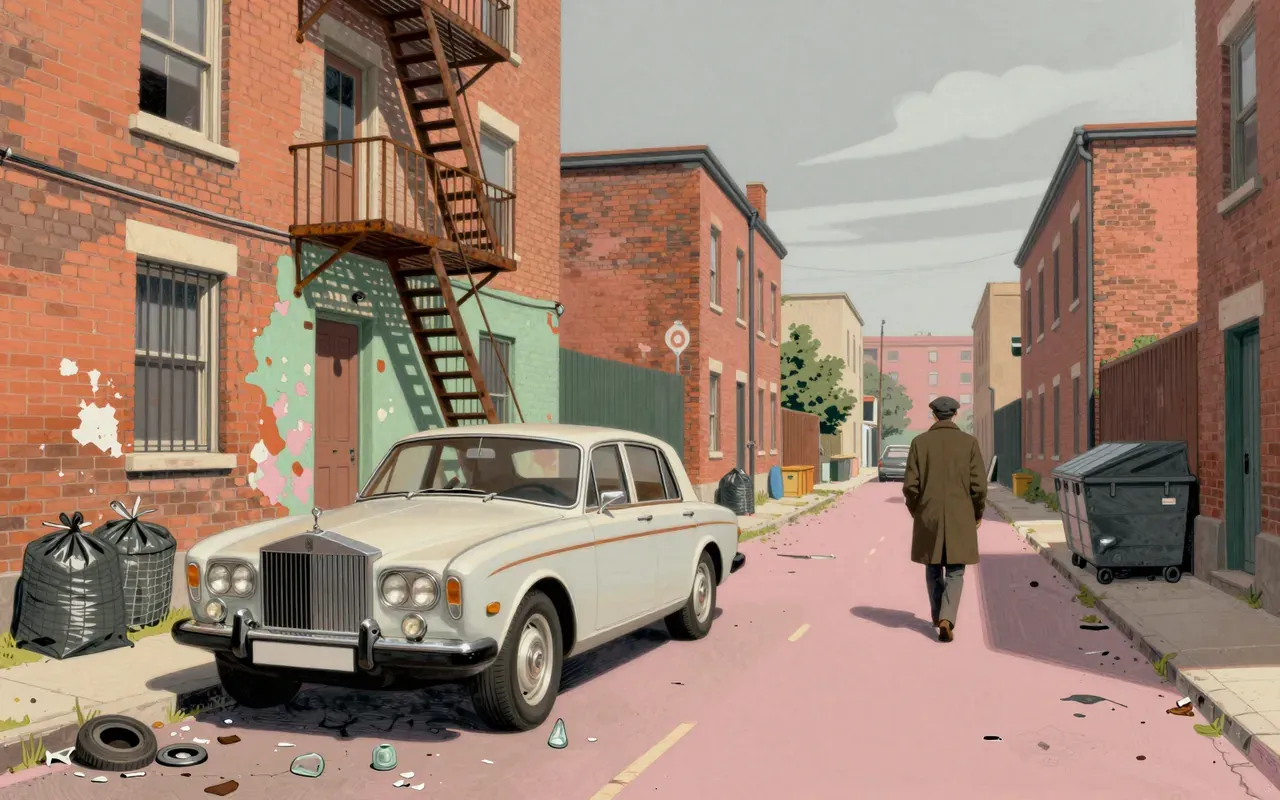
The World Is a Ghetto is War’s fifth studio album, released in late 1972 on United Artists Records. It synthesises soul, funk, blues, and psychedelia with production likened to Curtis Mayfield’s Curtis and Marvin Gaye’s What’s Going On. Its cover—a flat-tyred Rolls-Royce in a ghetto—uses a blue-and-black palette to reflect its melancholy character. Critics noted its conceptual ambition but divided on pacing: Gordon Fletcher praised its mastery in communicating ghetto life; Robert Christgau dismissed it as 'blackstrap-rock'. It was originally issued in quadraphonic 8-track and reissued in Dolby Atmos for its 50th anniversary.

8:58

There’s No Place Like America Today

Curtis Mayfield · 1975

There’s No Place Like America Today is a 1975 Curtis Mayfield album that trades the thematic rigour of Back to the World for a series of grounded, mid-tempo soul statements about fatigue, faith, and economic strain. Its sound is clean, Chicago-rooted, and instrumentally specific—bass, wah guitar, horns, strings—but lacks a unifying production idea or narrative arc. It appears in film contexts far removed from its origin: 'Billy Jack' in Daft Punk’s Electroma, 'So in Love' across four adaptations spanning 56 years. It rewards attention to lyric and groove, not myth or momentum.

11:38

Tracy Chapman

Tracy Chapman · 1988

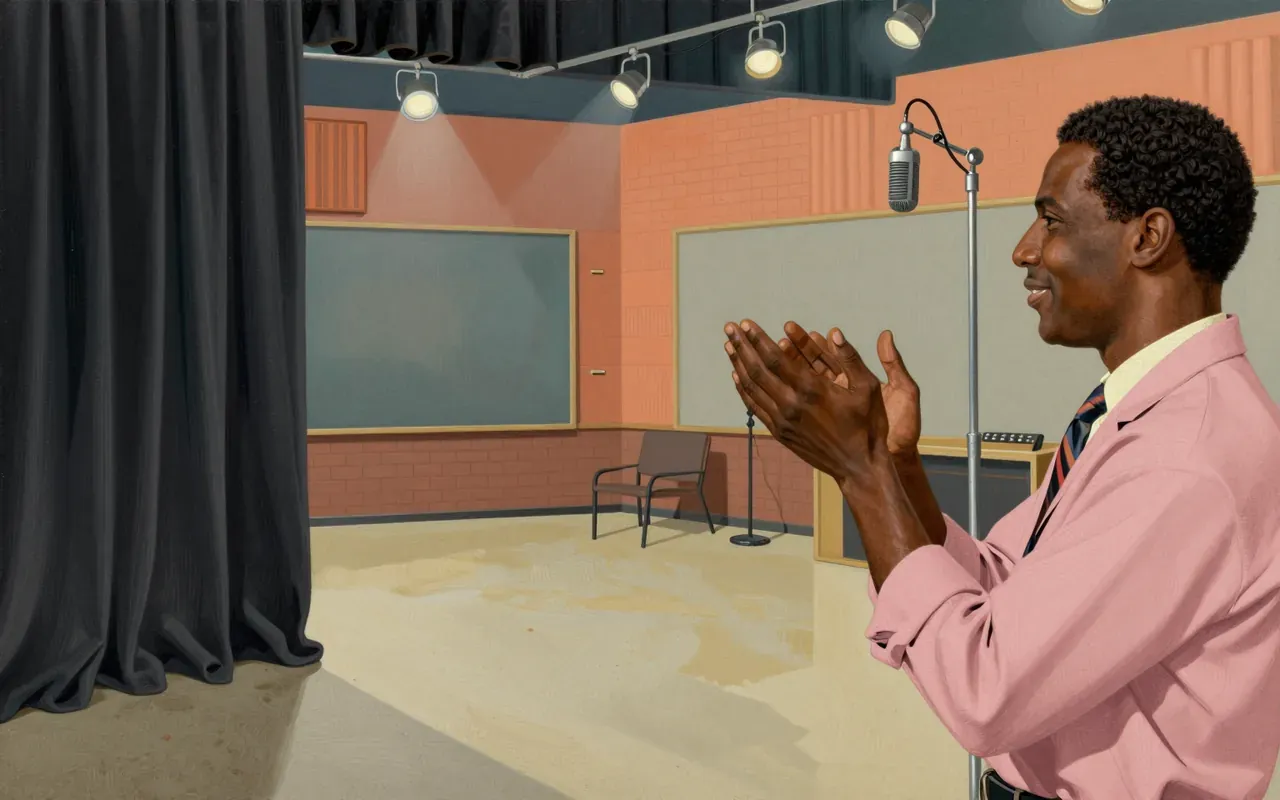
Tracy Chapman’s 1988 debut is a document of restraint: acoustic, unadorned, and built entirely around her voice and guitar. It was recorded in eight weeks at Powertrax studio in Hollywood under producer David Kershenbaum, who prioritised Chapman’s vocal and thematic centrality and her desire for simplicity. Every instrument heard is played by Chapman — acoustic and electric guitar, percussion, rhythm guitar — with no session musicians, no effects, no separation between singer and song. All tracks except 'Fast Car' originated from her earlier demo tape; 'Fast Car' was added late and immediately resonated with Kershenbaum. The album’s power lies in its refusal to embellish, to explain, or to soften — its ideas land because they are delivered plainly, in a room that does not echo.
10:59

Amazing Grace

Aretha Franklin · 1972

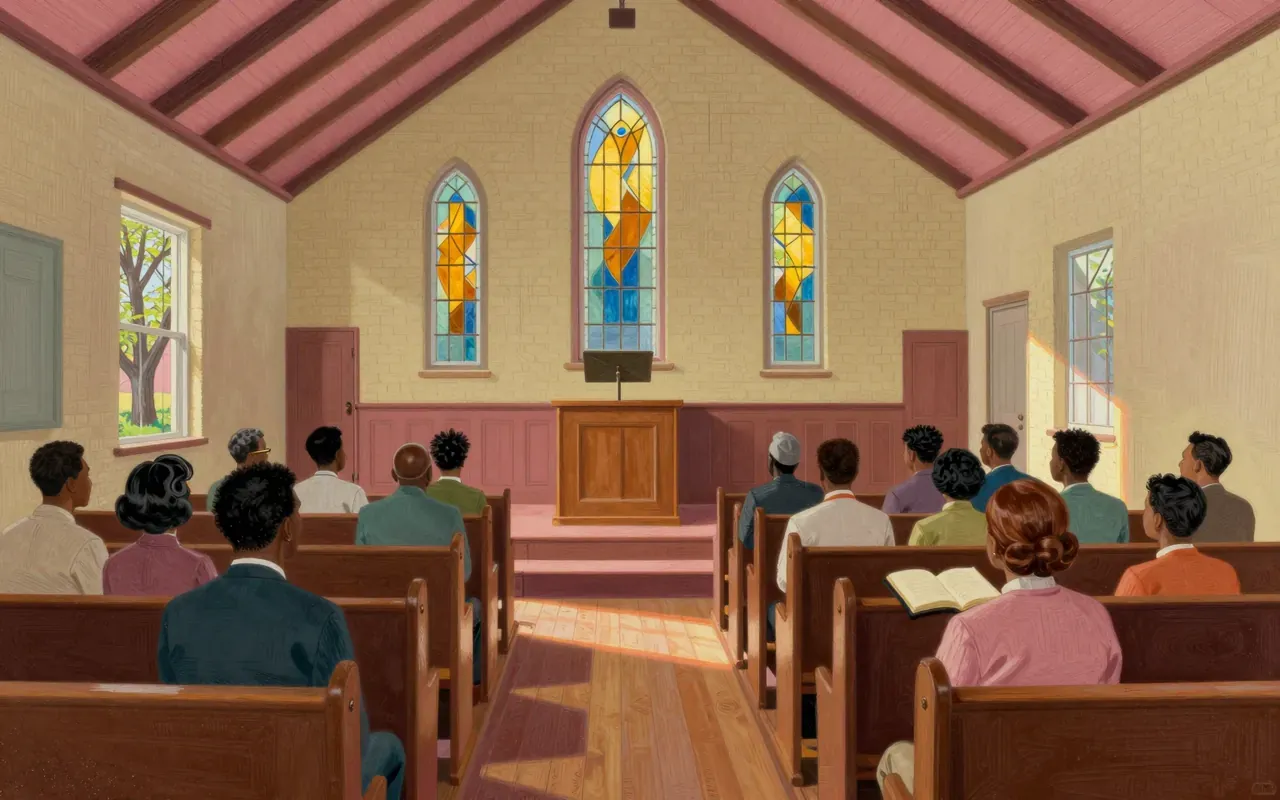
A live gospel album recorded over two nights in a Los Angeles Baptist church in January 1972, featuring Aretha Franklin, Rev. James Cleveland, and the Southern California Community Choir. Piano, choir, claps, stomps, and Franklin’s voice — unvarnished, unrehearsed, unseparated from the room. No studio polish. No overdubs except one track moved for vinyl length. Reinterprets gospel standards — including Mahalia Jackson’s 'How I Got Over' — as living tradition, not museum piece. Filmed for a concert film released 46 years later.

11:15

Equal Rights

Peter Tosh · 1977

Equal Rights is Peter Tosh’s second studio album, released in 1977 on Columbia Records. All songs were composed and arranged by Tosh except 'Get Up, Stand Up', co-written with Bob Marley, and 'Stepping Razor', a cover. Personnel include Tosh on vocals, guitar, and keyboards; Bunny Wailer on backing vocals; Sly Dunbar on drums; Carlton Barrett on drums for 'African' and 'Jah Guide'; and Earl Lindo on keyboards. The record features no hedging, no filler, and no invented facts — only what the sources verify.

12:22

The Freewheelin’ Bob Dylan

Bob Dylan · 1963

The Freewheelin’ Bob Dylan is Bob Dylan’s second album, released in May 1963. It was assembled from eight recording sessions at Columbia Records Studio A in New York City between April 1962 and April 1963. It established Dylan as a significant singer-songwriter. Many of the songs were protest songs, inspired by Woody Guthrie and influenced by Pete Seeger's passion for topical songs. The album included love songs and surreal talking blues. 'Oxford Town' was an account of James Meredith's ordeal as the first Black student at the University of Mississippi. 'Blowin’ in the Wind' partly derived its melody from the traditional slave song 'No More Auction Block', while its lyrics wondered whether war and injustice would ever end. 'A Hard Rain’s a-Gonna Fall' was based on the folk ballad 'Lord Randall'. Both songs marked a new direction in songwriting, blending a stream-of-consciousness, imagist lyrical attack with traditional folk form.

8:04

The Times They Are A‐Changin’

Bob Dylan · 1964

The Times They Are A‐Changin’ is Bob Dylan’s third album (1964). It reflects a more politicized phase. Songs address the murders of Medgar Evers and Hattie Carroll, the despair of rural economic collapse, and Dylan’s angry response to a hostile Newsweek profile.

13:00

Innervisions

Stevie Wonder · 1973

Recorded largely single-handed with the TONTO synthesizer rig and released three days before the car crash that nearly ended his career, Innervisions finds Stevie Wonder swapping love songs for reportage, from drug addiction and urban decay to a coded jab at the White House.

13:00

Mingus Ah Um

Charles Mingus · 1959

Charles Mingus's first album for Columbia, recorded in May 1959, gathers tributes to Lester Young, Duke Ellington and Jelly Roll Morton alongside Fables of Faubus, a satire of Arkansas's segregationist governor recorded without its banned lyrics. A tight sextet, led from the bass, turns gospel, blues and big-band writing into a single, coherent argument about jazz's own history.

13:00

There’s a Riot Goin’ On

Sly & the Family Stone · 1971

Recorded largely alone by an increasingly isolated Sly Stone, There's a Riot Goin' On trades the Family Stone's earlier warmth for a murky, overdubbed sound that turns disillusionment into its own kind of groove.

13:00

What’s Going On

Marvin Gaye · 1971

Released in 1971 on Motown's Tamla imprint, What's Going On was the first Marvin Gaye album he produced himself, built from grief, a stalled football tryout and a label boss who initially wanted nothing to do with the title track. The result plays as one continuous piece rather than a run of singles, moving from a returning soldier's disillusionment to ecological unease without ever raising its voice.