musicbriefs
Topic

Identity

Who someone is taken to be, and who gets a say.

24
in music
11:49
average
283 min
in total
138
across the network
Identity across the network →
All briefs24
10:54

Born This Way

Lady Gaga · 2011

Born This Way is Lady Gaga’s second studio album, released on May 23, 2011. It explores electronic rock and techno-pop. It debuted at number one on the Billboard 200 with 1.1 million first-week US sales. Its title track sold over one million copies on iTunes in five days.
9:34

Germfree Adolescents

X‐Ray Spex · 1978

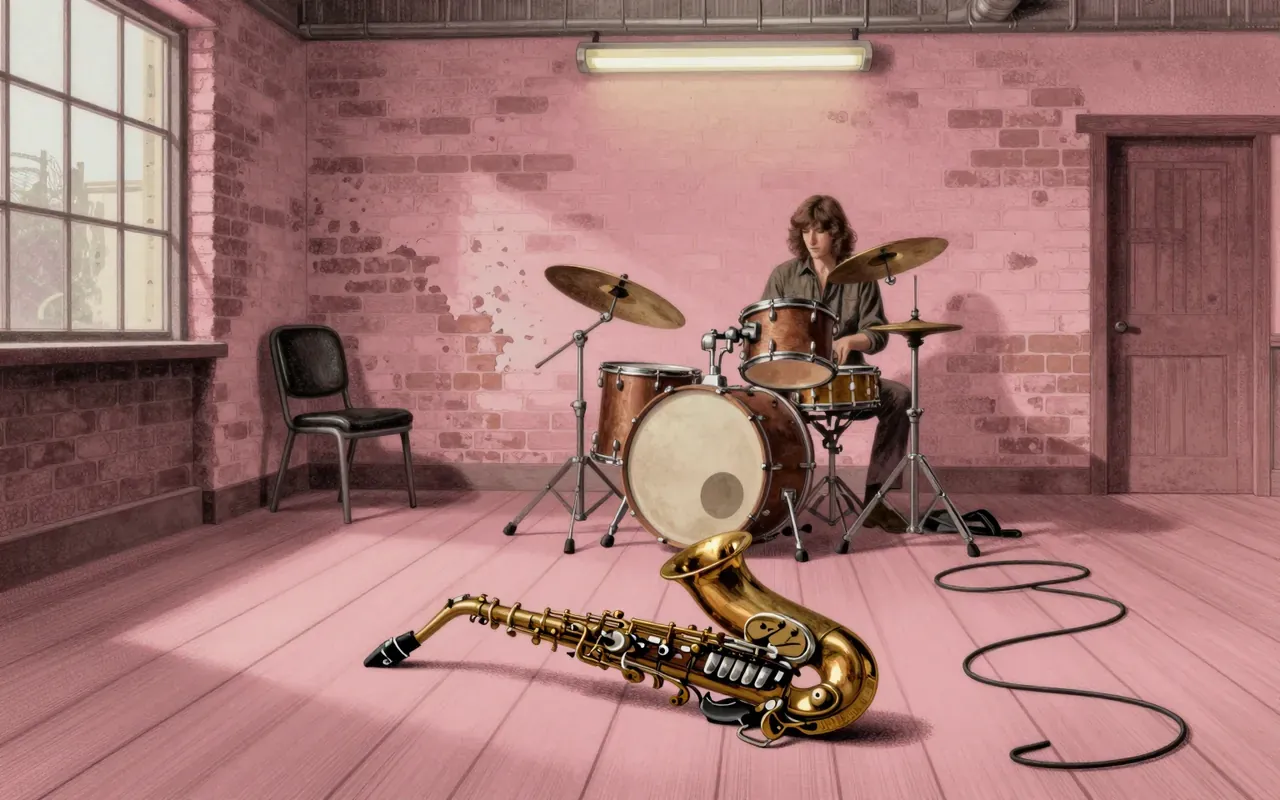
Germfree Adolescents is X-Ray Spex’s 1978 debut album. All twelve tracks were written by Poly Styrene. Five had previously appeared on singles’ A-sides or B-sides. The core band was Poly Styrene (vocals), Jak Airport (guitar), Paul Dean (bass), Rudi Thomson (saxophone), and B.P. Hurding (drums). Rudi Thomson played saxophone on the album.

11:02

How Will the Wolf Survive?

Los Lobos · 1984

How Will the Wolf Survive? is Los Lobos’s major label debut (October 1984), composed informally at Louie Pérez’s brother-in-law’s home, drawing lyrical inspiration from a National Geographic article about survival and identity; musically, it fuses Mexican traditions with R&B, country, and blues, and centres immigrant experience in songs like 'A Matter of Time' and 'Will the Wolf Survive?'.

8:34

I Am a Bird Now

Antony and the Johnsons · 2005

A record built around voice and string arrangement — sparse, deliberate, unadorned. No filler. No myth. Just what was played, who played it, and what the material says it means.

10:34

A Seat at the Table

Solange · 2016

A Seat at the Table is Solange’s third studio album. Writing began in 2008. Recording spanned 2013 to June 2016 across Long Island, New Orleans, New Iberia and Los Angeles. It was released 30 September 2016. Its sound comes from hour-long improvised tracks built around bass and synth lines, later structured in Louisiana and finished in LA with Raphael Saadiq and Troy Johnson. 'Cranes in the Sky' originated from a 2008 Saadiq instrumental — drums, strings and bass only. Master P narrated interludes drawn from real conversations. Themes include identity, empowerment, grief, healing, rage and self-care. All lyrics were paired with images in a digital art book.

9:04

ANTI

Rihanna · 2016

ANTI is Rihanna’s eighth studio album, released exclusively on Tidal on January 28, 2016, after her departure from Def Jam to Roc Nation. It is eclectic by design, blending pop, dancehall, psychedelic soul, lo-fi beats, soul, and trap — shaped by creative struggles and emotional turmoil — and it became her second number-one album on the Billboard 200.

8:47

Arular

M.I.A. · 2005

Arular is a debut shaped by constraint: one machine, one room, one voice. Its power lies in what it excludes — space, polish, convention — not what it adds.

10:24

Whatever People Say I Am, That’s What I’m Not

Arctic Monkeys · 2005

A first-person document of Sheffield nightlife, recorded at Chapel Studios in Lincolnshire in January 2006 with Jim Abbiss producing. Every track uses observational, first-person narrative. Four tracks examine nightclub behaviour. Three draw from real Sheffield locations and figures: bouncers, taxi queues, and sex workers near the band’s Neepsend practice space. Genre blend includes indie rock, garage rock, post-punk revival, punk rock, alternative rock, and post-Britpop. Title quotes Alan Sillitoe’s Saturday Night and Sunday Morning and reflects loss of control over public perception.

9:34

The Cool

Lupe Fiasco · 2007

The Cool is a narrative-concentrated hip-hop record, anchored in loss and executed with structural rigour—not sonic novelty.

13:00

Autobahn

Kraftwerk · 1974

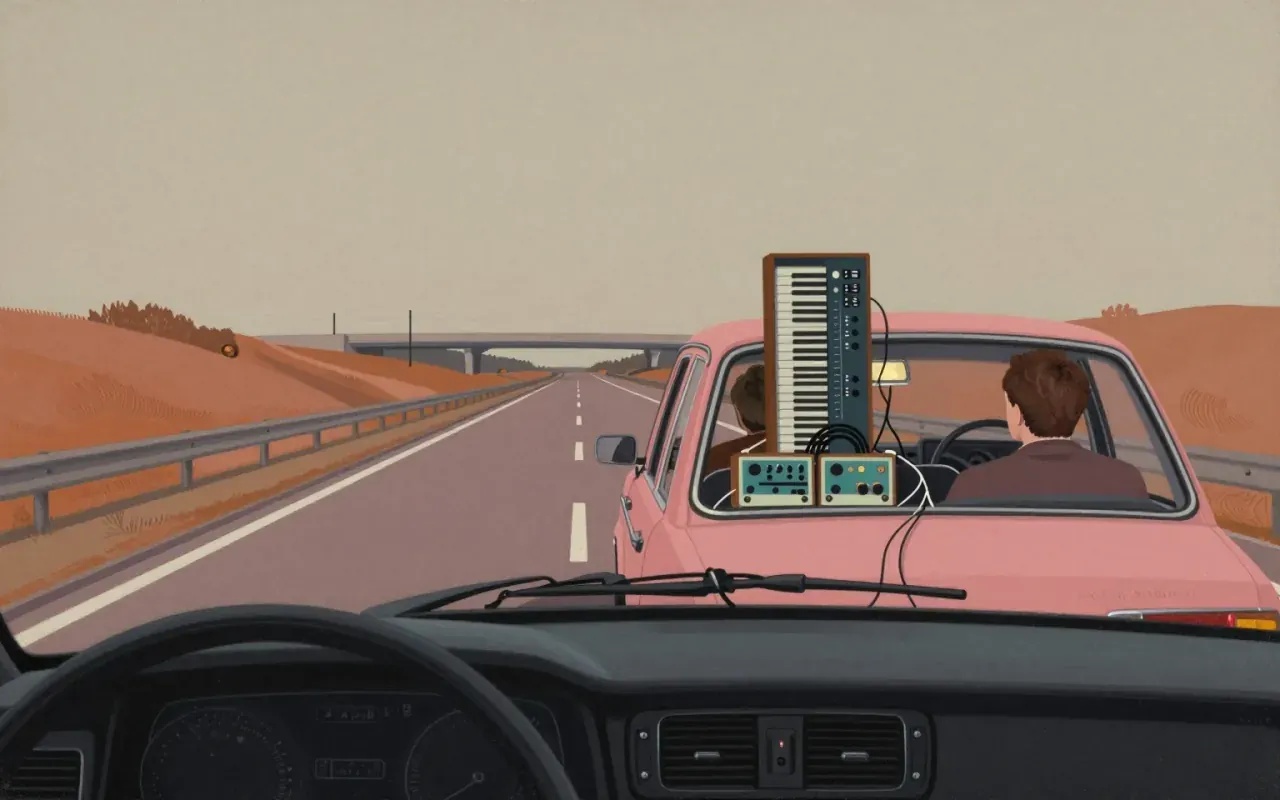
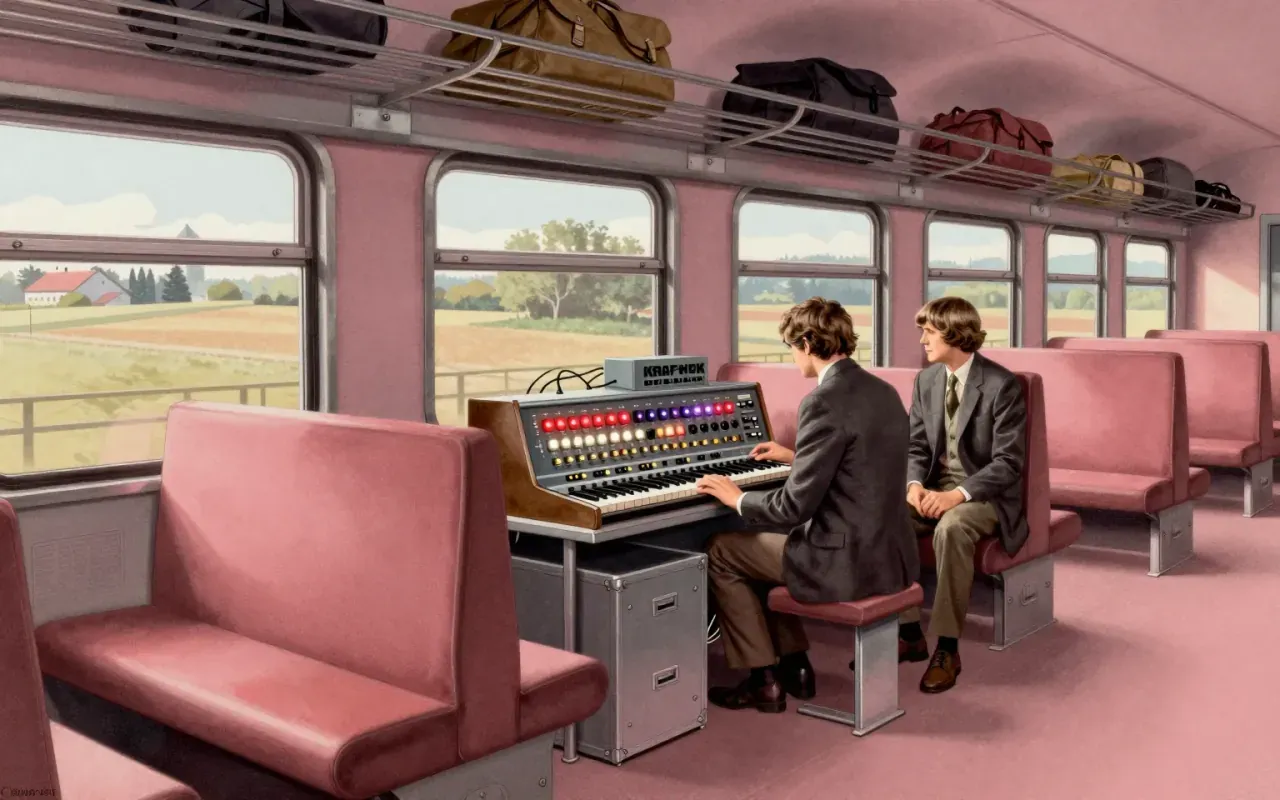
Kraftwerk's fourth album, cut partly at their own Kling Klang studio and mostly at Conny Plank's countryside facility outside Cologne, marks the point where the group traded free improvisation for synthesiser-and-drum-machine pop. The side-long title piece, built to mimic the sound and feeling of a motorway journey, became an unlikely American hit and set the template the band refined for the rest of the decade.

13:00

Computerwelt

Kraftwerk · 1981

Kraftwerk's eighth album, built at the band's own Düsseldorf studio and released in 1981 in matching German and English editions, imagines home computers, pocket calculators and digital surveillance years before most listeners had encountered any of them. Made without a single piece of computer technology, it went on to shape early hip-hop, electro and dance production far beyond its own modest chart run.

13:00

Die Mensch·Maschine

Kraftwerk · 1978

Recorded entirely at the band's own Kling Klang studio in Düsseldorf and released in 1978, this seventh Kraftwerk album pares the group's mechanical style down further and points it toward the dance floor. Six tracks address the Cold War, industrial manufacturing and the growing closeness between people and machines, wrapped in artwork built on Russian avant-garde design, and it left a direct mark on the synth-pop and new wave that followed.

13:00

Head Over Heels

Cocteau Twins · 1983

Head over Heels is the second Cocteau Twins album, released on 4AD in October 1983 after bassist Will Heggie left the band. Written quickly by Robin Guthrie and Elizabeth Fraser as a two-piece, it replaced the religious imagery of their debut with love songs built from reverberated guitar and increasingly wordless vocals, and it now stands as an early landmark of dream pop.

13:00

Hunky Dory

David Bowie · 1971

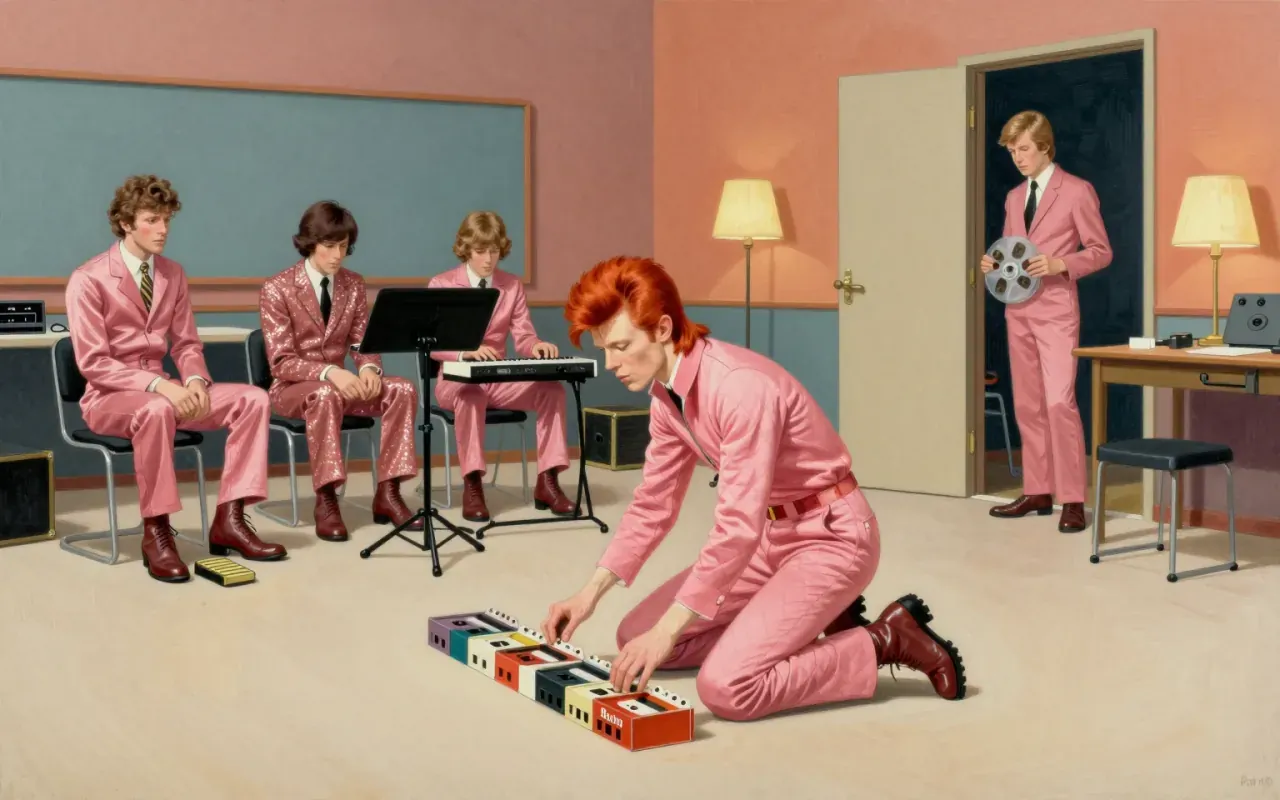
Made after his backing band and management both fell away, Hunky Dory finds David Bowie composing on piano for the first time, tipping between domestic tenderness and grand artistic reinvention across eleven songs recorded at Trident Studios.

13:00

Maggot Brain

Funkadelic · 1971

Recorded just before its original lineup scattered, Maggot Brain pairs Eddie Hazel's ten-minute unscripted guitar solo with tighter songs about unity and dread, closing out Funkadelic's founding chapter on its own terms.

13:00

Maxinquaye

Tricky · 1995

Tricky's debut, made after leaving Massive Attack, pairs his low, rapped vocals with Martina Topley-Bird's softer delivery over samples reworked past recognition through dub-influenced production. Recorded largely at his own home studio in 1994, the album explores intimacy, drug culture and the private grief of his mother's death beneath its hazy, downbeat surface.

13:00

Moondance

Van Morrison · 1970

Moondance is Van Morrison's third studio album, recorded at A&R Studios in New York in 1969 with Morrison producing for the first time in his career. Trading the loose, extended pieces of Astral Weeks for tighter songs built around a horn section, it became an immediate commercial and critical success and gave Morrison the sound he would be known for.

13:00

Rumours

Fleetwood Mac · 1977

Rumours is the eleventh Fleetwood Mac album, made in 1976 at the Record Plant in Sausalito while the band's two couples were separating and drug use ran unchecked through the sessions. Produced by the band with Ken Caillat and Richard Dashut, it became one of the best-selling albums ever made and remains the group's defining statement.

13:00

Sign “☮︎” the Times

Prince · 1987

Stripped from an abandoned triple album down to a still-vast double, Sign o' the Times finds Prince alone in the studio job-lot of genres — funk, gospel, electro, rock — sung partly through a pitched-up alter ego and driven by a house-bound cluster of drum machines and samplers.

13:00

Station to Station

David Bowie · 1976

David Bowie's tenth album, cut at Cherokee Studios in late 1975 while he shot a film and lived on a diet of peppers and cocaine, sets the funk band from Young Americans against a new, mechanical pulse borrowed from German records. The result is the hinge between his LA period and the trilogy that followed.

13:00

Talking Heads: 77

Talking Heads · 1977

Talking Heads: 77 was recorded at Sundragon and Mediasound in New York across late 1976 and early 1977, with the newly complete four-piece working around a producer they found condescending by tracking vocals when he left the room. The result carries the tight, wiry sound of a band still finding its footing, built on a set of songs about restlessness, routine and getting a grip on your own life.

13:00

The Modern Lovers

The Modern Lovers · 1976

Recorded piecemeal between 1971 and 1972 by a teenage Jonathan Richman's band, with John Cale producing half the tracks, The Modern Lovers only became an album in 1976, patched together from abandoned label sessions into a record its own maker no longer fully claimed.

13:00

The Rise and Fall of Ziggy Stardust and the Spiders From Mars

David Bowie · 1972

Recorded fast at Trident Studios with Mick Ronson's guitar doing much of the heavy lifting, Ziggy Stardust turns a loosely stitched science-fiction plot into cover for songwriting about sex, stardom and ruin that the early-seventies charts would not otherwise have carried under Bowie's own name.

13:00

Trans Europa Express

Kraftwerk · 1977

Recorded at the band's own Kling Klang facility in Düsseldorf and finished with sessions in Hamburg and Los Angeles, this sixth Kraftwerk album refines the group's earlier improvised style into tight, sequenced songcraft. Built around a new custom sequencer and versions cut separately in German, English and French, it turns a train service into a symbol for a Europe the band wanted to claim as their own, apart from war-era associations attached to their earlier work.