musicbriefs
Longest first

All briefs

1188 briefs · 11103 min · 97–192 on page 2 of 13
13:00

There’s a Riot Goin’ On

Sly & the Family Stone · 1971

Recorded largely alone by an increasingly isolated Sly Stone, There's a Riot Goin' On trades the Family Stone's earlier warmth for a murky, overdubbed sound that turns disillusionment into its own kind of groove.

13:00

Time Out

The Dave Brubeck Quartet · 1959

Recorded in 1959 at Columbia's 30th Street Studio, Time Out grew out of Dave Brubeck's overseas tours for the State Department, where he heard rhythms outside the usual pulse of American jazz. The Dave Brubeck Quartet built seven tracks around metres like nine-eight and five-four, including Take Five, composed by saxophonist Paul Desmond almost as an afterthought, which went on to outsell every jazz single before it.

13:00

Timeless

John Abercrombie · 1975

John Abercrombie's 1975 debut as a leader pairs him with organist and synthesist Jan Hammer and drummer Jack DeJohnette for a quiet, conversational take on fusion, cut over two days for ECM. It is patient rather than showy, and its reputation has grown slowly on the strength of the interplay between three musicians clearly listening to each other.

13:00

Trans Europa Express

Kraftwerk · 1977

Recorded at the band's own Kling Klang facility in Düsseldorf and finished with sessions in Hamburg and Los Angeles, this sixth Kraftwerk album refines the group's earlier improvised style into tight, sequenced songcraft. Built around a new custom sequencer and versions cut separately in German, English and French, it turns a train service into a symbol for a Europe the band wanted to claim as their own, apart from war-era associations attached to their earlier work.

13:00

Unknown Pleasures

Joy Division · 1979

Unknown Pleasures is the 1979 debut from Joy Division, made at Strawberry Studios in Stockport with producer Martin Hannett and released on Tony Wilson's Factory label. Ian Curtis, Peter Hook, Bernard Sumner and Stephen Morris arrived with a harder live set; Hannett rebuilt it around delay units, tape echo and studio noise borrowed from the building itself. The band's own verdict on the result was divided for years. It sold no singles at all and still became one of the most cited records in British rock.

13:00

Untrue

Burial · 2007

Made alone with the software Sound Forge rather than a studio, Untrue pulls apart vocal samples and phone recordings into androgynous, half-familiar fragments set over skipping garage-inflected beats. It turned a London producer's private, late-night working method into one of the more significant electronic records of its decade.

13:00

What’s Going On

Marvin Gaye · 1971

Released in 1971 on Motown's Tamla imprint, What's Going On was the first Marvin Gaye album he produced himself, built from grief, a stalled football tryout and a label boss who initially wanted nothing to do with the title track. The result plays as one continuous piece rather than a run of singles, moving from a returning soldier's disillusionment to ecological unease without ever raising its voice.

13:00

Wish You Were Here

Pink Floyd · 1975

Pink Floyd's ninth album wraps an attack on the music business around a long tribute to former member Syd Barrett, and was shadowed by his own unannounced, unrecognisable appearance in the studio while the band mixed the very song written for him.

13:00

Yellow Magic Orchestra

Yellow Magic Orchestra · 1978

Yellow Magic Orchestra's 1978 debut turned a mocking cover of a 1959 exotica tune into a synth-pop landmark, built almost entirely on a Roland Microcomposer and a rack of early synthesizers. Playful, cool and stranger than its chart success suggests, it is now heard less as a novelty than as an ancestor of electro, techno and much of the sampling culture that followed.

13:00

Yeti

Amon Düül II · 1970

Recorded soon after splitting from the wider Amon Düül commune, Yeti pairs song-shaped tracks like Archangels Thunderbird with side-long improvised pieces, letting discipline and openness sit next to each other unresolved across a double LP whose cover mourns a crew member's death.

12:58

War

U2 · 1983

U2's War is a studio document of ideological hardening. It trades echo for impact, doubt for declaration, and intimacy for broadcast. Every production choice serves the message — not the mood.

12:57

Ten

Pearl Jam · 1991

Ten is a studio-built rock record anchored by Gossard and Ament’s riffs, Parashar’s layered production, and Vedder’s heavy baritone. Its power lies in compression, repetition, and unresolved tension — not virtuosity, variation, or vulnerability. It sounds like a band assembling itself in real time, not playing together.

12:53

Teen Dream

Beach House · 2010

Teen Dream is Beach House’s third studio album, released January 26, 2010, through Sub Pop. It was recorded over three weeks in July 2009 at Dreamland Studios in Hurley, New York. Beach House produced and arranged it with Chris Coady as co-producer. They used mostly the same instruments as Devotion but significantly reduced reverb. The album includes a re-recorded version of their 2008 single "Used to Be" and the lead single "Norway", written on a train in Norway in 2008.

12:50

New Boots and Panties!!

Ian Dury · 1977

New Boots and Panties!! is Ian Dury’s 1977 debut solo album on Stiff Records. It was written nearly a year earlier at Oval Mansions in Kennington, in partnership with Chas Jankel, and co-written on some tracks with Steve Nugent. It followed Dury’s August 1977 Stiff debut single ‘Sex & Drugs & Rock & Roll’. It was recorded in mid-1977: demo tapes in April at Alvic Studios in Wimbledon, final tracking one week later at the Workhouse Studio. Blackhill Management funded the £4,000 budget.

12:46

Actually

Pet Shop Boys · 1987

Actually is a synth-pop record made in short, rotating sessions at Sarm and Advision Studios. It uses Fairlight programming instead of orchestras. Producers included Julian Mendelsohn, Stephen Hague, and Andy Richards. Lyrics reference Thatcherism, AIDS, and pop songs including 'Tainted Love'. 'King’s Cross' unintentionally foreshadowed the November 1987 fire. It was Pet Shop Boys’ second album, released in September 1987.

12:45

Bat Out of Hell

Meat Loaf · 1977

A maximalist, theatrically conceived rock record built from layered studio craft, not live-band chemistry. Its power lies in its refusal to simplify — in its arrangements, its narratives, its production. It is not subtle. It is not concise. It is not meant to be.

12:45

Mott

Mott the Hoople · 1973

Mott is a tightly wound, rhythm-forward rock record that trades the theatricality of All the Young Dudes for leaner, grittier execution. Its strength lies in instrumental clarity and forward momentum — not in grand statements or sonic expansion.

12:44

Help!

The Beatles · 1965

A studio pivot, not a stylistic peak. Lennon leads, McCartney expands. Flutes, strings, tape loops, and overdubs replace live-band urgency. The first Beatles record where the studio is the co-writer.

12:42

Waterloo

ABBA (Björn, Benny, Agnetha & Frida) · 1974

Waterloo is ABBA’s first album under that name — recorded in Stockholm between September and November 1973. It introduces their signature blend of crisp vocal harmony, theatrical lyricism and tightly arranged pop. Its strength lies in consistency of craft, not innovation. Its weakness is uneven ambition — especially on 'King Kong Song'.

12:40

The Number of the Beast

Iron Maiden · 1982

The Number of the Beast is Iron Maiden’s third studio album, released in 1982. It marks Bruce Dickinson’s debut and Clive Burr’s final appearance. Adrian Smith and Clive Burr contributed songwriting for the first time. Steve Harris adapted his writing specifically for Dickinson’s voice. Recorded in five weeks at Battery Studios. Five songs had been performed live before recording. Only 'The Number of the Beast' and 'Gangland' were newly written after the 1981 tour. The title track opens with a spoken passage from Revelation. The album sparked US controversy over religious imagery but was defended by the band as metaphorical and narrative-driven. It became Iron Maiden’s first UK number 1 album and has sold nearly 20 million copies worldwide.

12:39

Happy Sad

Tim Buckley · 1969

Happy Sad is Tim Buckley’s 1969 third album, recorded at Elektra Sound Recorders in Los Angeles and produced by Zal Yanovsky and Jerry Yester. It reflects folk and jazz influences, features David Friedman’s vibraphone as a defining textural element, and marks Buckley’s first full solo lyric writing after ending his collaboration with Larry Beckett. Its songs are significantly longer than his earlier work, and its vocals are stylized — used as an instrument for the first time. Though it reached No. 81 — Buckley’s commercial peak — it is neither a folk-rock consolidation nor a full avant-garde departure, but a liminal record where structure loosens and sound gains autonomy.

12:37

Barrio fino

Daddy Yankee · 2004

Barrio fino is reggaeton’s first major export strategy — rhythm-locked, studio-sourced, and genre-flexible where it counts.

12:30

AM

Arctic Monkeys · 2013

AM is Arctic Monkeys’ fifth studio album, released 9 September 2013. It marks their first venture into a hip hop-influenced sound, achieved by recording bass and drums first, using unconventional drum setups, and incorporating new instruments including the Hohner Guitaret, celeste, and vintage drum machine. It was produced by James Ford and co-produced by Ross Orton at Sage & Sound Recording in Los Angeles and Rancho De La Luna in Joshua Tree, California. Thematically, it concerns frustration surrounding tainted romance, sex and loneliness. Guest appearances include Josh Homme, Pete Thomas, and Bill Ryder-Jones—with Homme’s contribution to 'Knee Socks' singled out by Alex Turner as his favourite moment on the record. Turner described the sound as 'like a Dr. Dre beat, but we've given it an Ike Turner bowl-cut and sent it galloping across the desert on a Stratocaster', and said 'Arabella' expresses the album’s two dominant styles—hip-hop beats and 1970s heavy rock—most effectively in one track.

12:28

Out of Time

R.E.M. · 1991

Out of Time is R.E.M.’s seventh studio album, recorded mid-1990 after a year-long break, released in March 1991. It marked their commercial breakthrough and stylistic pivot—away from Green’s guitar-driven rock, toward country, folk, pop, and classical textures, built on mandolin, organ, and acoustic guitar from the start.

12:26

Boston

Boston · 1976

Boston’s 1976 debut is a meticulously layered, basement-born illusion — every harmony doubled, every guitar part composed and re-recorded, every session engineered to hide its origin. It sounds like control made audible.

12:22

Speakerboxxx / The Love Below

OutKast · 2003

A double album released 23 September 2003 after two years of work. It comprises Big Boi’s Speakerboxxx and André 3000’s The Love Below — two solo projects packaged as one OutKast release under pressure from Arista Records, which rejected separate releases.

12:22

The Freewheelin’ Bob Dylan

Bob Dylan · 1963

The Freewheelin’ Bob Dylan is Bob Dylan’s second album, released in May 1963. It was assembled from eight recording sessions at Columbia Records Studio A in New York City between April 1962 and April 1963. It established Dylan as a significant singer-songwriter. Many of the songs were protest songs, inspired by Woody Guthrie and influenced by Pete Seeger's passion for topical songs. The album included love songs and surreal talking blues. 'Oxford Town' was an account of James Meredith's ordeal as the first Black student at the University of Mississippi. 'Blowin’ in the Wind' partly derived its melody from the traditional slave song 'No More Auction Block', while its lyrics wondered whether war and injustice would ever end. 'A Hard Rain’s a-Gonna Fall' was based on the folk ballad 'Lord Randall'. Both songs marked a new direction in songwriting, blending a stream-of-consciousness, imagist lyrical attack with traditional folk form.

12:20

Morrison Hotel

The Doors · 1970

Morrison Hotel is The Doors’ fifth studio album, recorded November 1969–January 1970 at Elektra Sound Recorders in Los Angeles. It marks a return to blues rock after The Soft Parade, with Jim Morrison writing or co-writing every track. Structured as two sides — 'Hard Rock Café' and 'Morrison Hotel' — it features session bassists Lonnie Mack and Ray Neapolitan, and key production choices including Ray Manzarek’s switch to tack piano on 'Roadhouse Blues', John Sebastian’s harmonica overdub (credited as G. Puglese), and Robby Krieger’s distorted G5 guitar hook on 'Peace Frog'. Morrison drew lyrics for 'Peace Frog' from his 'Abortion Stories' notebook, repeating 'blood' as a motif — possibly referencing national unrest. The album lands strongest on its opening trio — 'Roadhouse Blues', 'Waiting for the Sun', and 'You Make Me Real' — then loosens its grip. It is not a unified statement, but a working-out: bass-heavy, texturally specific, lyrically fragmented, and sonically grounded in the room where it was cut.

12:19

Talking Book

Stevie Wonder · 1972

A keyboard-led pivot from Motown’s strings to synthesised soul—tight, live, and decisive.

12:19

Raising Hell

Run‐D.M.C. · 1986

Raising Hell is hip-hop’s first platinum album—and its first declaration of creative sovereignty. It sounds like command, not compromise.

12:18

Elvis Presley

Elvis Presley · 1956

Elvis Presley’s 1956 debut is not a collection of songs. It is a recalibration. Guitar replaces piano in the R&B covers. Five Sun tracks sit alongside seven RCA recordings—not as past and future, but as equal parts of a single argument. It was the first rock and roll album to top Billboard—and held that spot for ten weeks. No hedging. No filler. Just sound, structure, and consequence.

12:18

Meet The Beatles!

The Beatles · 1964

Meet the Beatles! is a commercially urgent, sonically direct US debut album — not a UK album repackaged. It foregrounds three current singles, omits five covers from With the Beatles, and uses duophonic stereo where real stereo masters were unavailable. Every instrument and voice belongs to the four Beatles, recorded live in a dry, intimate room. It is pop as propulsion — not nostalgia, not artifice, not myth.

12:15

The Madcap Laughs

Syd Barrett · 1970

The Madcap Laughs is not a relic. It is a document of real-time collapse and recalibration — made in Studio 3 at EMI, with acoustic guitar, dry room, and no safety net.

12:14

Criminal Minded

Boogie Down Productions · 1987

Criminal Minded is a sonic and sociocultural threshold — not a polished statement, but a live wire pulled from the South Bronx.

12:14

Illadelph Halflife

The Roots · 1996

Illadelph Halflife is the Roots’ third studio album, released 24 September 1996 on DGC and Geffen Records. It features a tougher and broader sound than Do You Want More?!!!??! (1995), integrating programmed drums and guest contributions from R&B musicians including Amel Larrieux and D'Angelo, and jazz musicians including David Murray, Steve Coleman, Cassandra Wilson, and Graham Haynes. Its production is grimy and haunting, shaped by Wu-Tang Clan and RZA’s influence, and replete with samples from old jazz and classical music. The multi-track tapes used to mix the album were destroyed in a 2008 fire at the Universal Studios back lot, though the original 1996 master tape remains unaffected. It was the group’s first album to break the Top 40 on the Billboard 200 chart. ‘What They Do’ was their first single to reach the Top 40 (No. 34); ‘Clones’ was their first to reach the top five on the rap charts. Scott Storch left the band and was replaced by Kamal Gray. Collaborators included Common, D'Angelo, and Q-Tip — foundational to the Soulquarians and the neo-soul association.

12:12

Bon Iver, Bon Iver

Bon Iver · 2011

Bon Iver, Bon Iver is a 10-track album released June 17, 2011. Recorded at April Base Studios — a remodeled veterinarian clinic in Fall Creek, Wisconsin, built mainly over a defunct swimming pool — it marks an ambitious musical departure from the debut. Each song represents a place. Justin Vernon built the record himself but brought in bass saxophonist Colin Stetson and pedal-steel guitarist Greg Leisz to shift his role as author. 'Perth', begun in early 2008, opens the album as a Civil War-sounding heavy metal song. 'Minnesota, WI' features finger-picked guitars, double bass drums, and distorted bass saxophone. 'Holocene' reflects on geological epochs and human scale. 'Beth/Rest' is horn-heavy and cited by Vernon as his proudest track.

12:12

Let England Shake

PJ Harvey · 2011

Let England Shake is a stark, live-recorded war record made in a Dorset church. It uses autoharp, saxophone, and sparse guitar. Its voice is narratorial, not expressive. Its subject is England’s violence — past and present — treated with precision, not symbolism. It won the 2011 Mercury Prize. It demands attention, not devotion.

12:12

Post

Björk · 1995

Post is Björk’s 1995 second studio album, conceived after her move to London and reflecting the city’s multicultural, club-driven energy. It features an eclectic fusion of electronic and organic elements, achieved through collaboration with co-producers Nellee Hooper, Graham Massey, Tricky, and Howie B. Recording began at Compass Point Studios in Nassau, where Björk integrated the natural environment — recording vocals in the ocean at sunset and inside a cave — and continued in London with intensive post-production. Tracks like 'Army of Me' and 'The Modern Things' were written earlier with Massey but withheld from Debut for their raw, brutal energy. The album balances synthetic textures with acoustic instrumentation — strings, brass, saxophone, trumpet, percussion — to achieve a dynamic, genre-defying cohesion rooted in lived experience and collaborative ethos.

12:12

The Stooges

The Stooges · 1969

The Stooges’ 1969 debut is the first fixed document of their live practice — not a studio creation, but a cut-and-paste trace of feedback, gesture, and object-based noise. Critics rejected it. It sold poorly. Its sound comes from vacuum cleaners, oil drums, and funnels — not from production choices. Its ideas are physical, not compositional. Its value lies in what it reveals about where rock could go before it settled into form.

12:11

More Songs About Buildings and Food

Talking Heads · 1978

More Songs About Buildings and Food is a record built on restraint: eleven songs, no wasted syllables, no unearned textures. It treats funk as geometry, soul as syntax, and rhythm as architecture. It does not ask to be loved — it asks to be inhabited.

12:11

Disintegration

The Cure · 1989

Disintegration is a record built on constraint: dread as discipline, silence as method, keyboards as architecture. It refuses to be either pure goth or pure pop — instead, it holds both in tension, using 'Lovesong' and 'Pictures of You' not as palate cleansers but as structural counterweights. Its sound is defined by what is layered (keyboards), what is slowed (guitar), and what is withheld (Tolhurst’s presence, Smith’s speech). Nothing here is ambient. Everything is placed.

12:10

Justified

Justin Timberlake · 2002

Justified is a focused, rhythm-first R&B record built in six weeks across four US studios. Its sound is defined by Neptunes’ clavichord-emulating synths, propulsive drum vamps, and live-in-the-moment arrangements inspired by Earth, Wind & Fire and Michael Jackson. It avoids contemporary clichés, foregrounds groove over gloss, and treats R&B as lineage—not trend. It lands where it commits: to feel, to reference, to physicality. It does not reach for conceptual scale or lyrical abstraction. It is worth your time if you listen to records as rooms, not résumés.

12:10

Original Pirate Material

The Streets · 2002

A solitary, resourceful act of creation in a Brixton bedroom — no studio, no band, no analogue gear — that redefined British hip-hop by grounding it in place, process, and vernacular truth.

12:10

Young, Gifted and Black

Aretha Franklin · 1972

A tightly constructed studio statement from Franklin’s commercial and creative peak — rooted in Miami, built by Wexler/Dowd/Mardin, anchored by originals and reframed covers.

12:04

In the Aeroplane Over the Sea

Neutral Milk Hotel · 1998

In the Aeroplane Over the Sea is Neutral Milk Hotel’s 1998 sophomore album, recorded July–September 1997 at Pet Sounds Studio in Denver under producer Robert Schneider. Its sound is defined by Mangum’s plugged-in acoustic guitar—recorded via Neumann U 87 microphones—and shaped by heavy compression, tube pre-amp proximity, and cassette saturation applied to every instrument. Musicians were isolated in separate rooms; electric guitar was rejected for failing to capture Mangum’s timbre. The quartet lineup enabled layered arrangements incorporating singing saw and uilleann pipes. Lyrical themes draw from Anne Frank’s diary but resist linear narrative. Initial sales were modest and reviews mixed, yet its production rigour and instrumental palette mark it as the band’s most fully realised work at release.

12:04

Pata Pata

Miriam Makeba · 1967

A commercially successful but artistically marginal record — shaped by US production, English narration, and Makeba’s own ambivalence.

12:03

Stand!

Sly and the Family Stone · 1969

Stand! is a live-wire document of funk’s emergence—not a polished statement, but a working argument made in real time, in one room, with shifting roles and urgent ideas.

12:03

Straight Outta Compton

N.W.A · 1988

N.W.A’s Straight Outta Compton (1988) is a low-budget, high-impact declaration of intent — recorded in six weeks at Audio Achievements Studio in Torrance, California, for $12,000, using TR-808 beats, sampled horns and vocals, and razor-sharp writing by Ice Cube, MC Ren, and The D.O.C. Its sound is sparse, confrontational, and unvarnished. Its ideas are local, immediate, and uncompromising. Its legacy begins not with acclaim, but with backlash — and a warning label.

12:02

The Animals

The Animals · 1964

The Animals’ 1964 debut is a focused, unadorned R&B document — twelve covers, dominated by Alan Price’s organ, recorded before their breakout and before any major personnel or production shifts.

12:02

Kick Out the Jams

MC5 · 1969

Kick Out the Jams is MC5’s debut live album, recorded over two nights at Detroit’s Grande Ballroom in October 1968 and released in February 1969. It is raw, in-your-face, savage and raging. Bruce Botnick engineered it. Jac Holzman and Botnick knew MC5 were at their best playing for a receptive audience. The band used no studio overdubs or edits — just five players captured in the room: Wayne Kramer on lead guitar and vocals for 'Ramblin' Rose', Fred 'Sonic' Smith on rhythm guitar, Michael Davis on bass, Dennis Thompson on drums, Rob Tyner on lead vocals. It contains politically explicit material: 'Motor City Is Burning' references the Detroit riots of 1967 and praises the Black Panthers. 'Starship' is co-credited to Sun Ra because its lyrics borrow from one of his poems. John Sinclair’s liner notes are inflammatory. It does not offer studio polish, instrumental nuance, or vocal control. It does not separate instruments in the mix. It does not mute the title track’s expletive in the original release. The title track lands as a full-throated, room-filling call to action. 'Rocket Reducer No. 62' lands as a proto-punk anthem with repetitive, driving force. 'Motor City Is Burning' lands as an extended, politically charged cover. 'Starship' lands as a spaced-out, lyrically borrowed piece. Yes — if you want to hear what unmediated live rock energy sounded like before production smoothed it out. No — if you need separation, clarity, or restraint.
12:01

Buffalo Springfield

Buffalo Springfield · 1966

A rushed, mono-and-stereo debut cut across two Hollywood studios in summer 1966—produced by managers with no recording experience, rejected by the band as sonically inert, and released against their wishes to hit Christmas. Its best moments are tightly written, vocally distinct, and rhythmically grounded—but its flaws are structural, not stylistic.

12:01

You Forgot It in People

Broken Social Scene · 2002

You Forgot It in People is a record built on refusal: to simplify, to centralise, to master. It is neither cohesive nor chaotic — it is densely occupied. Its value lies in how it forces attention to move laterally, not hierarchically.

12:01

Deeper Than Rap

Rick Ross · 2009

Deeper Than Rap is a 2009 hip-hop album defined by its use of soul and jazz-funk samples, its assertions of status and authority, and its unresolved tension between autobiography and fabrication.

12:00

Madman Across the Water

Elton John · 1971

Madman Across the Water is Elton John’s first progressive rock album — a studio-built pivot using session players, Paul Buckmaster’s strings, and Davey Johnstone’s guitar. Only one track features his touring band. It was written alongside the 1971 film Friends. ‘Tiny Dancer’ and ‘Levon’ were hits. The title track was re-recorded after an earlier version with Mick Ronson was shelved. It was the last album fully recorded at London’s Trident Studios.

11:59

This Is Happening

LCD Soundsystem · 2010

This Is Happening is documented solely as a chronologically situated artifact — not as a musical work with internal qualities.

11:58

Odessa

Bee Gees · 1969

Odessa is the Bee Gees’ 1969 double album — their only one of original material — conceived as a concept about a fictional ship lost in 1899. Recording spanned July to November 1968. Vince Melouney left after eight tracks. Robin Gibb departed mid-1969 over the single choice ('First of May' vs. 'Lamplight'). Bill Shepherd added orchestral arrangements and three instrumentals after the band’s final session. Critics later hailed it as their finest 1960s work for its stylistic range: progressive rock, country-inflected songs, and string-laced ballads. It remains a document of fracture — artistic, interpersonal, structural.

11:57

White Light/White Heat

The Velvet Underground · 1968

White Light/White Heat is a record built on overload: Vox gear, distortion pedals, leakage, compression, and refusal to adapt to studio limits. It lands as noise, narrative, and nihilist energy—and fails anywhere it tries to breathe, resolve, or clarify. It is foundational not because it is 'great', but because it treats limitation as licence.

11:55

Sweetheart of the Rodeo

The Byrds · 1968

A deliberate, unadorned country record — recorded fast in Nashville and Hollywood, using documented session players and documented repertoire. It establishes country rock as a category, not a mood. It sounds like what it is: a studio document of genre allegiance.

11:54

Every Picture Tells a Story

Rod Stewart · 1971

Every Picture Tells a Story is Rod Stewart’s third studio album, released 28 May 1971. It blends folk, rock, and blues. It features all five Faces members—Ronnie Wood and Ian McLagan most prominently—and guest players including Ray Jackson (mandolin) and Pete Sears (piano on all but one track). It was Stewart’s first number-one album in the UK and US.

11:53

Led Zeppelin III

Led Zeppelin · 1970

Led Zeppelin III is a 1970 album written at Bron-Yr-Aur, a remote Welsh cottage, and recorded mostly at Headley Grange using the Rolling Stones Mobile Studio. It is Led Zeppelin’s deliberate pivot toward folk and acoustic music — their first full reckoning with space, silence, and stringed texture.

11:53

Pieces of the Sky

Emmylou Harris · 1975

Pieces of the Sky is Emmylou Harris’s 1975 major-label debut — her second studio album, but the one that launched her career. Produced by Brian Ahern, it features her voice as the central, unadorned instrument, backed by acoustic guitar, pedal steel, and bass. Its song selection is eclectic: originals like ‘Boulder to Birmingham’ (written for Gram Parsons), plus covers of Merle Haggard, the Beatles, and Dolly Parton. ‘If I Could Only Win Your Love’ became her first country hit — No. 4 in the US, No. 1 in Canada. The album reached No. 7 on Billboard’s country LPs chart and No. 45 on the Billboard 200. It is certified gold. It established her country rock sound, initiated her long collaboration with Ahern, and laid groundwork for the Hot Band and the Americana genre.

11:53

Rust Never Sleeps

Neil Young · 1979

Rust Never Sleeps is a record about the friction between capture and construction — not a document, but a dossier.

11:51

Chega de saudade

João Gilberto · 1959

João Gilberto’s 1958 'Chega de saudade' single inaugurated bossa nova. It used two microphones — one for voice, one for guitar — to establish equal sonic footing between them. The voice was delivered at conversational volume. The song is 68 measures long: 32 in minor, 36 in parallel major. Elizeth Cardoso recorded it first in 1957; Gilberto’s version became the hit and defined the genre. It was released on 78 rpm at Odeon in August 1958, with arrangements by Antônio Carlos Jobim and participation by Milton Banana.

11:50

Imagine

John Lennon · 1971

A 1971 studio album by John Lennon, recorded across Ascot Sound Studios, EMI Recording Studios, and the Record Plant in New York City. It was Lennon’s second solo studio album after Plastic Ono Band. He made it with Yoko Ono and Phil Spector as co-producers, aiming for major commercial success through a more accessible sound.

11:50

Fear of a Black Planet

Public Enemy · 1990

Fear of a Black Planet is Public Enemy’s third album. Recorded across three New York studios between June and October 1989, it was delayed from late 1989 to April 1990. Produced by The Bomb Squad — Chuck D, Eric 'Vietnam' Sadler, Keith Shocklee, and Hank Shocklee — it expands the dense, sample-layered 'wall of noise' of their prior album. The team used the E-mu SP-1200, Akai S900, and a Macintosh computer. They combed thousands of records for fragments, reconfiguring radio and other media into new contexts. Hank Shocklee described their process as a production assembly line: he approached it from a DJ’s perspective, Sadler from a musician’s. Singles include 'Welcome to the Terrordome', '911 Is a Joke', and 'Fight the Power' — the latter regarded as one of hip-hop’s most influential songs and the theme song of Spike Lee’s Do the Right Thing. The album continued Public Enemy’s politically charged themes and became their most successful release. It was selected for preservation in the National Recording Registry in 2005.

11:50

Finally Famous

Big Sean · 2011

Finally Famous is a technically polished, sample-driven debut that delivers on radio-ready craft but avoids risk or revelation.

11:50

Rust in Peace

Megadeth · 1990

Rust in Peace is Megadeth’s 1990 studio album, recorded at Rumbo Recorders in March 1990. It is the first Megadeth album completed with a producer who wasn’t fired — Mike Clink — though Mustaine later said most of the work was done by himself, Max Norman, and engineer Micajah Ryan.

11:48

Fear of Music

Talking Heads · 1979

Fear of Music was recorded live in two days in Chris Frantz and Tina Weymouth’s Long Island City loft. Brian Eno co-produced and applied electronic treatments after the fact. David Byrne’s lyrics fixate on urban isolation and unnamed dread. The sound merges post-punk rock and funk. The recording environment — raw, wired, untreated — defines the album more than any instrument or melody.
11:48

Sketches of Spain

Miles Davis · 1960

Sketches of Spain is a studio album by Miles Davis and Gil Evans, recorded between November 1959 and March 1960 at Columbia’s 30th Street Studio in New York City. It features arrangements of Spanish classical and folk works—including the adagio from Rodrigo’s Concierto de Aranjuez and 'Will o’ the Wisp' from de Falla’s El amor brujo—as well as Evans originals inspired by Alan Lomax’s 1955 field recordings from Galicia and Andalusia. Davis performed on flugelhorn and trumpet. The album marks Davis’s first collaboration with producer Teo Macero. It was critically acclaimed despite recording challenges: classical musicians struggled with improvisation; jazz musicians with complex notation. It won the 1961 Grammy for Best Jazz Composition of More Than Five Minutes Duration.

11:48

British Steel

Judas Priest · 1980

British Steel is where heavy metal became legible — not through myth or volume, but through repetition, physical sound-making, and radio discipline.

11:47

Halcyon Digest

Deerhunter · 2010

Halcyon Digest is Deerhunter’s fifth studio album, released 27 September 2010. It was recorded in June 2010 at Chase Park Transduction studios in Athens, Georgia, with engineer David Barbe, by a four-piece band and producer Ben H. Allen. It is the band’s last album featuring bassist Josh Fauver. The final track, 'He Would Have Laughed', was recorded separately by Bradford Cox at Notown Sound in Marietta, Georgia, as a tribute to Jay Reatard. The album artwork, by Atlanta photographer George Mitchell, depicts Dennis Dinion from the 1982 Miss Star Lite Pageant at the Star Lite Lounge on Ponce de Leon Avenue in Atlanta — selected for its immediate connection to the music, especially 'Basement Scene'. It was Deerhunter’s first album distributed solely by 4AD worldwide.

11:46

Monk’s Music

Thelonious Monk Septet · 1957

Monk’s Music is a 1957 Thelonious Monk Septet album recorded in New York City on June 26. It features Coleman Hawkins and John Coltrane — their only recorded collaboration — and marks the sole studio meeting of Hawkins and Art Blakey. It was Riverside’s first Monk album issued in both mono and stereo, using distinct microphone setups resulting in markedly different sonic characteristics between the two versions — particularly reduced bass presence in stereo due to ceiling-suspended mics. 'Abide With Me' is performed by horns only; 'Ruby, My Dear' is a quartet of Monk, Hawkins, Ware, and Blakey; and Monk audibly cues Coltrane’s solo on 'Well, You Needn't'. Every track except 'Abide With Me' is a Monk original, and only 'Crepuscule with Nellie' had not been recorded before.

11:45

A Night at the Village Vanguard

Sonny Rollins · 1957

A Night at the Village Vanguard is a live 1957 Sonny Rollins album recorded on November 3 at the Village Vanguard in New York City. Released by Blue Note in 1958. The first live recording ever made at that venue. Features three sets: one afternoon with Donald Bailey and Pete LaRoca, two evenings with Wilbur Ware and Elvin Jones. Pianoless tenor-bass-drums trio format — pioneering 'strolling'. No studio mediation. No overdubs.

11:45

Live/Dead

The Grateful Dead · 1969

Live/Dead is the Grateful Dead’s 1969 live album, recorded across three concerts at the Avalon Ballroom and Fillmore West. It was the first live rock album to use 16-track recording. Owsley Stanley’s custom microphone splitter fed both PA and tape machine without loss. The band used the album to settle debt from Aoxomoxoa and fulfil their record contract. It captures them 'in-form', preceding their commercial breakthrough with Workingman’s Dead and American Beauty in 1970.

11:44

BLACKsummers’night

Maxwell · 2009

BLACKsummers'night is Maxwell’s fourth studio album and first in eight years. It was recorded between 2007 and 2009 at Chung King Studios, Bowery Digital, and Platinum Sound Recording Studios in New York City. Maxwell and Hod David produced the entire album. It is the first part of a scheduled trilogy. Its music is rooted in soul and features a more straightforward structure than Embrya. The lyrics reflect Maxwell’s romantic experiences during his sabbatical — inspired by a real-life relationship that surprised him.

11:44

The Head on the Door

The Cure · 1985

The Head on the Door is the Cure’s sixth studio album, released in August 1985. It is their first composed entirely by Robert Smith. Simon Gallup returned after absence. Porl Thompson and Boris Williams became official members. It was inspired by Kaleidoscope and Dare. It contains an oriental hook, flamenco guitar, and a reused piano motif. It synthesises optimism and pessimism. Its success was driven by ‘In Between Days’ and ‘Close to Me’.

11:44

Stankonia

OutKast · 2000

Stankonia is OutKast’s fourth album, recorded spring 1999–spring 2000 at their newly owned Stankonia Studios in Atlanta, released October 2000. It began life as Sandbox. It is a hip-hop record built on studio autonomy, guitar-led composition, and deliberate stylistic pivot from their earlier, darker work.

11:43

Loving You

Elvis Presley · 1957

The 'Loving You' soundtrack is Elvis Presley’s first film album, recorded in early 1957 across two studios — Paramount Pictures Scoring Stage and Radio Recorders in Hollywood — with Steve Sholes as first officially credited producer. It contains seven songs written expressly for the film under Presley’s and Parker’s publishing companies, plus five added to meet LP runtime: 'Don’t Leave Me Now' (written for but excluded from the film), '(Let Me Be Your) Teddy Bear' (insisted upon by producer Hal B. Wallis), 'Blueberry Hill' (a 1956 Fats Domino hit), 'True Love' (a Cole Porter song from High Society), and 'I Need You So'. Released in July 1957, it was Presley’s third consecutive number-one album. It inaugurated RCA’s practice of padding Presley soundtracks with non-soundtrack recordings — a pattern that defined his film-era output.

11:43

Bizarre Ride II the Pharcyde

The Pharcyde · 1992

Bizarre Ride II the Pharcyde is a 1992 hip-hop debut by The Pharcyde, recorded in late 1991 at Paramount Recording Studios and then Hollywood Sounds. J-Swift produced 15 of 16 tracks using live instrumentation and samples, with input from JMD on drums and his own piano, bass and rhodes. The group lived communally at the Pharcyde Manor in Inglewood. They avoided profanity, partly at Delicious Vinyl’s urging for radio viability. Internal conflict led J-Swift to exit before completion, recommending L.A. Jay to co-produce the final track. The album is highly acclaimed as an influential alternative hip-hop record.

11:43

Heart Like a Wheel

Linda Ronstadt · 1974

Heart Like a Wheel is a technically exact, commercially dominant country-rock record from 1974. It prioritises vocal clarity, instrumental definition, and radio-ready pacing over mood, risk, or ambiguity. Every sound serves the song’s emotional architecture — nothing more, nothing less.

11:42

Vampire Weekend

Vampire Weekend · 2007

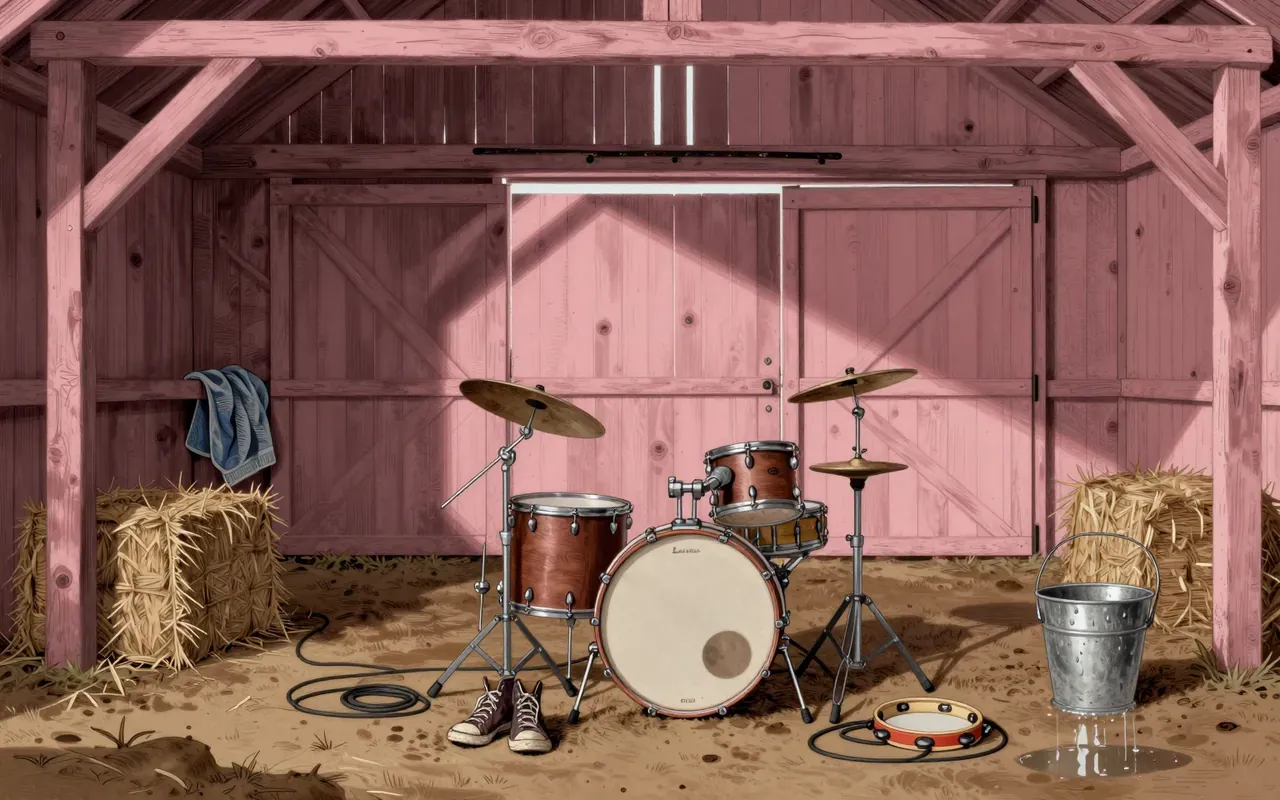
Vampire Weekend (2008) is a self-produced debut recorded across a basement, a barn, two apartments, and Tree Fort studio in Brooklyn — featuring soukous guitar lines, harpsichords, and strings, with 'really echoey drums' from the barn session. It blends indie pop, Afropop, and chamber music under the joke-name 'Upper West Side Soweto'. Released January 29, 2008, it landed with precision, not posture.

11:42

Made in Lagos

Wizkid · 2020

Made in Lagos is Wizkid’s fourth studio album, released 30 October 2020 after postponement from 15 October due to the End SARS protests. It fuses Afrobeats and R&B with mid-tempo production, rich local African percussions as its core, casually Auto-Tuned melodies, and meticulously complex beats. Themes include love, focus, goodwill, gratitude, and grace. It achieved commercial success and critical acclaim, reaching number-one on the Billboard World Albums chart. Its single 'Essence' featuring Tems became the first Nigerian song to chart on the Billboard Hot 100.

11:42

Paranoid

Black Sabbath · 1970

Paranoid is a foundational rock record because it was made fast, live, and without pretence — not because it is ‘timeless’ or ‘iconic’, but because its sound is physically legible: the room, the strings, the drums, the decisions made in under half an hour.

11:40

In Colour

Jamie xx · 2015

In Colour is a meticulously assembled electronic record that treats sampling as archival practice and editing as emotional architecture. Its strength lies in restraint: space, decay, and human imperfection are compositional tools — not accidents to be polished out.

11:40

Unhalfbricking

Fairport Convention · 1969

Unhalfbricking is Fairport Convention’s third studio album and their first 1969 release, marking a pivotal transition from American folk-rock influences toward a British folk-slanted sound. It features traditional English folk songs—including the influential 'A Sailor's Life'—and previously unreleased Bob Dylan material sourced from The Basement Tapes sessions, including 'Percy's Song', 'Million Dollar Bash', and 'Si Tu Dois Partir', the latter adapted with improvised French lyrics during a Middle Earth Club interval. The album was recorded at Sound Techniques and Olympic Studios in London with engineer John Wood, and includes early contributions from Dave Swarbrick on fiddle, notably on 'Cajun Woman', where the band improvised microphone placement using a dismantled telephone. Sandy Denny sang lead on all but one track, following Iain Matthews' departure mid-recording; her composition 'Who Knows Where the Time Goes?' became a signature song and enduring classic. The title originated from the word game Ghost, and the UK sleeve photograph—taken at the Denny family home—was captured shortly before the fatal May 1969 crash that killed drummer Martin Lamble and Jeannie Franklyn, casting the album's release in a context of profound personal and collective reckoning.

11:39

Ogdens’ Nut Gone Flake

Small Faces · 1968

Ogdens’ Nut Gone Flake is a 1968 Small Faces concept album — side one: six eclectic songs; side two: a narrated fairy tale about Happiness Stan. Recorded at Olympic and Trident Studios. Engineered by Glyn Johns. Features wah-wah Hammond organ, strings conducted by David McCallum Senior, and Stanley Unwin’s ‘Unwinese’ narration — developed from the band’s private language observed during sessions. Conceived on the Thames after a disastrous 1968 tour. Packaged in a circular tin mimicking an antique tobacco tin. Reached No. 1 in the UK for six weeks. Performed live in full only once — on BBC’s Colour Me Pop. A studio-bound zenith, both cohesive and unrepeatable.

11:39

White Light Demo's

Gene Clark · 0

A set of demos tethered to White Light—not a reissue, not a reconstruction, but a quiet echo of what came before the album’s quiet arrival.

11:38

Slayed?

Slade · 1972

Slayed? is Slade’s 1972 album — raw, live-sounding, UK number one. It merges glam rock with classic rock. Chas Chandler produced it. Don Powell’s shout stays in. Lyrics come from TV, flights, and bouncers’ stories. It landed hard in the UK and Australia, barely registered in the US.

11:38

30

Adele · 2021

30 is Adele’s fourth studio album, released 19 November 2021. It reached number one in 24 territories and was the best-selling album of 2021 worldwide across multiple chart formats. It marked the first time Columbia Records marketed an Adele album globally. Its lead single, 'Easy on Me', won a Grammy Award in 2023.

11:38

De La Soul Is Dead

De La Soul · 1991

De La Soul Is Dead is a 1991 hip-hop album that rejects its predecessor's image through conceptual rupture, darker humour, and weighty themes—while holding onto playfulness in groove and skit. It is structured around format-specific sequencing, fictional radio framing, and a visual metaphor of death-as-metamorphosis. Its sound is defined by eclectic sampling and rhythmic experimentation—but no instrument, room, or technical detail beyond that is verified.

11:38

Deep Purple in Rock

Deep Purple · 1970

A loud, heavy, collaborative statement — forged in rehearsal rooms and gig halls, captured across London studios, and built to replicate the band’s live assault.

11:38

Tracy Chapman

Tracy Chapman · 1988

Tracy Chapman’s 1988 debut is a document of restraint: acoustic, unadorned, and built entirely around her voice and guitar. It was recorded in eight weeks at Powertrax studio in Hollywood under producer David Kershenbaum, who prioritised Chapman’s vocal and thematic centrality and her desire for simplicity. Every instrument heard is played by Chapman — acoustic and electric guitar, percussion, rhythm guitar — with no session musicians, no effects, no separation between singer and song. All tracks except 'Fast Car' originated from her earlier demo tape; 'Fast Car' was added late and immediately resonated with Kershenbaum. The album’s power lies in its refusal to embellish, to explain, or to soften — its ideas land because they are delivered plainly, in a room that does not echo.