musicbriefs
Shortest first

All briefs

1188 briefs · 11103 min · 1–96 on page 1 of 13
1:52

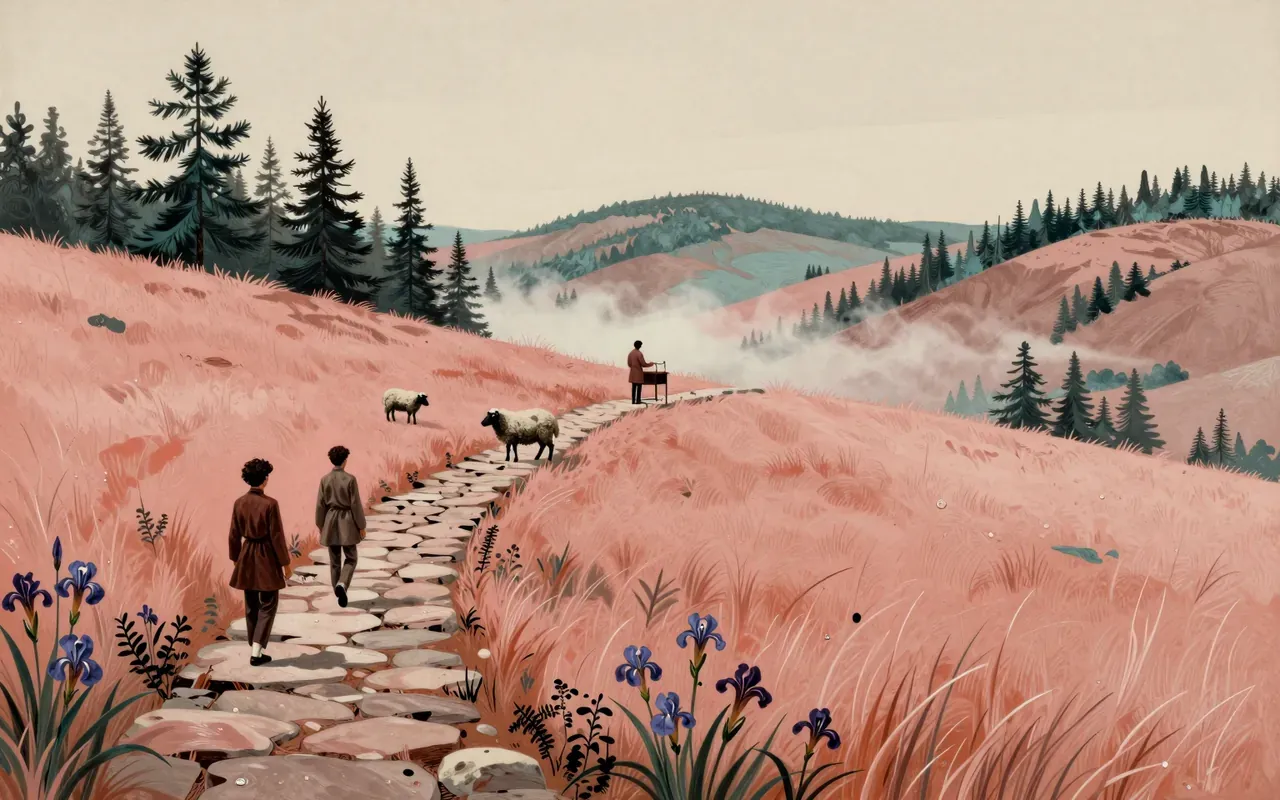
Call of the Valley

Hariprasad Chaurasia, Brij Bhushan Kabra, Shivkumar Sharma · 1968

Call of the Valley brings Hariprasad Chaurasia, Brij Bhushan Kabra and Shivkumar Sharma together in a suite following a Kashmiri shepherd's day. This record uses the 1968 release dating found in the album reference and label-linked digital catalogue; some discographies date it 1967.
1:54

Bongo Rock

Incredible Bongo Band · 1973

Bongo Rock was released in 1973 after Michael Viner's soundtrack work with Perry Botkin Jr. developed into a full album project. The Incredible Bongo Band name describes an assembled studio undertaking. Its later use by DJs gives the recordings another history without replacing the original one.

1:54

Ella and Louis

Ella Fitzgerald, Louis Armstrong · 1956

Ella and Louis was released in 1956, the first of Fitzgerald and Armstrong's three Verve albums together. Norman Granz selected the ballad repertoire and produced the session. Armstrong had the final say over songs and keys, making the partnership a practical arrangement as well as a marquee pairing.

1:55

Miles Ahead

Miles Davis · 1957

Miles Ahead was released in 1957, reuniting Miles Davis with Gil Evans after their earlier nonet work. Producer George Avakian conceived a larger setting that would place Davis prominently in front. The project changes the relationship between soloist and ensemble rather than simply enlarging the usual quintet.

1:55

The Psychedelic Sounds of the 13th Floor Elevators

The 13th Floor Elevators · 1966

The 13th Floor Elevators' 1966 debut announces its psychedelic identity explicitly. It retains garage-rock and R&B foundations while introducing a particularly unusual instrumental presence. The record's strangeness is not a decorative layer added to an otherwise calm performance.

1:55

Take Care

Drake · 2011

Take Care, Drake's second album, appeared in 2011 after he sought a more coherent relationship with longtime collaborator Noah “40” Shebib. Numerous guests contribute, but the production establishes a recognisable environment around the lead performer. Singing becomes more prominent alongside rap.

1:56

James Blake

James Blake · 2011

James Blake's 2011 debut followed three stylistically varied EPs. Much of its material was new, and his own singing became more prominent than in the earlier sample-led work. He also sampled himself, complicating the distinction between a vocal performance and a production element.

1:56

Jazz in Silhouette

Sun Ra and His Arkestra · 1959

Jazz in Silhouette was recorded and released in 1959 during Sun Ra's Chicago period. The session predates the more openly avant-garde work of the following decade. Its date was once disputed, but the original tape box establishes the March 1959 recording.

1:56

John Coltrane and Johnny Hartman

John Coltrane, Johnny Hartman · 1963

John Coltrane and Johnny Hartman was recorded in March 1963 and released that summer by Impulse! Bob Thiele brought the collaboration together. Hartman initially doubted their compatibility, but work on the repertoire with Coltrane and McCoy Tyner established a practical basis for the session.

1:56

Coltrane “Live” at the Village Vanguard

John Coltrane · 1962

This 1962 album selects three performances from Coltrane's November 1961 Village Vanguard engagement. Bob Thiele produced and Rudy Van Gelder recorded the concerts. It is distinct from later Vanguard releases and the larger archive eventually issued from the same run.

1:56

McCartney

Paul McCartney · 1970

McCartney was released in April 1970 during the Beatles' breakup. Much was recorded privately at home on basic equipment, with further work in professional studios. Apart from Linda McCartney's occasional vocals, Paul performed the album alone through overdubbing.

1:56

Night Beat

Sam Cooke · 1963

Night Beat was recorded over three nights in February 1963 and released that August. Sam Cooke worked with a small studio ensemble at RCA in Hollywood. The setting offers a different perspective from the larger arrangements associated with some of his crossover recordings.

1:56

Supreme Clientele

Ghostface Killah · 2000

Supreme Clientele, released in 2000, is Ghostface Killah's second solo album. RZA contributed production and also reworked material from other producers to give the record greater coherence. Wu-Tang associates and other guests remain part of the setting around the lead performer.

1:56

The Wildest!

Louis Prima · 1956

The Wildest! appeared in 1956, featuring Keely Smith, Sam Butera and the Witnesses alongside Louis Prima. Their Las Vegas performing partnership provides the essential context. The record aims to preserve the character of an entertainment act whose voices and musicians function together.

1:57

Blues & Roots

Charles Mingus · 1960

Blues & Roots was recorded in February 1959 and released in 1960. Nesuhi Ertegun encouraged Mingus to foreground the blues after criticism that his music did not swing enough. Mingus accepted the focus while insisting it represented only one part of his musical world.

1:57

The Famous 1938 Carnegie Hall Jazz Concert

Benny Goodman · 1950

Benny Goodman's January 1938 Carnegie Hall concert first appeared as an album in 1950. The delay matters: this is a later release of a particular historical performance. The programme includes his orchestra, smaller groups and guests associated with the Basie and Ellington bands.

1:57

Franz Ferdinand

Franz Ferdinand · 2004

Franz Ferdinand's debut was released in February 2004 after sessions in Malmö with Tore Johansson. The band produced “Tell Her Tonight” and “This Fire” themselves. The programme establishes a compact identity through songs designed to work as memorable performances.

1:57

Heavy Weather

Weather Report · 1977

Heavy Weather, released in 1977, brings Joe Zawinul and Wayne Shorter together with Jaco Pastorius, Alex Acuña and Manolo Badrena. Zawinul produced and orchestrated, with additional production from Shorter and Pastorius. Its success rests on a strongly defined ensemble language rather than a parade of unrelated showcases.

1:57

The Immaculate Collection

Madonna · 1990

The Immaculate Collection appeared in 1990 with fifteen earlier singles and two new songs. The established material runs from “Holiday” to “Vogue.” “Justify My Love” and “Rescue Me” prevent the retrospective from being only an account of completed work.

1:57

Larks' Tongues in Aspic

King Crimson · 1973

King Crimson's fifth album introduced a new lineup in 1973: Robert Fripp, John Wetton, David Cross, Bill Bruford and Jamie Muir. It was the only studio album made by this exact group. Modernist composition and free improvisation helped define its new direction.

1:58

All Mirrors

Angel Olsen · 2019

All Mirrors was released in 2019 and co-produced by Angel Olsen and John Congleton. Earlier versions of several songs later appeared on Whole New Mess. That parallel material helps establish this album as a particular interpretation of the writing, with arrangement central to its identity.

1:58

Armed Forces

Elvis Costello, The Attractions · 1979

Armed Forces appeared in 1979, with Nick Lowe producing Costello and the Attractions. The working title Emotional Fascism points toward its concern with power inside human relationships. Its more commercial presentation changes the means of attack without removing the argument.

1:58

Berry Is on Top

Chuck Berry · 1959

Berry Is on Top appeared in July 1959. Almost all its selections had already been issued as singles; “Blues for Hawaiians” was the exception. The album's coherence comes from collecting a body of performances rather than documenting a newly conceived continuous session.

1:58

Chicago Transit Authority

Chicago · 1969

The band's 1969 debut was released as a double album under its original name, Chicago Transit Authority. Producer James William Guercio supported the combination of jazz-related brass writing and soulful rock. The scale announces a group interested in more than a short introduction.

1:58

Crossing the Red Sea with the Adverts

The Adverts · 1978

The Adverts released Crossing the Red Sea in February 1978 after “No Time to Be 21” introduced the album as a single. John Leckie produced the Abbey Road recording. The debut places an established live-band format inside a focused studio presentation.

1:58

Debut

Björk · 1993

Debut was Björk's first international solo album after the Sugarcubes, released in 1993. Produced with Nellee Hooper, it draws on electronic pop, house, jazz and other forms. The title announces a new public role rather than the literal beginning of her recording life.

1:58

Electric Music for the Mind and Body

Country Joe and the Fish · 1967

Country Joe and the Fish released their debut in May 1967 after developing from an acoustic group into an electric band. Samuel Charters produced the sessions at Sierra Sound. Several pieces had already appeared in earlier versions on the group's independently released EPs.

1:58

Reach Out

Four Tops · 1967

Reach Out was released in 1967, the Four Tops' last album with Holland–Dozier–Holland. It includes six successful singles alongside contemporary pop covers selected by Berry Gordy. The programme therefore combines a concentrated creative partnership with a broader commercial repertoire.

1:58

Fulfillingness' First Finale

Stevie Wonder · 1974

Fulfillingness' First Finale was released in 1974, following Innervisions. Much of the programme turns toward a more personal and reflective mood, without abandoning public concerns. Its value lies partly in that adjustment of scale rather than in repeating the previous album's breadth.

1:58

The Great Twenty-Eight

Chuck Berry · 1982

The Great Twenty-Eight was released in 1982, surveying Chuck Berry's first decade at Chess. It gathers twenty-one singles, six B-sides and an album track. The selection makes the short recorded performance, rather than a later album concept, the unit around which the retrospective is built.

1:58

Johnny Burnette and the Rock 'n Roll Trio

The Rock and Roll Trio · 1956

The Rock and Roll Trio's debut first appeared as a UK ten-inch album in December 1956, followed by an American twelve-inch release in 1957. It gathers material from sessions that year. Johnny Burnette fronts a group whose recorded energy outgrew its initial commercial reach.
1:58

Ladies and Gentlemen We Are Floating in Space

Spiritualized · 1997

Spiritualized's 1997 third album joins the band with the Balanescu Quartet, the London Community Gospel Choir and Dr. John. Jason Pierce built the project across several studios. Although often read through his private relationships, some key songs predate the breakup used to explain them.

1:58

Metal Box

Public Image Ltd · 1979

Metal Box was released in 1979, named after the canister containing its original discs. It later appeared in conventional packaging as Second Edition. The music marks a substantial move beyond Public Image Ltd's debut, with several sessions and drummers contributing to its formation.

1:58

The Moon & Antarctica

Modest Mouse · 2000

The Moon & Antarctica was Modest Mouse's first major-label album, released in 2000. Brian Deck produced the sessions at Chicago's newly built Clava Studios. The expanded resources became an opportunity to develop unusual sounds rather than simply smooth the band's existing edges.

1:58

Whitney Houston

Whitney Houston · 1985

Whitney Houston's debut appeared in 1985 after years of experience as a backing and session singer. Several producers helped prepare a programme that could introduce different aspects of her voice. The album's success followed gradually rather than arriving fully formed on release day.

1:58

Winter in America

Gil Scott-Heron, Brian Jackson · 1974

Winter in America was recorded in Maryland in 1973 and released by Strata-East in 1974. The joint billing matters: Gil Scott-Heron and Brian Jackson produced a record whose writing and musical settings depend on their partnership. It was their only album for the label.

1:58

Younger Than Yesterday

The Byrds · 1967

Younger Than Yesterday was released in 1967 with Gary Usher producing. Chris Hillman emerged as a major writer and singer, changing the distribution of creative responsibility. Psychedelia, jazz influence and country-related material all become part of the album's range.

1:59

At the Pershing: But Not for Me

Ahmad Jamal Trio · 1958

At the Pershing was recorded in Chicago in January 1958 and released that year. Ahmad Jamal selected eight performances from a much larger recorded evening. Israel Crosby and Vernel Fournier join him, making the trio's working relationship the centre of the album.

1:59

Bad Girls

Donna Summer · 1979

Bad Girls was released as a double album in 1979, with Donna Summer continuing her work with Giorgio Moroder and Pete Bellotte. Additional collaborators and a broader stylistic range extend the project beyond a single version of disco. The album gives her several kinds of stage to occupy.

1:59

Beauty and the Beat

The Go-Go's · 1981

Beauty and the Beat, released in 1981, is the Go-Go's debut album. The group emerged from the California punk scene before developing a more broadly accessible song style. The record's success makes sense through that combination of band energy and clear melodic appeal.

1:59

El Camino

The Black Keys · 2011

El Camino was released in 2011, co-produced and co-written with Danger Mouse. The Black Keys began the Nashville sessions without finished material. Difficulties translating slower Brothers songs to the stage helped direct the new record toward a more immediately propulsive programme.

1:59

Fifth Dimension

The Byrds · 1966

Fifth Dimension was released in 1966 after Gene Clark's departure forced the Byrds to redistribute songwriting responsibilities. Jim McGuinn and David Crosby contributed more, while covers and an instrumental helped fill the programme. The album contains bold advances without entirely resolving that transition.

1:59

40 Greatest Hits

Hank Williams · 1978

40 Greatest Hits was released in 1978, twenty-five years after Hank Williams' death. Its two-record selection offered more breadth than a short hits package. A significant editorial choice was to avoid the posthumous alterations that had affected several earlier presentations of his catalogue.

1:59

Oar

Alexander Spence · 1969

Oar was recorded in Nashville in December 1968 and released in 1969. Alexander “Skip” Spence played all the instruments. He later said he understood the recordings as demos intended for fuller production, a significant complication when discussing the finished album's spare character.

1:59

Thelonious Monk with John Coltrane

Thelonious Monk, John Coltrane · 1961

Released in 1961, Thelonious Monk with John Coltrane collects 1957 recordings from three sessions. Three quartet tracks provided the core; outtakes from Monk's Music and Thelonious Himself completed the original LP. The title identifies an important partnership but not a uniform lineup throughout.

1:59

The United States of America

The United States of America · 1968

The United States of America's only studio album appeared in 1968, produced by David Rubinson. Joseph Byrd and Dorothy Moskowitz brought backgrounds in experimental music into a politically engaged rock project. The band sought more than unusual decoration around conventional songs.

2:00

20 Golden Greats

Buddy Holly, The Crickets · 1978

20 Golden Greats was first issued in Britain in 1978, collecting recordings associated with Buddy Holly and the Crickets from 1956–58. It also circulated as Buddy Holly Lives. The release date belongs to the retrospective, not to a newly assembled performing group.

2:00

Control

Janet Jackson · 1986

Control was released in 1986 after Janet Jackson changed important personal and professional relationships. Jimmy Jam and Terry Lewis became her central songwriting and production collaborators. The album presents independence as a practical claim about who gets to make decisions.

2:00

Ellington at Newport

Duke Ellington and His Orchestra · 1956

Ellington at Newport draws on Duke Ellington's 1956 festival appearance, an important renewal of public attention to his orchestra. The original album also used studio recreations. That distinction matters when the record's reputation rests so heavily on the excitement of a particular night.

2:00

Folklore

Taylor Swift · 2020

Folklore was conceived during the early pandemic and released in July 2020. Swift recorded remotely with Aaron Dessner and Jack Antonoff. Fictional characters and linked narratives broaden the writing beyond a straightforward autobiographical reading, even where the emotional situations feel intimate.

2:00

Genius of Modern Music, Volume One

Thelonious Monk · 1956

This brief covers the first twelve-inch Genius of Modern Music volume, issued by Blue Note in 1956. Earlier ten-inch releases and later CDs organise the material differently. Alfred Lion produced the underlying sessions, making the album a selection from Monk's early recording work rather than a new 1956 session.

2:00

Kala

M.I.A. · 2007

Kala, released in 2007, was recorded across several countries after M.I.A.'s original American working plans were obstructed by visa difficulties. She and Switch became the main creative partnership, with other collaborators contributing. The album takes its name from her mother.

2:00

Norman Fucking Rockwell!

Lana Del Rey · 2019

Released in 2019, Norman Fucking Rockwell! was chiefly produced by Lana Del Rey and Jack Antonoff. Its title invokes the American illustrator while the songs explore less reassuring versions of romance and place. The album's ambitions extend beyond a single relationship without abandoning intimate address.

2:00

Public Image: First Issue

Public Image Ltd · 1978

Public Image Ltd's debut was released in December 1978 after John Lydon's departure from the Sex Pistols. Keith Levene, Jah Wobble and Jim Walker formed the new band with him. The record makes its break with the prior group through musical priorities as well as personnel.

2:00

Safe as Milk

Captain Beefheart and His Magic Band · 1967

Safe as Milk was released in 1967 after Captain Beefheart and the Magic Band's relationship with A&M ended. Buddah issued the debut, whose blues foundation remains clearly visible. A young Ry Cooder contributed guitar and arrangements, helping shape this particular version of the group.

2:00

Sister

Sonic Youth · 1987

Sister was released in 1987 with Sonic Youth's previous lineup intact: Thurston Moore, Kim Gordon, Lee Ranaldo and Steve Shelley. It continues the movement toward song structures begun on EVOL. Philip K. Dick's life and fiction provide a loose conceptual background rather than a straightforward plot.

2:00

Stephen Stills

Stephen Stills · 1970

Stephen Stills' 1970 solo debut was recorded mainly in London and Los Angeles around Crosby, Stills, Nash & Young activity. The separation gave him another setting for songs shaped by personal relationships. It remained a collaborative record, despite the single name on the cover.

2:01

The B-52's

The B-52's · 1979

The B-52's released their debut in 1979, presenting a world of kitsch, dance rhythms and conspicuous vocal personalities. The record's social invitation is central to its identity. Its strangeness is something listeners are encouraged to join rather than solemnly decode.

2:01

The Beach Boys Today!

The Beach Boys · 1965

The Beach Boys Today! appeared in March 1965 as Brian Wilson increasingly concentrated on studio work. The first side favours more energetic songs, while the second turns toward introspective ballads. Its concerns extend beyond the cars and surfing associated with earlier records.

2:01

The Elvis Presley Sun Collection

Elvis Presley · 1975

The Elvis Presley Sun Collection was issued in the UK in 1975; the related American release followed as The Sun Sessions in 1976. The recordings come from 1954–55 at Sun in Memphis under Sam Phillips. The album date therefore describes the act of collecting the performances.

2:01

Mama's Gun

Erykah Badu · 2000

Mama's Gun was released in 2000 after Erykah Badu worked with the Soulquarians circle at Electric Lady in New York. Collaborators included Questlove, Pino Palladino, James Poyser, Roy Hargrove and Jay Dee. The setting supported writing about self-worth, relationships and social inequality.

2:01

Moon Safari

Air · 1998

Moon Safari introduced the French duo Air on album in 1998. Its relaxed electronic-pop presentation helped make downtempo music accessible to a broad audience. The useful point of entry is the care given to melody, rather than the fashionable atmosphere that gathered around it.

2:01

Rastaman Vibration

Bob Marley and The Wailers · 1976

Rastaman Vibration was released in 1976, with Marley leading the Wailers after Peter Tosh and Bunny Wailer's departure. Its American success brought the music to a larger audience, but the record's substance remains the relationship between an inviting song and a demanding message.

2:01

Star Time

James Brown · 1991

Star Time was released in 1991, selected by Cliff White and Harry Weinger. Its four discs run from “Please, Please, Please” in 1956 to the 1984 Afrika Bambaataa collaboration “Unity.” The collection is an extended career argument, not a recording of one event.

2:01

Workingman's Dead

Grateful Dead · 1970

Workingman's Dead was recorded and released in 1970, with the band turning away from the elaborate psychedelic studio work of its previous albums. Jerry Garcia and Robert Hunter's songs supplied a different centre. The project favoured a quicker recording process and a return to folk-related resources.

2:02

Arthur (Or the Decline and Fall of the British Empire)

The Kinks · 1969

Arthur was developed in 1969 with writer Julian Mitchell for a television play that was never produced. Ray Davies built the songs around Arthur Morgan, a carpet-layer partly based on a family member. The album survived as a musical account of domestic life within a changing national story.

2:02

The Atomic Mr. Basie

Count Basie and His Orchestra · 1958

Recorded in October 1957 and released in 1958, this album originally appeared as Basie and became known as The Atomic Mr. Basie. Neal Hefti composed and arranged the original programme. Later expanded editions add material from the sessions that was not part of that initial sequence.

2:02

Vol. 4

Black Sabbath · 1972

Vol. 4 was released in 1972 as Black Sabbath took greater control of production, with Tony Iommi doing much of the work. It continues the weight of Master of Reality while introducing conspicuous departures. The album is a record of expanding options as well as a demanding period for the band.

2:02

The Cars

The Cars · 1978

The Cars' 1978 debut emerged from the Boston group's club work and demos, with Roy Thomas Baker producing. Its songs place an established appetite for rock hooks beside newer electronic resources. The combination supplies both familiarity and a measure of distance.

2:02

My Life in the Bush of Ghosts

Brian Eno, David Byrne · 1981

Brian Eno and David Byrne's 1981 collaboration was recorded before Remain in Light but delayed by sample-clearance problems. Its title comes from Amos Tutuola's novel, though the musicians had not read it when choosing the name. The record is a constructed encounter with recorded voices and sounds.

2:02

The Harder They Come

A soundtrack makes a small collection of Jamaican singles speak through several distinct performers.
2:02

Lady in Satin

Billie Holiday · 1958

Lady in Satin was recorded with Ray Ellis's orchestra and released in 1958. Holiday wanted a delicate orchestral setting and actively sought Ellis for the project. That choice matters: the arrangement is part of her artistic intention, not merely something imposed on a vulnerable singer.

2:02

LCD Soundsystem

LCD Soundsystem · 2005

LCD Soundsystem's debut was released in 2005 and produced by the DFA partnership of James Murphy and Tim Goldsworthy. Its new album material was accompanied by a second disc gathering earlier releases. The package therefore combines a first sustained album statement with an account of the project before it.

2:02

Ready to Die

The Notorious B.I.G. · 1994

The Notorious B.I.G.'s 1994 debut is a partly autobiographical sequence about crime, ambition and emotional instability. Released by Bad Boy, it moves from an introduction sketching a life toward an ending that undermines any easy success story. It was the only album issued during his lifetime.

2:02

Scott 4

Scott Walker · 1969

Scott 4 appeared in 1969 under Walker's birth name, Scott Engel. It was his first album made entirely from his own songs, rather than a mixture including covers and Jacques Brel translations. That change places the dramatic situations more firmly within his authorship.

2:02

Sheer Heart Attack

Queen · 1974

Sheer Heart Attack was released in 1974, with Queen and Roy Thomas Baker producing. The third album moves toward more conventional rock and pop forms than the preceding records. That concentration helped make the band's already theatrical identity easier to grasp.

2:02

Technique

New Order · 1989

Technique was released in 1989 after sessions that began partly in Ibiza. Balearic and acid-house influences entered New Order's existing dance-rock language. The band described the process as a negotiation between electronic rhythms and its continuing interest in playing together.

2:02

Time (The Revelator)

Gillian Welch · 2001

Time (The Revelator), released in 2001, was co-written with David Rawlings and largely recorded at RCA Studio B. “I Want to Sing That Rock and Roll” came from a live performance at the Ryman. The record's modest performing resources make the relationship between the two musicians central.

2:02

Unknown Soldier

Fela Kuti · 1979

Recorded in 1979, Unknown Soldier addresses the attack on Fela Kuti's Kalakuta community and the loss of his mother. The original programme divides a single extended work into instrumental and vocal portions. Its scale allows remembrance and accusation to become the purpose of a whole record.

2:02

(What's the Story) Morning Glory?

Oasis · 1995

Oasis's second album arrived in 1995, produced by Owen Morris and Noel Gallagher. Compared with Definitely Maybe, its writing gives more space to ballads, strings and large choruses. The change made a band's assertive identity easier to inhabit as a collective singalong.

2:02

White Blood Cells

The White Stripes · 2001

White Blood Cells was recorded over three days in Tennessee and released in 2001. Jack White produced the duo's third album as it moved further toward garage rock. The compressed schedule was intended to preserve tension rather than allow every part to settle into polish.

2:02

Wild Is the Wind

Nina Simone · 1966

Wild Is the Wind was issued in 1966 from recordings made during 1964 and 1965 for Simone's Philips work. It is therefore a compiled album rather than the document of one unified session. The singer's interpretive identity gives the different performances their strongest continuity.

2:03

The Black Saint and the Sinner Lady

Charles Mingus · 1963

Recorded and released in 1963, The Black Saint and the Sinner Lady is a continuous composition divided into tracks and movements, partly conceived as a ballet. Charles Mingus worked with an eleven-piece band and co-orchestrator Bob Hammer. The album's unit is the whole developing work.

2:03

El mal querer

Rosalía · 2018

El mal querer was released in 2018 after developing as Rosalía's graduation project. Co-produced with El Guincho, it follows the medieval Occitan narrative Flamenca through a sequence of chapters. The literary source provides a structure for examining a destructive relationship.

2:03

Entertainment!

Gang of Four · 1979

Gang of Four's 1979 debut places political questions inside the subjects a pop record usually treats as private. Love, consumption and work share the programme. Its title is therefore a useful provocation: the music asks what entertainment does while offering an energetic version of it.

2:03

Life After Death

The Notorious B.I.G. · 1997

Life After Death appeared in March 1997, sixteen days after the Notorious B.I.G.'s murder. The double album continues from Ready to Die's ending, but its musical ambitions spread outward through a much larger cast. Its posthumous release should not erase the deliberate breadth of the project.

2:03

Reggatta de Blanc

The Police · 1979

The Police's second album appeared in 1979, following Outlandos d'Amour. Recording took place in sessions spread across several months, with the band choosing continuity over the larger studio and more famous producer its label proposed. That setting allowed the trio to keep developing its own balance.

2:03

Sunday at the Village Vanguard

Bill Evans Trio · 1961

Recorded on June 25, 1961, Sunday at the Village Vanguard features Bill Evans, Scott LaFaro and Paul Motian. LaFaro died eleven days later. Evans and producer Orrin Keepnews selected performances that highlighted the bassist, making the album a particular view of the day's music.

2:03

Two Steps from the Blues

Bobby Bland · 1961

Two Steps from the Blues was released in 1961, combining earlier recordings with material from 1960 sessions. Bobby Bland already had successful singles behind him. Arranger and trumpeter Joe Scott helped give the assembled programme a musical setting larger than a basic blues combo.

2:04

Alive!

KISS · 1975

Alive!, released in 1975, draws on Kiss concerts from several American cities and songs from their first three studio albums. The double album was intended to communicate a performance identity the band felt those records had not captured. Its title describes an ambition as much as a recording method.

2:04

Black Messiah

D’Angelo, The Vanguard · 2014

Black Messiah was released in 2014 under the credit D'Angelo and the Vanguard, following the long interval after Voodoo. Collaborators include Questlove, Pino Palladino, Isaiah Sharkey, Roy Hargrove and Kendra Foster. The ensemble credit matters to a record built from many interdependent contributions.

2:04

Either/Or

Elliott Smith · 1997

Either/Or was recorded across several locations, mainly in Portland, and released in 1997. Elliott Smith worked with Tom Rothrock and Rob Schnapf while his time in Heatmiser was ending. The album occupies a point between his earlier spare recordings and the fuller arrangements that followed.

2:04

Everybody Knows This Is Nowhere

Neil Young, Crazy Horse · 1969

Neil Young's second solo album, released in 1969, was his first with Crazy Horse. Danny Whitten, Billy Talbot and Ralph Molina brought an existing working relationship into the collaboration. The record marks a change from elaborate studio assembly toward capturing musicians playing together.

2:04

Imperial Bedroom

Elvis Costello, The Attractions · 1982

Imperial Bedroom was released in 1982 after sessions at AIR Studios with producer Geoff Emerick. Costello and the Attractions treated recording as a place for continual revision. The album's relationship songs gained a more elaborate setting than the group's earlier, more immediately forceful work.

2:04

The Only Ones

The Only Ones · 1978

The Only Ones' debut appeared in April 1978. The band produced it with Robert Ash, drawing on several engineers and additional musicians. Its relationship to the punk period is useful context, but its instrumental resources extend beyond the most stripped-down version of that scene.